
To help your puppy love their crate, create a cozy, positive space with soft bedding and place it in a quiet part of your home. Use treats, praise, and meals inside to build happy associations, and always let your puppy explore voluntarily. Keep sessions short, progress gradually, and stay patient and consistent. When your puppy feels safe and loved in their crate, it becomes their favorite relaxing spot—discover how to make that happen.
Key Takeaways
- Make the crate a cozy, inviting space with soft bedding and familiar scents.
- Use treats, praise, and positive reinforcement to create enjoyable experiences inside the crate.
- Gradually increase crate time, starting with short, calm sessions to build comfort and routine.
- Never force or punish your puppy; instead, patiently encourage voluntary exploration and calm behavior.
- Incorporate the crate into daily routines, such as feeding and resting, to foster a sense of security and love.

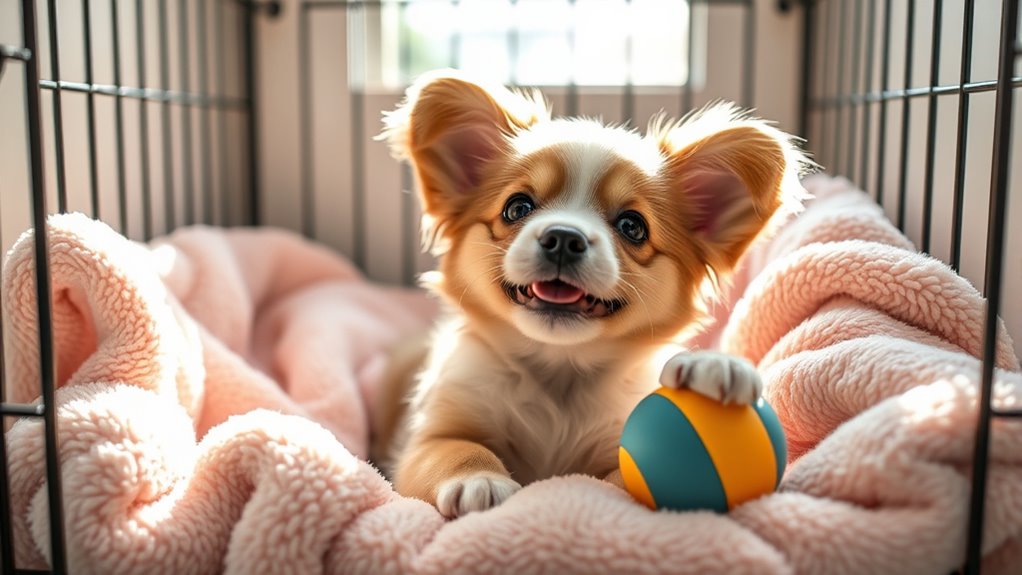
Crate training is an effective way to teach your puppy good behavior and provide them with a safe space to relax. When you introduce your puppy to a crate, you’re giving them a cozy den where they can feel secure and comfortable. The key is making the crate a positive place from the start, so your puppy associates it with good things rather than punishment. Begin by placing soft bedding inside and positioning the crate in a familiar, quiet area of your home. Use treats and praise to encourage your puppy to explore the crate voluntarily. Toss a treat inside and let them go in at their own pace, gradually increasing the time they spend inside. Never force your puppy into the crate, as this can create negative associations that are hard to undo later.
Crate training creates a safe, positive space for your puppy to relax and learn good behavior.
As your puppy becomes more comfortable, start feeding their meals inside the crate. This helps associate the crate with something pleasant and familiar. You can also leave the door open during initial training sessions so they can come and go freely, reinforcing the idea that the crate is a safe, inviting space. When your puppy is ready, close the door for short periods, always rewarding calm behavior with treats and praise. Keep these sessions brief at first, gradually increasing the duration as your puppy learns to settle calmly. Remember, patience is essential; never punish or yell at your puppy if they whine or fuss. Instead, calmly reassure them and give them time to adjust.
Consistency is fundamental in crate training. Use the same crate and routine daily so your puppy knows what to expect. Establish set times for crate time, such as during naps, overnight, or when you’re busy around the house. This regularity helps your puppy feel secure and understand that the crate is a normal part of their day. If your puppy whines or cries, try to identify the cause—hunger, thirst, or the need to go outside—and address it calmly. Avoid giving in to their fussing by letting them out immediately, as this can reinforce unwanted behaviors. Instead, wait until they are quiet before opening the door, helping them learn patience.
Over time, your puppy will see the crate as a place of comfort rather than confinement. By making the crate a positive, safe haven, you help your puppy develop good habits that will serve them well throughout their life. Remember, successful crate training is about patience, consistency, and positive reinforcement. When done right, your puppy will love their crate as a cozy retreat, making house training easier and giving both of you peace of mind. Incorporating early socialization into your training routine can further enhance your puppy’s comfort and confidence around new people and environments.
Frequently Asked Questions
How Long Can a Puppy Stay in a Crate Daily?
You should limit your puppy’s crate time to about 3-4 hours during the day, as puppies have small bladders and need frequent breaks. For overnight, they can usually stay 6-8 hours if they’ve been properly exercised and potty-trained. Always guarantee your puppy gets plenty of playtime, socialization, and bathroom breaks outside the crate. Never use the crate as a form of punishment, and make it a positive space.
What if My Puppy Cries in the Crate?
When your puppy cries in the crate, stay calm, be patient, and offer reassurance. Remember, crying is normal at first, so comfort your pup with gentle words and a soft touch. Avoid opening the crate immediately, which could reinforce the crying. Instead, wait until they’re quiet before rewarding calm behavior. Consistent, gentle responses will help your puppy learn that the crate is a safe, comforting space.
How Do I Choose the Right Crate Size?
You should choose a crate that comfortably fits your puppy, allowing them to stand, turn around, and lie down easily. Measure your puppy’s height and length, then add a few inches for growth. Avoid crates that are too big, as they can encourage accidents, or too small, which can be uncomfortable. Select a crate that provides a cozy, secure space, promoting positive crate associations as your puppy grows.
When Should I Start Crate Training My Puppy?
You should start crate training your puppy as soon as you bring them home, ideally around 8 weeks old. Begin with short sessions, gradually increasing the time they spend inside. Make the crate a positive space with treats and toys, and never use it as punishment. Consistency is key, so establish a routine and be patient to help your puppy feel safe and comfortable.
Can Crate Training Help With Housebreaking?
Think of crate training as building a safe harbor for your puppy. Yes, it helps with housebreaking because it teaches your pup to hold their bladder and bowels, reducing accidents. When you consistently use the crate, your puppy learns to associate it with comfort and security. This makes housebreaking smoother, quicker, and less stressful for both of you. Plus, it gives your puppy a cozy space to relax and feel safe.
Conclusion
By making the crate a cozy, welcoming space, you gently guide your puppy toward comfort and trust. Remember, patience and kindness turn the crate into a safe haven they’ll enjoy spending time in. With each positive experience, you’re quietly shaping a well-behaved, confident companion. Soon, your puppy will see the crate as a special retreat—one that’s all about love, security, and happy moments together. Keep nurturing that bond, and watch your puppy thrive.