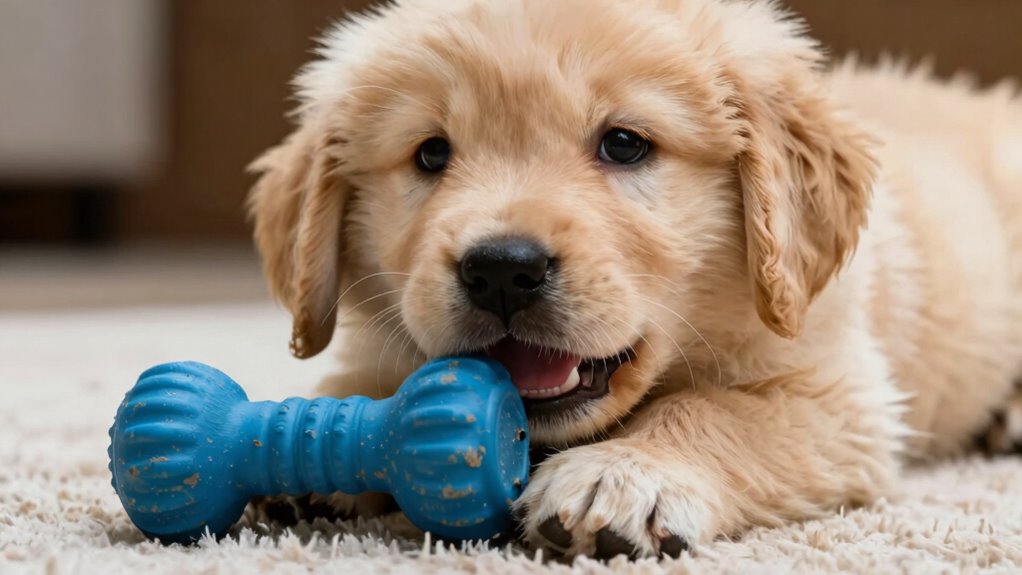

Puppy teething usually starts around 3-4 months old and continues until about 6-8 months. During this time, you’ll notice increased chewing, swollen gums, drooling, and sometimes irritability. Most puppies go through this natural process, but if you see persistent bleeding, foul odor, refusal to eat, or severe discomfort, it’s time to consult a vet. Keep your puppy comfortable and supported—more tips on managing teething comfortably are just a step away.
Key Takeaways
- Puppy teething begins around 3-4 months and lasts until 6-8 months, involving emerging teeth and increased chewing.
- Signs include excessive chewing, drooling, swollen gums, and behavioral changes.
- Seek veterinary help if there’s bleeding, persistent bad odor, refusal to eat, or severe discomfort.
- Support teething with durable toys, soft foods, and regular dental care routines.
- Maintain long-term oral health through regular brushing, dental checkups, and safe chew treats.

MateeyLife Silicone Cat & Dog Food Mat for Floors Waterproof, Anti-Slip Dog Bowl Mats for Food and Water, Pet Feeding Mats with Lip to Prevent Spills, Pet Placemat for Messy Drinkers to Protect Floors
- Safe & Spill-Resistant Material: Made of food-grade silicone, easy to carry
- Raised Edge Design: Contains mess with 0.5-inch raised border
- Non-Slip & Waterproof: Features anti-slip dots and waterproof surface
As an affiliate, we earn on qualifying purchases.
When Does Puppy Teething Start and End?
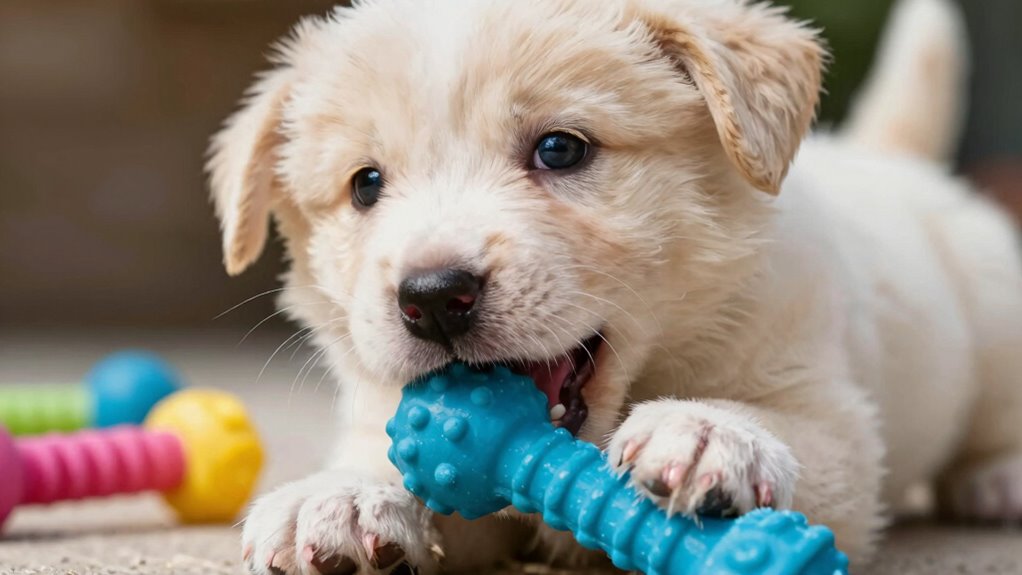
When does puppy teething typically begin and end? Usually, it starts around three to four months old and lasts until about six to eight months. During this period, your puppy’s teeth are emerging, and they may chew more to soothe discomfort. Proper puppy nutrition supports healthy teething, providing necessary nutrients for strong teeth and gums. You might also consider teething remedies like frozen toys or cold washcloths to ease soreness. Keep in mind that teething varies with each puppy, so some may start earlier or finish later. Monitoring their chewing habits and offering safe, appropriate options helps manage the process. Additionally, understanding the typical teething timeline can help you better support your puppy through this natural stage. Recognizing signs of discomfort early can help you implement teething relief strategies effectively, especially since nutritional support plays a vital role in healthy teething.
How Do I Know My Puppy Is Teething? Signs to Watch For

You’ll notice your puppy chewing on everything and biting more often as signs of teething. You might also see an increase in drooling or salivation during this time. Keep an eye out for these behaviors to confirm your puppy is teething. Monitoring teething symptoms can help you better understand what’s normal during this developmental stage.
Chewing and Biting Behaviors
During the teething phase, your puppy may start chewing and biting more frequently as a natural way to soothe irritated gums. You’ll notice them gnawing on furniture, shoes, or toys during puppy play, often with increased intensity. This behavior is normal, but it’s important to redirect their chewing to appropriate items. Keep an eye out for signs like drooling or swollen gums as indicators of teething. To help with socialization tips, encourage gentle play and avoid rough biting. Providing plenty of chew toys can redirect their energy. Use this table to recognize behaviors:
| Behavior | What it Means | How to Respond |
|---|---|---|
| Excessive biting | Teething discomfort | Offer suitable chew toys |
| Nipping during play | Normal puppy play behavior | Redirect to toys |
| Reduced play energy | Teething fatigue | Allow rest and comfort |
Additionally, choosing safe chew toys made from durable, non-toxic materials can provide relief and prevent damage to household items. Remember, offering appropriate chew items can also help promote healthy chewing habits and reduce destructive behavior.
Changes in Drooling or Salivation
One of the most noticeable signs your puppy is teething is an increase in drooling or salivation. You might see sudden salivation fluctuations, which can be messy and frustrating. This excess drooling can lead to discomfort and a need for drooling management. Watch for these signs:
- Constant dribbling that soaks their fur or bedding
- Clumps of saliva on furniture or floors
- Chewing or licking their lips more often
- Swollen or red gums accompanying increased salivation
- Reluctance to eat or chew as usual
These changes indicate teething is in progress. Managing drooling helps prevent skin irritation and keeps your puppy comfortable. Stay alert to salivation fluctuations, and provide appropriate teething toys to ease their discomfort and reduce excessive drooling.
The Stages of Puppy Teething: From Milk Teeth to Adult Teeth
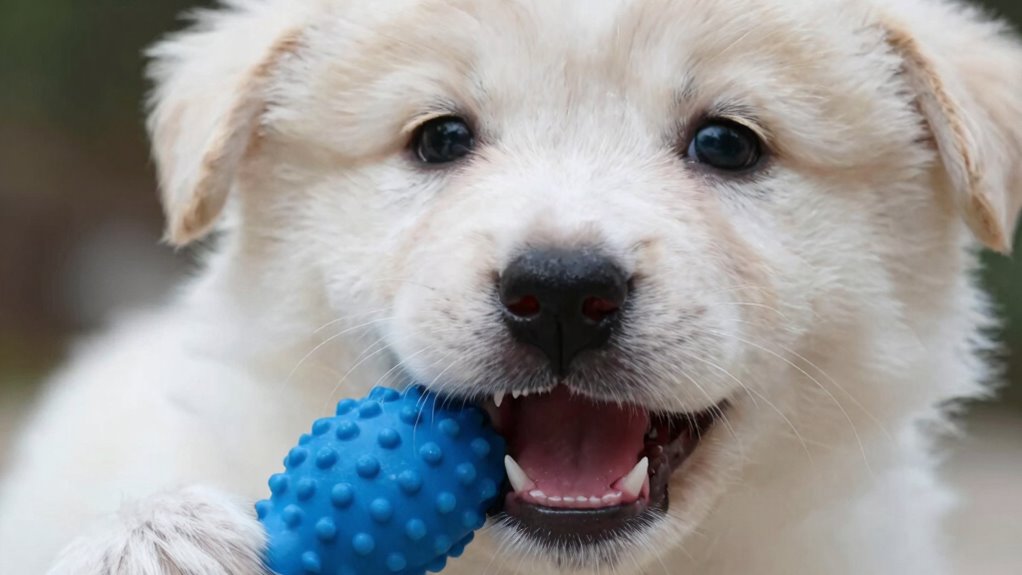
As your puppy grows, you’ll notice their milk teeth erupt first, usually between three and six weeks. These tiny teeth are temporary and will eventually fall out as they prepare to develop their adult set. The shift from milk to adult teeth typically begins around four months and continues until about eight months old. Proper dental care during this period can help prevent issues like dental health problems later in life. Regular check-ups and appropriate chew toys can support healthy tooth development during this critical phase. Ensuring a balanced diet also contributes to overall oral health and proper teething progression. Additionally, understanding the teething timeline can help you better anticipate your puppy’s needs and behaviors during each stage.
Milk Teeth Eruption
Puppy teething begins with the eruption of milk teeth, usually around three to four weeks of age. During this stage, your puppy’s tiny puppy milk teeth start breaking through, signaling the start of a new adventure. You’ll notice signs like increased chewing, drooling, and mild discomfort—classic teething symptoms. Watching these tiny teeth emerge is both adorable and bittersweet. As their milk teeth come in, you might feel a mix of pride and concern. Keep an eye out for these emotional moments:
- Tiny white teeth poking through gums
- Chewing everything in reach
- Increased restlessness and irritability
- Mild swelling in the gums
- Early signs of teething discomfort
This phase is vital for your puppy’s development and sets the stage for what’s to come.
Transition to Adult Teeth
When your puppy’s milk teeth start to loosen and fall out, it signals the beginning of the changeover to adult teeth. During this phase, your puppy may experience some discomfort, so focus on providing proper puppy nutrition to support healthy tooth development and reduce irritation. As the teeth emerge, it’s a good time to reinforce socialization techniques, like gentle grooming and chewing exercises, to help your puppy get accustomed to handling and new sensations. Regular vet check-ups ensure the teeth are coming in correctly and identify any issues early. Keep toys available that promote healthy chewing habits, which can ease teething pain and protect new adult teeth. Patience and consistent care will help your puppy transition smoothly into their adult dentition. Additionally, understanding the teething timeline can help you anticipate and manage your puppy’s needs more effectively. Proper chewing habits play a vital role in preventing destructive behaviors and supporting dental health as your puppy matures.
How Can I Help My Puppy Feel Comfortable During Teething?

Teething can be uncomfortable for your puppy, but there are simple ways to help soothe their discomfort. Providing appropriate chew toys can distract them and reduce teething discomfort. Ensuring your puppy has a balanced puppy nutrition supports their overall health and healing. You can gently massage their gums to ease soreness or offer cold, damp cloths for chewing. Keep their environment calm and comforting, offering extra patience and love. Consider freezing toys or treats—coolness often relieves gum pain. Remember, your support makes a difference in their comfort and well-being. Additionally, using an air purifier can help improve indoor air quality, creating a healthier environment for your puppy’s recovery. Proper ventilation and air quality are important for reducing indoor pollutants, which can help your puppy breathe easier during this uncomfortable phase. Maintaining good air quality can also support their developing immune system and overall health. Regular cleaning and monitoring indoor air can lessen exposure to irritants that might exacerbate teething discomfort.
Common Teething Problems and When to See the Vet
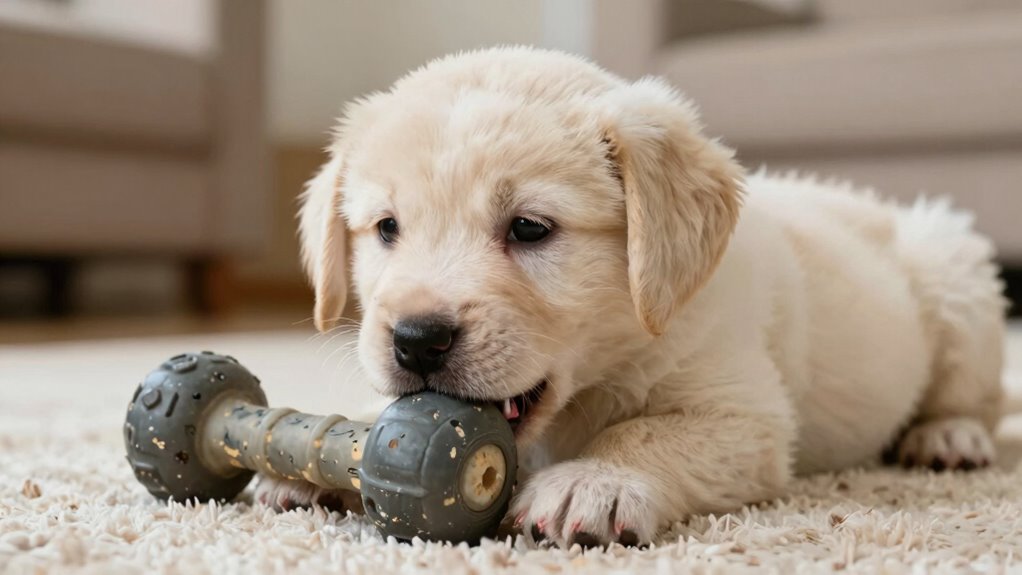
While teething is a normal part of your puppy’s development, some problems can signal the need for professional help. Watch for issues like excessive drooling, bleeding gums, persistent bad odor, or refusal to eat. Poor puppy nutrition can worsen discomfort, so make sure they’re getting balanced meals. If your puppy chews excessively or seems in pain despite teething remedies, it’s time to see the vet. Here’s a quick guide:
| Problem | Possible Cause | When to See the Vet |
|---|---|---|
| Bleeding gums | Gum injury or infection | Immediately |
| Persistent bad odor | Dental infection | Within 24 hours |
| Excessive drooling | Oral irritation or foreign object | ASAP |
| Refusal to eat or drink | Pain or dental issues | Urgently |
| Swollen or bleeding areas | Injury, infection, or abnormal growth | Consult promptly |
Be aware that maintaining good oral health during teething can help prevent more serious issues later. Regular dental checkups and proper oral hygiene practices are essential components of puppy care. Ensuring proper teething management can also minimize discomfort and associated problems for your puppy. Additionally, providing appropriate chew toys can help soothe teething pain and promote healthy dental development.
Best Chewing Toys and Tips to Protect Your Home
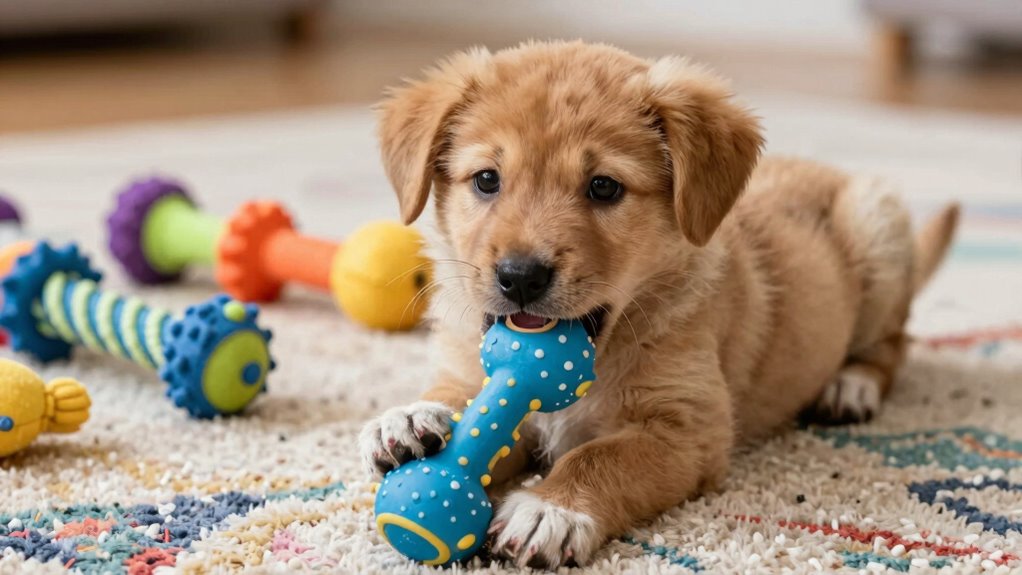
To protect your home from your puppy’s chewing habits, it’s essential to provide engaging and appropriate toys. This helps redirect their natural chewing instincts and eases teething discomfort. The right toys can become your puppy’s favorite, preventing damage to furniture and shoes. Look for durable options like rubber toys, teething rings, or plush toys designed for puppies. Additionally, selecting appropriate teething toys can significantly reduce your puppy’s desire to chew on household items. Consider these tips: – Choose toys that are safe and non-toxic – Rotate toys regularly to keep your puppy interested – Use interactive toys to stimulate their mind – Avoid cheap, easily destroyed items – Reward your puppy when they chew the right toys. Being mindful of your puppy’s teething timeline can help you anticipate their needs and choose suitable toys accordingly. Properly understanding puppy teething stages can ensure you provide the right support at each phase. Also, selecting high-quality pinball machines can offer your family endless entertainment and serve as a fun, interactive way to spend time together.
What Changes Can I Expect in My Puppy During Each Teething Stage?

As your puppy progresses through each teething stage, you’ll notice clear physical and behavioral changes. During the early phase, around 3 to 4 months, puppy teeth begin to loosen, leading to increased chewing and gnawing. You might see swollen gums or mild discomfort, which can affect their appetite and puppy nutrition, so offering soft, nutritious foods helps. As teething advances, around 4 to 6 months, new adult teeth start emerging, and your pup may become more irritable or restless. If discomfort seems severe, teething medication recommended by your vet can ease pain. Expect more drooling and chewing on furniture or toys. Recognizing these stages helps you adjust your approach, ensuring your puppy stays comfortable and gets the right support during each phase.
How Can I Prevent Dental Problems During Teething?
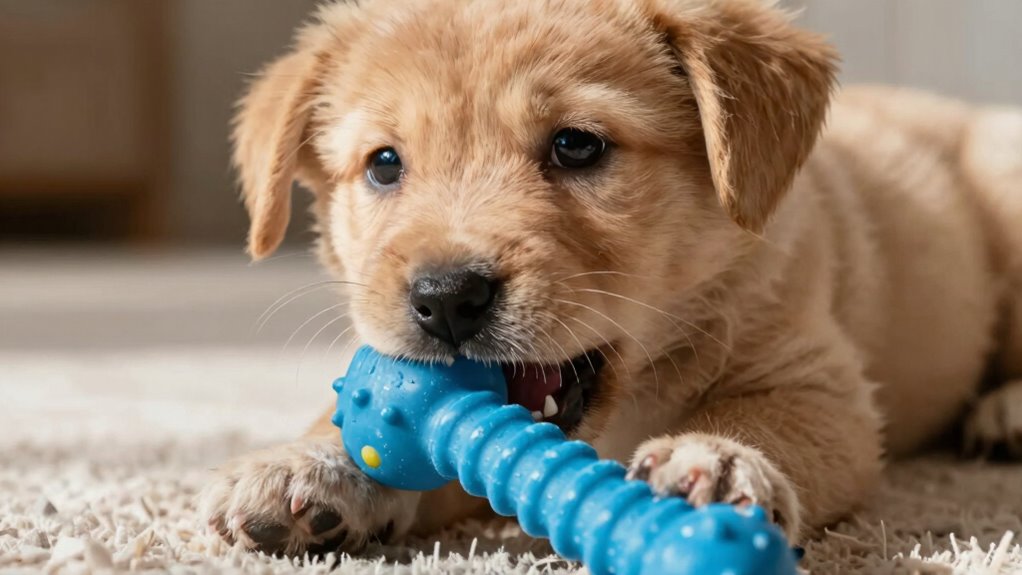
During the teething process, taking steps to prevent dental problems can save you from future discomfort and costly treatments. Good dental hygiene is essential for maintaining your puppy’s dental health. Start by providing safe teething toys that soothe gums and promote healthy chewing. Regularly brush your puppy’s teeth with a vet-approved toothbrush and toothpaste to remove plaque buildup. Avoid giving them sugary treats or human food that can cause decay. Schedule routine vet check-ups to catch potential issues early. You’ll feel relief knowing you’re actively protecting their oral health, preventing painful dental problems down the line, and fostering lifelong healthy habits.
- Protect your puppy’s smile from painful decay
- Keep their gums strong and healthy
- Reduce the risk of future dental emergencies
- Build trust through gentle care
- Ensure a lifetime of happy, healthy teeth
Long-Term Dental Care Tips for Your Puppy After Teething

Once your puppy has finished teething, maintaining their dental health requires consistent care. Regular brushing with dog-specific toothpaste helps preserve puppy dental health and prevents plaque buildup. Schedule professional dental cleanings as recommended by your veterinarian to catch issues early. Providing long-term oral hygiene also involves offering safe chew toys and dental treats that help reduce tartar. Avoid giving your puppy sugary or hard human foods that can damage their teeth. Keep an eye on their gum health and look for signs of inflammation or bad breath, which could indicate problems. Establishing a daily dental routine now guarantees your puppy develops good habits that last a lifetime, supporting their overall health and happiness.
Frequently Asked Questions
How Can I Tell if My Puppy’s Teething Pain Is Severe?
If your puppy’s teething discomfort seems intense, you’ll notice excessive drooling, biting, or pawing at their mouth. Severe pain might lead to refusal to eat or drink, swelling, or bleeding gums. For proper puppy dental care, monitor these signs closely. If pain persists or worsens, consult your vet promptly. They can assess if your puppy needs pain relief or additional dental care to ease their teething discomfort.
Are There Specific Foods That Help Soothe Teething Discomfort?
Think of teething as a storm passing through—your puppy needs gentle relief. Offer healthy snacks like frozen carrots or chilled apple slices, which can soothe sore gums. Incorporate soothing toys, such as rubber teething rings or chilled washcloths, to provide comfort and distraction. These options not only ease discomfort but also keep your puppy happily occupied, helping them navigate teething’s rough waters with a little less fuss.
When Should I Start Brushing My Puppy’s Teeth?
You should start brushing your puppy’s teeth as soon as you bring them home, ideally around 3 to 4 months old. Establishing good dental hygiene early helps prevent future dental issues. Use a soft-bristled toothbrush and puppy-safe toothpaste, and make puppy dental care a positive routine. Regular brushing not only keeps their teeth clean but also promotes healthy gums, setting the foundation for a lifetime of good oral health.
Can Teething Cause Behavioral Changes in Puppies?
Teething can cause behavioral changes in puppies, like increased teething biting and irritability. You might notice your pup becoming more excitable or less social during this phase. To help, focus on puppy socialization and provide safe teething toys to redirect biting. Remember, patience is key—these behaviors are temporary and part of normal development. Proper socialization and gentle guidance will help your puppy adjust comfortably through teething.
What Are Natural Remedies for Teething Pain Relief?
You can soothe your puppy’s teething pain naturally by offering teething toys, especially ones that can be chilled to provide extra relief. Cold compresses on their gums also help reduce discomfort and swelling. Always choose safe, durable toys and make certain compresses are wrapped in a cloth to prevent biting too hard. These remedies ease teething pain and keep your puppy calm during this uncomfortable phase.
Conclusion
By understanding your puppy’s teething timeline, you hold the power to turn chaos into calm. With the right care, you can prevent messy chewing disasters and future dental disasters. Think of yourself as a superhero, armed with tips and tricks to keep your pup comfortable, healthy, and smiling brightly for years to come. Don’t underestimate your role—you’re the ultimate guardian against teething turmoil and dental disaster!