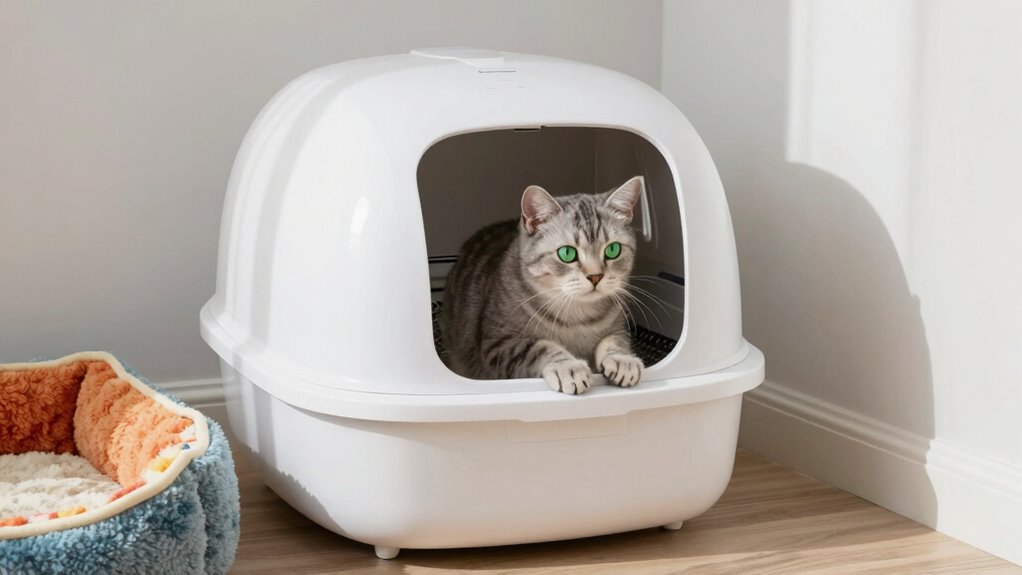

To help your cat accept a self-cleaning litter box, focus on their natural preferences for cleanliness, privacy, and comfort. Choose a model with scent control, good airflow, and high sides for privacy. Place it in a quiet, low-traffic area away from food, and introduce it gradually alongside their current box. Using positive reinforcement and paying attention to their behavior will ease the changeover. Keep exploring tips that make your cat feel safe and secure around this new setup.
Listen free for 30 days with Audible
Thousands of audiobooks and originals — cancel anytime.
As an affiliate, we earn on qualifying purchases.
Key Takeaways
- Ensure the self-cleaning box is placed in a quiet, private location away from food and busy areas.
- Gradually introduce the new box alongside the old, using treats and praise to encourage exploration.
- Maintain regular cleaning initially to mimic familiar routines and reduce stress during transition.
- Provide a high-sided, comfortable, and secure environment that aligns with feline instincts for privacy and safety.
- Observe your cat’s behavior, reinforce positive interactions, and be patient to promote acceptance and reduce anxiety.
self-cleaning litter box with scent control
As an affiliate, we earn on qualifying purchases.
As an affiliate, we earn on qualifying purchases.
How Do Self-Cleaning Litter Boxes Work, and What Do Cats Like About Them?
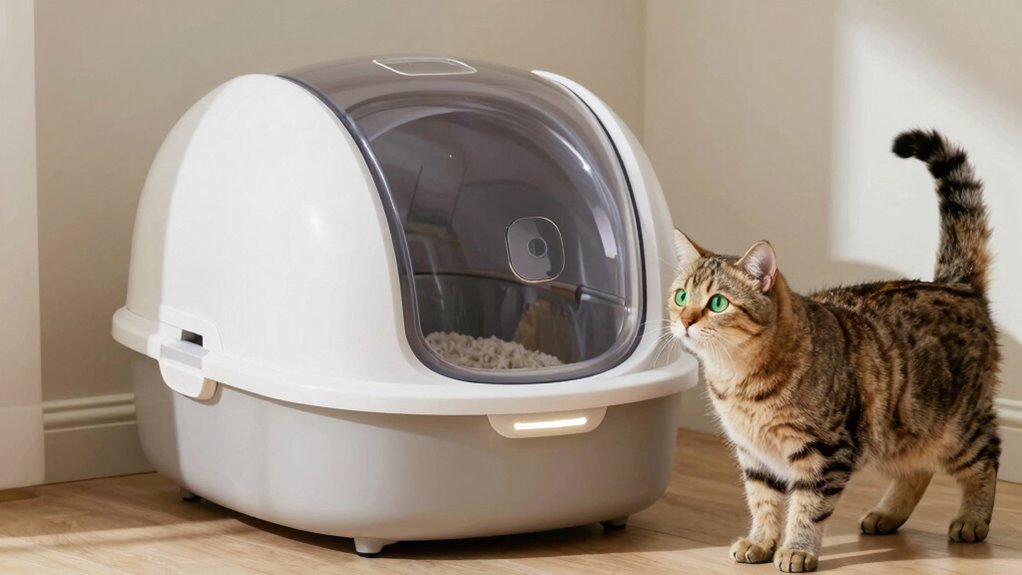
Have you ever wondered how self-cleaning litter boxes actually work and why cats seem to prefer them? These boxes use automatic mechanisms to handle litter box maintenance, reducing odor and mess. When your cat uses the box, sensors detect waste, triggering a cleaning cycle that sifts or scoops out clumps into a sealed compartment. This process keeps the litter fresh and clean without you having to do much. Cats appreciate this because a clean litter box aligns with their natural feline behavior of avoiding soiled areas. The consistent cleanliness encourages them to use the box regularly and comfortably. Additionally, Free Floating designs allow for easier access and better airflow, which can make the environment more inviting for your cat. Proper litter box hygiene is essential for preventing infections and ensuring your cat’s health. Regularly maintaining a hygienic environment helps reduce stress for your pet and minimizes odors in your home. Implementing automatic cleaning systems can further streamline the process and keep the litter box consistently fresh. Studies show that odor control is significantly improved with these systems, making them more appealing to both cats and owners. By making litter box maintenance easier and more hygienic, these systems help guarantee your cat stays happy and healthy, while also minimizing unpleasant smells in your home.
Why Do Many Cats Resist Switching to a Self-Cleaning Litter Box?
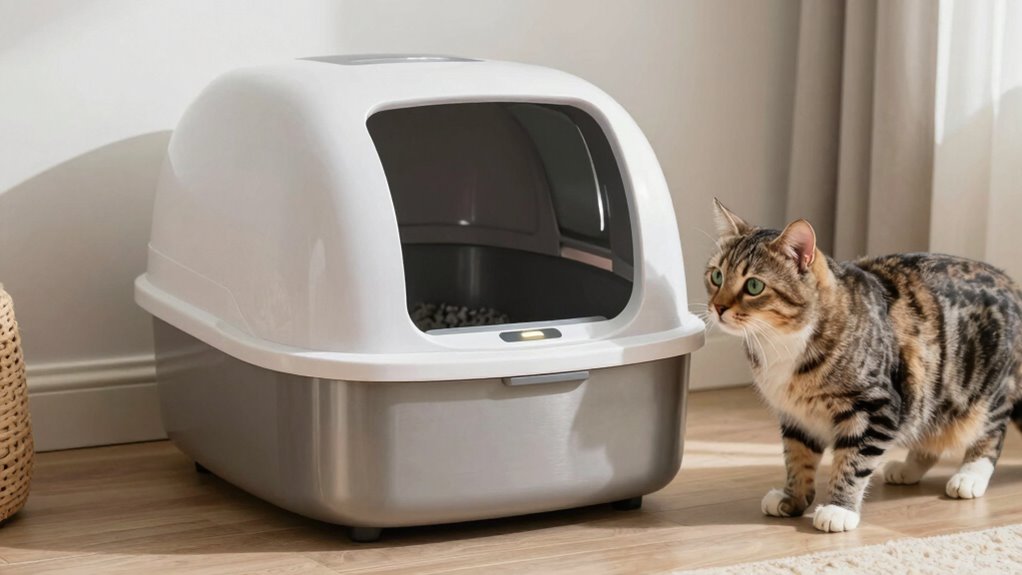
Many cats resist shifting to a self-cleaning litter box because they’re sensitive to odors or unfamiliar smells. The noise from the cleaning cycle can also make cats nervous or wary of the new setup. Understanding these concerns helps you address them and make the transition smoother.
Odor Control Concerns
Even though self-cleaning litter boxes are designed to reduce odor and improve convenience, cats often resist switching to them because they can be sensitive to changes in their environment. Odor control is a key concern for many cats, who rely on their sense of smell to feel secure. If the litter box doesn’t effectively mask scents or absorb odors, your cat may avoid it. Some self-cleaning models use scent masking to hide waste, but if the scent isn’t natural or strong enough, it can trigger rejection. The table below highlights common odor control features:
| Feature | Benefit |
|---|---|
| Scent Masking | Keeps waste odors less noticeable |
| Odor Absorption | Neutralizes smells for a fresher environment |
| Air Filtration | Reduces airborne odors |
Proper odor control is essential for your cat’s acceptance.
Adjustment to Noise
While odor control features help make self-cleaning litter boxes more appealing, the noise they produce often causes hesitation for cats. Many cats have noise sensitivity, making sudden or loud sounds unsettling. When faced with unfamiliar noises from the cleaning mechanism, your cat might become stressed or hesitant to use the box. Sound habituation takes time, so if your cat isn’t used to noisy environments, they may resist switching. To ease this adjustment, introduce the box gradually, allowing your cat to get accustomed to the sounds in a low-stress setting. Covering the unit temporarily or running it when your cat isn’t nearby can also help. Gradual exposure can significantly reduce a cat’s stress response to new noises. Patience is key—over time, your cat can learn to tolerate the noise, making self-cleaning boxes more acceptable. Additionally, understanding how AI tools can assist in monitoring and managing your pet’s behavior may further ease the transition.
Which Litter Types and Textures Make Self-Cleaning Boxes More Acceptable?
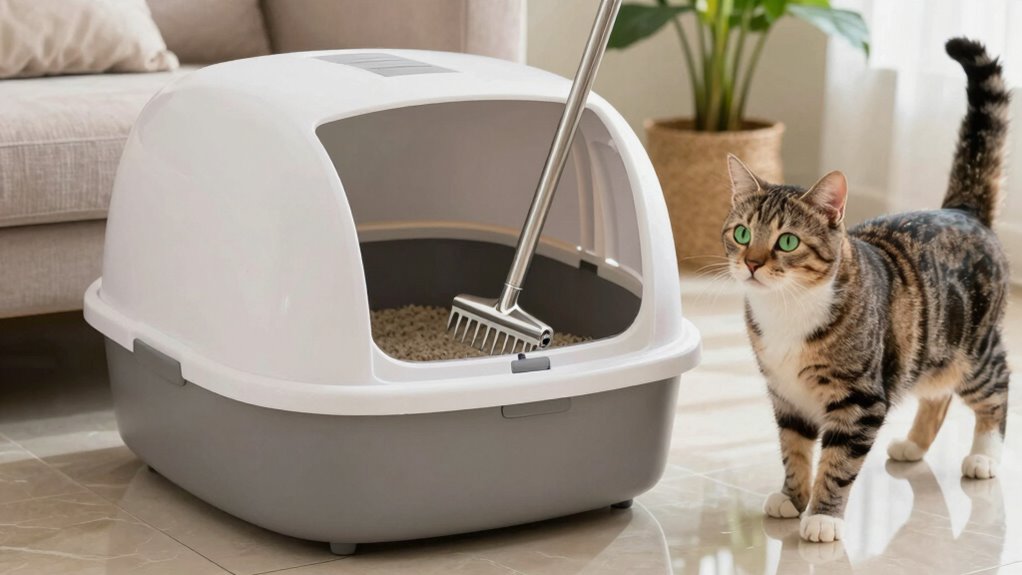
Choosing the right litter type can make your cat more comfortable with a self-cleaning box. Clumping litters often appeal because they make cleanup easier, but some cats prefer non-clumping options for comfort. Paying attention to your cat’s texture preferences can improve acceptance and reduce resistance.
Clumping vs. Non-Clumping Litter
Have you ever wondered how the type of litter affects the effectiveness of a self-cleaning litter box? Clumping litter forms solid masses when wet, making it easier for the box’s mechanism to remove waste efficiently. Non-clumping litter stays loose, which can sometimes challenge the cleanliness and litter box aesthetics. Your cat’s personality traits also influence acceptance: more finicky cats prefer clumping for its familiar texture, while adventurous cats might tolerate non-clumping better. To visualize, here’s a comparison:
| Feature | Clumping Litter | Non-Clumping Litter |
|---|---|---|
| Waste Removal Ease | Easy, solid waste removal | More difficult, loose waste |
| Scent Control | Better odor containment | Less effective odor control |
| Cat Acceptance | Often preferred for familiarity | Varies based on cat traits |
| Maintenance | Quick scoop, less mess | Longer cleaning sessions |
Texture Preferences and Comfort
Ever wonder why some cats prefer certain litter textures over others? It all comes down to cat texture preferences and litter comfort. Cats are naturally sensitive to texture, and a litter that feels too rough or too smooth can cause hesitation. Fine, soft litter mimics natural sand and often appeals to cats seeking comfort during elimination. On the other hand, coarser textures may be uncomfortable and discourage use. To improve acceptance of a self-cleaning litter box, choose a litter with a texture your cat finds pleasant. Keep in mind that consistency is key; sudden changes can upset your cat’s comfort. Offering a variety of textures initially can help identify what your cat prefers, making the transition smoother and encouraging regular use. Additionally, selecting a Suprem fabric-like litter can enhance comfort, as its soft and durable qualities resemble natural materials that cats find soothing. Understanding litter texture preferences can significantly influence your cat’s willingness to use the self-cleaning box regularly.
How Can You Introduce a Self-Cleaning Litter Box to Your Cat Gradually?
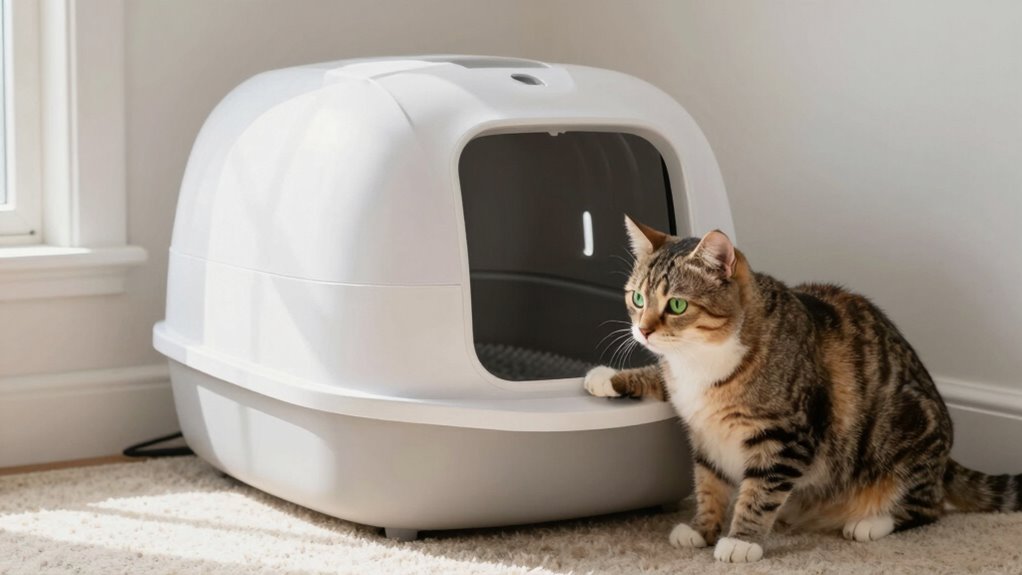
Introducing a self-cleaning litter box to your cat requires a gradual approach to facilitate a smooth changeover. Start by placing the new box next to your cat’s current litter box to respect litter box etiquette and minimize stress. Let your cat explore it at her own pace, offering treats or praise to create positive associations. During the first few days, continue cleaning the self-cleaning box manually so it resembles her familiar environment and supports her feline behavior. Observe her reactions closely—if she shows hesitation, don’t force her. Over time, gradually reduce manual cleaning, allowing her to adapt to the self-cleaning mechanism. Patience and consistency are key, helping your cat feel secure and comfortable with her new litter box. Understanding feline behavior can also help in making the transition smoother. Additionally, being mindful of ear wax odor and other scents in the environment can help you notice if your cat is stressed or uncomfortable during the process. Recognizing species-specific habits can further ease her acceptance of the new setup. Incorporating cat instincts into the transition plan can improve her comfort and cooperation. Moreover, paying attention to her litter box preferences can guide you toward a successful transition.
What Environmental Factors Help Cats Feel Comfortable Using Self-Cleaning Litter Boxes?

Creating a comfortable environment is essential for encouraging your cat to use a self-cleaning litter box. Start by choosing a model with appealing litter box aesthetics that blend well with your home. Cats are naturally private, so providing a quiet, secluded spot helps them feel secure. Avoid placing the box in busy or noisy areas, which can cause stress. Ensure the environment is clean and free from strong odors, as this encourages use. A litter box with high sides can give your cat a sense of privacy and security, making them more comfortable. Remember, a calm, inviting space that respects your cat’s need for feline privacy and visual appeal will increase the likelihood they’ll happily use their self-cleaning litter box. Additionally, understanding environmental factors can help you create a space that promotes positive litter box habits. Recognizing the reliance on cloud services that many modern devices depend on can help you troubleshoot issues if your self-cleaning system experiences tech-related problems. Creating a calm environment by minimizing sudden noises and disruptions can further encourage consistent use. Paying attention to lighting conditions can also influence your cat’s comfort and willingness to use the box. Being mindful of air quality can also impact your cat’s comfort and willingness to use the litter box consistently.
How Does Proper Placement Make Your Cat More Likely to Use the Self-Cleaning Litter Box?
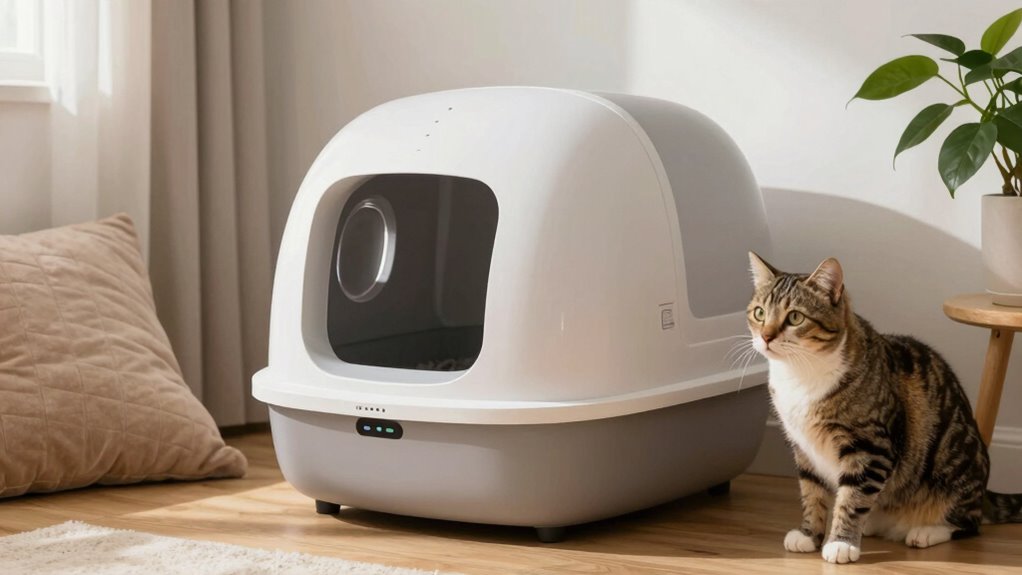
Proper placement of the self-cleaning litter box is key to ensuring your cat uses it consistently. Start with effective placement strategies by choosing a quiet, low-traffic area where your cat feels safe. Avoid placing the box near food and water sources, as cats prefer separation between elimination and eating spaces. Privacy considerations are vital; cats often seek a secluded spot, so select a location that offers some cover or a sense of security. Make sure the area is easily accessible, especially for older or shy cats. Keep the box away from loud appliances or busy hallways. Ensuring the environment is stress-free can further encourage your cat to use the self-cleaning litter box regularly, ensuring a cleaner, more comfortable environment for both of you. Additionally, understanding cat behavior related to privacy and comfort can help you optimize placement and increase acceptance. Creating a safe space where your cat feels comfortable will also promote consistent use and reduce avoidance. For optimal results, consider the environmental factors that influence your cat’s litter box habits and adjust the placement accordingly.
What Common Mistakes Should You Avoid When Transitioning Your Cat to a Self-Cleaning Litter Box?
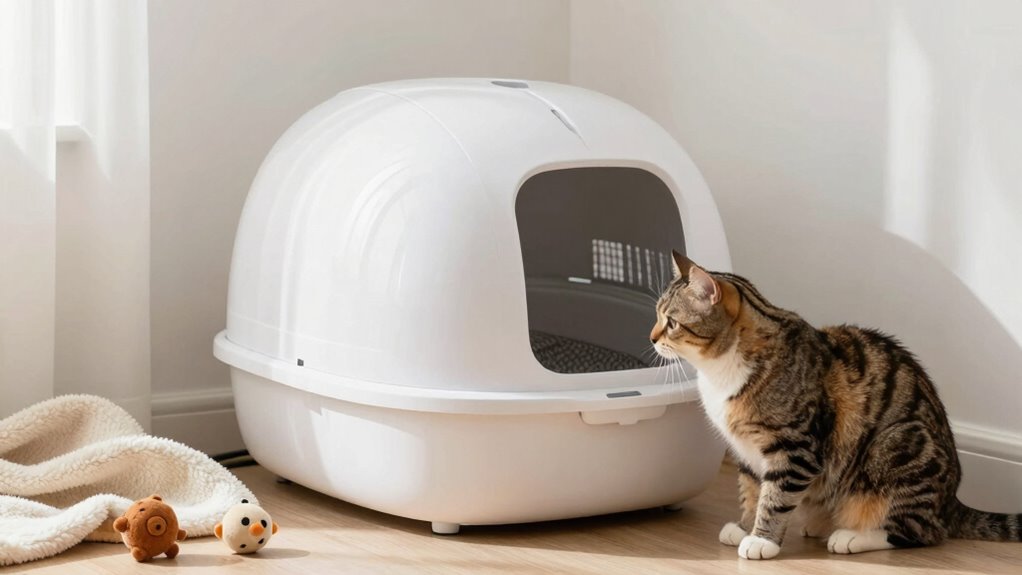
When shifting your cat to a self-cleaning litter box, one common mistake is not giving your cat enough time to adjust. Rushing this change can disrupt their litter box hygiene habits and trigger unwanted feline behavior. To avoid this, keep these points in mind:
- Don’t switch abruptly; introduce the new box gradually alongside the old one.
- Avoid placing the self-cleaning box in an unfamiliar or noisy location.
- Don’t ignore your cat’s cues; if they seem stressed, give them more time to adapt.
- Never neglect cleaning the new box regularly during transition, as poor hygiene can deter use.
How Can You Monitor and Encourage Your Cat’s Acceptance of the New Litter Box System?
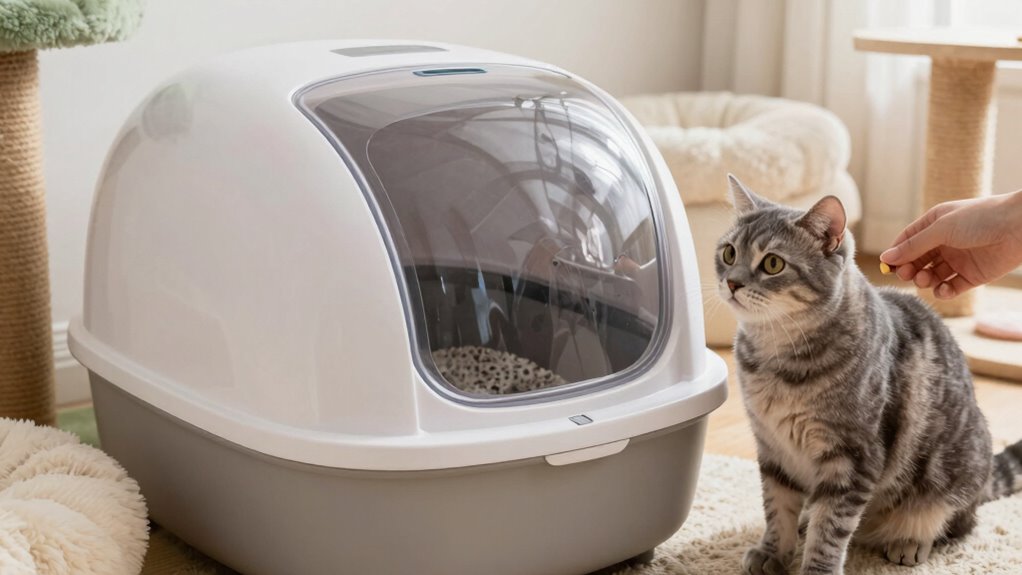
To guarantee your cat accepts the new litter box system, it’s important to actively observe their behavior and make adjustments as needed. Watch how they interact with the self-cleaning litter box during litter box training, noting any signs of hesitation or avoidance. If your cat seems reluctant, try placing treats nearby to encourage exploration or gently guiding them to use it. Pay attention to feline behavior cues, such as sniffing, scratching, or hesitation, and respond accordingly. Consistency is key—keep the litter box in a quiet, accessible location, and be patient as they adjust. Reinforce positive behavior with praise or treats, and avoid scolding. Monitoring and encouraging your cat’s acceptance helps guarantee a smooth transition to the new system.
Frequently Asked Questions
How Often Should Self-Cleaning Litter Boxes Be Maintained?
You should maintain your self-cleaning litter box daily to guarantee proper litter box maintenance and keep your cat comfortable. Check the cleaning schedule regularly to scoop out waste and add fresh litter as needed. Even with automatic features, occasional manual cleaning is essential to prevent odors and ensure the box functions well. Consistent upkeep helps your cat accept the box and promotes good litter box habits.
Are Self-Cleaning Litter Boxes Suitable for Multiple Cats?
In a busy multi-cat household, self-cleaning litter boxes can be a game-changer, but are they suitable? They can work well if you follow shared litter box etiquette—multiple units, frequent cleaning, and enough space. However, some cats may hesitate with the automated process. Keep a close eye on their reactions; if they seem comfortable, these boxes could simplify your life and keep your cats happy.
Can Self-Cleaning Litter Boxes Help Reduce Odors Effectively?
Yes, self-cleaning litter boxes can help reduce odors effectively. They often feature advanced odor control systems, keeping smells at bay. Plus, since they clean more frequently than manual scooping, they minimize odor buildup. You’ll notice fresher air and a cleaner space, making your home more pleasant. Regular maintenance and choosing models with good odor control guarantee your cat’s litter box stays odor-free and inviting, encouraging your cats to use it happily.
What Safety Features Should I Look for in a Self-Cleaning Box?
Look for a self-cleaning litter box with automatic sensors that detect when your cat enters and exits, guaranteeing safe operation. Safety locks are essential to prevent accidental activation or injury, especially if you have curious or playful cats. These features help keep your pet secure while maintaining cleanliness. Prioritize models with these safety features to give you peace of mind and ensure your cat feels safe and comfortable using the box.
Do Self-Cleaning Litter Boxes Require Special Litter Types?
Think of self-cleaning litter boxes as a new dance partner—you need the right moves. They don’t require special litter types but do need litter that’s compatible with their mechanism and your cat’s preferences. To guarantee cat acceptance, choose a litter that’s familiar and comfortable for your feline friend. Using the correct litter helps your cat feel secure, making it easier for them to accept this high-tech addition to their routine.
Conclusion
With patience and gentle guidance, you can turn the switch from old to new, helping your cat see the self-cleaning litter box as a welcoming oasis rather than a stranger. Think of it as planting a seed of trust, nurturing it with understanding and care. Soon, your feline friend will embrace this shiny, modern throne, making litter time a harmonious dance rather than a stressful chore. Trust the process, and watch the comfort blossom.
Fall Picks
fall essentials
As an affiliate, we earn on qualifying purchases.