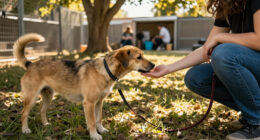
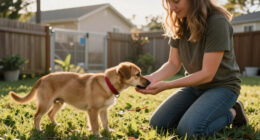
To make puppy car rides normal before anxiety starts, introduce short, positive trips early on. Use treats, praise, and familiar toys to create calm, rewarding experiences. Always secure your pup safely with a harness or crate, keep the environment cozy, and maintain a gentle atmosphere with soft music and ventilation. Avoid rushing or forcing your puppy, and stick to consistent routines. If you keep these tips in mind, you’ll set your pup up for relaxed travels ahead.
Key Takeaways
- Introduce the car gradually with short, positive sessions using treats and praise to build familiarity.
- Secure your puppy properly with a harness or crash-tested crate to ensure safety and comfort.
- Use calming techniques like soft music, familiar toys, and gentle handling to promote relaxation during rides.
- Keep car rides consistent, stress-free, and reward calm behavior to create positive associations early.
- Recognize early signs of fear and address them with patience, desensitization, and professional guidance if needed.
As an affiliate, we earn on qualifying purchases.
Why Early Puppy Exposure to Car Rides Builds Confidence

Introducing your puppy to car rides early on can substantially boost their confidence. Early exposure is essential for effective puppy socialization, helping your pup become comfortable with new environments and sounds. When you gradually introduce your puppy to car rides, they learn that travel isn’t frightening but a normal part of life. This confidence building reduces anxiety during future trips, making vet visits and outings more enjoyable for both of you. Starting early also helps prevent fearfulness from developing later, as puppies are most receptive to new experiences during their critical socialization period. Consistent, positive experiences during these early rides create a sense of security, ensuring your puppy grows into a confident, well-adjusted traveler who enjoys adventures with you. Additionally, high refresh rates in the car’s environment can help your pup process sights and sounds smoothly, reducing overstimulation and promoting calmness. Incorporating gentle handling and positive reinforcement during car rides can further enhance their comfort and trust in this experience. Engaging in positive socialization during these trips can also help your puppy become accustomed to other animals and people they may encounter during travels. Using calm, reassuring tones can further soothe your puppy and reinforce a sense of safety during rides.
How to Set Up Your Car to Keep Your Puppy Safe and Calm
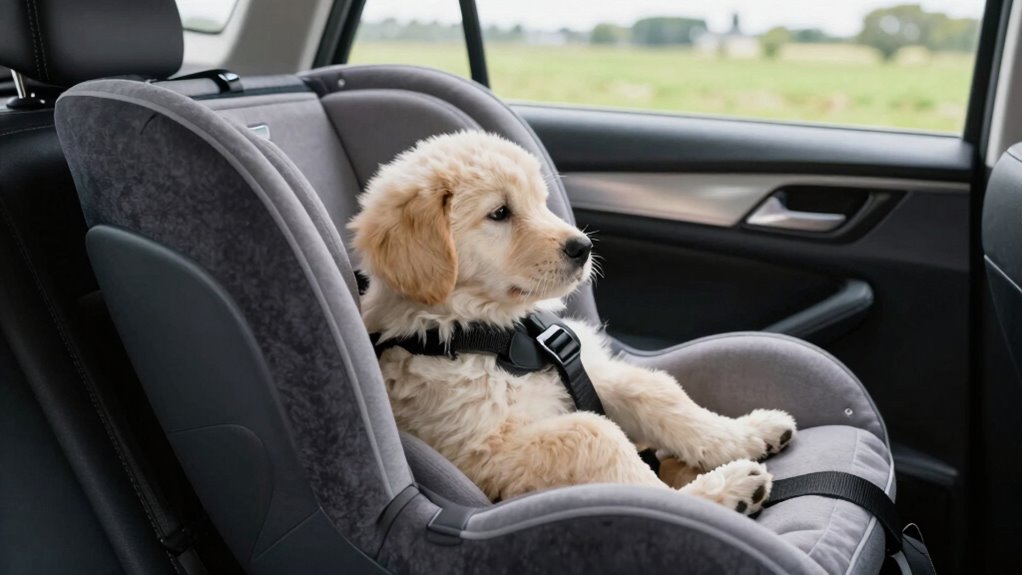
Setting up your car properly is essential to guarantee your puppy stays safe and calm during rides. Start by securing a comfortable crate or harness that keeps your pup stable and prevents injury. Make certain your puppy has proper puppy nutrition before traveling to avoid hunger or discomfort, which can cause anxiety. Keep grooming essentials like wipes and a brush handy to clean paws or fur if needed, making your puppy feel more comfortable. Avoid feeding your puppy heavy meals immediately before travel to prevent nausea. Keep the temperature in the car moderate and use calming accessories like a soft blanket or calming spray. These steps help create a secure environment, reducing stress and encouraging calmness during car rides. Additionally, understanding sleep comfort factors can help you recognize when your puppy might be experiencing discomfort or stress, enabling you to adjust the environment accordingly. Being aware of pinball machine weights can also be useful if you’re transporting larger crates or equipment, ensuring safe handling. Proper ventilation and airflow is also crucial to keep your puppy comfortable and prevent overheating during the trip. Creating an environment that considers environmental comfort will promote a relaxed and enjoyable travel experience for your puppy.
Step-by-Step: Introducing Car Rides to Your Puppy Without Stress
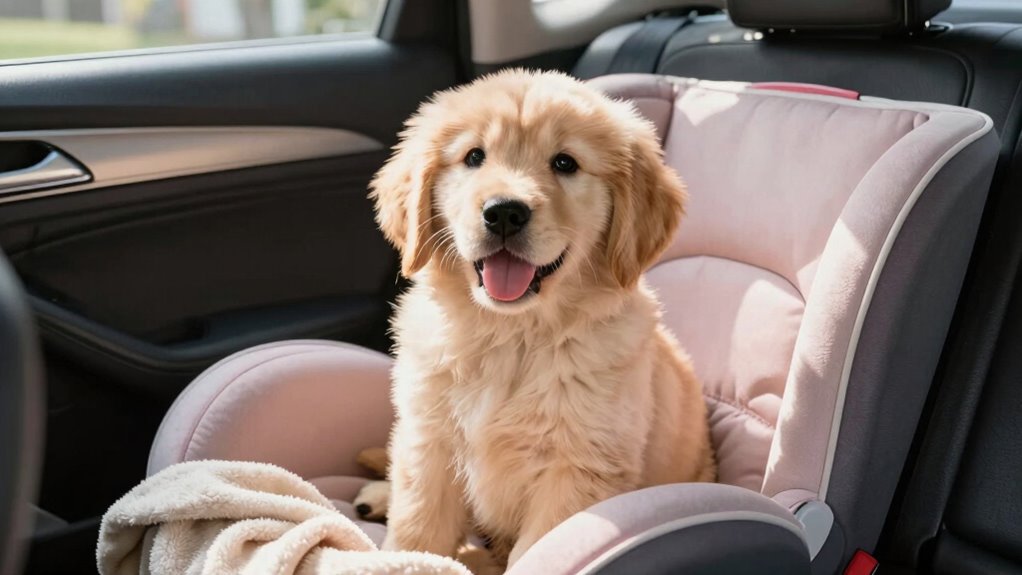
To help your puppy adjust smoothly to car rides, start with short, positive experiences that build confidence. Before hitting the road, make sure your puppy’s grooming is up to date—clean, comfortable, and free of stress. A well-groomed puppy feels better and is less likely to be anxious. When preparing your car, perform regular car maintenance to ensure everything runs smoothly and quietly, reducing unexpected noises that might scare your puppy. Begin by letting your puppy explore the car while it’s parked, offering treats and praise. Gradually introduce short rides around the block, keeping trips positive and calm. Keep outings consistent and stress-free, and always reward your puppy for calm behavior. This step-by-step process creates a foundation of comfort and trust, helping your puppy develop a positive association with car travel and easing potential travel anxiety. Additionally, understanding dog health and comfort can help you create a more stress-free travel experience for your puppy, making your outdoor adventures even more rewarding.
How Positive Reinforcement Can Help Your Puppy Feel Comfortable in the Car

Positive reinforcement is a powerful tool to help your puppy feel comfortable and secure in the car. By using treat training, you reward calm behavior, encouraging your puppy to associate car rides with positive experiences. Desensitization techniques gradually expose your pup to the car environment, reducing fear and anxiety. Start with short sessions, offering treats when your puppy remains relaxed. Consistency is key; always praise and reward progress. Here’s a quick guide:
| Step | Action | Reward |
|---|---|---|
| Introduce the car | Let your puppy explore it calmly | Treats for calm curiosity |
| Short rides | Take brief trips, praise relaxed behavior | Treats after each trip |
| Increase duration | Gradually extend travel time | Continue rewarding calmness |
Using positive reinforcement helps your puppy build confidence, making car rides enjoyable rather than stressful. Incorporating balanced designs into training spaces can also help create a calm environment for your puppy to learn and relax.
Common Mistakes That Make Puppy Car Anxiety Worse: and How to Avoid Them

One common mistake that worsens puppy car anxiety is forcing your pup into the car or trying to rush the process. This approach can create negative associations with car rides, making anxiety worse over time. Instead, focus on gentle puppy socialization by introducing your pup to the car gradually, using praise and treats to build positive feelings. Avoid rushing crate training; guarantee your puppy views the crate as a safe space before attempting rides. Forcing your pup into the car or skipping these steps can cause fear and resistance, which heighten anxiety during travel. Patience and consistency are key. By fostering positive experiences through socialization and crate training, you help your puppy associate car trips with comfort and security, reducing their fear and making travel a normal part of life. Additionally, incorporating water-based activities like supervised water play can help your puppy become more relaxed overall, easing travel anxiety. Introducing calming techniques such as gentle massage or calming music can also significantly reduce stress during car rides, making the experience more enjoyable for your puppy. Engaging in relaxation exercises consistently can further promote a sense of calm and confidence during travel, helping your puppy feel more secure. Remember, using positive reinforcement consistently reinforces good behavior and can help your puppy feel more confident during travel.
How to Prevent Motion Sickness and Reduce Stress During Car Trips
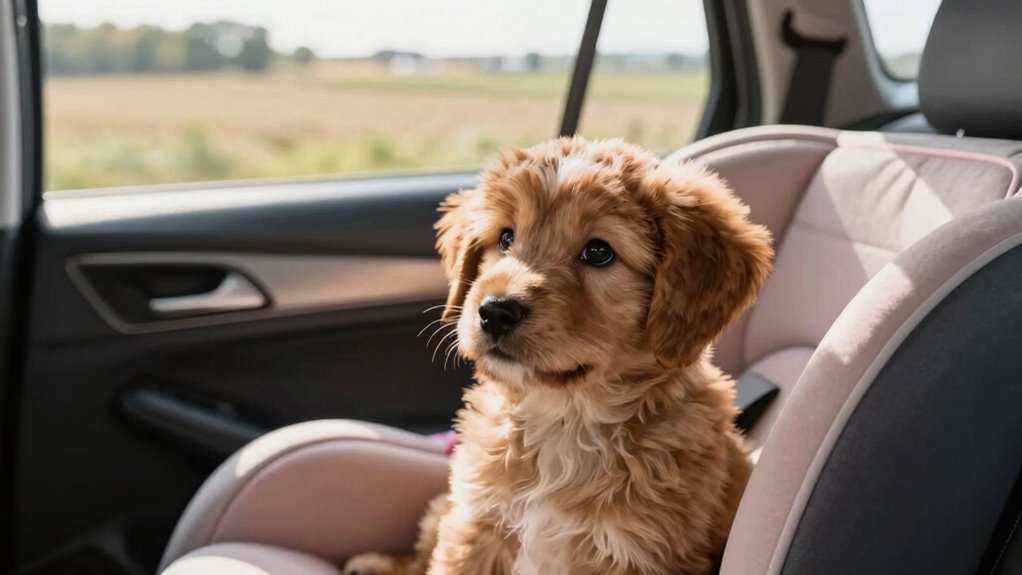
To keep your puppy comfortable during car trips, make sure they’re securely harnessed or in a crate to prevent unnecessary movement. Creating a calm environment with soft music or gentle tones can help reduce their stress. These simple steps can make car rides smoother and more enjoyable for your puppy. Additionally, using vehicle modifications such as non-slip mats or window shades can further enhance their comfort and safety during travel. Incorporating sustainable materials into your car accessories can also contribute to eco-friendly travel practices. Consulting with a trusted Gold IRA provider can ensure your investment choices are sound and secure, similar to choosing reliable travel accessories for your puppy.
Secure Your Puppy Properly
Securing your puppy properly in the car is essential to prevent motion sickness and reduce stress during trips. Using a proper car restraint ensures puppy safety and keeps your little one stable. Choose a harness designed for travel that attaches securely to the seatbelt or a crash-tested crate. Avoid letting your puppy roam freely, as sudden stops or turns can cause injuries or increase anxiety. A snug, well-fitting harness helps limit excessive movement, making your puppy feel more secure. Before hitting the road, double-check that the restraint is properly installed and comfortable for your puppy. Proper body restraint not only protects your pup but also minimizes their exposure to jolts and bumps, helping them stay calm and comfortable throughout the journey. Implementing calming techniques can further ease your puppy’s travel anxiety and promote a more relaxed experience. Additionally, incorporating essential oils for anxiety relief, such as lavender or chamomile, can help create a calming environment inside the vehicle.
Keep Car Environment Calm
Keeping your car environment calm is key to minimizing motion sickness and lowering your puppy’s stress during trips. A calm environment helps your pup feel safe and relaxed, making travel smoother. Reduce noise by keeping music at a gentle volume and avoiding loud conversations. Use soft, comfortable bedding to create a cozy space. Ventilate the car well to prevent stuffiness, which can increase discomfort. Proper ventilation ensures fresh air circulation, reducing the risk of nausea and stress. Here’s a quick guide:
| Tip | Effect |
|---|---|
| Play calming music | Eases anxiety and promotes relaxation |
| Keep the car cool | Prevents overheating and discomfort |
| Limit sudden movements | Reduces surprises that stress your pup |
| Use familiar toys | Provides comfort and stress reduction |
Creating a calm environment is essential for stress reduction and enjoyable car trips.
Tips for Keeping Your Puppy Calm on Longer Car Journeys
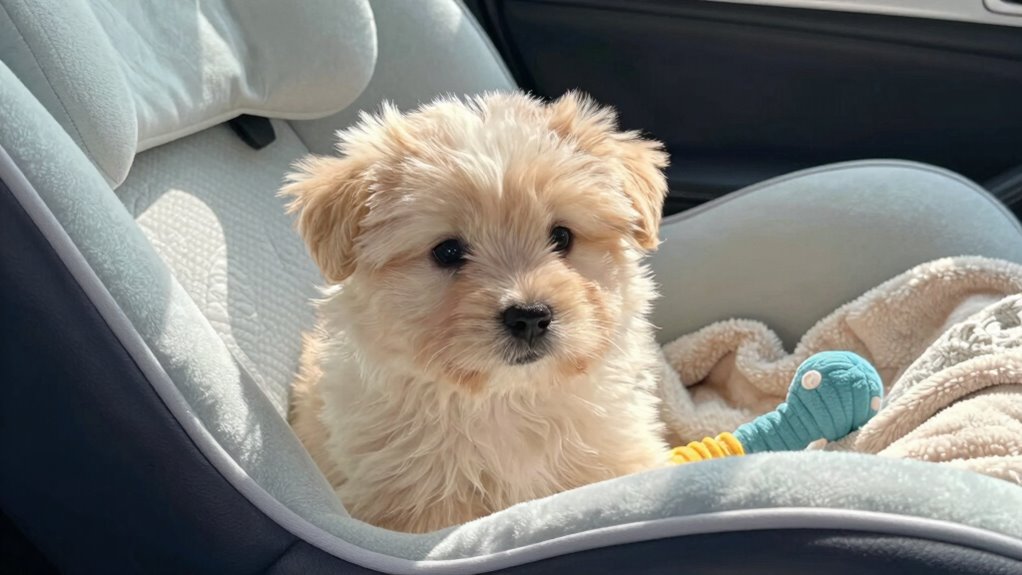
Long car rides can be stressful for puppies, but you can make the experience calmer by preparing ahead. Start with puppy socialization to guarantee your pup is comfortable around different environments and sounds. Bring familiar items like a blanket or toy to provide comfort and reduce anxiety. Follow car safety tips by securing your puppy in a crate or using a harness to prevent injuries during sudden stops. Keep the ride calm with gentle music or white noise, and take regular breaks to stretch and potty. Avoid feeding your puppy right before traveling to prevent nausea. Staying calm yourself helps your puppy stay relaxed. Consistent, positive experiences during longer trips will build their confidence and make future journeys easier.
When Should You Seek Help If Your Puppy Still Fears Car Rides?

If your puppy continues to show persistent fear during car rides, it’s time to pay attention to warning signs like ongoing anxiety or unusual behavior. Watch for physical stress signals such as excessive drooling or trembling, which indicate discomfort. When you notice behavioral changes or these signs don’t improve, seeking professional help can make a big difference in easing your puppy’s fears.
Persistent Fear Indicators
When your puppy continues to show intense fear or distress during car rides despite consistent training, it’s a clear sign that professional help may be needed. Persistent fear indicators include trembling, whining, attempts to escape, or refusal to enter the vehicle. If your puppy’s anxiety persists even after practicing gradual exposure, it might be time to consult a professional. You can also work on building confidence outside the car, like leash training during walks or visits to the dog park, to improve overall comfort. These strategies help reinforce positive associations and reduce general anxiety. Recognizing these persistent fear signs early prevents the problem from escalating and ensures your puppy gets the support needed to enjoy travel without stress.
Physical Stress Signs
Persistent fear can manifest through physical stress signs that indicate your puppy is overwhelmed during car rides. Watch for signs like excessive panting, trembling, drooling, or trying to escape the vehicle. These are clear indicators your puppy is experiencing significant anxiety. If your puppy shows these signs despite gentle reassurance, consider evaluating their grooming routine—sometimes, discomfort from mats or skin issues can add to stress. Also, confirm your car maintenance is up to date; strange noises or rough rides can heighten fear. If these physical stress signs persist or worsen, it’s time to seek help from a professional. Addressing these issues early can prevent long-term anxiety and make future car rides more comfortable for your puppy.
Behavioral Changes Noticed
Even after addressing physical stress signs, you should seek help if your puppy continues to show behavioral changes that indicate fear during car rides. Watch for signs like trembling, vocalizing, hiding, or refusing to enter the vehicle. These puppy behaviors suggest ongoing discomfort and may point to unresolved anxiety triggers. If your puppy seems excessively anxious, avoids the car altogether, or shows signs of distress even after gradual exposure, it’s time to consult a professional. Persistent fear signals that your puppy’s anxiety isn’t improving, and early intervention can prevent long-term issues. Recognizing these behavioral changes is vital, as they often indicate deeper fear responses that require targeted training or behavior modification to make car rides a positive experience.
Frequently Asked Questions
How Young Can I Start Taking My Puppy on Car Rides?
You can start taking your puppy on car rides as early as 8 weeks old, once they’ve had their initial puppy vaccination. Keep rides short and positive, using crate training to create a safe space. Gradually increase the duration, making sure your puppy associates car trips with good experiences. This helps prevent anxiety and builds confidence, ensuring your puppy feels comfortable traveling from a young age.
What Toys or Treats Can Help Soothe My Puppy During Travel?
You can soothe your puppy with calming toys that offer gentle comfort and travel treats that keep them distracted. While soft plush toys or chew toys provide a calming presence, tasty treats like small training bites or flavored chews can redirect their focus. Combining these toys and treats creates a calming rhythm, helping your puppy associate car rides with positive experiences and reducing anxiety during travel.
How Do I Handle Car Sickness That Persists Despite Precautions?
If your puppy’s car sickness persists, try using motion sickness remedies like ginger or special calming supplements. Keep rides short and gradually increase duration to build tolerance. Use calming techniques such as soothing voice, gentle petting, and a comfortable, well-ventilated space. Make sure your puppy is well-hydrated and avoid feeding right before trips. Consistency and patience help your puppy associate car rides with positive experiences, reducing nausea over time.
Can Specific Breeds Be More Prone to Car Anxiety?
Some breeds are more prone to car anxiety due to breed sensitivity and anxiety predisposition. For example, smaller or more nervous breeds like Chihuahuas or Greyhounds often experience heightened anxiety during travel. You should start acclimating your pup early, using positive reinforcement and gradual exposure. Knowing your dog’s breed tendencies helps you tailor your approach, making travel less stressful and more comfortable for your furry friend.
When Is the Best Time to Introduce Longer Trips to My Puppy?
You should introduce longer trips to your puppy after they’ve completed their initial puppy socialization, usually around 8-12 weeks. Start with short, positive rides to build their comfort and trust, gradually increasing duration. During travel, follow safety tips like securing your puppy and providing comfort. This approach helps prevent anxiety from developing and ensures safe, enjoyable experiences, making travel a normal part of their life early on.
Conclusion
By starting your puppy’s car adventures early and making each trip a positive experience, you’re setting the stage for a lifetime of stress-free travels. Imagine a world where car rides are as natural as playtime, with your pup confidently hopping in and out without a single whimper. With patience, positive reinforcement, and these simple tips, you’ll turn car trips from chaos into pure joy—your puppy will thank you with wagging tails and endless adventures!