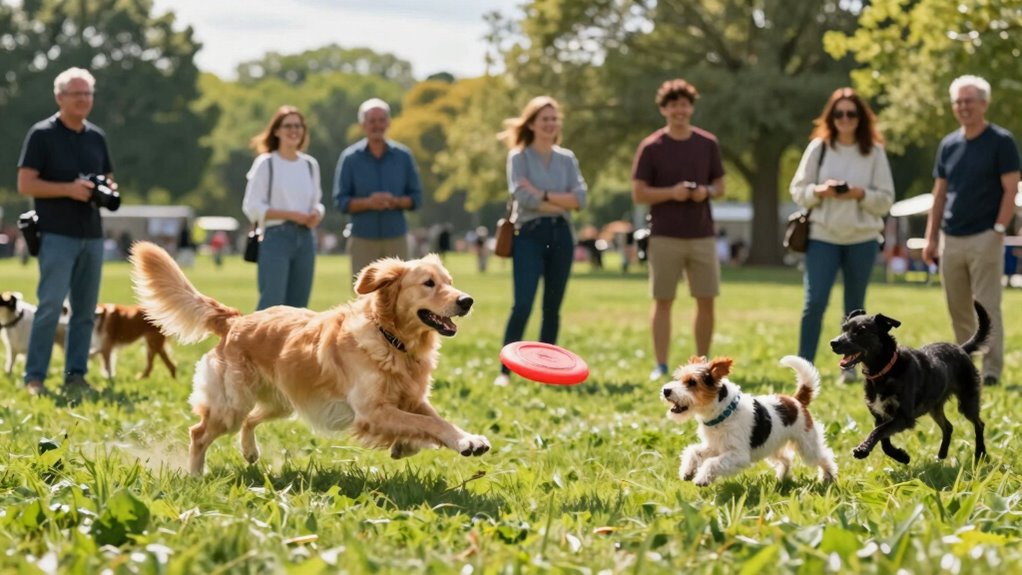

Deciding if a dog park is worth it depends on your dog’s personality, health, and how safe the environment feels. If your dog enjoys socializing, stays calm, and the park is clean, it can be a great way to boost confidence and energy. But if the park is overcrowded, noisy, or dirty, it might cause stress or health issues. To know more about making the best choice, keep exploring how to balance fun and safety.

Get pet supplies delivered free — and shop member deals
- Fast, free delivery on millions of items
- Access to Prime Big Deal Days deals on October 6–7
- Prime Video, Amazon Music and more included
Key Takeaways
- Assess your dog’s comfort level and observe signs of enjoyment or stress during park visits.
- Consider environmental factors like noise, hygiene, and overcrowding to ensure a safe experience.
- Balance socialization benefits against potential health risks such as infections or aggressive behaviors.
- Explore alternative socialization options if the park environment is chaotic or uncomfortable for your dog.
- Make an informed decision based on your dog’s behavior, safety, and overall well-being during park outings.
As an affiliate, we earn on qualifying purchases.
Are Dog Parks Right for Your Dog? Benefits and Drawbacks
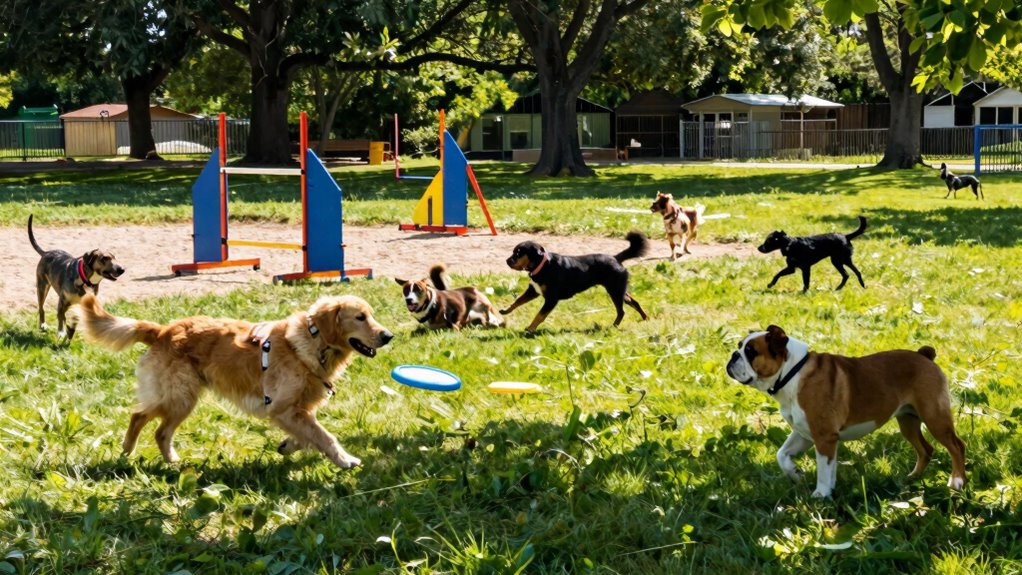
Deciding whether a dog park is right for your furry friend depends on understanding both its benefits and potential drawbacks. Dog parks offer socialization opportunities, exercise, and mental stimulation, which can improve your dog’s overall well-being. However, they also require you to enforce proper dog park etiquette, ensuring your dog behaves and respects others. Leash policies are essential; many parks have strict rules about off-leash play to prevent accidents or conflicts. If your dog is friendly and enjoys interacting with other dogs, a park can be a great outlet. But if your dog is shy, aggressive, or easily overwhelmed, the chaos might be stressful. Weigh these factors carefully to decide if a dog park fits your pet’s personality and your comfort level. Understanding dog park etiquette can help ensure a positive experience for everyone involved. Additionally, being aware of dog behavior can help you better interpret your dog’s reactions and ensure safe interactions. Familiarizing yourself with dog body language can further enhance your ability to read your dog’s mood during social play.
How to Tell if Your Dog Enjoys or Hates the Park
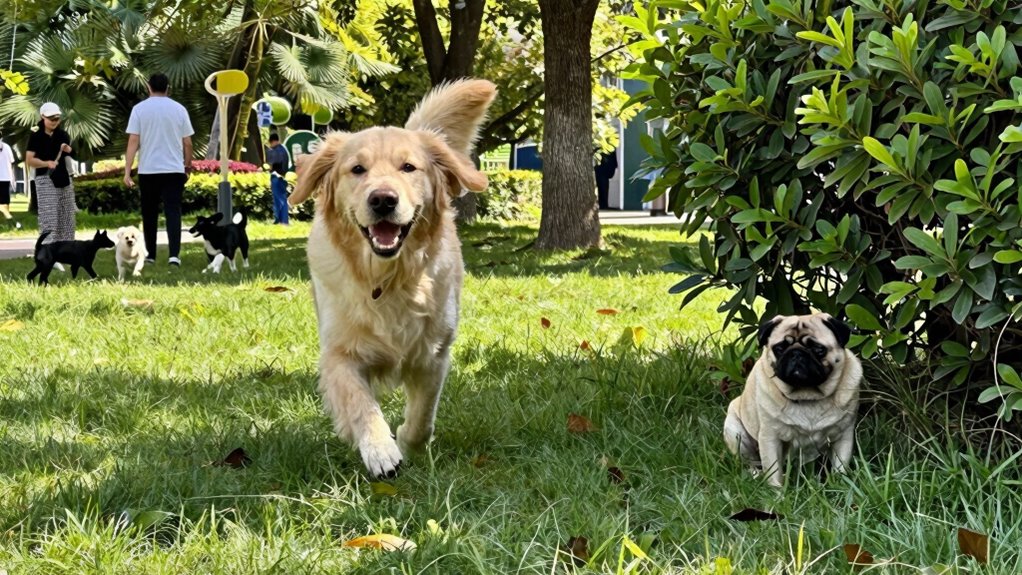
Pay attention to your dog’s body language—are they wagging their tail and approaching playfully, or backing away and showing signs of stress? Notice if they’re engaging in active play or retreating to the sidelines, which can reveal how they feel about the park. Also, listen to their vocalizations; excited barking often indicates enjoyment, while growling or whimpering may signal discomfort. Additionally, observing if your dog exhibits support breakfast behaviors, such as seeking comfort or avoiding interaction, can help determine their overall well-being at the park. Recognizing signs of natural behaviors like sniffing and exploring can further inform you about their comfort level in the environment. Incorporating these observations with an energetic alignment approach can deepen your understanding of your dog’s emotional state.
Body Language Signals
When observing your dog at the park, body language offers clear clues about how they’re feeling. Dog body language is a reliable way to gauge their mood. Pay attention to tail wagging—if it’s loose and high, your dog likely feels happy and relaxed. Conversely, a stiff or low tail can indicate discomfort or stress. Watch for other signals like ear position, with ears back suggesting anxiety, or relaxed ears showing contentment. Body posture also matters: a relaxed stance with open mouth and soft eyes indicates enjoyment, while a tense body, lip licking, or yawning might signal unease. Recognizing these signals helps you understand if your dog is enjoying the park or feeling overwhelmed, guiding your next move to ensure a positive experience. Additionally, observing your dog’s body language signals can reveal subtle cues about their comfort level, especially when they are hesitant or overstimulated.
Play vs. Retreat
Observing how your dog behaves during playtime can reveal whether they’re truly enjoying the park or just tolerating it. Look for signs of a playful interaction—happy tail wagging, engaging body language, and enthusiastic approach. Conversely, retreat behavior, like backing away or seeking shelter, indicates discomfort or dislike. To gauge their feelings, consider these cues:
- Your dog initiates play and maintains energetic, enthusiastic interactions.
- They show relaxed body language during play sessions.
- They occasionally retreat or withdraw from interaction without stress.
- They return to the park after short breaks, signaling comfort or willingness to re-engage.
- Natural behaviors can provide additional insight into your dog’s comfort level in the environment.
These signals help you determine if the park is a positive place or if your dog prefers to keep their distance. Adjust visits based on their reactions to ensure a better experience.
Vocalization Patterns
Vocalizations offer valuable insight into how your dog truly feels during park visits. Pay attention to vocalization patterns, especially barking frequency, to gauge their mood. If your dog barks loudly and constantly, it might be a sign of excitement or anxiety, depending on the context. Occasional, playful barks often indicate happiness, while persistent, high-pitched barking could signal discomfort or overstimulation. Conversely, a dog that remains quiet or only barks softly may feel relaxed or indifferent. Notice if your dog’s vocalizations increase when other dogs approach or during specific interactions. Consistent, excessive barking might suggest your dog isn’t enjoying the experience. Understanding these vocal cues helps you decide if the park is a positive environment or if it’s time to reconsider future visits. Additionally, observing your dog’s vocalization patterns in relation to other factors can provide a clearer picture of their overall experience.
Tips to Make Dog Park Visits Safe, Fun, and Conflict-Free
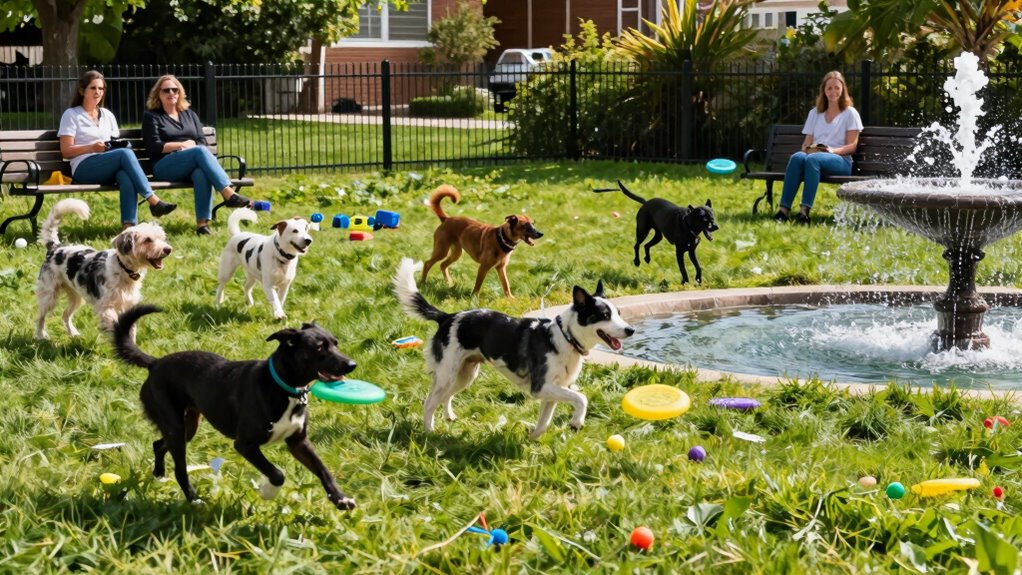
To guarantee your dog’s visits to the park are safe, fun, and conflict-free, start by observing your dog’s behavior and understanding its comfort levels. This helps you gauge when to intervene or give space. Follow dog park etiquette by respecting others’ space and cleaning up after your pet. Adhere to leash laws, keeping your dog on a leash until you’re ready to let it play freely. Here are some tips to ensure a positive experience:
- Watch for signs of stress or overexcitement and remove your dog if needed.
- Introduce your dog gradually to new dogs, observing their interactions.
- Keep an eye on your dog’s body language to prevent conflicts.
- Follow park rules and leash laws to maintain safety and harmony.
- Understanding dog behavior cues can help in assessing your dog’s energy levels and overall health, ensuring they’re fit for park visits. Recognizing socialization skills can also improve your dog’s ability to interact positively with other dogs and owners, and monitoring their reaction to stimuli can prevent overstimulation during visits.
When to Skip the Dog Park and Try Other Activities
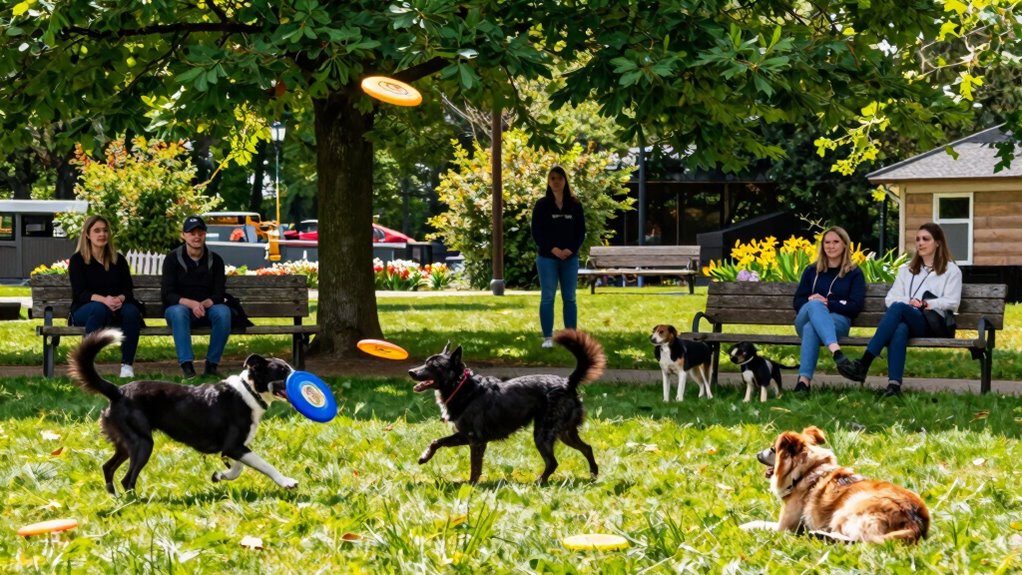
If your dog consistently has poor interactions with others, or if the park becomes too noisy or dirty, it might be time to contemplate other activities. These conditions can stress your dog or compromise hygiene. Exploring alternative options can ensure your pet stays safe, happy, and healthy. Additionally, considering the impact of cookies on your browsing experience can help you manage online privacy while researching suitable activities.
Poor Dog Interactions
Sometimes, despite your best efforts, your dog just doesn’t get along with others at the park. Poor dog interactions can lead to stress and setbacks in your dog’s socialization efforts. If your dog repeatedly shows aggression, fear, or avoidance, it’s a sign to pause and contemplate other activities. Focus on reinforcing leash training and controlled socialization at home or in calmer environments. Incorporating ventilation considerations into your planning can improve comfort and safety during indoor training sessions. Here are some options to consider: 1. Practice leash training indoors or in quiet spaces. 2. Enroll in supervised, small-group dog classes. 3. Engage your dog in one-on-one playdates. 4. Use positive reinforcement to build confidence gradually. Skipping the park temporarily can help your dog develop better social skills without the pressure of a chaotic environment.
Excessive Noise Levels
Excessive noise at the dog park can overwhelm your dog, making socialization more stressful than enjoyable. If your dog has noise sensitivity, constant barking and loud interactions can heighten their anxiety, reducing the benefits of playtime. Pay attention to barking etiquette—if dogs bark nonstop or become overly rowdy, the environment may be too chaotic. When noise levels become intolerable, it’s a sign to skip the dog park and explore quieter activities. Consider taking your dog for a walk in a peaceful area or practicing training exercises at home. These alternatives can help your dog remain calm and comfortable without the overwhelming noise. Recognizing when noise becomes too much ensures you prioritize your dog’s well-being and avoid unnecessary stress. Regularly monitoring noise levels can help you decide when the environment is too overwhelming for your dog. Additionally, understanding socialization techniques can aid in gradually exposing your dog to noisy environments in a controlled manner. Being aware of your dog’s individual comfort thresholds can also guide you in choosing the best activities for their mental health.
Unhygienic Conditions
Unhygienic conditions at the dog park can pose health risks for your dog, making it important to recognize when it’s time to skip the park and try other activities. Sanitary hazards, such as accumulated waste or muddy areas, increase the risk of bacteria spread and infections. If you notice the park is excessively dirty, with foul odors or visible waste, it’s best to avoid potential illness. Consider these signs:
- Persistent bad smells or visible waste
- Muddy, waterlogged areas that trap bacteria
- Overcrowding, making cleaning difficult
- Frequent reports of infections or illnesses in dogs
Additionally, incorporating connected fitness technology like monitoring tools or hygiene alerts can help you stay informed about the cleanliness of the environment. Staying aware of quality assurance practices in public spaces ensures you can make safer choices for your pet.
Furthermore, paying attention to water quality in the park’s water features can prevent exposure to harmful contaminants. When these conditions are present, your dog’s health is better protected by choosing cleaner, safer alternatives. Prioritizing hygiene helps prevent illness and keeps your pup happy and healthy.
Getting Your Dog Ready for a Positive Park Experience
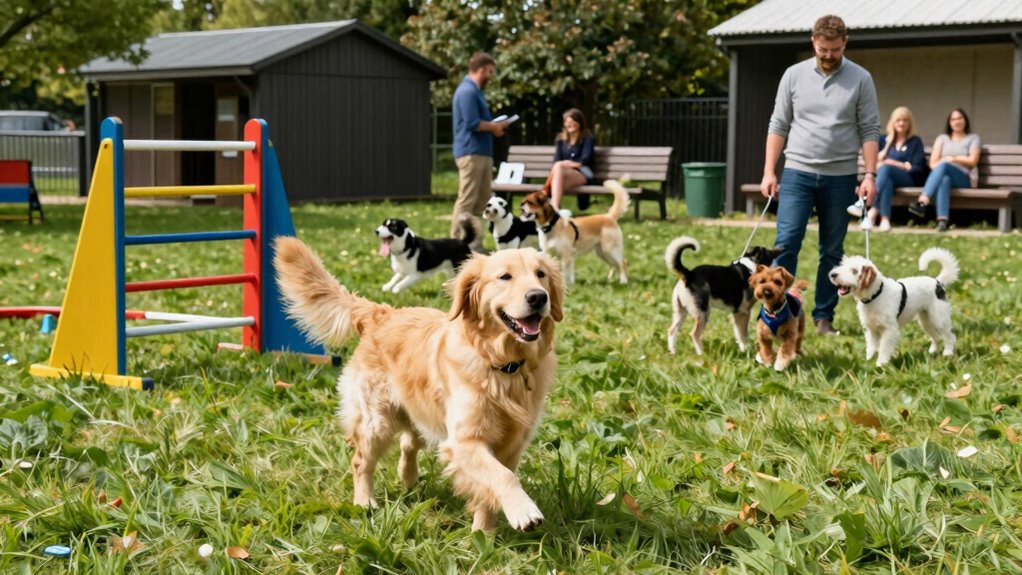
Preparing your dog for a positive park experience starts with making sure they are well-socialized and comfortable around other dogs and people. Providing regular socialization opportunities helps your dog build confidence and reduces anxiety in new environments. Before visiting the park, expose your dog to different dogs, people, and sounds to promote positive interactions. Additionally, a well-exercised dog is more likely to be calm and less prone to hyperactivity or misbehavior at the park. Regular exercise benefits your dog’s physical health and helps burn off excess energy, making park visits more enjoyable for everyone. Gradually introduce your dog to the park environment in controlled settings, so they feel safe and confident when it’s time to explore. Proper preparation ensures a fun, relaxed experience for your furry friend. Incorporating the right vacuum can also help keep your home clean and free of pet hair after outdoor adventures. To further enhance your outings, consider dog park etiquette to ensure a positive experience for all visitors. Understanding youngster choices and how they relate to social behavior can also help you better interpret your dog’s actions and reactions during park visits.
Is the Dog Park Worth It for Your Furry Friend? Making the Decision
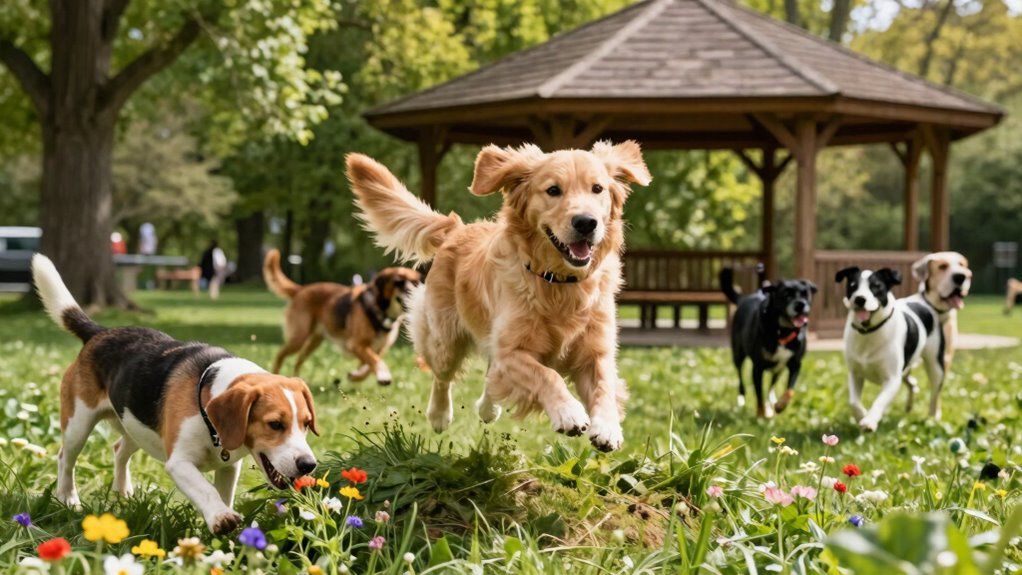
Deciding whether the dog park is worth it depends on your dog’s personality, needs, and your lifestyle. If your dog thrives on socialization benefits, it can be a great way to build confidence and burn energy. However, consider environmental risks like exposure to other animals’ germs or aggressive behaviors. Ask yourself:
- Does your dog enjoy meeting new pups?
- Is your dog comfortable in busy, unpredictable environments?
- Can you supervise interactions to reduce environmental risks?
- Do the benefits of socialization outweigh potential health hazards?
If your dog is friendly and adaptable, a dog park can be a valuable resource. But if your pet is anxious or prone to health issues, weighing these factors carefully will help you make the right choice for your furry friend.
Frequently Asked Questions
How Can I Tell if My Dog Is Ready for a Dog Park?
You can tell your dog’s ready for a dog park if they have solid socialization skills and are comfortable with other dogs. Make sure they’re leash trained and relaxed around new environments. Start with short visits to gauge their behavior, watching for signs of stress or aggression. If your dog responds well to commands and enjoys interactions, they’re likely prepared to handle the social scene at the park.
What Signs Indicate My Dog Dislikes the Park Environment?
You notice your dog’s tail tucks, ears flatten, and they avoid eye contact—clear signs they dislike the park environment. They might withdraw from other dogs, showing socialization challenges, or become visibly stressed. Ignoring these signals risks escalating tension and disrupting dog park etiquette. If your pup seems uncomfortable or anxious, it’s best to respect their feelings, skip the park, and seek alternative ways to build confidence and social skills safely.
Are There Specific Breeds That Do Better at Dog Parks?
Some breeds tend to do better at dog parks, especially those with good breed compatibility and strong socialization skills. For example, retrievers and spaniels usually enjoy socializing, while more reserved breeds might struggle. To help your dog thrive, use socialization tips like gradual introductions and positive reinforcement. Observe their reactions, and if they seem uncomfortable, consider alternative activities. Always prioritize your dog’s comfort and safety at the park.
How Can I Prevent My Dog From Becoming Aggressive at the Park?
To prevent your dog from becoming aggressive at the park, focus on consistent dog training and socialization techniques. Keep a close eye on your dog, and intervene early if you notice signs of aggression. Gradually introduce your dog to other dogs in controlled environments, and reward calm behavior. Building confidence through positive interactions helps reduce aggression, making park visits more enjoyable for everyone involved.
What Are Alternatives if My Dog Isn’t Suited for Dog Park Visits?
If your dog isn’t suited for dog park visits, consider alternatives like structured dog training and socialization techniques. Studies show that 70% of dogs benefit from controlled social interactions. You can enroll in classes, organize playdates, or visit quiet, supervised pet-friendly spots. These options help your dog develop confidence and social skills without the chaos of crowded parks, ensuring safe, positive experiences tailored to your dog’s comfort level.
Conclusion
Ultimately, deciding if the dog park is right for your pup depends on observing their behavior and comfort. For example, if your dog keenly joins playdates and enjoys running freely, it’s worth trying. But if they’re consistently anxious or aggressive, exploring other activities might be better. Trust your instincts and your dog’s reactions to guarantee their happiness and safety. With patience and attention, you can find the best ways to keep your furry friend happy and healthy.
Fall Picks
fall essentials
As an affiliate, we earn on qualifying purchases.