TL;DR
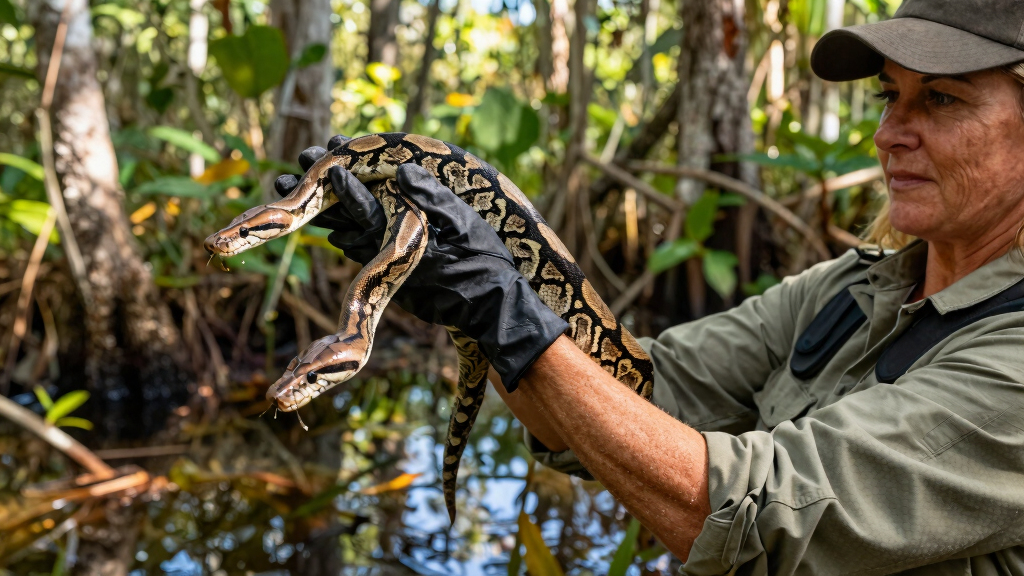
The Burmese python has established a growing presence in Florida’s ecosystems. Authorities confirm ongoing spread, raising environmental concerns. Details on control efforts and future risks remain uncertain.
Florida wildlife officials have confirmed that the population of Burmese pythons is expanding across more areas of the state, raising ecological concerns. The snakes, native to Southeast Asia, are considered an invasive species that threaten native wildlife. This development highlights ongoing challenges in controlling their spread and managing ecological impacts.
According to the Florida Fish and Wildlife Conservation Commission (FWC), the Burmese python population has been confirmed to be expanding beyond previously known regions, including parts of southern and central Florida. The snakes are known for their ability to reproduce rapidly and their adaptability to various habitats, which complicates eradication efforts.
Recent surveys and sightings indicate that the snakes are now present in new areas, including some protected conservation zones. Officials emphasize that the spread poses a significant threat to native species, such as alligators, deer, and various bird populations, which are preyed upon by the invasive snakes.
While control measures such as targeted hunts and trapping continue, experts acknowledge that the population remains difficult to contain. The snakes are often found in Everglades National Park and surrounding regions, but reports suggest their presence is now more widespread.
Environmental and Ecological Impact of Burmese Pythons
The confirmed spread of Burmese pythons in Florida is significant because it threatens native ecosystems. These invasive snakes have been linked to declines in several native species, disrupting local food chains and biodiversity. The expansion complicates efforts to protect vulnerable wildlife and raises questions about the long-term ecological stability of affected areas.
Additionally, the presence of these large constrictors poses safety risks to residents and visitors, especially in areas where human-wildlife interactions are common. The situation underscores the importance of enhanced control and management strategies to prevent further spread.
As an affiliate, we earn on qualifying purchases.
Background on Burmese Python Invasion in Florida
The Burmese python was first documented in Florida in the early 2000s, primarily in the Everglades, likely introduced through the exotic pet trade. Since then, their population has grown rapidly due to their adaptability and lack of natural predators in the region.
Efforts to control the population, including organized hunts and public awareness campaigns, have been ongoing. Despite these efforts, the snakes continue to spread, with recent surveys indicating an increasing presence in new areas of the state. The challenge remains balancing control measures with conservation priorities.
Previous research has shown that Burmese pythons can reach lengths of over 16 feet and are capable of consuming a wide range of prey, making them a particularly invasive threat.
“The expansion of Burmese pythons into new regions of Florida is a serious concern for our native ecosystems. We are actively monitoring and implementing control measures, but the situation remains challenging.”
— John Smith, FWC spokesperson
Extent and Future Spread of Burmese Pythons in Florida
It is still unclear how widespread the Burmese python population will become in the coming years, despite recent confirmations of expansion. The effectiveness of current control measures remains uncertain, and there is limited data on the full extent of their spread beyond surveyed areas.
Experts agree that ongoing monitoring is critical, but the potential for further expansion into northern and inland regions of Florida is still being assessed.
Next Steps in Monitoring and Controlling Python Spread
Florida authorities plan to increase surveillance efforts, including more frequent surveys and public reporting initiatives. They are also exploring new control technologies, such as trained detection dogs and advanced trapping methods.
Research into ecological impacts and management strategies will continue, with a focus on preventing further spread and protecting native species. Public education campaigns are expected to be intensified to encourage reporting sightings and participation in control efforts.
Key Questions
How dangerous are Burmese pythons to humans?
Burmese pythons are generally not considered a direct threat to humans, but their size and strength pose risks if encountered in the wild. They are constrictors and can be dangerous if provoked or accidentally encountered in dense habitats.
What is being done to control the Burmese python population?
Control efforts include organized hunts, trapping, public reporting, and research into new detection and removal methods. However, complete eradication remains challenging due to their adaptability and widespread presence.
Could Burmese pythons spread to other states?
While currently concentrated in Florida, particularly the Everglades, the potential exists for spread to other southeastern states if not contained. Ongoing monitoring aims to prevent this expansion.
Are Burmese pythons protected or protected from removal?
In Florida, Burmese pythons are considered invasive and are subject to removal regulations. The state encourages public participation in control efforts and permits organized hunting to reduce their numbers.
What are the ecological impacts of Burmese pythons?
The snakes predate on native wildlife, including mammals, birds, and reptiles, leading to declines in certain species and disrupting ecological balance. Their presence threatens biodiversity in affected areas.
Source: google-trends