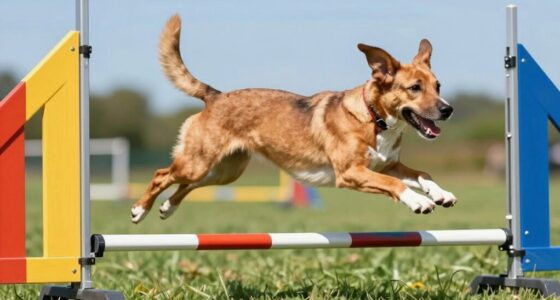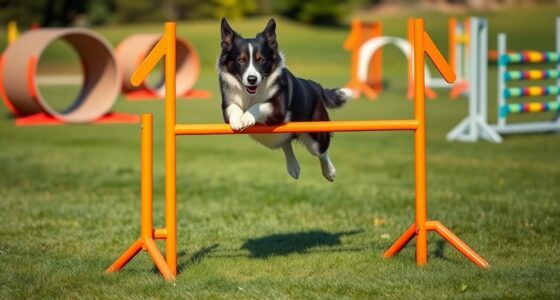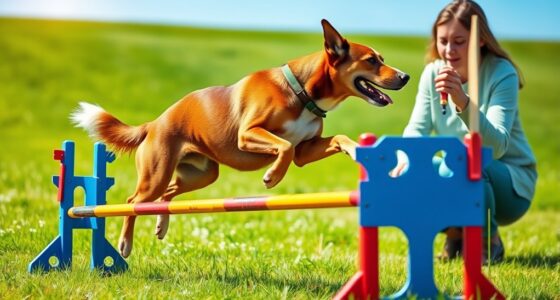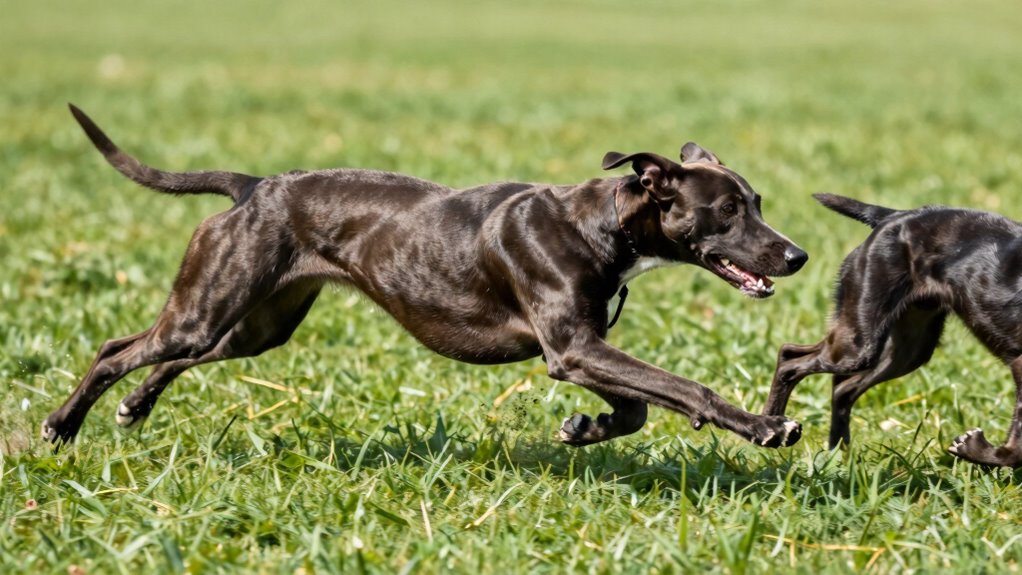

You’ll notice your dog moves differently on grass versus turf because each surface offers distinct traction, cushioning, and stability. Grass can be soft or muddy, which affects footing and can cause slipping, especially in wet conditions, while turf provides a more consistent grip and firmer surface. These differences influence how confidently and quickly your dog can turn, stop, or jump. To learn more about how these surfaces impact your dog’s agility, keep exploring the details below.
Key Takeaways
- Surface variability affects paw traction, influencing dogs’ grip and confidence during quick movements.
- Softer grass provides cushioning, reducing joint stress compared to firmer turf.
- Weather conditions can make grass slippery or muddy, altering movement and safety.
- Turf offers consistent traction but may increase impact stress due to its firmness.
- Environmental factors like temperature impact paw comfort and grip on both surfaces.

Have you ever wondered how playing on grass compares to turf when it comes to agility? When your dog runs, jumps, and pivots, the surface beneath their paws plays an essential role in how smoothly and safely they move. Grass and turf each offer different experiences, especially in terms of paw traction and surface impact. Understanding these differences can help you optimize your dog’s performance and prevent injuries.
On grass, paw traction tends to be more variable. Natural grass can be soft or firm depending on weather conditions and maintenance. When the ground is moist or muddy, your dog’s paws might slip more, making sudden turns or quick stops challenging. Conversely, dry, well-maintained grass provides decent grip, allowing your dog to accelerate and change direction confidently. The surface impact on grass is generally softer because the soil absorbs some of the shock from your dog’s paws hitting the ground. This cushioning reduces stress on their joints and paws, making it a gentler surface overall. However, uneven patches or hidden holes can pose risks, causing your dog to stumble or twist a paw. Additionally, surface variability can make it harder to predict traction, especially in changing weather conditions. Being aware of weather-dependent traction can help you better prepare for outdoor activities. A further consideration is that natural grass may require regular upkeep to maintain consistent safety and performance. Maintaining proper ground conditions is crucial for ensuring your dog’s safety and agility.
Grass provides a softer, variable surface that’s easier on joints but can be unpredictable in traction.
Turf, on the other hand, usually offers more consistent paw traction. Artificial turf is designed to mimic the grip of natural grass, but it often provides a more predictable surface. Your dog can push off more reliably, especially during quick turns or sudden stops, thanks to the stable, rubberized backing. The surface impact on turf is typically higher than on grass because it’s a firmer, more resilient material. While this can be beneficial for speed and agility, it also means your dog’s joints experience more stress, especially if they’re running at high speeds repeatedly. Turf may also get hot in the sun, which can affect paw comfort and traction, so monitoring temperature and providing breaks are essential. Additionally, the surface consistency of turf helps reduce unexpected slips, making it a popular choice for agility training. Proper maintenance and checking for wear can further enhance safety during training sessions. Considering how the surface temperature influences paw health can help you create a safer environment for your dog during outdoor activities.
As an affiliate, we earn on qualifying purchases.
Frequently Asked Questions
How Does Weather Affect Dog Agility on Grass Versus Turf?
Weather variations considerably impact your dog’s agility on grass versus turf, mainly through surface traction. On wet or icy days, grass becomes slippery, reducing traction and making your dog cautious or hesitant. Turf generally offers more consistent traction, but if it’s muddy or wet, it can also become slick. You need to adjust your training and be mindful of these conditions to keep your dog safe and performing at its best.
Are Certain Dog Breeds Better Suited for Turf or Grass Courses?
You’ll find that Border Collies excel on grass due to their breed suitability for natural surfaces and agility. For example, a case study shows they perform better on grass, where their quick turns and stability shine. Surface preferences vary—some breeds like Whippets prefer turf, which offers a consistent, smooth surface. Knowing your dog’s breed and their specific surface preferences helps optimize their agility performance and enjoyment.
What Equipment Differences Are There Between Grass and Turf Agility Courses?
You’ll notice equipment differences between grass and turf courses primarily in surface texture and equipment durability. Turf surfaces are often softer, so you might see more padded or cushioned equipment to prevent injuries, while grass is firmer, making durable, weather-resistant equipment essential. You should select gear designed to withstand moisture and rougher conditions on turf, ensuring safety and longevity, whereas on grass, focus on equipment that maintains stability and grip.
How Does the Age of a Dog Influence Performance on Each Surface?
You’ll notice that age affects your dog’s agility on both grass and turf, with older dogs experiencing age-related agility decline, making them less nimble and more prone to slips. Younger puppies benefit from proper puppy training considerations, helping them build strength and coordination early on. Overall, your dog’s age influences performance, so adapt training and course difficulty accordingly, ensuring safety and enjoyment on both surfaces.
What Are the Long-Term Impacts of Turf Versus Grass on Dog Joints?
Turf can put more stress on your dog’s joints over time due to its surface durability and firmness, potentially leading to joint issues. Grass, being softer and more forgiving, generally promotes better joint health in the long run. If you’re concerned about your dog’s joint well-being, opting for grassy surfaces may reduce impact stress and support healthier joint development, especially during frequent agility training or competitions.
Conclusion
So, next time you watch dogs race across grass or turf, remember it’s no accident. The surface beneath their paws influences every leap and turn, shaping their agility in surprising ways. It’s almost as if nature and design gently conspired—each surface highlighting a different aspect of your dog’s skills. Whether on lush grass or sturdy turf, understanding these subtle differences can help you better appreciate and support your dog’s agility journey.