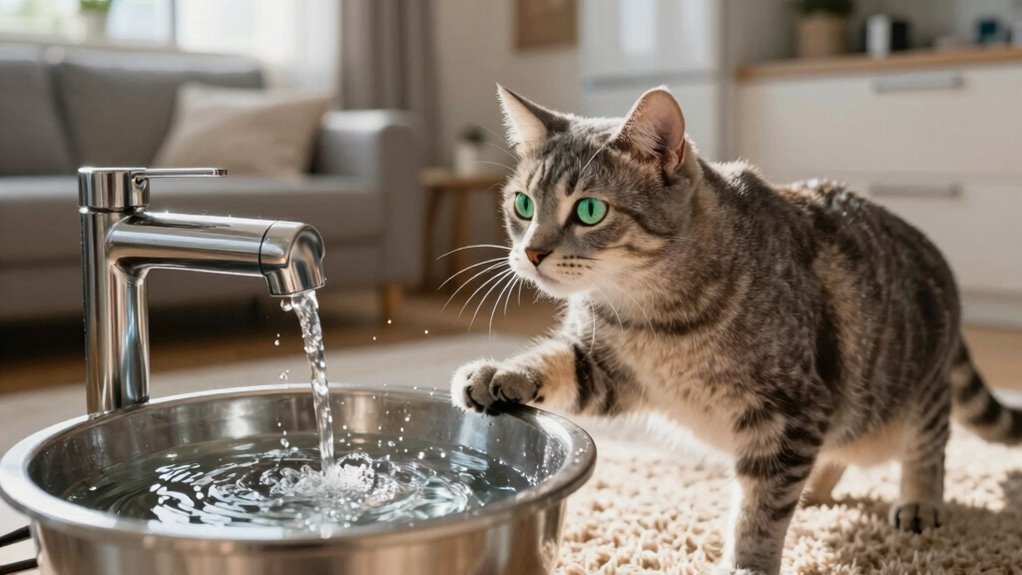

You might notice your cat refuses the fountain in one room but loves it in another because environmental comfort and familiarity play a big role. Noisy appliances, bright reflections, or unfamiliar setups can make your cat nervous and avoid drinking. Past experiences and triggers like loud sounds or stress also influence preferences. Adjusting placement, lighting, or fountain design can encourage use in less favored areas. Keep exploring these factors to better understand what makes your cat feel most comfortable.

Get pet supplies delivered free with Prime
- Fast, free delivery on millions of items
- Prime Video, Amazon Music and more included
- Member-only deals all year
Key Takeaways
- Environmental comfort and familiarity influence a cat’s willingness to approach and use the fountain.
- Noise, lighting, or shadows in a room can spook cats and deter fountain use.
- Past negative experiences or associations in a specific space may cause avoidance.
- Fountain features like flow rate, sound, and height affect individual preferences.
- Gradual acclimation and positive reinforcement encourage fountain acceptance in different rooms.
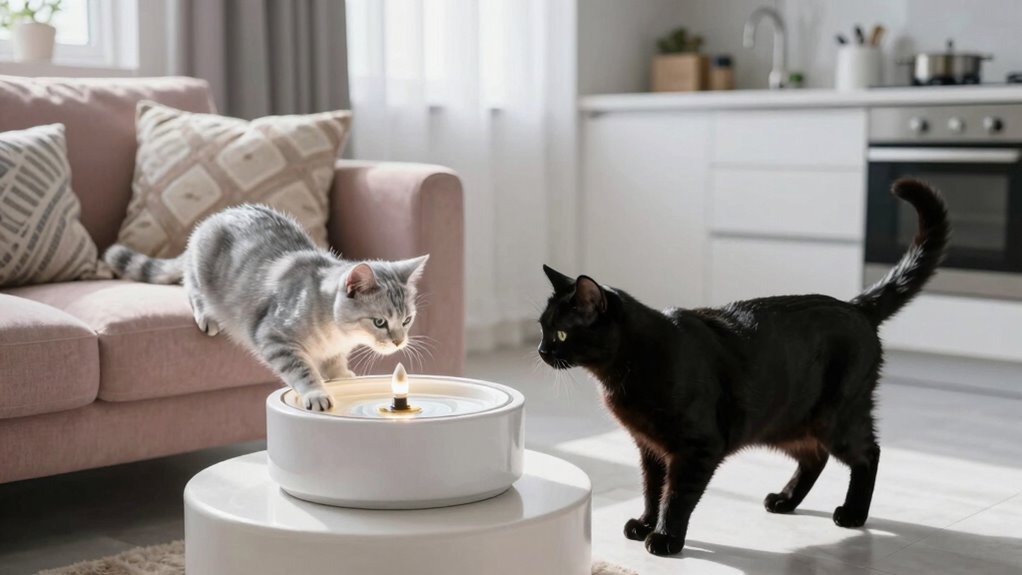
If your cat refuses to drink from a fountain in one room but happily laps it up in another, it might seem puzzling. The reason often lies in behavioral triggers and environmental factors that influence your cat’s comfort and confidence around the fountain. Cats are creatures of habit, and small changes in their surroundings can significantly impact their willingness to approach water sources. For example, if a room feels noisy, chaotic, or unfamiliar, your cat might associate it with stress or danger, making them hesitant to approach the fountain there. Conversely, in a more peaceful, familiar space, they may feel secure enough to drink without hesitation.
Cats’ comfort with their environment greatly influences whether they’ll drink from a fountain.
Environmental factors such as lighting, sounds, and even the placement of the fountain can all play a role. If the fountain is placed near a busy window where sunlight causes reflections or shadows, your cat might get spooked or distracted, avoiding the fountain altogether. Likewise, if the fountain is near a loud appliance or a high-traffic area, the constant noise and movement can trigger their fight-or-flight response, discouraging them from drinking. The texture and height of the fountain can also influence their willingness. Some cats prefer fountains at a certain height or with a particular flow rate, and if they’re not comfortable with the setup in one room, they might avoid it.
Behavioral triggers extend beyond just the physical environment. Your cat’s past experiences, such as an accidental scare or a negative encounter near the fountain, can cause them to associate certain spaces with discomfort. Even subtle cues like a sudden loud noise or the presence of another pet can create anxiety, prompting them to steer clear of the fountain in specific areas. It’s important to observe where your cat feels most at ease and to consider whether certain environmental factors might be unwittingly deterring them from drinking. Additionally, fountains with specific features such as sound or flow rate may influence their preference. Adjustments to the fountain’s design or settings can sometimes make a significant difference in their comfort level. Understanding your cat’s behavioral triggers and environmental influences can help you create a more inviting space, encouraging consistent fountain use and hydration. Sometimes, a gradual acclimation process can help your cat become more comfortable with the fountain in less familiar areas, especially when combined with positive reinforcement.
cat water fountain with adjustable flow rate
As an affiliate, we earn on qualifying purchases.
As an affiliate, we earn on qualifying purchases.
Frequently Asked Questions
Do Cats Prefer Still or Flowing Water in Fountains?
Cats generally prefer flowing water in fountains because it mimics natural water sources, encouraging better hydration habits. They tend to dislike still water, which can become stale quickly. You should guarantee the water temperature is cool or room temperature, as very cold or hot water may deter your cat. Providing a fountain with gentle, steady flow helps meet their natural instincts, making them more likely to drink and stay well-hydrated.
Can the Type of Fountain Influence a Cat’s Acceptance?
Yes, the type of fountain can influence your cat’s acceptance. You notice behavioral cues like hesitation or curiosity, which can be affected by scent preferences. Some cats prefer quiet, ceramic fountains, while others like bubbling, plastic ones. The material and smell may comfort or deter your cat. By observing their reactions and adjusting the fountain type accordingly, you help make certain they feel safe and willing to drink from it.
How Does the Position of the Fountain Affect a Cat’s Willingness to Drink?
About 70% of cats prefer water sources in quiet, undisturbed areas. The position of the fountain greatly influences their willingness to drink because cats are sensitive to their environment. If the fountain is in a noisy or high-traffic spot, they may avoid it. Also, they prefer water temperature that feels natural and safe, respecting feline sensitivities. Placing the fountain in a calm, accessible spot encourages more consistent hydration.
Do Cats’ Personalities Determine Their Fountain Preferences?
Yes, your cat’s personality influences their fountain preferences. Behavioral traits like curiosity, independence, or caution shape how they react to new setups. Environmental factors, such as noise levels or the fountain’s location, also play a role. A confident cat might explore and enjoy fountains more readily, while a shy one could be wary. Understanding these traits helps you create a comfortable environment that encourages your cat to drink more happily.
Can Changes in Household Routines Impact a Cat’s Fountain Acceptance?
You might be surprised, but yes—changes in household routines can influence your cat’s fountain acceptance. Ironically, cats thrive on environmental stability, yet sudden shifts in routine or setting can make them wary of familiar water sources. When household routines fluctuate, your cat might feel insecure, affecting how they interact with their fountain. Maintaining consistency helps your feline feel safe, encouraging them to enjoy their water, regardless of room changes.
Conclusion
So, next time your feline friend turns their nose up at the fountain in one room but laps it up in another, remember it’s like a mysterious dance of comfort and curiosity. Cats are delicate explorers, guided by scent, space, and mood. Just like a secret garden, their preferences shift with the breeze of their feelings. With patience and understanding, you’ll help them find their perfect water spot—turning the current of their preferences into a gentle stream.
Fall Picks
fall essentials
As an affiliate, we earn on qualifying purchases.