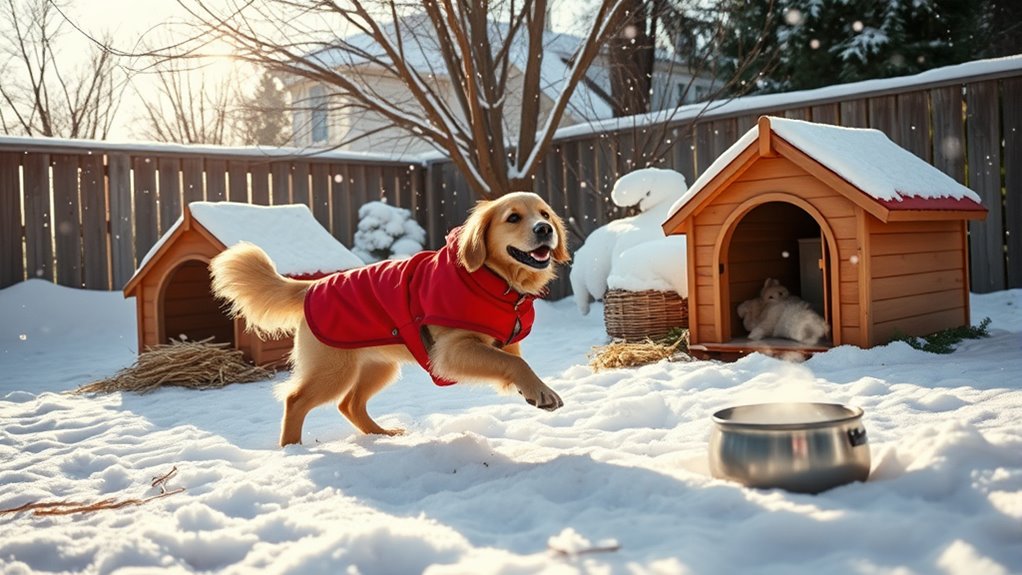

In winter, dogs can suffer from the cold just like you do. Watch for signs like shivering, hunched postures, or reluctance to go outside. Keep them warm with cozy beds and doggy sweaters, especially for short-haired breeds. Limit outdoor time when temperatures drop below 20°F. Make sure to protect their paws and provide warm meals to maintain body heat. If you’re looking for more tips to keep your pup safe this winter, there’s plenty more to explore.
Key Takeaways
- Provide warm bedding and heated blankets to keep your dog comfortable during cold nights.
- Dress short-haired or small breed dogs in coats or sweaters when going outside.
- Limit outdoor exposure to less than 30 minutes when temperatures drop below 20°F (-7°C).
- Monitor for signs of cold discomfort, such as shivering or reluctance to walk, and bring them indoors immediately.
- Keep emergency supplies ready, including food and water, and include pets in evacuation plans.
As an affiliate, we earn on qualifying purchases.
Understanding Cold Impact on Dogs

When temperatures drop, it’s essential to understand how cold impacts your dog. Dogs feel cold similarly to us, but their fur often isn’t enough for prolonged exposure to cold temperatures, especially below 20°F (-7°C).
Short-haired dogs and older pets need extra care, as they’re more vulnerable to frostbite and hypothermia. Pay close attention to their ears, tails, and paw pads, which are particularly susceptible.
Signs of hypothermia include shivering, lethargy, and a refusal to walk. Keeping pets warm becomes vital in these conditions.
As a pet owner, you must prioritize cold weather safety to maintain your dog’s body temperature and overall health. Always monitor your dog closely as temperatures drop, especially when it’s 40°F (4°C) or lower.
Signs of Cold Discomfort
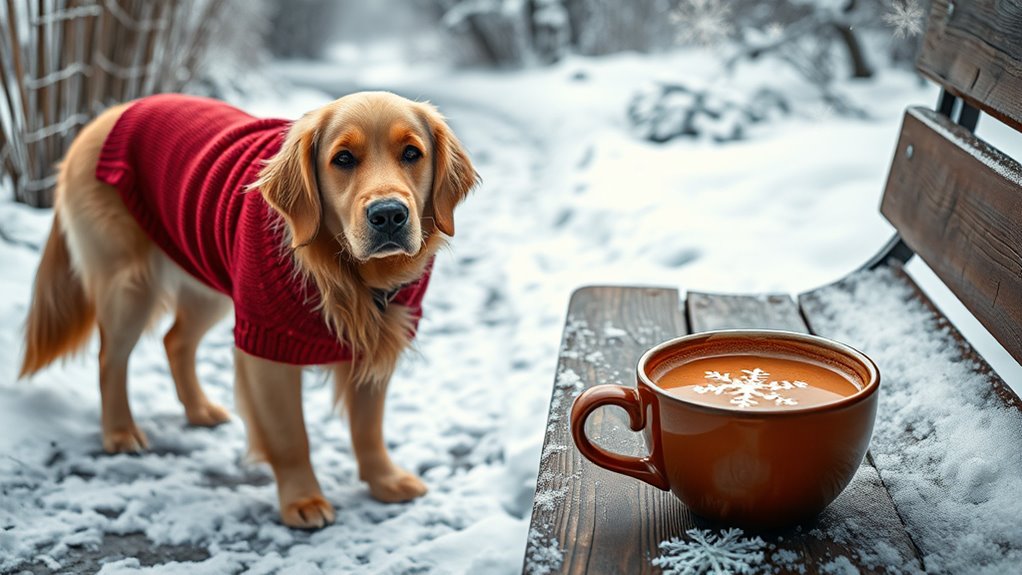
As temperatures drop, it’s crucial to recognize the signs of cold discomfort in your dog. Look for shivering or trembling, which indicates they’re feeling cold and may need to come indoors.
You might notice your dog holding their feet up or adopting a hunched posture—both signs of discomfort in cold weather. Behavioral changes like whining, confusion, or lethargy can also signal distress.
If your dog refuses to walk or seems reluctant to go outside, take that seriously. More severe signs, such as weakness, muscle stiffness, and loss of consciousness, could indicate hypothermia and require immediate veterinary attention.
Always remember to keep your dog warm and follow safety tips during outdoor time in wintery conditions.
Keeping Dogs Warm in Winter
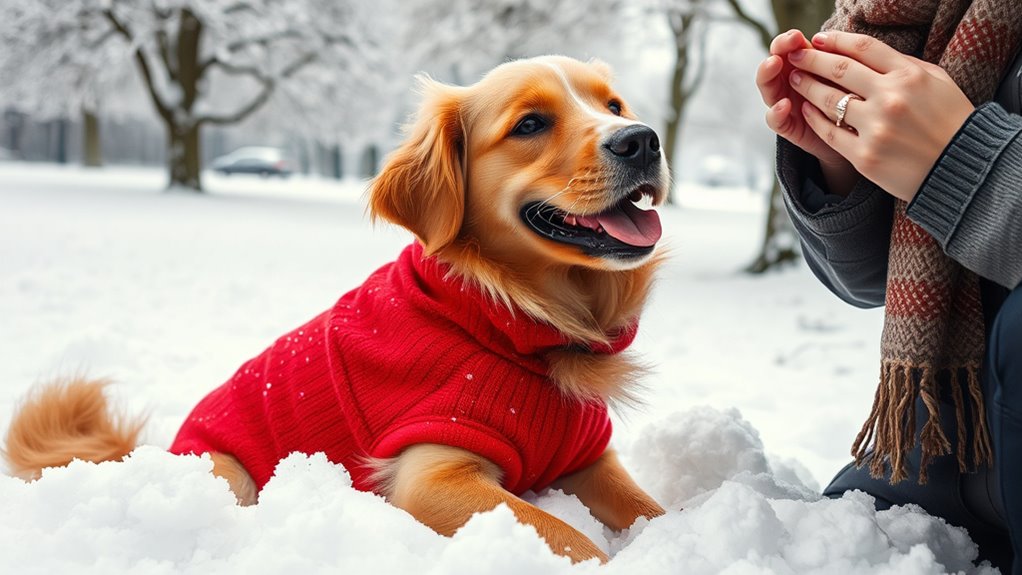
To keep your dog warm during the winter months, it’s essential to create a cozy environment that protects them from the chill.
Provide warm beds or heated blankets to guarantee your pets stay comfortable during cold nights. If you have short-haired or small breed dogs, dressing them in a coat or sweater when outside can help protect their body heat from winter weather.
Remember to limit outdoor exposure for all dogs when temperatures drop below 20°F (-7°C). Supervise their activities closely; if you notice signs of cold discomfort, like shivering or reluctance to walk, bring them inside immediately.
Offering warm water and heated meals will also help maintain your dog’s body temperature and overall safety during these frigid months.
Outdoor Safety Considerations and Duration of Outdoor Exposure

While enjoying outdoor activities with your dog in winter, it’s important to take into account their safety and comfort.
Keep your dog’s safety and comfort in mind when enjoying winter outdoor activities together.
Here are some key safety tips to keep in mind:
- Monitor your pet’s time outdoors—small or thin-coated dogs need close supervision as temperatures drop, especially below 40°F.
- Watch for signs of discomfort—if you feel cold, it’s likely your dog does too. Bring them inside if temperatures dip below 20°F.
- Protect their paws from snow and ice—consider using dog booties to prevent frostbite and irritation.
Emergency Preparedness and Seeking Shelter for Pets
When emergencies arise, having a solid plan that includes your pets is vital for their safety and well-being. You should guarantee you have enough supplies for at least five days, including food, water, and medications. Always evacuate with your pets; never leave them behind, as many shelters may not accommodate animals. Keep contact information for local shelters, veterinarians, and emergency services handy. Regularly review your emergency plan, considering your pets’ specific needs. If your dog shows signs of distress in cold temperatures, seek warmth immediately and consider temporary boarding options. Here’s a quick reference table to assist with your emergency preparedness:
| Action Item | Details | Resources |
|---|---|---|
| Supplies | Food, water, medications | Local pet stores |
| Evacuation Plan | Include pets in planning | Emergency contacts |
| Temporary Boarding | Local kennels | Vet recommendations |
| Shelters | Verify pet policies | Local shelter contact |
| Plan Review | Update regularly | Personal checklist |
Frequently Asked Questions
At What Temperature Is It Too Cold for Dogs?
When temperatures drop below 45°F (7°C), your dog might start feeling chilly, especially smaller breeds.
If it’s between 32°F and 45°F (0°C to 7°C), limit outdoor time for smaller and senior dogs.
Once it hits 20°F to 32°F (-7°C to 0°C), all dogs face risks of cold-related issues, so consider protective gear.
At temperatures below 20°F (-7°C), minimize outdoor exposure to avoid frostbite and hypothermia, regardless of your dog’s breed or size.
How to Keep Dogs Safe in Extreme Cold?
When it comes to extreme cold, remember, “An ounce of prevention is worth a pound of cure.”
To keep your dog safe, limit outdoor time when temperatures drop below 20°F. Provide insulated shelter if they must stay outside and guarantee they’ve fresh, unfrozen water.
Monitor for signs of discomfort like shivering or whining, and invest in winter gear for extra warmth. Always supervise their outdoor play to prevent accidents.
What Can You Put in a Dog House to Keep It Warm in Winter?
To keep your dog house warm in winter, you can insulate it with straw or hay for excellent thermal protection.
Consider adding a heated blanket or a pet-safe heating pad to provide extra warmth.
Elevate the house off the ground to prevent cold and moisture from seeping in.
Use heavy plastic or burlap to block drafts while ensuring proper ventilation, and fit a snug door flap to minimize heat loss.
How to Keep Your Pet Warm in Winter?
You’ve experienced that chill in the air that makes you want to curl up under a blanket. Your dog deserves the same comfort!
To keep your pet warm in winter, create a cozy, draft-free sleeping area, ideally off cold floors. If your dog’s short-haired, dress them in a snug sweater and consider booties for their paws.
Limit outdoor time in extreme cold and always offer warm water to keep them hydrated and cozy.
Conclusion
As winter wraps its icy fingers around the world, keeping your dog warm and safe becomes essential. You’re not just a pet owner; you’re a guardian against the chill. By recognizing their signs of discomfort and taking proactive steps, you create a cozy haven for your furry friend. Remember, every moment spent outside should be a joyful romp, not a shiver. So bundle up your pup, and together, embrace the beauty of the winter wonderland with warmth and love.