Automatic feeders can fail unexpectedly due to sensor issues, software glitches, or hardware malfunctions, putting your pet’s nutrition at risk. To prepare, choose a reliable power backup like batteries or a UPS, and set up a manual feeding system with stored supplies and simple tools. Regularly test your backup plan and stay alert for malfunctions. Exploring these strategies will help you keep your pet fed even during outages or device failures.

Get pet supplies delivered free — and shop member deals
- Fast, free delivery on millions of items
- Access to Prime Big Deal Days deals on October 6–7
- Prime Video, Amazon Music and more included
Key Takeaways
- Regularly perform maintenance, software updates, and calibration to prevent malfunctions and ensure reliable operation.
- Prepare a manual backup feeding system with pre-measured food and easy-to-access tools.
- Store sufficient, sealed pet food supplies for several days, rotating stock to maintain freshness.
- Establish and practice a manual feeding routine in case of power outages or device failure.
- Keep emergency resources like non-electrical feeding tools and backup power options (batteries, UPS) ready.
automatic pet feeder backup power supply
As an affiliate, we earn on qualifying purchases.
As an affiliate, we earn on qualifying purchases.
Why Automatic Feeders Fail and How to Recognize the Signs

Automatic feeders can sometimes stop working unexpectedly, leaving your pets hungry or causing inconvenience. Common issues include sensor malfunctions, where the device’s sensors fail to detect food levels or motion, leading to missed feedings. Software glitches are also frequent; bugs or compatibility problems can cause the feeder to freeze, misfire, or refuse to dispense food altogether. Recognizing these signs early helps prevent feeding disruptions. Look for irregular behavior, such as the feeder not responding to commands, inconsistent dispensing, or persistent error messages. If you notice the device isn’t operating smoothly or if it suddenly stops functioning, it’s likely due to sensor malfunctions or software glitches. Regularly checking your feeder and updating its software can help catch these problems before they impact your pet’s feeding schedule. Additionally, understanding automatic feeder components can assist in troubleshooting and maintenance efforts, and being aware of how energy efficiency in devices impacts long-term performance can help prevent failures. Proper maintenance and understanding of device calibration procedures can further reduce the likelihood of malfunctions over time. Being aware of backup power options can also ensure your feeder continues to operate during outages. Incorporating routine maintenance checks into your schedule can significantly improve reliability and longevity of your device.
How to Choose the Right Power Backup for Your Pet Feeder

When relying on automatic feeders, power outages or electrical issues can disrupt their operation just when your pet needs their meal the most. Choosing the right power backup guarantees your pet stays fed. First, consider battery types—alkaline, lithium, or rechargeable—each offers different longevity and reliability. Second, assess the capacity to handle power surges, which can damage electronics; look for surge protection features. Third, evaluate how easy it is to replace or recharge the batteries, especially during emergencies. Fourth, think about backup options like portable power banks or uninterruptible power supplies (UPS) for continuous operation. Additionally, understanding power management options can help optimize backup performance during outages. Being aware of electrical safety considerations ensures your backup setup is both reliable and safe. Furthermore, selecting a backup solution with compatibility in mind ensures seamless integration with your existing feeder system. By understanding these factors, you’ll select a backup that keeps your pet fed without interruption, even during power fluctuations or outages.
Setting Up a Reliable Manual Backup Feeding System

To guarantee your pet’s feeding schedule remains uninterrupted during power outages or technical failures, setting up a reliable manual backup feeding system is essential. Keep a supply of pre-measured pet food in an accessible container, and store a simple scoop or measuring device nearby to ensure accurate portions. Establish a clear routine for manually feeding your pet if the automatic system fails, and practice this process periodically to build confidence. This backup helps maintain your pet’s consistent pet nutrition, preventing missed meals or overfeeding. Keep detailed records of feeding times and portions during manual feedings, so you can easily resume the automated schedule once the system is restored. Understanding your dog’s dietary needs can help you tailor the backup feeding plan more effectively, ensuring nutritional balance is maintained even during disruptions. Regularly reviewing your feeding schedule can help identify any gaps or adjustments needed in your backup plan. Familiarizing yourself with pet health indicators can help you spot potential issues early and adapt your backup plan accordingly. A reliable manual plan offers peace of mind and safeguards your pet’s health during unexpected disruptions. Additionally, knowing how to identify signs of nutritional deficiencies can help you adjust the backup plan accordingly. Being aware of data integrity principles can also help you ensure that your feeding records are accurate and reliable for future reference.
Using Smart Alerts and Monitoring to Catch Feeding Problems Early

Smart alerts and monitoring systems are essential tools for catching feeding problems early before they impact your pet’s health. These systems notify you of issues like low food levels or mechanical jams, allowing prompt action. To maximize effectiveness, consider these steps:
- Regularly check sensor calibration to ensure accurate readings.
- Keep your software updated for new features and security improvements.
- Set thresholds for alerts to avoid false alarms or missed signals.
- Monitor feed levels remotely to catch problems before your pet runs out of food.
- Integrate modern technology to enable seamless synchronization with other smart home devices. Additionally, understanding media literacy helps you interpret system notifications accurately and avoid unnecessary panic over false alarms. Staying informed about technology trends can further enhance your ability to troubleshoot and optimize your feeding system. Developing a backup plan ensures your pet’s feeding routine remains uninterrupted even if the primary system fails.
Maintaining and Testing Your Backup Systems for Peace of Mind

Regular maintenance and testing of your backup feeding systems are essential to guarantee they function reliably when needed. Start by inspecting sensors regularly to ensure sensor maintenance keeps them clean and responsive. A faulty sensor can disrupt the feed schedule, so verify that your sensors detect food levels accurately. Test your backup system periodically by running a full cycle to confirm it dispenses the correct amount of food and operates smoothly. Additionally, incorporating sensor calibration into your maintenance routine can help maintain accuracy over time. Keep detailed logs of maintenance and test results to track performance over time. Confirm your feed schedule remains consistent and adjust as necessary to match your pet’s changing needs. Incorporating holistic SEO strategies can also help ensure your system’s instructions and documentation are easily discoverable and clear. Regular servicing of your system, including sound vibration testing, can help identify subtle issues before they become major problems. Implementing preventive maintenance routines further reduces the risk of unexpected failures. Routine system audits can help identify potential weaknesses early. Regular servicing of your backup system minimizes surprises during emergencies, giving you peace of mind that your pet stays fed, no matter what happens.
Tips to Keep Your Pets Fed During Power Outages
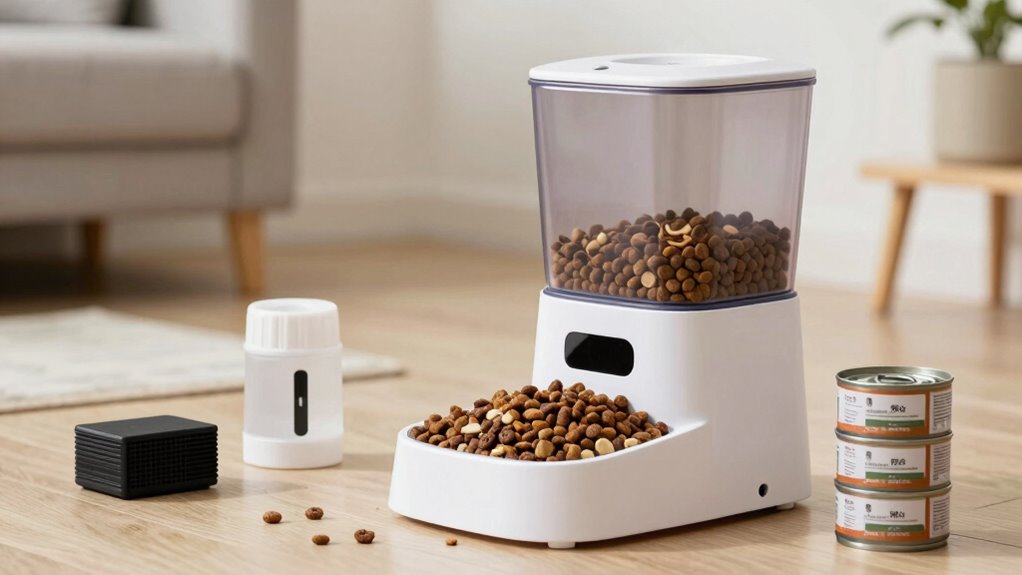
Power outages can interrupt your pet’s feeding schedule, but with some preparation, you can make certain they stay nourished. To keep your pet fed during outages, consider these tips:
- Store enough pet food in sealed, easily accessible containers to last several days.
- Rotate your pet food storage regularly to ensure freshness and prevent spoilage.
- Maintain a manual or emergency feeding schedule that doesn’t rely on electrical devices.
- Keep extra supplies like canned food or treats on hand for quick feeding if needed.
- Familiarize yourself with natural feeding techniques that can be useful when electrical appliances are unavailable. These methods often involve using non-electrical tools and techniques that can be employed in various situations, especially when understanding food preservation methods can help extend the usability of stored pet food. Additionally, knowing how to properly store and handle pet food can further ensure its safety during extended outages.
Frequently Asked Questions
How Often Should I Test My Backup Feeding System?
You should test your backup feeding system at least once a month to guarantee it’s reliable. Incorporate emergency drills into your routine, simulating real scenarios to identify potential issues. Adjust your feeding schedule based on these tests, making sure your backup system activates smoothly when needed. Regular testing keeps your backup plan ready, giving you peace of mind knowing your pets won’t go hungry if the automatic feeder fails.
What Are Common Signs of Automatic Feeder Malfunctions?
You’ll notice common signs of automatic feeder malfunctions when your feeding schedule isn’t being met, such as inconsistent or skipped feedings. Equipment maintenance is key—if you see jams, unusual noises, or blockages, these indicate issues. Regularly check your feeder to catch problems early, ensuring it operates smoothly and keeps your animals fed on time. Staying vigilant helps prevent unexpected failures and keeps your backup plan ready.
Can Manual Backups Fully Replace Automatic Feeders?
Think of manual backups as a sturdy lifeboat amid a stormy sea, but they can’t fully replace the automatic feeder’s steady stream. While manual feeding provides a reliable backup system during failures, it’s labor-intensive and less consistent. You can’t rely solely on it for long-term, hands-free operation. Instead, use manual backups as a safety net, knowing they complement the automatic system but don’t replace its convenience and efficiency.
What Is the Best Way to Store Backup Food Supplies?
The best way to store backup food supplies is to follow proper storage tips to maximize shelf life. Keep dried and canned goods in a cool, dark, and dry place, guaranteeing airtight containers prevent spoilage. Rotate stock regularly to maintain freshness, and label items with purchase dates. Proper storage not only extends food shelf life but also ensures you have reliable backup supplies when needed, giving you peace of mind during emergencies.
How Do I Train My Pet to Accept Manual Feedings?
To train your pet to accept manual feedings, use positive reinforcement and consistent training techniques. Start by offering small portions by hand, rewarding your pet with praise or treats when they accept it calmly. Gradually increase the amount and time between feedings. Be patient, stay consistent, and always reward calm behavior. Over time, your pet will associate manual feedings with positive experiences, making the process smoother and less stressful.
Conclusion
Think of your pet’s feeding routine as tending a garden—you need a backup plan to weather storms. By choosing the right power sources, setting up manual backups, and staying vigilant with alerts, you become the gardener who keeps every plant thriving, rain or shine. With these steps, you’ll guarantee your furry friend is always well-fed, no matter what surprises come your way. After all, a happy pet is the harvest of good planning.
Halloween Picks
halloween
As an affiliate, we earn on qualifying purchases.