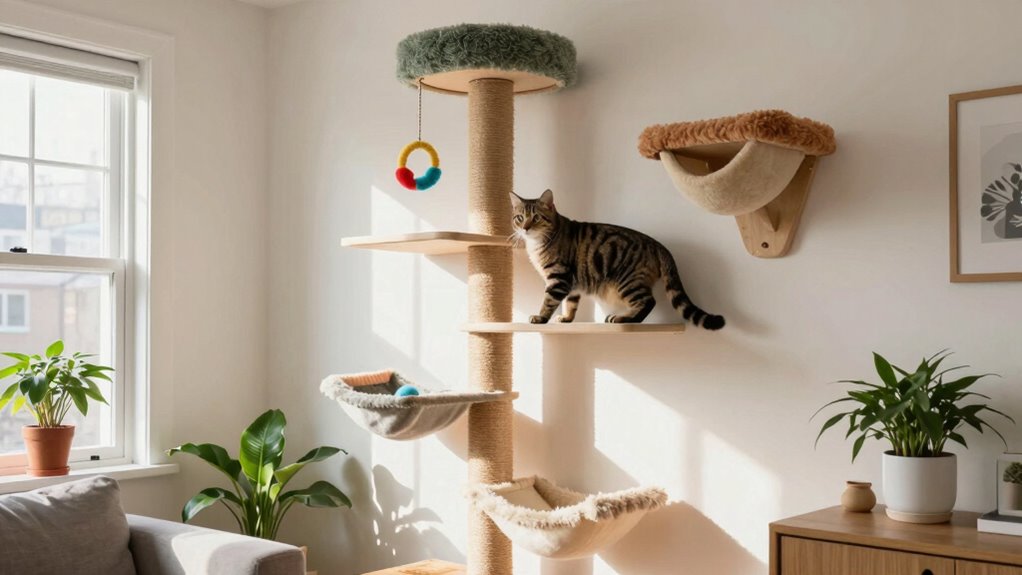

To create a vertical route for your cat, install sturdy shelves and perches at various heights, ensuring they’re slip-resistant and securely fastened. Add engaging toys like hanging items, puzzle feeders, or laser pointers along the route to encourage movement and play. Incorporate cozy resting spots and feeding stations at different heights for added stimulation. Always check that all structures are stable and safe, and use soft surfaces for comfort. Keep exploring to discover more tips for a fun, safe environment.
Key Takeaways
- Identify and secure sturdy, slip-resistant spots for shelves, perches, and cat trees at various heights for climbing and resting.
- Incorporate interactive toys, puzzle feeders, and hanging items at different levels to stimulate play and exploration.
- Install wall-mounted feeding stations and treat dispensers to encourage movement and natural hunting behaviors.
- Ensure all structures are stable, padded, and free of sharp edges for safety and comfort.
- Use natural, environmentally friendly materials and secure fastenings to create a safe, engaging vertical environment.
Creating a vertical route for your cat at home provides a stimulating and safe way for them to explore and exercise. Cats love to climb and perch, and designing a vertical route taps into their natural instincts, helping them stay active and engaged. To start, identify key spots in your home where you can add shelves, perches, or cat trees that are sturdy enough to support their weight. Positioning these at various heights encourages your cat to jump, climb, and explore, which is great for both their physical health and mental stimulation. When installing these routes, make sure the surfaces are slip-resistant and the brackets are securely anchored to prevent accidents.
Creating a vertical route boosts your cat’s activity and engagement safely at home.
Adding interactive toys along the route makes the experience even more engaging. Small hanging toys, puzzle feeders, or laser pointers can motivate your cat to move along the route, turning climbing into playtime. Interactive toys not only keep your feline friend entertained but also provide mental stimulation, preventing boredom and destructive behaviors. Place toys at different levels to encourage your cat to explore all parts of their vertical environment. You might also consider incorporating cozy spots or window perches along the route, giving your cat spots to rest and observe their surroundings.
Feeding stations integrated into the vertical route serve as both a fun challenge and a way to make meal times more stimulating. Instead of leaving food bowls on the floor, install wall-mounted feeding stations at various heights—this encourages your cat to climb and reach, making eating a playful activity. Puzzle feeders or treat-dispensing toys mounted on shelves or wall mounts can turn feeding into an interactive experience, promoting natural hunting behaviors. Be sure to position these stations at accessible heights to prevent frustration but high enough to keep your cat engaged and moving.
Finally, think about safety and comfort as you design your vertical route. Use soft, padded surfaces or carpets on shelves and perches to prevent slipping and provide cushioning. Regularly check the stability of all installations, and avoid overloading shelves with too many items. Additionally, incorporating biodiversity-friendly materials and designs can help create a healthier environment for your pet and the surrounding ecosystem. It’s also beneficial to consider the safety of all climbing structures and accessories, ensuring they are free of sharp edges and securely fastened to prevent accidents. Incorporating natural elements and environmentally conscious materials into your design can also help enrich your cat’s environment and support their well-being. Creating a well-planned vertical route with the right combination of climbing structures, interactive toys, and feeding stations offers your cat a stimulating environment that satisfies their curiosity and instincts. A thoughtful approach to cat-proofing your setup will ensure a safe and enjoyable experience for your feline friend. With some effort and creativity, you turn your home into a dynamic space where your feline friend can thrive and stay happily active.
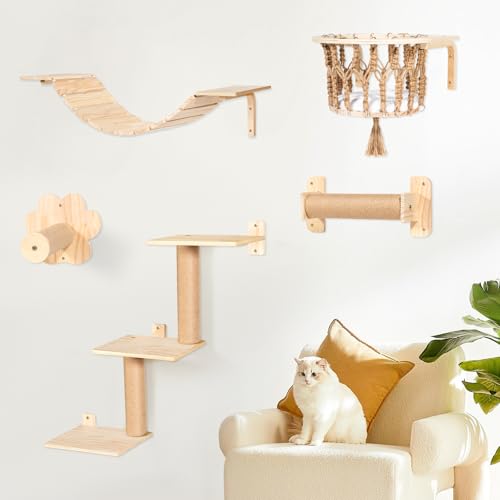
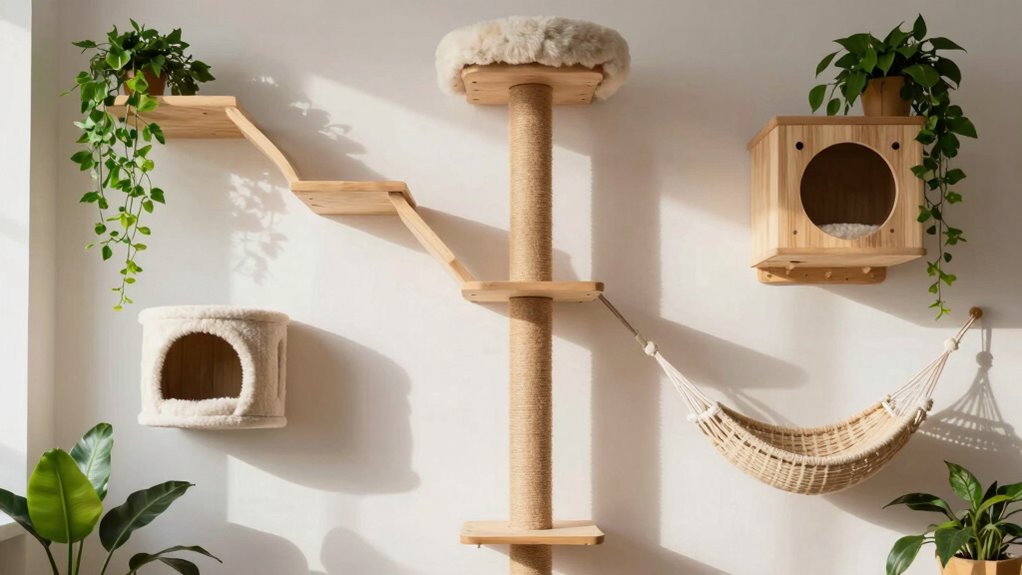
TAKEKIT Cat Wall Shelves and Perches, Wall Mounted Cat Furniture with Hammock, Bridge, Tree, Steps and Scratching Posts, Wooden Climbing System for Indoor Large Cats and Kittens
- Create a Vertical Cat Playground: Includes steps, hammock, bridge, and tree
- Multi-Functional Cat Furniture: Provides scratching, resting, climbing, and observing areas
- Promotes Healthy Exercise and Play: Encourages jumping, exploring, and scratching activities
As an affiliate, we earn on qualifying purchases.
As an affiliate, we earn on qualifying purchases.
Frequently Asked Questions
What Materials Are Safest for Cat Climbing Routes?
You should choose non-toxic materials to guarantee cat climbing safety. Opt for natural wood or sisal-covered posts, as these are safe and durable. Avoid treated woods, plastics, or toxic paints, which can harm your cat. Use soft, secure padding or carpeting on surfaces for traction. Always verify that all materials are free from harmful chemicals and safe for your cat’s health, creating a safe, enjoyable vertical route at home.
How Do I Prevent My Cat From Scratching the Route?
Think of your cat’s scratching as a symphony of natural instincts, not mischief. To prevent damage, offer appealing scratching alternatives like sisal posts or textured panels alongside the climbing route. Incorporate cat enrichment by placing toys or treats nearby, guiding your feline’s attention away from the route itself. Consistent redirection and positive reinforcement teach your cat that these new spots are just as satisfying, turning scratching into a healthy, fulfilling habit.
How High Should Each Platform Be Spaced?
You should space each platform about 12 to 18 inches apart, considering your cat’s climbing preferences and size. Cats enjoy a variety of heights for different activities, from lounging to perching. Observe your cat’s behavior to see if they prefer closer platforms or more space to jump. Proper spacing encourages safe exploration, keeps your cat engaged, and helps prevent accidents or injuries during climbing.
Can I Use Existing Furniture for the Route?
Absolutely, you can transform your existing furniture into a feline paradise. Think of furniture repurposing as giving your space a new lease on life, turning sofas and shelves into a cat’s jungle gym. It’s a clever way to optimize your space, creating vertical paths without clutter. Just make certain the furniture is sturdy and accessible, so your kitty can climb, explore, and play safely, turning your home into a feline playground.
How Do I Encourage My Cat to Use the Route?
To encourage your cat to use the route, engage in playful interactions nearby to pique their curiosity. Use toys or treats to lure them onto the route, making it an exciting experience. Incorporate scent marking by rubbing familiar scents along the route, which helps your cat feel safe and comfortable. Consistent positive reinforcement and patience will gradually build your cat’s confidence, making them more likely to explore and enjoy their new vertical space.
Conclusion
Creating a vertical route for your cat transforms your home into a jungle gym of adventure, turning everyday spaces into a playground of exploration and comfort. With a little effort, you’ll see your feline friend thrive, feeling safe and stimulated as they climb and perch like royalty. Remember, this isn’t just about furniture; it’s about nurturing your cat’s natural instincts and strengthening your bond. Watch your home blossom into a haven where both of you can flourish, side by side.