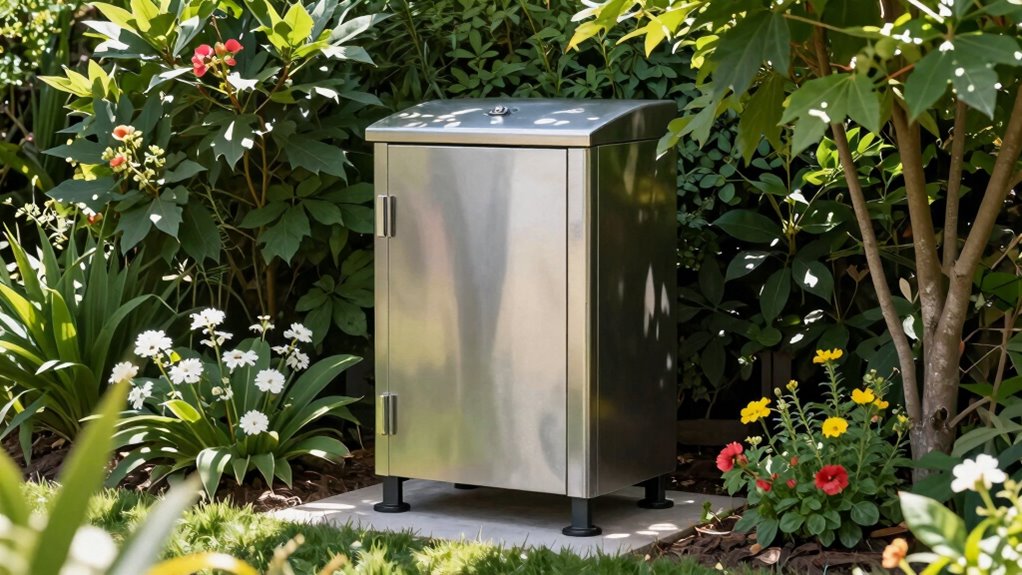

To cut odors fast, place your backyard waste station in a shaded, well-drained spot away from your home, windows, and outdoor living areas. Choose a location that’s easy to monitor for moisture and aeration, which helps control smells and pests. Cover compost bins tightly and add browns like leaves or shredded paper on top of food scraps. Keep pest prevention tips in mind, and you’ll see odors diminish quickly—learn more to optimize your setup.

Get pet supplies delivered free with Prime
- Fast, free delivery on millions of items
- Prime Video, Amazon Music and more included
- Member-only deals all year
Key Takeaways
- Place waste stations in shaded, well-drained areas to slow decomposition and reduce odors.
- Position compost bins away from windows and outdoor living spaces to minimize smell impact.
- Ensure proper aeration and moisture control to prevent foul odors and promote faster composting.
- Cover compost with lids and add browns to trap odors and discourage pests.
- Use natural odor absorbers like charcoal or sawdust and maintain cleanliness for effective smell reduction.

Setting up waste stations in your backyard can considerably simplify waste management and promote eco-friendly practices. When you organize your waste stations thoughtfully, you not only reduce clutter but also make composting easier and more effective. Composting tips become especially valuable here, as they help you turn kitchen scraps and yard waste into nutrient-rich soil, cutting down on trash and supporting your garden. To maximize benefits, choose a spot that’s shaded and well-drained, which slows down odors and discourages pests. Proper placement also makes it easier to monitor moisture levels and aerate the compost, speeding up decomposition and preventing unpleasant smells from lingering.
To prevent pests from turning your waste station into an attractive feast, you need to be proactive. Covering compost bins with a tight-fitting lid or adding a layer of browns—like leaves or shredded paper—on top of food scraps helps keep pests at bay. Avoid placing your compost near your home’s foundation or in areas where children and pets play, as this minimizes the risk of attracting rodents or insects. Regularly turning the compost not only accelerates decomposition but also disrupts pest habitats, making your waste station less appealing to unwelcome critters. Keeping the station clean by rinsing out bins periodically prevents build-up of residues that could attract pests. Additionally, understanding the importance of biodiversity in composting can help you create a healthier and more balanced environment for beneficial organisms that accelerate decomposition.
When setting up your waste stations, think about odor control. Proper placement can make a big difference in how quickly smells dissipate. Positioning your compost away from windows, doors, and outdoor living spaces reduces the chances of odors affecting your home environment. Incorporate composting tips like balancing greens and browns to manage moisture and odor levels. Maintaining proper aeration and moisture prevents anaerobic conditions that cause foul smells. Also, consider using compost activators or natural odor absorbers like sawdust or charcoal to further curb bad smells. Incorporating proper ventilation is essential for maintaining a healthy compost environment and minimizing odors.
As an affiliate, we earn on qualifying purchases.
Frequently Asked Questions
How Often Should I Clean My Backyard Waste Station?
You should clean your backyard waste station at least once a week to prevent odors and maintain hygiene. Regular cleaning helps with landfill alternatives and waste segregation, making sure harmful bacteria don’t build up. If you notice strong smells or pests, clean more often. Use soap and water, and consider adding natural deodorizers. Proper maintenance keeps your waste station smelling fresh and environmentally friendly, supporting healthy backyard practices.
Are There Eco-Friendly Waste Station Options Available?
Think of eco-friendly waste stations as the green heart of your backyard. Yes, eco-friendly options exist, crafted from sustainable materials that minimize environmental impact. You can choose stations made from recycled plastics or biodegradable components, helping your yard stay green and clean. These sustainable choices not only reduce waste but also promote a healthier environment, making your backyard a more eco-conscious haven for you and your family.
What Materials Are Best for Backyard Waste Stations?
You should choose materials that offer durability and fit your aesthetic design. Plastic bins are lightweight, weather-resistant, and easy to clean, making them a practical choice. Metal options, like galvanized steel, provide long-lasting durability and a sleek look, but can corrode over time if not treated. Wood adds a natural aesthetic, but needs regular maintenance. Select materials based on your climate, usage, and preferred style to guarantee your waste station stays functional and attractive.
Can Waste Stations Be Used for Composting?
Yes, waste stations can be used for composting. You’ll find composting benefits, like reducing waste and creating nutrient-rich soil, make it worthwhile. Just guarantee your waste station is designed for composting, with proper aeration and drainage. Regular waste station maintenance is key—turning compost and managing moisture prevents odors and pests. With the right setup, your waste station becomes a sustainable, odor-free composting powerhouse.
How Do I Prevent Pests Around Waste Stations?
To prevent pests around your waste stations, focus on effective pest control and attractants prevention. Always keep the station sealed tightly to block pest entry, and clean it regularly to remove odors that attract pests. Use pest deterrents like natural repellents or traps nearby. Avoid leaving food scraps or waste exposed, and position your station in a well-drained, sunny area to reduce pest attraction and encourage quick drying of any spills.
Conclusion
Now that you know the best spots for your waste station, you’re all set to keep your backyard smelling fresh and tidy. Just remember, a well-placed station can make all the difference—no more “stink” storms ruining your outdoor vibe. Think of it like having your own modern-day alchemist, transforming chaos into cleanliness. With these tips, your backyard will stay delightful, and you’ll be the envy of your neighbors—no need to summon a wizard, just smart placement!
Halloween Picks
halloween
As an affiliate, we earn on qualifying purchases.