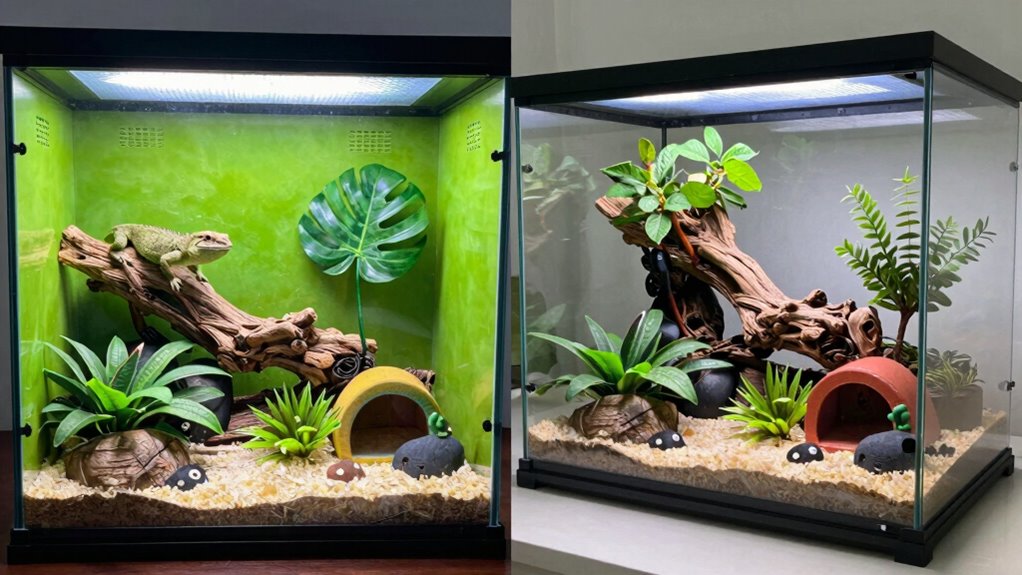
Choosing between PVC and glass reptile enclosures depends on your pet’s needs. PVC is lightweight, durable, and insulates well, making it great for species sensitive to temperature fluctuations. Glass offers excellent visibility and a more natural feel but can be fragile and cause glare. Consider your reptile’s activity level, habitat requirements, and your maintenance preferences. Keep exploring to find the best match for your pet’s comfort and well-being.

Get pet supplies delivered free — and shop member deals
- Fast, free delivery on millions of items
- Access to Prime Big Deal Days deals on October 6–7
- Prime Video, Amazon Music and more included
Key Takeaways
- Choose PVC for species needing stable temperatures, humidity control, and easy maintenance; opt for glass when high visibility and display are priorities.
- PVC enclosures suit species that require insulation and minimal glare, while glass is better for viewing active or visually sensitive reptiles.
- Select glass for species that benefit from natural light exposure, but ensure proper UVB lighting to prevent deficiencies.
- Use PVC for lightweight, movable habitats, especially for species that require frequent cleaning or habitat adjustment.
- Consider enclosure fragility and cleaning needs: PVC resists mold and scratches, making it ideal for long-term, low-maintenance habitats.
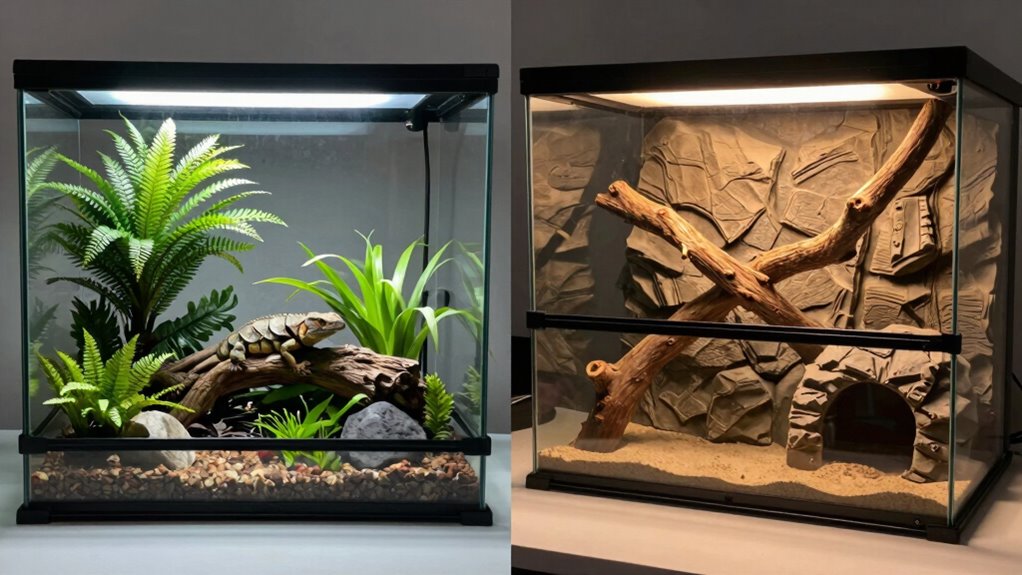
When choosing a reptile enclosure, understanding the differences between PVC and glass options can help you make an informed decision. Both materials have unique advantages and drawbacks that can considerably impact your reptile’s habitat, especially when it comes to lighting considerations and cleaning and maintenance. PVC enclosures are lightweight and durable, making them easy to move and position. They typically have better insulation properties than glass, helping maintain consistent temperatures without extra effort. This insulation can influence lighting considerations, as it helps reduce temperature fluctuations and may lessen the need for additional heating or lighting fixtures. Plus, PVC’s matte finish minimizes reflections and glare, providing a more natural environment for your pet. Moreover, the material properties of PVC make it more resistant to mold and algae growth, simplifying upkeep. Additionally, PVC’s non-porous surface helps prevent moisture absorption, which further reduces mold risks. Proper ventilation is also critical for controlling humidity levels and preventing mold buildup in both enclosure types. Proper airflow helps maintain a healthy environment and reduces the likelihood of mold and mildew developing inside the enclosure.
In contrast, glass enclosures are transparent, offering excellent visibility to observe your reptile’s behavior. This clarity can be beneficial for monitoring health and activity levels, and it makes checking on feeding or basking spots easier. However, when it comes to lighting considerations, glass can reflect light, causing glare that might bother your reptile or make it difficult to see inside. You may need to position lighting fixtures carefully or use specialized bulbs to reduce glare and provide appropriate UVB or heat sources. Cleaning and maintenance are also factors to think about—PVC is generally easier to clean because its surface resists mold, algae, and moisture buildup. You can wipe down PVC with standard cleaning solutions without worrying about damaging the material. Its non-porous surface means less frequent deep cleans are needed, and it won’t stain or discolor easily over time. Additionally, the lighter weight of PVC makes it easier to move for cleaning or repositioning compared to glass.
Glass enclosures, on the other hand, require more frequent cleaning to remove water spots, fingerprints, or algae buildup, especially if humidity levels are high. Scratching can be an issue with glass if you’re not careful, and cleaning should be gentle to avoid scratches that could obscure visibility. Additionally, glass tends to be heavier and more fragile, so moving or relocating the enclosure demands extra caution. The weight can also make cleaning more cumbersome, especially when reaching into the enclosure or wiping down the sides. Both materials need proper ventilation and humidity control, but glass enclosures tend to trap more moisture, requiring vigilant cleaning to prevent mold or mildew. Proper ventilation setup is essential for maintaining a healthy environment regardless of enclosure material.
As an affiliate, we earn on qualifying purchases.
Frequently Asked Questions
How Do PVC and Glass Enclosures Compare in Longevity?
PVC enclosures generally have a better durability comparison than glass ones because they’re more resistant to cracking and breaking. Their material resilience allows them to withstand impacts and humidity without damage, making them ideal for long-term use. Glass enclosures, while sturdy, can crack or shatter over time, especially if mishandled. So, if longevity is a priority, PVC offers superior durability, ensuring your reptile’s habitat stays intact longer.
Are PVC Enclosures More Environmentally Friendly Than Glass?
Yes, PVC enclosures are generally more eco-friendly than glass because they’re made from eco-friendly materials and often have better recycling options. PVC can be reused or recycled more easily, reducing waste. Glass, although recyclable, requires more energy to produce and transport, making it less sustainable overall. By choosing PVC, you help lower your environmental impact while providing a safe habitat for your reptiles.
Can PVC Enclosures Be Easily Customized for Specific Species?
Think of PVC as a blank canvas, ready for your creative touch. Its material flexibility makes it easy to customize for specific species, allowing you to add shelves, hideouts, or water features tailored to your reptile’s needs. Plus, its aesthetic customization options let you match the enclosure’s look to your decor. So yes, PVC enclosures are highly adaptable, helping you craft a habitat that’s both functional and visually appealing.
Do Glass Enclosures Require More Maintenance Than PVC?
Glass enclosures generally require more maintenance than PVC because they need regular cleaning to maintain their aesthetic appeal and prevent algae buildup. Additionally, glass tends to have lower ventilation efficiency, which can lead to humidity issues if not properly managed. PVC enclosures are easier to clean and maintain, offering better ventilation, making them less demanding overall. Your choice depends on balancing aesthetic appeal with ease of upkeep.
How Do Temperature Regulation Options Differ Between the Two Materials?
You’ll find that PVC enclosures typically offer better temperature regulation because they have superior insulation properties and lower thermal conductivity compared to glass. This means PVC retains heat more effectively, reducing temperature fluctuations. Glass, however, has higher thermal conductivity, so it loses heat faster and may require additional heating sources. Adjusting your heating setup depends on these material differences, ensuring your reptile’s habitat remains stable and comfortable.
Conclusion
Choosing the right enclosure truly impacts your reptile’s well-being. Did you know that reptiles housed in properly matched habitats are 30% less likely to develop stress-related health issues? Whether you opt for PVC’s affordability and lightweight design or glass’s clarity and durability, make sure it suits your species’ needs. Your thoughtful choice not only enhances their environment but also strengthens your bond. Ultimately, a habitat tailored to their needs helps your reptile thrive and live happily with you.
Fall Picks
fall essentials
As an affiliate, we earn on qualifying purchases.