
To avoid soggy enclosures with misting systems, you should choose adjustable systems to control moisture precisely. Position nozzles high and away from food or hides, and secure all components to prevent dislodging. Use timers to mist 2-3 times daily for short periods, and regularly monitor humidity levels to prevent excess moisture. Proper maintenance and tweaks help create a balanced environment. Learn how to optimize your setup for a healthy, comfortable habitat.

Get pet supplies delivered free — and shop member deals
- Fast, free delivery on millions of items
- Access to Prime Big Deal Days deals on October 6–7
- Prime Video, Amazon Music and more included
Key Takeaways
- Use adjustable misting systems to control spray duration and frequency, preventing over-saturation.
- Position nozzles high and away from food and hides to mimic natural rainfall without creating puddles.
- Regularly monitor humidity levels and adjust misting intervals to avoid overly damp enclosures.
- Clean nozzles and check for leaks or blockages to ensure consistent, controlled misting.
- Incorporate good ventilation to help evaporate excess moisture and prevent sogginess.
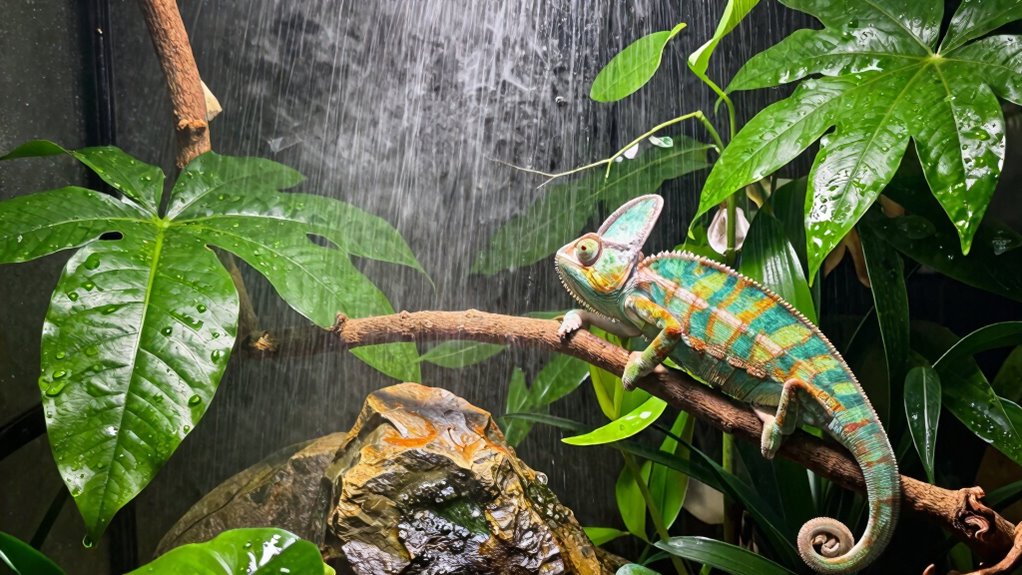
If you keep tropical reptiles, maintaining proper humidity levels is vital for their health and well-being. Mistings are a popular way to achieve that, but they require careful management to prevent soggy enclosures. When you’re using a misting system, humidity control becomes your top priority, making sure your reptiles stay comfortable without creating a damp, mold-prone environment. Proper humidity isn’t just about adding water; it’s about keeping the levels consistent and appropriate for your specific species. Too much moisture can lead to health issues like respiratory infections or skin problems, while too little leaves your reptiles dehydrated and stressed.
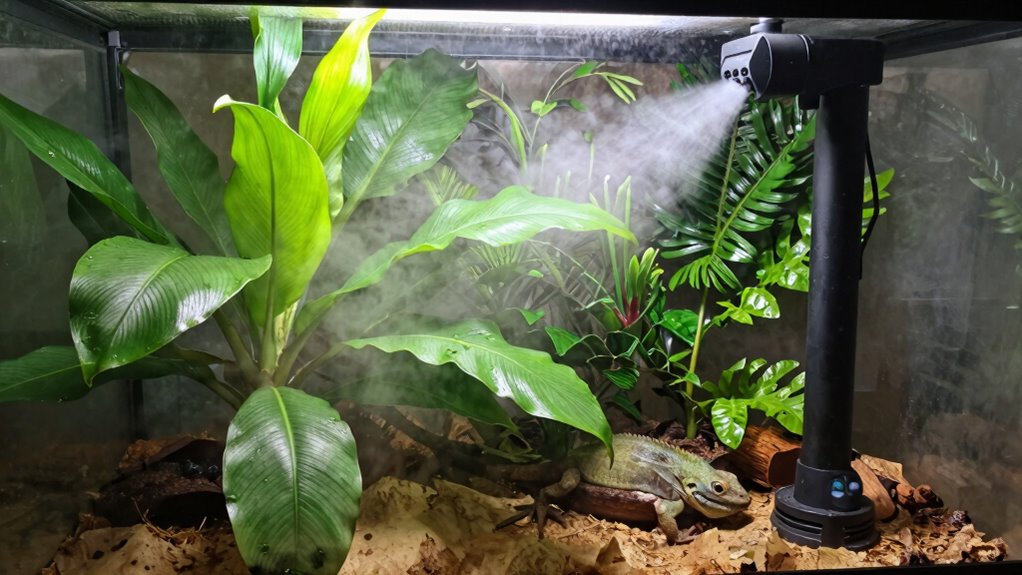
To avoid these pitfalls, you need to get your installation tips right from the start. First, choose a misting system designed for reptile enclosures, ideally one with adjustable spray settings. This gives you precise control over how much moisture is released, helping you avoid over-saturating the habitat. When installing, position the nozzles at strategic points—preferably high up and away from food and hides—to mimic natural rainfall and prevent pooling of water. Secure the system properly to avoid accidental dislodging, which could lead to uneven misting or water leaks. You also want to make sure the tubing is flexible enough to reach all areas of your enclosure without kinking or blocking water flow. Additionally, selecting the right materials for your system can help prevent system failure and ensure long-term reliability.
Proper misting setup involves strategic nozzle placement, secure installation, and flexible tubing to ensure even humidity control.
Timing is fundamental when setting up your misting system. Many systems come with timers, allowing you to program misting intervals that match your reptile’s natural environment. Typically, misting 2-3 times a day for about 30 seconds to a minute works well, but you should adjust based on your enclosure’s size, humidity levels, and species needs. Keep a close eye on the humidity gauge and observe your reptiles’ behavior—if they seem lethargic or if your enclosure feels damp or smells moldy, dial back the misting frequency or duration. Regularly checking humidity levels is essential to maintaining a healthy environment, as consistent monitoring helps prevent over- or under-humidification. Additionally, understanding the natural habitat of your reptiles can guide you in setting appropriate misting schedules. Incorporating proper ventilation can further help to prevent excess moisture buildup and keep your enclosure dry and healthy.
Regular maintenance is key to successful humidity control. Clean the nozzles frequently to prevent mineral buildup, and check the system for leaks or blockages. If your enclosure starts to feel overly wet after misting, you might need to tweak your system—perhaps reduce the misting duration or increase the time between sprays. Remember, the goal isn’t to soak your habitat but to replicate natural humidity levels, creating a comfortable environment that keeps your tropical reptiles healthy, active, and stress-free. Proper installation and vigilant adjustments will make sure your misting system works efficiently without turning your enclosure into a soggy, unhealthy mess. Ensuring system reliability through regular checks can help prevent unexpected failures that might compromise your reptiles’ environment.
reptile misting system with adjustable spray
As an affiliate, we earn on qualifying purchases.
As an affiliate, we earn on qualifying purchases.
Frequently Asked Questions
How Often Should I Clean My Misting System?
You should clean your misting system at least once a month to maintain ideal performance. Incorporate regular maintenance routines to prevent mineral buildup and clogs. The cleaning frequency may increase if you notice reduced misting or algae growth. Always turn off the system, drain any remaining water, and clean filters and nozzles thoroughly. Proper maintenance keeps your tropical reptiles healthy and prevents soggy enclosures caused by malfunctioning misting systems.
Can Misting Systems Be Used Outdoors?
Yes, you can use misting systems outdoors, but you need to take into account weather conditions and outdoor placement carefully. Rain or high humidity might cause over-misting or soggy areas, so adjust your system accordingly. Make sure to position your misting system where it won’t be directly exposed to harsh elements, and regularly monitor to prevent excessive moisture. This way, your reptiles stay comfortable without creating a soggy environment.
What Is the Best Humidity Level for Tropical Reptiles?
You should aim for a humidity level between 70-80% for tropical reptiles. Proper humidity regulation is essential for their health, as it supports respiration and shedding. To maintain this, you need consistent enclosure maintenance, including regular misting without over-saturating. Use a hygrometer to monitor levels and adjust your misting schedule accordingly. Keeping humidity steady helps prevent dehydration and stress, ensuring your reptile thrives in its environment.
Are Automatic Misting Systems Energy-Efficient?
Automatic misting systems are like the gentle rain, quietly keeping your reptile’s home lush and vibrant. They’re designed to be eco-friendly, conserving water and energy through smart operation. Their power consumption is typically low, making them an energy-efficient choice that won’t drain your wallet or the environment. With these systems, you get reliable humidity control while minimizing your carbon footprint, making your setup both sustainable and effective.
How Do I Troubleshoot Inconsistent Misting?
To troubleshoot inconsistent misting, first check for humidity fluctuations in your enclosure, which can indicate a problem. Inspect the nozzle for blockages; clean or replace it if water isn’t spraying evenly. Confirm the system’s timer settings are correct, and verify the water pressure. Regular maintenance helps prevent issues, so clean filters and nozzles often to keep misting consistent and your reptiles healthy.
Conclusion
To keep your tropical reptiles healthy, you need to mist carefully, monitor moisture levels, and avoid over-saturating their enclosure. By misting consistently, maintaining proper humidity, and observing your reptiles’ behavior, you create a thriving environment. Remember, a well-managed misting system supports hydration, prevents sogginess, and promotes natural behaviors. Stay attentive, stay consistent, and you’ll provide a habitat that’s just right—neither too dry nor too soggy—ensuring your reptiles thrive happily and healthily.
Fall Picks
fall essentials
As an affiliate, we earn on qualifying purchases.