
Using treat dispensers effectively can help prevent overexcitement by teaching your dog impulse control through consistent reinforcement of calm behavior. Start with basic cues and reward proper responses immediately, gradually increasing distractions to build patience. Routine and predictability foster self-control over time, especially during outings. When used correctly, treat dispensers make training fun and clear, reducing impulsive reactions. If you want to learn more tips, you’ll find helpful techniques to keep your dog calm and focused.

Get pet supplies delivered free with Prime
- Fast, free delivery on millions of items
- Prime Video, Amazon Music and more included
- Member-only deals all year
Key Takeaways
- Use treat dispensers to reinforce calm responses and control impulsive behaviors during training sessions.
- Introduce treats gradually amid distractions to teach impulse control in stimulating environments.
- Deliver treats immediately after correct responses to promote patience and consistent behavior.
- Establish routines with treat dispensers to create predictability and reduce overexcitement.
- Incorporate calming cues and short sessions to prevent overstimulation and promote self-regulation.

Have you ever wondered how treat dispensers can influence your dog’s impulse control? The way you use these devices can profoundly impact your dog’s ability to stay calm and respond to commands, especially in situations that might otherwise trigger overexcitement. When you incorporate proper training techniques with treat dispensers, you help your dog learn self-control and patience. It’s not just about giving treats; it’s about creating a structured environment where your dog understands what behaviors earn rewards and what behaviors are undesirable. Using treats strategically helps reinforce behavioral cues, allowing your dog to associate calmness and focus with positive outcomes.
To prevent overexcitement, it’s essential to be deliberate with how you introduce and use treat dispensers. Start by teaching your dog basic behavioral cues like “sit,” “stay,” and “focus.” When your dog responds correctly, use the treat dispenser to deliver the reward immediately. This consistency helps your dog understand that calm, controlled responses lead to positive reinforcement. Over time, your dog will begin to associate these cues with a sense of self-control, reducing impulsive reactions in high-energy moments. Remember, timing is vital; delivering treats at the right moment reinforces the desired behavior and discourages impulsive actions like jumping or barking.
Another effective training technique involves gradually increasing the level of distraction during training sessions. As your dog becomes more consistent with behavioral cues, you can introduce mild distractions, then use the treat dispenser to reward your dog for maintaining composure. This method helps your dog learn that impulse control applies even when exciting things happen around them. Be patient and keep training sessions short and positive. If your dog gets overly excited, pause and give a calming cue, then reward calmness with treats from the dispenser. This approach teaches your dog to associate calm behavior with rewards, fostering better impulse control.
Using treat dispensers consistently also helps your dog develop a sense of predictability, which is key in controlling impulses. When your dog knows that good behavior will be rewarded, they’re less likely to act impulsively just to get treats. Pairing the treat dispenser with clear behavioral cues creates a routine that encourages self-regulation over time. Remember, the goal isn’t just to reward your dog but to help them learn to control their impulses independently. With patience, consistency, and the right training techniques, your dog can learn to manage excitement levels, making outings and everyday interactions calmer and more enjoyable for both of you. Additionally, understanding biodiversity and the importance of a balanced environment can positively influence your pet’s overall well-being and behavior, emphasizing the value of environmental awareness in training.
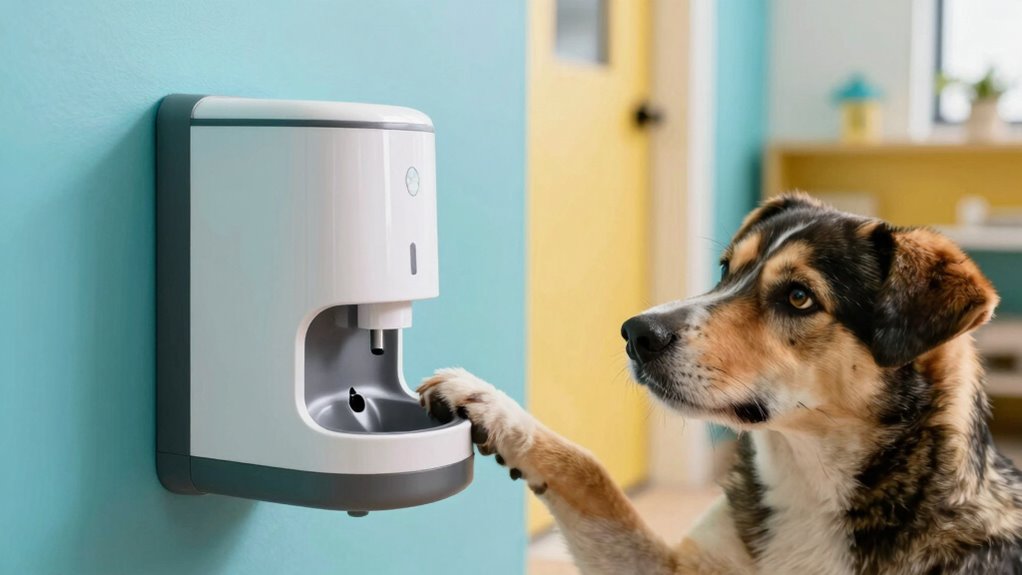
automatic treat dispenser for dogs
As an affiliate, we earn on qualifying purchases.
As an affiliate, we earn on qualifying purchases.
Frequently Asked Questions
How Do Treat Dispensers Affect My Dog’s Long-Term Behavior?
Treat dispensers can positively influence your dog’s long-term behavior when used correctly. They promote patience and self-control by encouraging treat timing, which helps prevent overexcitement. However, you must prioritize treat dispenser safety—avoid over-rewarding or using treats as constant bribes. When you manage treat timing wisely, your dog learns impulse control, leading to calmer behavior and better focus over time.
Can Impulse Control Training Improve My Dog’s Response to Treats?
Impulse control training can dramatically improve your dog’s response to treats, transforming hyperactive chaos into calm focus—it’s like turning a tornado into a gentle breeze. With consistent training and treat variability, your dog learns patience and self-control, making treat acceptance more controlled and less overexcited. Stick with it daily, and you’ll see your furry friend become more relaxed and responsive, turning treats into tools for better behavior rather than sources of overexcitement.
Are There Specific Treat Types Better for Impulse Control?
Yes, certain treat types work better for impulse control. Opt for healthy alternatives like small, low-calorie treats to prevent overexcitement. Flavor variations can keep your dog interested and motivated without overwhelming them. Using treats with subtle flavors or softer textures helps your dog stay focused during training. By choosing these types, you encourage better impulse control, making training sessions more effective and enjoyable for both you and your dog.
How Do I Prevent Over-Reliance on Treat Dispensers?
Think of treat dispensers like a sweet tooth—easy to crave and hard to resist. To prevent over-reliance, you must balance treats with other rewards, ensuring your dog doesn’t develop treat addiction or reward dependence. Mix in praise, play, and toys, so your dog doesn’t depend solely on treats for excitement. This way, you keep their impulse control sharp and avoid overexcitement fueled by constant treat rewards.
What Signs Indicate My Dog Is Becoming Overstimulated?
You’ll notice signs of overstimulation in your dog through calming signals like yawning, lip licking, or turning away. They might also seem restless, pawing at their face, or exhibiting exaggerated sniffing. These behaviors indicate sensory overload and that your dog needs a break. Pay close attention to these signals, and if you see them, calmly help your dog relax to prevent further overexcitement and keep interactions enjoyable.
Conclusion
By understanding how treat dispensers influence impulse control, you can prevent overexcitement in your pet. Did you know that dogs trained with controlled treat rewards show a 30% improvement in impulse regulation? Using treat dispensers wisely helps your furry friend learn patience and self-control, making training sessions more effective and enjoyable for both of you. Keep your treats in check, and watch your pet become calmer and more obedient over time.
Fall Picks
fall essentials
As an affiliate, we earn on qualifying purchases.