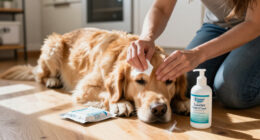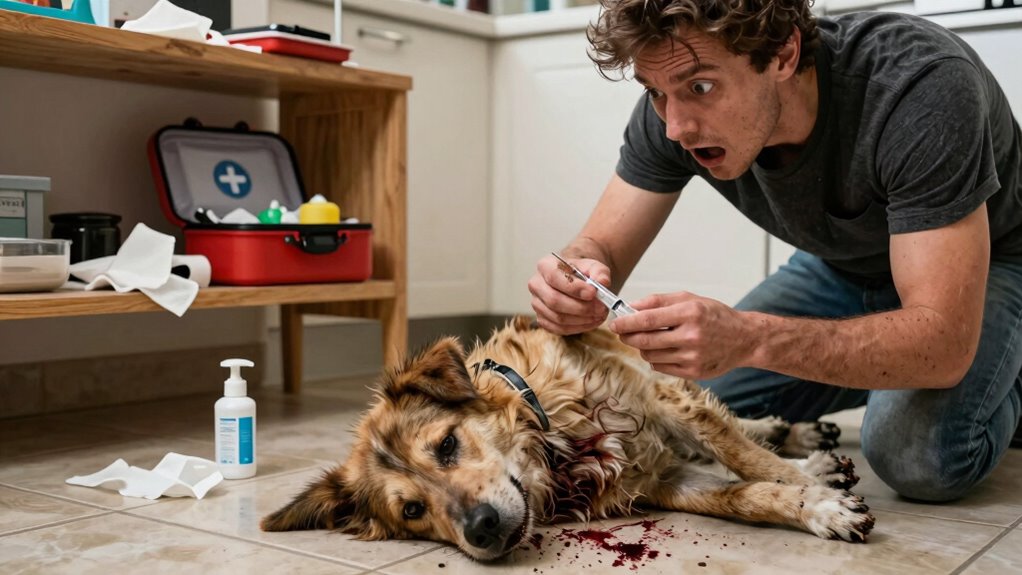
In a panic, you might rush to move your pet without checking for injuries, which can make broken bones or spinal damage worse. You could also try giving medication yourself, but this can be dangerous if you’re unsure what to do. Rushing into treatment without consulting a vet may cause more harm. Staying calm and evaluating the situation first is key. If you want to learn how to avoid these common mistakes, keep going.

Get pet supplies delivered free with Prime
- Fast, free delivery on millions of items
- Prime Video, Amazon Music and more included
- Member-only deals all year
Key Takeaways
- Moving the pet without assessing injuries can worsen existing conditions like broken bones or spinal injuries.
- Attempting to give medication or perform treatments without proper knowledge may cause harm.
- Rushing into treatment without professional guidance can lead to mistakes and complications.
- Failing to keep the pet calm can increase stress and worsen injuries.
- Neglecting ongoing monitoring after initial first aid can delay detection of internal or worsening injuries.

When your pet is injured or suddenly unwell, it’s natural to feel panicked and unsure of what to do. Your immediate reaction might be to rush them to the vet or try to fix the problem yourself. However, many pet owners make critical first-aid mistakes in these moments that can worsen the situation. One common error is not prioritizing pet safety. In a panic, you might try to move your pet without considering potential injuries, which can cause more harm, especially if they have a broken bone or spinal injury. Before attempting to move them, it’s essential to assess the situation calmly and consider whether moving your pet could cause further harm. Having a plan for emergency preparedness can help you stay composed and act correctly. This includes keeping a pet first-aid kit accessible and knowing basic emergency procedures. Additionally, understanding biodiversity and how to handle various scenarios can improve your response and reduce stress during emergencies.
Prioritize your pet’s safety and assess the situation calmly before moving or acting.
Another mistake is rushing into treatment without proper knowledge. In your panic, you might try to give your pet medication or apply bandages incorrectly, which can lead to complications. For example, wrapping a wound too tightly can restrict blood flow, and administering human medication can be toxic to animals. Instead, you should focus on controlling bleeding with gentle pressure and seek professional help as soon as possible. Many owners overlook the importance of calling your veterinarian or an emergency pet hotline early. Immediate communication with a professional can guide your actions and prevent unnecessary mistakes. Being aware of common pet injuries can help you recognize when professional help is urgently needed.
You might also neglect to keep your pet calm during a crisis. An anxious or frightened pet can struggle or lash out, making the situation more dangerous for both of you. It’s helpful to speak softly, stay calm, and minimize movement until help arrives. Practicing emergency preparedness ahead of time can make a significant difference; you’ll know how to handle different scenarios and avoid impulsive, risky moves.
Finally, some owners forget to monitor their pet closely after initial first aid. Even if the situation seems to improve, injuries can be internal or worsen after initial treatment. Continuous monitoring and quick follow-up with your vet are crucial. Remember, mistakes often happen because of fear and lack of preparation. By focusing on pet safety, staying calm, and being prepared for emergencies, you can reduce the chances of making errors that might cost your pet dearly. It’s all about staying informed, practicing responses, and acting confidently when it matters most.
As an affiliate, we earn on qualifying purchases.
Frequently Asked Questions
How Can I Stay Calm During an Emergency?
To stay calm during an emergency, focus on stress management and use breathing techniques. Take slow, deep breaths to steady your nerves and reduce panic. Remind yourself to stay present and think clearly, rather than reacting impulsively. Maintaining a calm mind helps you make better decisions and provide effective first aid. Practicing these techniques beforehand can prepare you to handle emergencies with confidence and composure.
What Should I Keep in My Pet First-Aid Kit?
You should keep essential items in your pet first-aid kit, like pet medication prescribed by your vet, antiseptic wipes, gauze, and tweezers. Include a digital thermometer and scissors as well. Don’t forget to have your emergency contacts, including your vet’s number and a nearby animal emergency clinic, readily accessible. Having these supplies on hand helps you act quickly and confidently during a stressful situation.
When Is It Necessary to Seek Veterinary Help Immediately?
Did you know that around 40% of pet poisonings happen at home? You should seek veterinary help immediately if your pet shows signs of pet poisoning, like vomiting or seizures, or if you notice allergic reactions such as swelling or difficulty breathing. Rapid response can save your pet’s life, so don’t delay—call your vet right away when these urgent signs appear. Your prompt action makes all the difference.
How Do I Identify if My Pet Is in Shock?
You can tell your pet is in shock if you notice emergency signals like pale or bluish gums, rapid breathing, and weakness. Shock symptoms also include a rapid heartbeat, cold or clammy skin, and disorientation. If you see these signs, act quickly by keeping your pet warm and calm, and seek veterinary help immediately. Recognizing shock symptoms early can save your pet’s life, so don’t delay in getting professional assistance.
Are There First-Aid Techniques Safe for All Pet Species?
Think of first-aid as a tailored suit—you need species-specific handling to fit your pet perfectly. Not all techniques are safe for every species, so you shouldn’t use one-size-fits-all methods. Emergency training helps you learn the right response for your pet’s unique needs. Always consult a veterinarian or trained professional before applying first aid, ensuring you don’t unintentionally cause more harm. Knowledge keeps your pet safe in a crisis.
Conclusion
Remember, in a panic, your quick reactions can save your pet’s life—unless you accidentally cause more harm. It’s ironic how a simple mistake, like giving the wrong dosage or delaying help, can turn a minor emergency into a disaster. So, stay calm, know your first-aid basics, and keep emergency numbers handy. After all, when it’s your pet’s life hanging in the balance, a little preparation can make all the difference—don’t let panic be your undoing.
Fall Picks
fall essentials
As an affiliate, we earn on qualifying purchases.