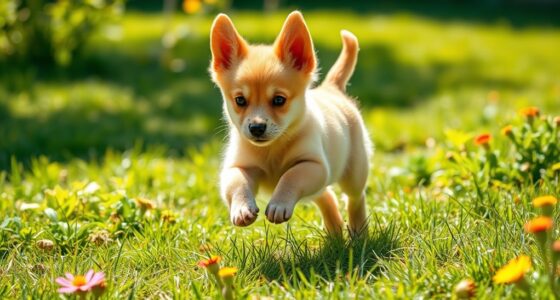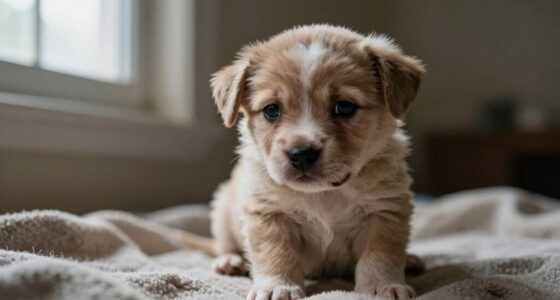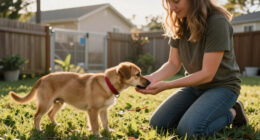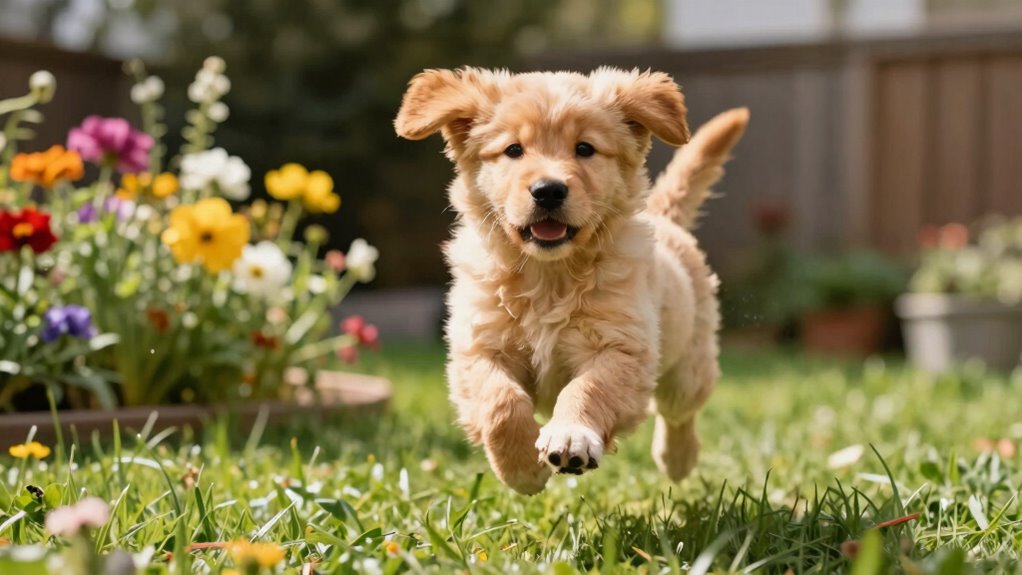

To turn puppy jumping into calm greetings quickly, establish clear boundaries and use consistent commands like “sit” or “stay.” Reward your puppy with treats and praise when they greet calmly, and ignore jumping behavior. Practice in controlled environments and gradually add distractions. Be patient, and build routines that reinforce relaxed interactions. With commitment, you’ll notice calmer greetings in just a few days—and there’s more to discover for long-term success.
Key Takeaways
- Establish consistent greeting rules and use commands like “sit” or “calm” to promote relaxation.
- Create designated calm zones and reward your puppy for calm behavior during greetings.
- Practice controlled exposure and reinforce calm body language with treats and praise.
- Use gentle voice tones, slow movements, and immediate rewards to encourage calm interactions.
- Be patient and consistent, gradually increasing social exposure to turn greetings into peaceful moments.
puppy training treats for calm behavior
As an affiliate, we earn on qualifying purchases.
As an affiliate, we earn on qualifying purchases.
Why Do Puppies Jump and How It Affects Greetings
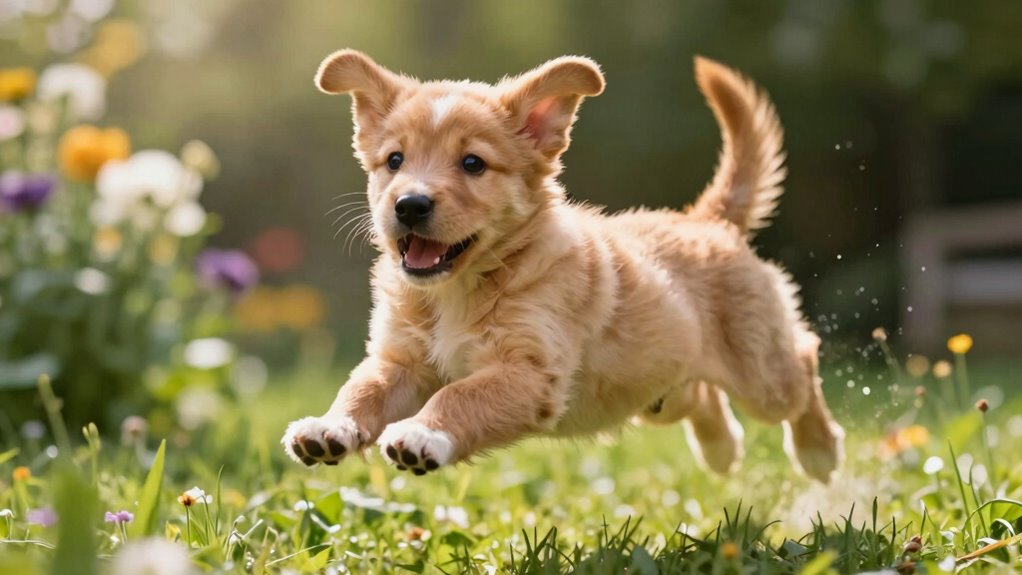
Puppies often jump during greetings because they’re excited and enthusiastic to interact. This behavior is part of their puppy body language, signaling happiness and eagerness. Jumping is a natural way for them to get attention and explore social cues. However, it can become overwhelming or unsafe if not managed properly. Understanding why puppies jump helps you address it effectively. Socialization techniques, like controlled exposure to people and calm interactions, teach your puppy appropriate greeting behaviors. Consistent training can redirect their energy and help them learn that calm greetings earn attention. Recognizing these body language signals early allows you to set boundaries and encourage better manners, making greetings enjoyable for everyone involved. Proper socialization is essential in helping puppies develop desirable behaviors and reduce unwanted jumping. Additionally, being aware of puppy development stages can guide you in timing your training efforts for optimal results.
How to Spot What Triggers Your Puppy’s Excited Jumps
To effectively address your puppy’s jumping behavior, you need to identify what specifically sparks their excitement. Scent triggers are a common cause; your puppy might become hyper when they smell new or familiar scents that excite them. Pay attention to whether certain scents, like treats or other animals, cause more jumping. Play excitement is another key factor—your puppy may jump when they’re keen to play or when you return after being absent. Notice what happens right before their jumps: Do they get more energetic when you come home, or when they see a favorite toy? Recognizing these triggers helps you understand what fuels their enthusiasm, so you can better manage and redirect their energy before it turns into jumping. Additionally, understanding energetic behaviors associated with their environment can help you develop effective training strategies. Being aware of breed tendencies, such as high energy levels in certain breeds, can also prepare you to implement appropriate calming techniques. Recognizing these factors early allows for targeted interventions that can reduce jumping over time.
Setting Boundaries to Prevent Jumping During Greetings

To prevent your puppy from jumping during greetings, set clear and consistent rules for how to greet people. Create a designated calm zone where your puppy learns to relax instead of jumping. Use command words like “sit” or “stay” to reinforce calm behavior and establish boundaries. Consistent training not only helps manage behavior but also builds trust and understanding between you and your puppy document management, making the process smoother and less stressful. Understanding dog behavior cues can further enhance your puppy’s understanding of expected manners during greetings. Recognizing cultural influences in training approaches can also help tailor strategies that respect your puppy’s unique temperament and background. Incorporating dog behavior cues into your training routine can further enhance your puppy’s understanding of expected manners during greetings.
Consistent Greeting Rules
Establishing consistent greeting rules is essential for preventing your puppy from jumping on people during interactions. You need to observe your puppy’s body language closely, recognizing signals like tail wagging or leaning in as signs they’re enthusiastic to greet. Consistency helps your puppy understand what’s expected, so everyone involved should follow the same approach. Use socialization techniques to expose your pup to different people calmly, reinforcing calm behavior during greetings. When visitors arrive, ask them to ignore your puppy until all four paws are on the ground, then reward gentle approaches. By maintaining these rules, your puppy learns that calm greetings lead to positive interactions, reducing the likelihood of jumping. Clear boundaries and steady routines are key to turning chaos into calm during your puppy’s greetings.
Designated Calm Zones
Setting up designated calm zones gives both you and your puppy clear boundaries during greetings, making it easier to prevent jumping. These zones act as a safe space where your puppy can relax without feeling the need for playful pounces or excited yelps. When visitors arrive, guide your pup to a specific area, like a mat or bed, and encourage calmness with treats and praise. This boundary helps your puppy associate staying calm with positive experiences, reducing the urge to jump. Consistently maintaining these zones teaches your pup that greetings are about gentle interactions, not energetic leaps. Incorporating consistent application methods such as applying treats, praise, and gentle commands reinforces the calm behavior. Using training techniques that promote self-control can further help your puppy learn to stay calm during greetings. Incorporating calming signals and setting boundaries helps your puppy understand appropriate greeting behaviors. Regularly practicing positive reinforcement in these zones accelerates learning and builds your puppy’s confidence. Over time, your puppy learns to stay in the calm zone during arrivals, turning chaotic greetings into composed, friendly welcomes.
Use of Command Words
Have you ever wondered how to clearly tell your puppy what behavior is expected during greetings? Using command words is essential for setting boundaries and preventing jumping. Consistent commands help your puppy understand boundaries through socialization strategies and reading puppy body language. When greeting, use a firm, calm voice with commands like “sit” or “no jump.” Reinforce these commands with positive reinforcement when your puppy responds correctly. To visualize this, consider the following table:
| Behavior | Command | Response |
|---|---|---|
| Jumping | “Off” | Sit calmly |
| Excitement | “Calm” | Stay relaxed |
| Approaching | “Wait” | Pause before greeting |
| Body language | Observe puppy’s cues | Respond appropriately |
Clear command words create structure, reducing jumping and encouraging calm greetings. Additionally, understanding puppy body language can greatly enhance your training effectiveness, helping you interpret your puppy’s subtle signals and respond appropriately. Recognizing body language cues can prevent miscommunication and speed up training progress. Observing body language is also crucial for establishing trust and ensuring your puppy feels secure during training exercises.
Teach Your Puppy to Sit Calmly Before Saying Hello
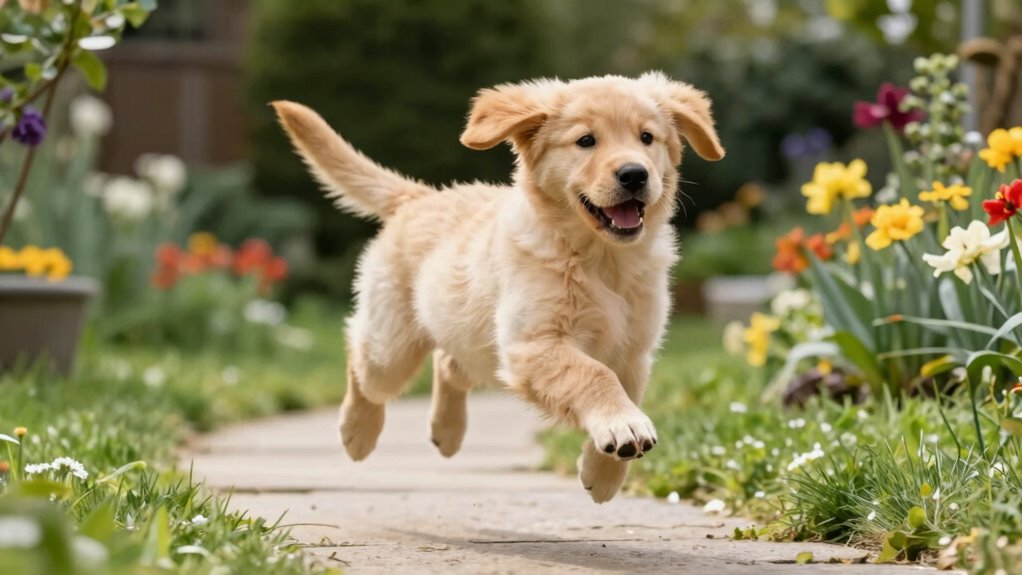
To help your puppy greet people politely, it’s important to teach them to sit calmly before saying hello. Watching your puppy’s body language is key; look for relaxed ears, wagging tail, and soft eyes to recognize when they’re ready. Use socialization techniques by exposing your puppy to different people in controlled settings, encouraging calm behavior. When someone approaches, ask your puppy to sit, and reward them for remaining still. Consistently reinforce this behavior so they learn that a calm sit is the right way to greet. Incorporating positive reinforcement methods into training routines can further enhance your puppy’s understanding of acceptable greetings. Practicing these techniques regularly helps build your puppy’s confidence and reduces jumping and excitement. Sustainability practices can be incorporated into training routines to promote environmentally friendly habits. Avoid rushing or encouraging jumping, as this can reinforce excitement. With patience and regular practice, your puppy will associate sitting calmly with positive greetings, turning chaotic welcomes into peaceful hellos.
Use Consistent Commands to Keep Greetings Calm
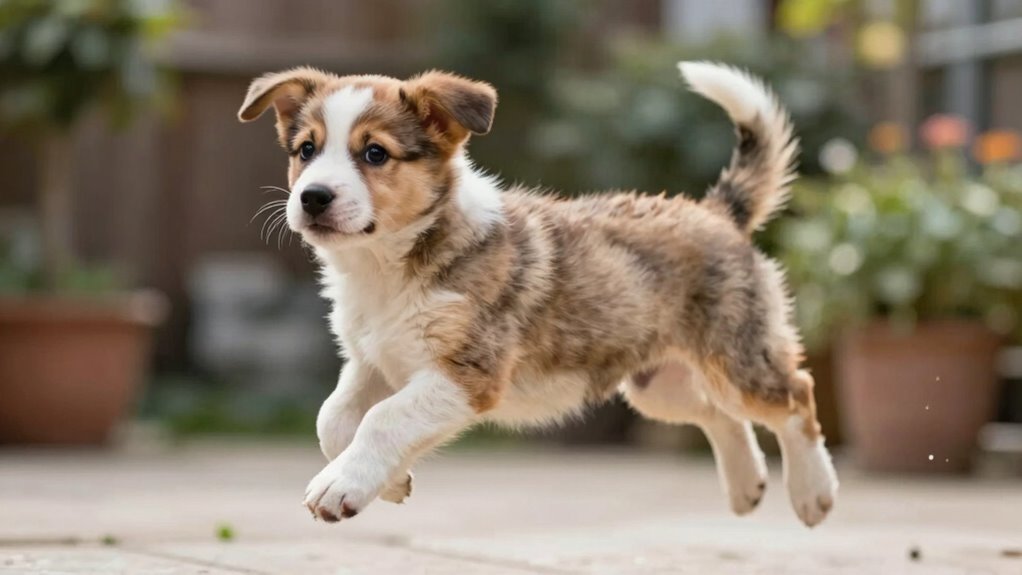
Using consistent commands helps your puppy understand exactly what’s expected during greetings. When you establish clear, uniform cues, your puppy learns to stay calm and respect playful boundaries. Consistency reinforces socialization cues, signaling that calm behavior is preferred. For example, always use the same command like “Calm” or “Settle” during greetings, so your puppy associates it with calmness. This consistency prevents confusion and reduces jumping. To deepen understanding, consider this table:
| Command | Playful Boundary | Socialization Cue |
|---|---|---|
| “Sit” | Keeps paws on the ground | Encourages calm greetings |
| “Settle” | Limits jumping or pawing | Promotes relaxed behavior |
| “Wait” | Pauses before greeting | Reinforces patience |
| “No Jump” | Stops jumping behavior | Establishes clear limits |
| “Hello” | Acknowledge calm approach | Reinforces polite greetings |
Stick to these cues to turn chaos into calm greetings fast. Additionally, consistent training with positive reinforcement helps your puppy internalize these cues more effectively. Regularly practicing these commands in different environments also builds your puppy’s understanding of behavioral consistency and improves responses over time. Incorporating training patience techniques ensures your puppy remains receptive and responsive during each session.
Reward Your Puppy for Proper Greeting Behavior
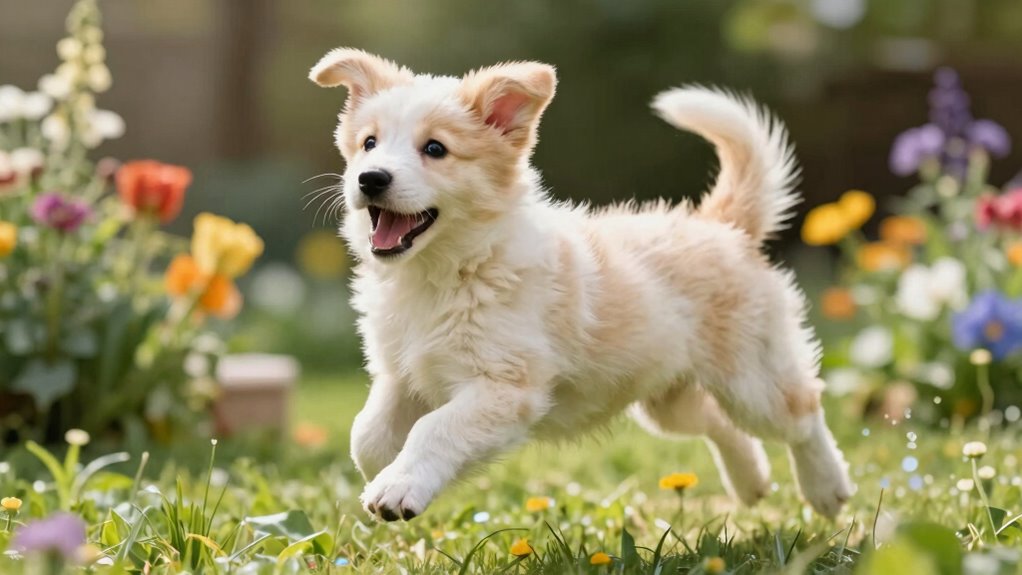
You can encourage your puppy to greet calmly by offering treats consistently when they behave well. Use a calm voice to reinforce positive behavior and avoid excitement. Praise your puppy quietly when they greet without jumping to help them understand what you expect.
Offer Treats Consistently
Consistently offering treats when your puppy greets calmly reinforces the behavior you want to see. When your puppy’s puppy energy is high, and jumping habits are common, rewarding calm greetings helps them learn what’s acceptable. Each time your puppy stays on the ground, give a treat to acknowledge their self-control. This positive reinforcement encourages your puppy to associate calm behavior with rewards, gradually reducing jumping habits over time. Be consistent with treats, offering them immediately after the calm greeting, so your puppy clearly connects the two. Avoid rewarding jumping or overly excited behavior. Instead, focus on reinforcing the desired calm response, which will help turn their energetic greetings into relaxed, controlled ones. Consistency is key to shaping better greeting habits.
Use Calm Voice
When your puppy approaches you calmly, speaking in a soft, steady voice reinforces that relaxed behavior. Your calm tone helps your puppy understand that gentle greetings are welcome, while loud or excited voices can trigger jumping or overexcitement. Pay attention to your puppy’s body language—relaxed posture, wagging tail, and soft eyes indicate comfort and good socialization. Using a calm voice during puppy socialization teaches your puppy to interpret human cues effectively, reducing future jumping. Consistently rewarding your puppy with a gentle voice when they greet calmly encourages them to repeat this behavior. Over time, your steady tone becomes a signal that calm greetings are the goal, transforming chaotic jumping into composed, friendly interactions.
Praise Calm Behavior
Praising your puppy for calm greeting behavior reinforces the positive actions you want to see. When your puppy remains relaxed and gentle during greetings, reward them immediately with praise or treats. This helps establish a clear connection between calm behavior and positive reinforcement. Use socialization tips to expose your puppy to various environments and people, which can influence their puppy personality and response to different situations. Recognizing and praising calm greetings also teaches your pup that being patient and gentle is rewarding. Consistency is key—always reward good behavior to build confidence and reinforce their understanding. Over time, your puppy will learn that calm greetings earn your praise, turning jumping and overexcitement into composed, friendly interactions.
Practice Greeting Techniques in Controlled Situations
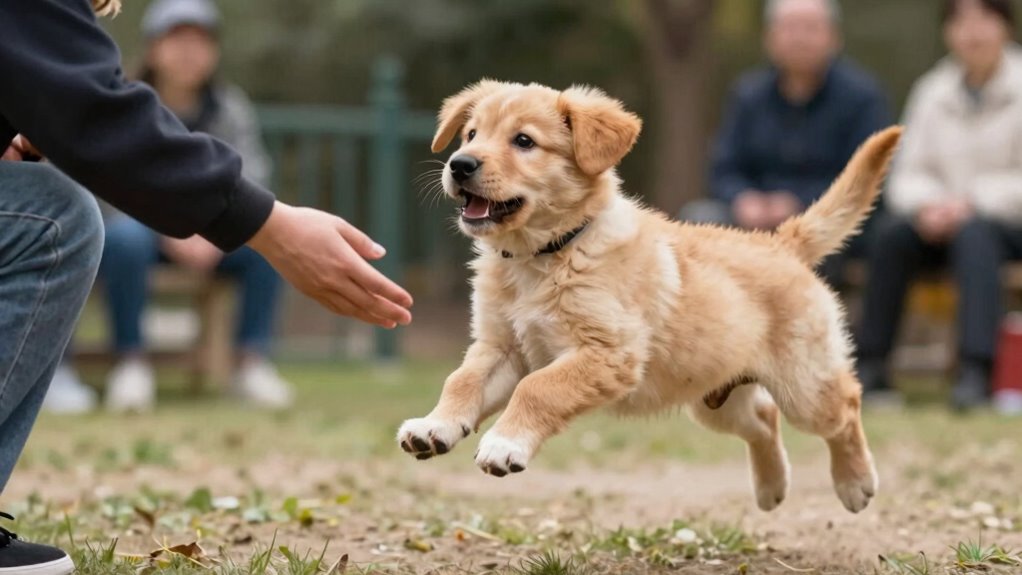
Practicing greeting techniques in controlled situations helps your puppy learn appropriate behavior before encountering real-world distractions. Start with calm environments to build confidence and reinforce good manners. Use socialization techniques to expose your puppy to different people and settings gradually. Incorporate crate training to help your puppy feel secure during greetings, reducing excitement. Focus on these key practices:
- Introduce your puppy to visitors in a quiet space, rewarding calm behavior.
- Use short, controlled sessions to practice sitting and greeting politely.
- Gradually increase distractions as your puppy becomes more confident.
Troubleshooting Persistent Jumping and Excitement Issues

Persistent jumping and excessive excitement can be challenging behaviors to correct, especially if your puppy becomes overwhelmed or overstimulated. Paying close attention to your puppy’s body language helps you recognize signs of overexcitement, like wagging tail, bouncing, or stiff posture. When you notice these cues, calmly redirect their attention before they jump. Using effective socialization strategies exposes your puppy to calm, controlled interactions, reducing their overall excitement levels. Consistent, gentle reinforcement teaches them to stay calm during greetings, even if they’re excited. Avoid rewarding jumping with attention; instead, reward quiet, relaxed behavior. Over time, understanding your puppy’s body language and managing their environment will help you troubleshoot persistent jumping and excitement issues more effectively, turning chaos into calm greetings.
Maintain Your Training for Calm, Stress-Free Greetings

To maintain calm, stress-free greetings, consistency is key in your training routines. Regular practice helps your puppy understand expectations and reduces excitement. Incorporate puppy socialization to expose your pup to different people and environments, reinforcing calm behavior during greetings. Continue crate training to give your puppy a safe space, which promotes self-control and reduces jumping impulses. Set clear boundaries so your puppy learns when it’s appropriate to greet calmly. Reinforce good behavior immediately and avoid rewarding jumping or overly excited responses. Consistent routines and positive reinforcement create a predictable environment, helping your puppy feel secure. Remember, patience and persistence are essential in maintaining these habits for calm, relaxed greetings. Over time, your efforts will turn greetings into calm, enjoyable interactions.
Frequently Asked Questions
How Long Does It Typically Take to See Results?
You can often see results within a few days to a week, but it varies based on your training timeline, patience, and consistency. If you stick to the routine daily, your puppy will learn to greet calmly over time. Remember, every pup is different, so stay patient and consistent. With regular practice, you’ll notice calmer greetings and a happier, more obedient puppy sooner than you think.
Can Older Puppies Be Trained to Stop Jumping?
Sure, older puppies can learn to stop jumping—if you’re willing to put in age-related training and consistency strategies. Think of it like convincing a stubborn teenager; patience and persistence are key. You’ll need to reinforce good behavior every day, rewarding calm greetings and ignoring jumpy antics. With time, even the most seasoned jumpers can learn manners, transforming chaos into calm, no matter their age.
What if My Puppy Still Jumps Despite Training?
If your puppy still jumps despite training, stay consistent with your jumping prevention techniques. Reinforce calm greetings by ignoring jumping and rewarding gentle behavior. Consistent training helps your puppy understand boundaries, so stick to it daily. Use commands like “sit” or “stay,” and reward compliance. Remember, patience is key—over time, your puppy will learn that calm greetings bring attention, reducing jumping and turning chaos into calm in just days.
Are There Specific Breeds More Prone to Jumping?
Some breeds are more prone to jumping due to breed tendencies and high energy levels, like Jack Russell Terriers or Beagles. To address this, prioritize consistent training that emphasizes calm greetings and boundary setting. Focus on reinforcing commands, ignoring jumping behaviors, and rewarding calm behavior. With patience and proper training priorities, you can help your puppy learn appropriate greetings regardless of breed tendencies.
How Can I Involve Family Members in Training?
A chain is only as strong as its weakest link, so involve your family members in training to create consistency. Encourage everyone to participate in daily practice, reinforcing commands and boundaries. Share responsibilities like rewarding good behavior and correcting jumping. When everyone’s on the same page, your puppy will learn faster, making greetings calm and controlled. Your combined efforts will turn chaos into calm, creating a harmonious home for all.
Conclusion
Think of your puppy’s greetings as a delicate dance—when you set the rhythm and boundaries, the chaos transforms into harmony. Consistent training and patience are your best tools to turn those energetic jumps into calm welcomes. With time, you’ll both glide through greetings smoothly, like a well-rehearsed performance. Keep practicing, stay patient, and soon your puppy will greet you with a wagging tail and a gentle paw, not chaos, turning every hello into a joyful encore.