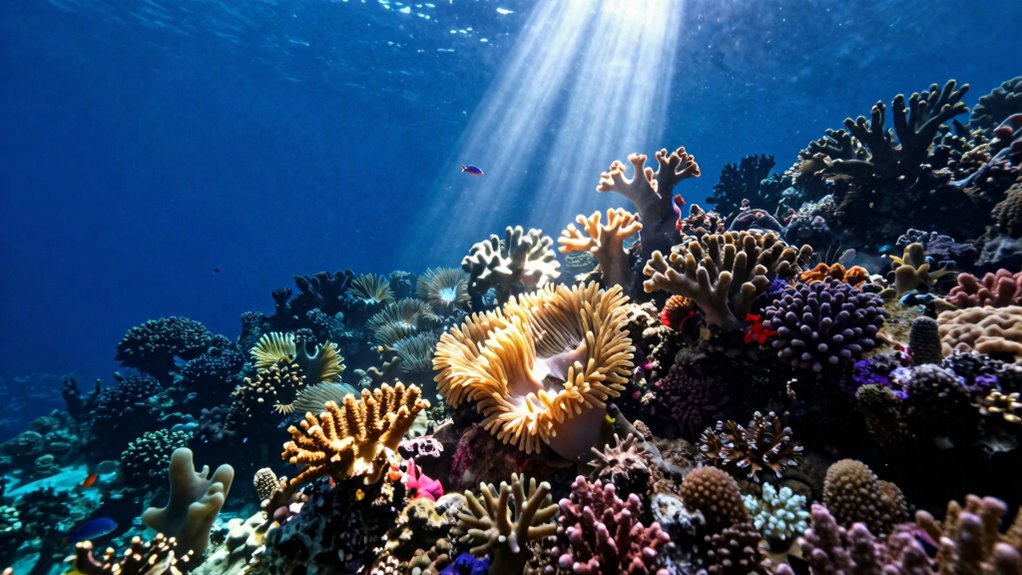
Increasing PAR levels beyond what your corals need can do more harm than good. Too much light, especially suddenly, can stress or bleach your corals, harming their health and growth. It’s essential to gradually acclimate them to higher intensities and focus on a balanced spectrum that supports their photosynthesis. Proper lighting, along with water quality, helps your corals thrive. Keep exploring, and you’ll discover how to optimize your reef’s lighting for healthier, more vibrant corals.
Key Takeaways
- Excessive PAR can stress corals, leading to bleaching and health issues.
- Sudden increases in PAR may shock corals, hindering their adaptation.
- Gradual PAR adjustments promote coral acclimation and resilience.
- Optimal coral health depends on balanced light spectrum, not just high PAR.
- Water quality and environmental factors are crucial alongside appropriate PAR levels.
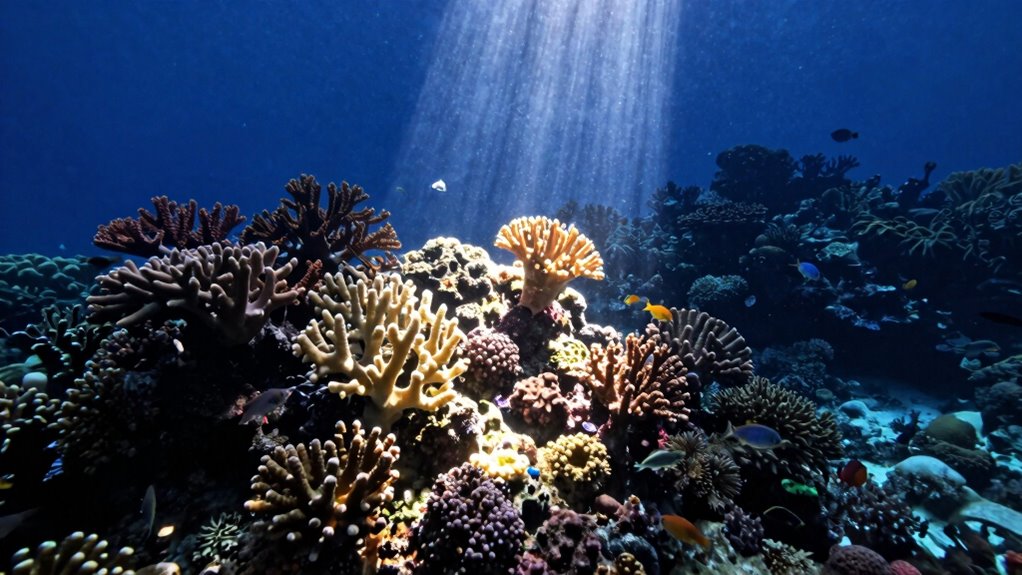
When it comes to reef lighting, more PAR (Photosynthetically Active Radiation) doesn’t always mean better health for your corals. While high PAR levels can seem appealing, they can actually cause stress or bleaching if your corals aren’t prepared for such intense light. To prevent this, you need to understand coral acclimation, which is how your corals adjust to their environment over time. When introducing new lights or increasing intensity, do it gradually. Sudden spikes in PAR can shock your corals and hinder their growth. By slowly ramping up the light, you give your corals a chance to adapt, reducing the risk of bleaching and promoting healthier growth.
Equally important is maintaining a proper light spectrum balance. Corals rely on a specific range of wavelengths to photosynthesize efficiently, mainly in the blue and violet spectrum. If your lighting leans too heavily toward the red or green, your corals might not get the optimal spectrum they need. This imbalance can lead to poor coloration, reduced growth, or stress. So, when choosing your reef lights, look for fixtures that provide a full spectrum with an emphasis on the blue range, since it penetrates water better and supports photosynthesis. A balanced spectrum encourages better coral coloration, enhances growth, and keeps your reef vibrant. Understanding light spectrum balance can help you optimize your setup and improve coral health. Additionally, being aware of water quality factors can further support your corals’ ability to adapt to their lighting conditions. Proper lighting acclimation and water parameter management are essential for maintaining a thriving reef environment.
As an affiliate, we earn on qualifying purchases.
Frequently Asked Questions
How Do I Measure PAR Levels Accurately at Home?
To measure PAR levels accurately at home, start with proper lighting calibration to guarantee your readings are precise. Use reliable PAR measurement tools, like a quantum PAR meter, to get accurate readings of the light intensity at your tank’s various points. Place the meter at the level of your corals, then record the readings. Regularly calibrate your tools and compare measurements to maintain consistent and accurate PAR levels for ideal reef health.
What Are the Signs of Over-Lighting in My Reef Tank?
Imagine your reef tank’s vibrant corals fading into dull, washed-out hues. Over-lighting signs include poor coral pigmentation and excessive algae growth, which thrive under too much light. You might notice corals bleaching or algae overtaking rocks and glass. These are clear indicators you’re shining too brightly, stressing your tank’s ecosystem. Reduce your light intensity gradually to restore balance, helping corals regain their natural colors and keeping algae in check.
Can Different Coral Species Require Different PAR Levels?
Yes, different coral species require varying PAR levels because of their unique adaptations. Some corals have adapted to thrive in low-light environments, while others need higher light intensities. During light acclimation, you should gradually adjust your reef lights to prevent stress and allow corals to adapt safely. By understanding coral adaptation and providing appropriate PAR levels, you guarantee healthy growth and vibrant colors without risking overexposure.
How Does Light Spectrum Influence Coral Health?
The light spectrum substantially influences coral health by affecting coral pigmentation and photosynthesis efficiency. You should provide a spectrum that mimics natural sunlight, emphasizing blue and violet wavelengths, which enhance pigmentation and promote effective photosynthesis. Proper spectral balance helps corals develop vibrant colors and boosts their energy production, leading to healthier growth. Avoid overly broad or imbalanced spectra, as they can stress corals or hinder their ability to photosynthesize efficiently.
Are There Specific Reef Lights Recommended for Beginner Aquarists?
Are you overwhelmed by reef light options? For beginners, I recommend starting with LED lights designed for reef tanks, as they offer adjustable lighting intensity and promote vibrant coral pigmentation. Look for models with customizable spectrum settings to support coral growth without risking light stress. These lights simplify maintenance, guarantee healthy pigmentation, and help you learn how to balance light levels effectively, making your reef journey more enjoyable.
Conclusion
Remember, when it comes to reef lighting, more PAR isn’t always better—sometimes less is more. You don’t want to burn out your corals or cause algae overgrowth just because you’re chasing higher numbers. It’s all about finding that sweet spot where your corals thrive without risking damage. Keep a close eye, adjust gradually, and trust your instincts. After all, a little patience and moderation often lead to the best results—don’t put all your eggs in one basket.