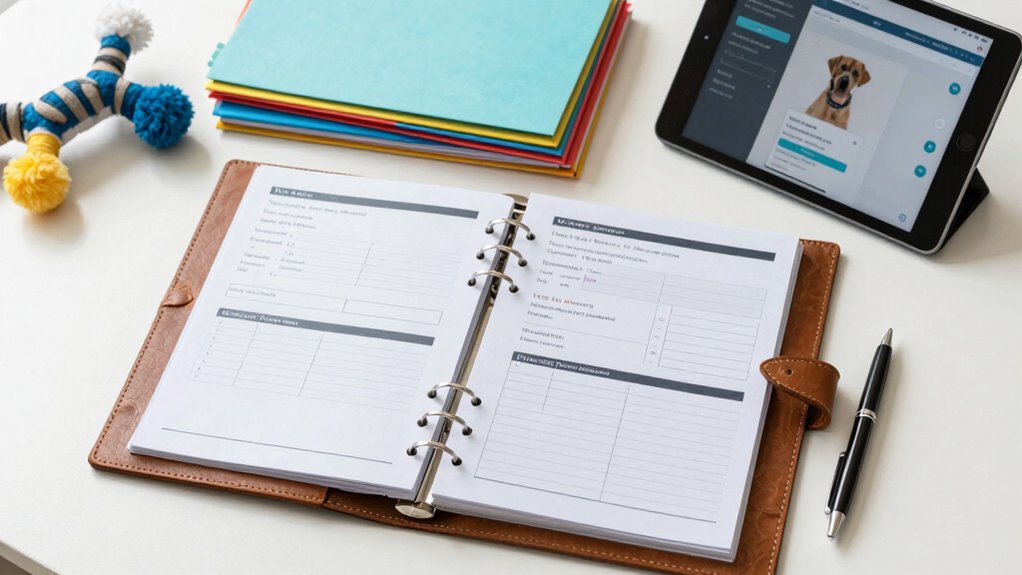

To organize your pet’s papers, create a dedicated folder or binder for all documents, keeping them in a safe, accessible spot like a cabinet or drawer. Scan digital copies and store them securely on the cloud or your phone for quick access during emergencies or travel. Regularly review and update records, including vet notes, vaccination history, microchip info, and insurance details. Keep recent photos for identification, and stay consistent with your filing system to guarantee you’re always prepared—there’s more to streamline the process.
Key Takeaways
- Create a dedicated physical and digital folder for all pet-related documents for easy access.
- Keep current medical, vaccination, insurance, and microchip info organized and regularly updated.
- Store digital backups securely on cloud or mobile device for quick retrieval during emergencies.
- Include recent pet photos and verification documents in the organization system.
- Schedule routine reviews to ensure all records are accurate and up-to-date.
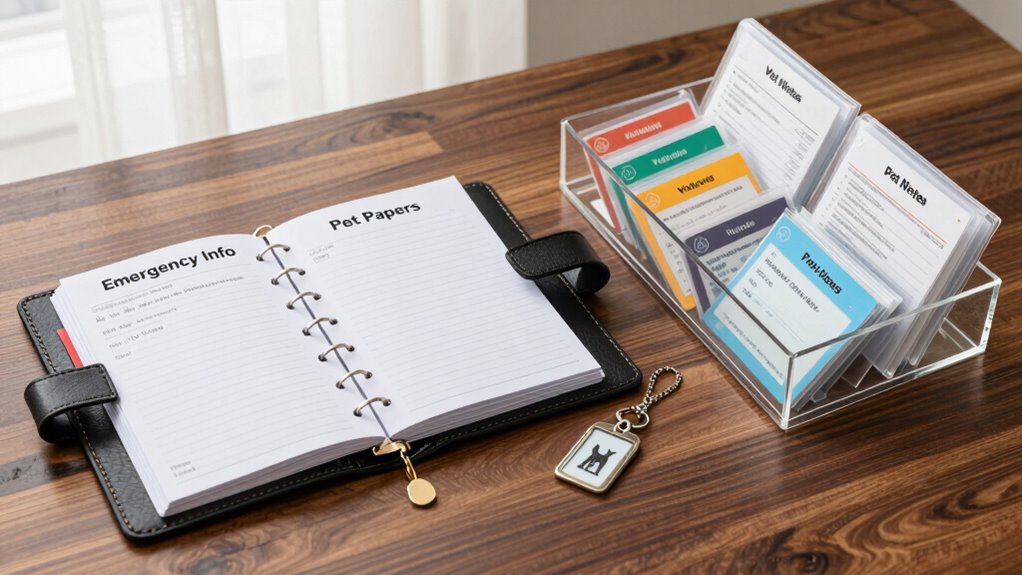
Ever wonder how to keep all your pet’s important papers in order? Staying organized isn’t just about convenience; it’s about being prepared for any situation that might arise with your furry friend. The first step is creating a dedicated folder or binder to hold all these essential documents. Keep it in a safe, easily accessible spot, like a cabinet or a designated drawer. This way, when an emergency strikes or you’re at the vet’s office, you won’t waste time searching for critical info.
Start by gathering your pet’s medical records, vet notes, and vaccination history. These documents are crucial for ongoing care and can be a lifesaver if your pet ever needs urgent treatment. Make sure to keep a current copy of vaccination records, which most vets update regularly. Alongside these, include any recent health notes from your veterinarian, especially if your pet has ongoing health issues. Keeping these notes organized helps you track patterns or changes in your pet’s health over time.
Keep medical records, vet notes, and vaccination history organized for ongoing care and emergency preparedness.
Next, organize your pet insurance documents. Having your policy number, coverage details, and contact info readily available can save you stress during emergencies. Make digital copies as well, stored securely on your phone or cloud service, so you can access them anywhere. This is especially useful if you’re traveling with your pet or if the original documents get misplaced. Pet insurance can help cover unexpected veterinary bills, so knowing your policy details can expedite claims and ensure you get the help your pet needs without delays. Regularly reviewing your insurance coverage also ensures that your policy still meets your pet’s changing health needs and that you’re aware of any updates or renewals. Additionally, keeping a comprehensive record of all communications with your insurance provider can streamline any claims process.
Another critical document is your pet’s microchip documentation. This includes the microchip registration number, the company’s contact information, and proof of registration. Microchips are a permanent way to identify your pet if they ever get lost, so keeping this info organized ensures you can quickly report or update details if needed. It’s a good idea to periodically verify that your pet’s microchip registration is current and that the contact info is accurate. Including a recent photo of your pet in the folder can also help in case they go missing, making it easier for others to identify them. Microchip registration is a vital component of pet safety, and staying on top of updates can prevent delays in recovery efforts. Regularly updating microchip info is essential for maintaining accurate identification, especially if you move or change contact details.
Finally, don’t forget to update and review these documents regularly. As your pet ages or as policies change, keeping everything current guarantees you’re always prepared. Also, storing digital backups ensures you have access to important info even if the physical copies are lost or damaged. By maintaining an organized system for pet papers—covering everything from pet insurance and microchip documentation to vet notes—you’re taking proactive steps to safeguard your pet’s health and your peace of mind. Incorporating a regular review schedule can help you stay on top of all updates and ensure no important information is overlooked.
As an affiliate, we earn on qualifying purchases.
Frequently Asked Questions
How Often Should I Update My Pet’s Records?
You should update your pet’s records whenever there’s a new vet visit, change in medication, or vaccination. Regularly review your pet’s medical history to guarantee it’s complete, especially if you have pet insurance. Updating these records every 6 to 12 months helps you stay on top of health needs and makes emergency situations easier. Staying current ensures accurate coverage and quick access to critical information when needed most.
What’s the Best Way to Store Digital Pet Documents?
The best way to store digital pet documents is by using cloud storage, which keeps your files accessible and safe from hardware failures. You should also create digital backups on an external drive or another cloud service for added security. Regularly update these files and guarantee your storage accounts are protected with strong passwords. This way, you’ll always have quick access to your pet’s essential information whenever you need it.
How Can I Organize Multiple Pets’ Paperwork Efficiently?
Think of your pet paperwork like a well-organized library—start by creating separate folders or binders for each pet. Use clear labels for vet notes, pet health logs, grooming schedules, and emergency info. Keep digital copies as backups. Regularly update these documents, and consider color-coding for quick access. This way, you’ll have all essential info at your fingertips, just like a trusty 21st-century librarian!
Should I Keep Paper Copies or Rely on Digital Files?
You should consider a mix of paper vs. digital storage solutions for your pet papers. Keep essential documents like vet records in a safe, organized physical folder for quick access during emergencies. Simultaneously, scan and store digital copies on a secure cloud or external drive for backup. This approach guarantees you have reliable, accessible records whether you prefer paper or digital, minimizing the risk of losing important information.
How Do I Handle Emergency Contact Updates?
Ever wonder what would happen if your pet’s emergency contact info changed unexpectedly? Keep your emergency kit and contact list current by reviewing and updating them at least every six months. When updates occur, replace outdated papers or digital files promptly. Consider using a dedicated folder or app that notifies you of updates. This way, you guarantee emergency responders always have the latest info, keeping your pet safe and prepared.
Conclusion
Now that you’ve organized your pet’s papers, you’ve created a safety net that’s as reliable as a loyal friend. Keeping everything in one place makes finding essential info quick and easy, especially when emergencies strike. Think of your organized files as a well-tuned compass guiding you through any situation. With this system in place, you’ll always be prepared—because your pet’s health and happiness deserve nothing less than your best effort.