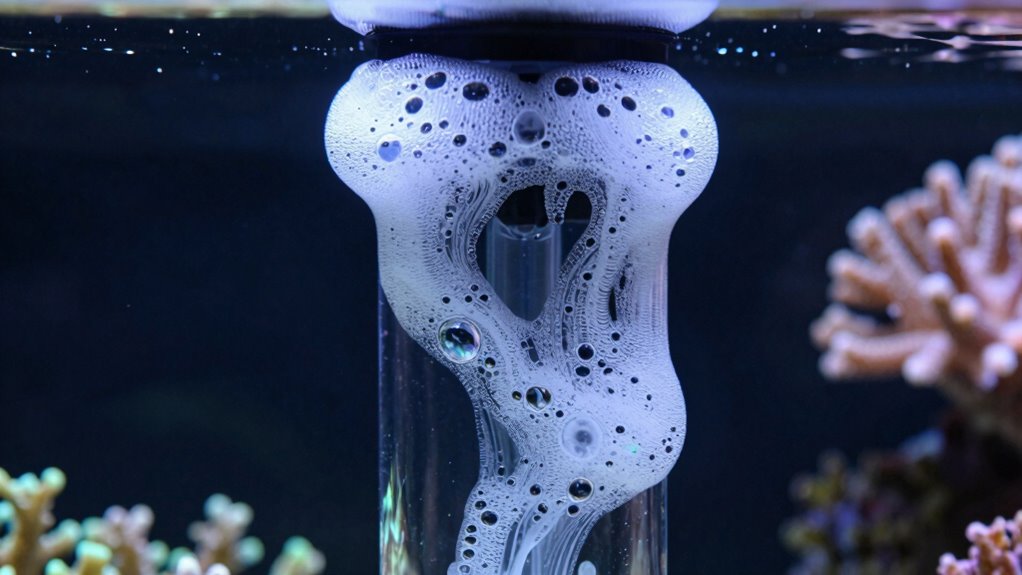

Understanding foam in your protein skimmer is key to maintaining water quality without obsessing over perfect bubbles. Foam fluctuates naturally and indicates active waste removal, so focus on keeping it stable and clean. Regularly monitor, adjust airflow, and clean parts like the collection cup to guarantee good performance. Small tweaks can make a big difference. Keep in mind, prioritizing stability over perfection helps your tank stay healthy, and there’s more valuable tips to explore as you go along.

Get pet supplies delivered free — and shop member deals
- Fast, free delivery on millions of items
- Access to Prime Big Deal Days deals on October 6–7
- Prime Video, Amazon Music and more included
Key Takeaways
- Focus on maintaining stable foam levels rather than achieving perfect, constant foam height.
- Regularly clean the collection cup, neck, and body to prevent build-up that affects foam quality.
- Adjust air intake and water flow to optimize foam stability and waste removal.
- Monitor foam color and thickness as indicators of effective organic waste removal.
- Routine maintenance and patience ensure consistent skimmer performance without chasing perfection.
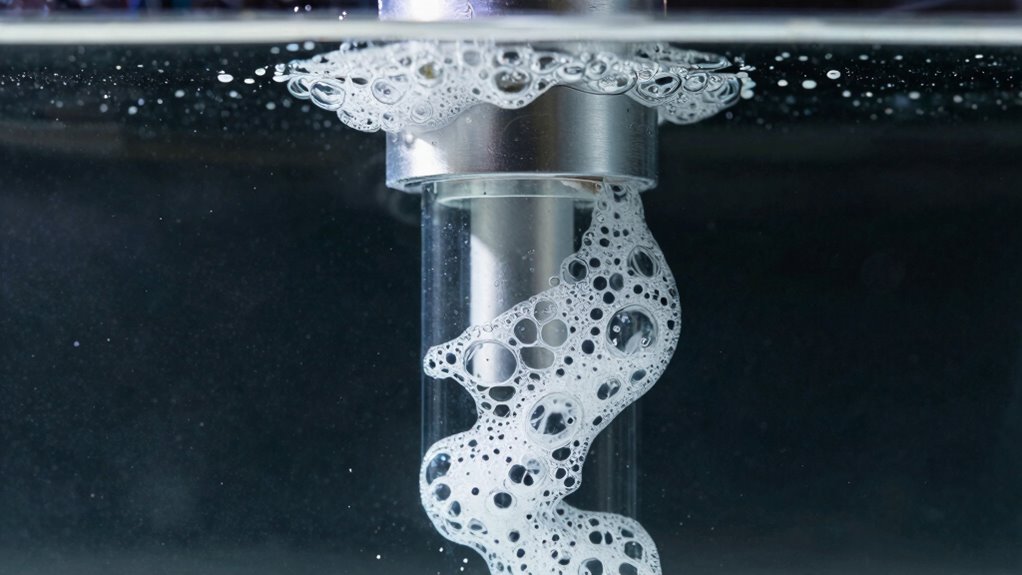
Have you ever wondered how marine aquarists maintain crystal-clear water in their tanks? The secret often lies in a well-functioning protein skimmer. These devices are essential for removing organic waste before it breaks down into harmful compounds, helping keep your marine aquarium healthy and visually stunning. But to get the most out of your skimmer, you need to understand that maintaining consistent foam production isn’t about chasing perfection. Instead, it’s about understanding the skimmer’s behavior and making small, informed adjustments.
Consistent foam production is about understanding your skimmer’s behavior and making small, informed adjustments.
When you first set up your protein skimmer, you’ll notice it produces foam—sometimes thick and sometimes thin. This foam captures dissolved organic compounds from the water, pulling them out of your marine aquarium. Over time, the foam levels can fluctuate, and that’s normal. Your goal shouldn’t be to achieve a perfect foam height every day but to keep the foam stable and the skimmer operating efficiently. Proper skimmer maintenance is key here. Regularly cleaning the collection cup, neck, and body prevents build-up that can hinder foam production. When components are clogged or dirty, your skimmer can’t perform at its best, and foam quality deteriorates. Additionally, understanding the biodiversity within your tank can help you optimize your skimming process, as different organic compounds require different skimming approaches. Recognizing the organic waste in your tank can guide your adjustments to improve foam stability. Moreover, factors such as the water parameters influence how well your skimmer functions, so keeping these in check supports consistent foam production. Maintaining a stable environment also helps prevent sudden fluctuations in foam, ensuring your skimmer functions smoothly. Monitoring foam stability over time can help you identify subtle changes that might signal the need for adjustment or maintenance.
Adjustments are part of the process. You may need to tweak the air intake or water flow to find the sweet spot where foam is consistently produced and the bubbles are stable. Remember, higher foam levels don’t always mean better filtration. Sometimes, a slight reduction in foam or a change in the bubble size improves the quality of waste removal. It’s a delicate balance—too much foam can overflow, while too little indicates that your skimmer isn’t pulling enough organic waste. Keep an eye on the foam color; dark, thick foam usually signals active waste removal, whereas light foam may suggest the skimmer needs a tweak.
Throughout your marine aquarium’s life, skimmer maintenance becomes routine. It’s not about perfection but about consistency. Regularly inspect the impeller and verify that the air and water channels are clear. Adjust the skimmer’s height or needle wheel if your model allows, and always clean it thoroughly after a few weeks of operation. Remember, foam is your indicator of healthy filtration, but it’s not the only one. Monitor your water parameters, and recognize that small adjustments to your skimmer can have a significant impact on water clarity and overall tank health. Patience and routine maintenance will help you achieve a well-balanced system where foam serves as a helpful tool, not a relentless pursuit of excellence.
As an affiliate, we earn on qualifying purchases.
Frequently Asked Questions
How Often Should I Clean My Protein Skimmer?
You should clean your protein skimmer weekly to maintain an effective maintenance routine and ideal skimmer efficiency. Regular cleaning prevents buildup of organic waste and guarantees consistent foam production. Check the collection cup and skimmer neck for clogs or excess gunk, and rinse parts with fresh water. By staying on top of cleaning, you keep your skimmer functioning properly, which benefits your aquarium’s water quality and overall health.
Can Protein Skimmers Remove All Types of Pollutants?
Protein skimmers mainly remove organic compounds and certain pollutants, but they don’t eliminate all types of pollutants like chemicals or heavy metals. For thorough filtration, you need chemical filtration, like activated carbon, and support biological processes with live rock or bio-media. Combining these methods ensures your tank stays healthy, as skimmers focus on organic waste, while chemical and biological filtration target other pollutants.
What Size Skimmer Is Suitable for My Tank?
You should choose a skimmer size based on your tank’s volume, aiming for a model rated slightly above your tank’s capacity for peak performance. Place the skimmer in a stable, accessible spot, ensuring proper flow and easy maintenance. To reduce noise, position it on a vibration-absorbing surface and check for loose fittings. Proper placement and size help improve efficiency and keep your tank water clear without unnecessary noise.
How Does Water Flow Rate Affect Foam Production?
Back in the day, folks knew that water flow impacts foam production considerably. You’ll find that increased water turbulence, caused by a higher flow rate, can break apart foam, reducing its effectiveness. To optimize foam, you need to make flow rate adjustments carefully—too fast, and foam won’t form properly; too slow, and it might stagnate. Finding the right balance ensures your protein skimmer functions efficiently and keeps your tank pristine.
Are There Eco-Friendly Options for Protein Skimmers?
Yes, eco-friendly options for protein skimmers exist. You can choose models that prioritize eco-friendly filtration, using biodegradable materials for parts or packaging. Look for skimmers made with sustainable components, which reduce environmental impact. These options help you maintain water quality while supporting eco-conscious practices. By selecting biodegradable materials and energy-efficient designs, you contribute to a healthier environment and a sustainable aquatic hobby.
Conclusion
So, next time you set up your protein skimmer, remember—it’s not about chasing a perfect foam that could fill your entire room! Embrace the art of subtlety, let the foam do its magic, and don’t stress over every tiny bubble. Your tank will thrive without obsessing over perfection. Trust the process, stay patient, and watch your marine paradise flourish like a secret underwater kingdom—foam or no foam!
Halloween Picks
halloween
As an affiliate, we earn on qualifying purchases.