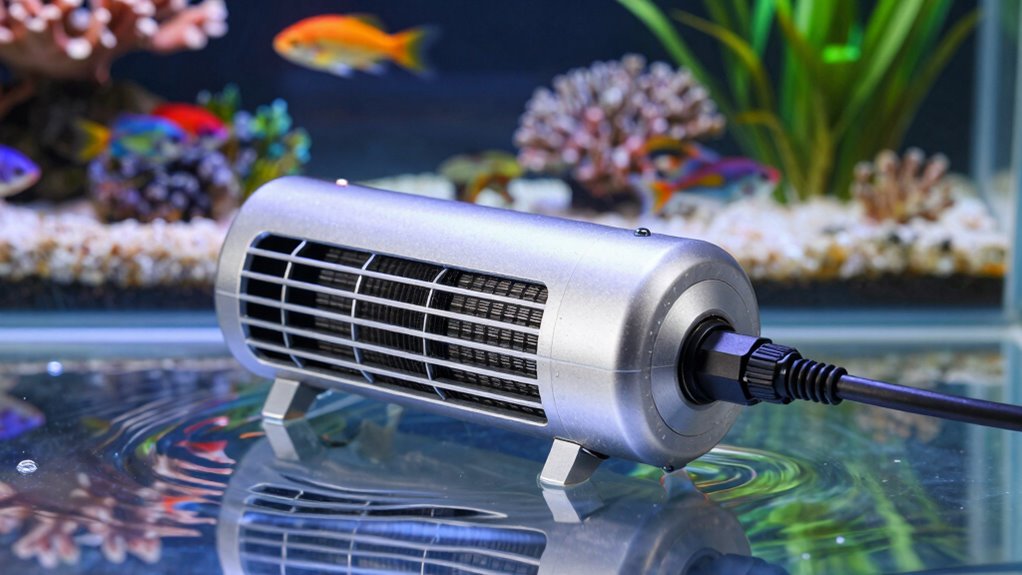

To keep your aquarium safe, choose a high-quality heater with safety features like automatic shut-off and a reliable thermostat. Mount it securely to prevent cracks and leaks, and avoid placing it near sharp objects. Regularly inspect it for damage and use a thermostat or external controller to prevent temperature spikes. Always keep cords in good condition and use GFCI outlets to prevent shocks. Staying vigilant helps protect your fish—learn more about safe heater practices to ensure a healthy tank.
Listen free for 30 days with Audible
Thousands of audiobooks and originals — cancel anytime.
As an affiliate, we earn on qualifying purchases.
Key Takeaways
- Regularly inspect the heater for cracks, damage, and proper mounting to prevent leaks and structural failures.
- Use grounded outlets, GFCI protection, and external controllers to reduce electrical shocks and temperature spikes.
- Match heater wattage to tank size and set the thermostat to appropriate levels for your fish species.
- Position the heater away from sharp decorations and ensure even water flow to avoid cracks and uneven heating.
- Conduct routine temperature checks with an independent thermometer and clean algae to maintain safe, stable water conditions.
aquarium heater with safety shut-off
As an affiliate, we earn on qualifying purchases.
As an affiliate, we earn on qualifying purchases.
Why Aquarium Heater Safety Matters for Your Fish
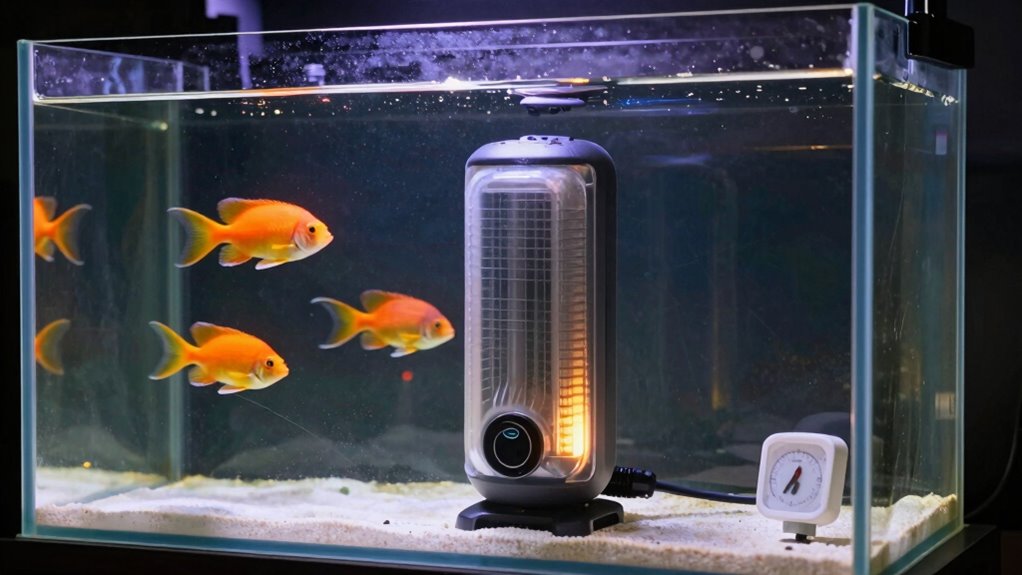
Your fish rely on a stable temperature to stay healthy, which is why aquarium heater safety is essential. Sudden temperature fluctuations can stress your fish, weaken their immune systems, and increase disease risk. An unsafe heater might cause cracks or leaks, releasing harmful substances into the water and harming fish health. Additionally, temperature spikes or drops can affect your aquarium’s aesthetics, making the environment less appealing and stressing you out. Proper heater safety ensures consistent warmth, promoting vibrant colors and clear water. When your heater operates safely, you create a stable habitat that supports your fish’s wellbeing and keeps your tank looking beautiful. Regular heater maintenance and inspections are vital to prevent potential hazards and ensure optimal performance. Implementing temperature regulation techniques can help maintain a steady environment and prevent dangerous fluctuations. Understanding the importance of aquarium safety standards helps you implement effective safeguards. Prioritizing heater safety is a key step in maintaining a healthy, visually appealing aquarium, and understanding water quality management can further enhance your tank’s overall health. Additionally, understanding heater placement can help prevent accidental damage and ensure even heat distribution.
How to Choose the Right Aquarium Heater for Safety and Performance
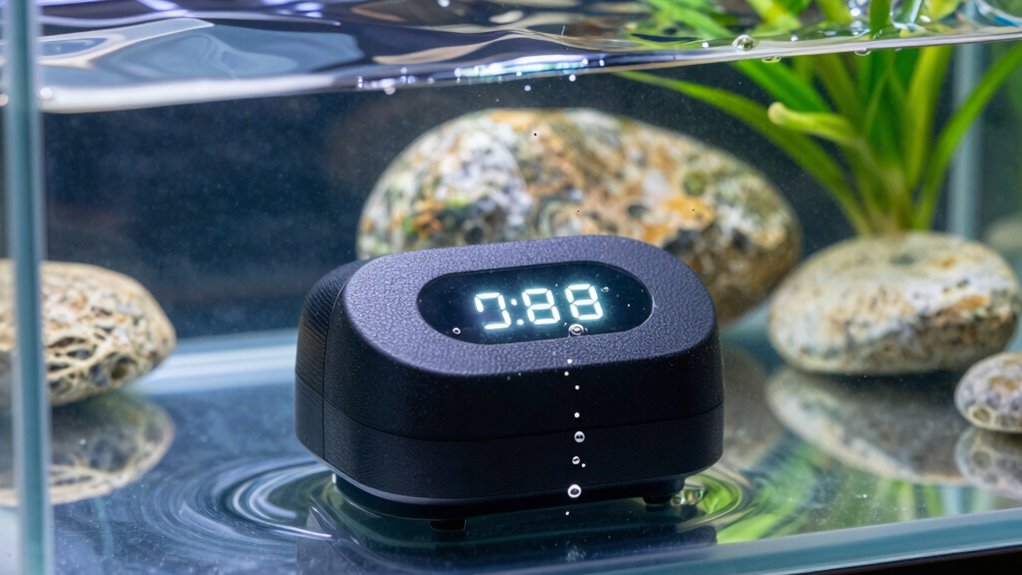
Selecting the appropriate aquarium heater is crucial to guarantee both safety and peak performance. When choosing, consider reputable aquarium heater brands known for reliability and durability. Look for models with safety features like automatic shut-off and thermal regulation to prevent overheating. Energy efficient heaters not only save you money but also reduce the risk of damage caused by excess heat. Match the heater’s wattage to your tank size for consistent temperature control without stressing your fish. Read reviews to identify models with proven safety records. Avoid inexpensive or generic brands that may lack essential safety features. Investing in a quality, energy efficient heater ensures your aquarium stays safe, stable, and healthy, giving your fish the environment they need to thrive. Proper temperature regulation helps prevent cracks, shocks, and temperature spikes that can harm aquatic life. Additionally, selecting a heater with built-in safety features, such as thermal cutoffs, can further protect against potential hazards. Ensuring your heater has reliable temperature control systems is vital for maintaining a stable environment. For added peace of mind, look for heaters that include overheat protection to minimize risk during operation.
Proper Aquarium Heater Placement to Prevent Cracks and Damage
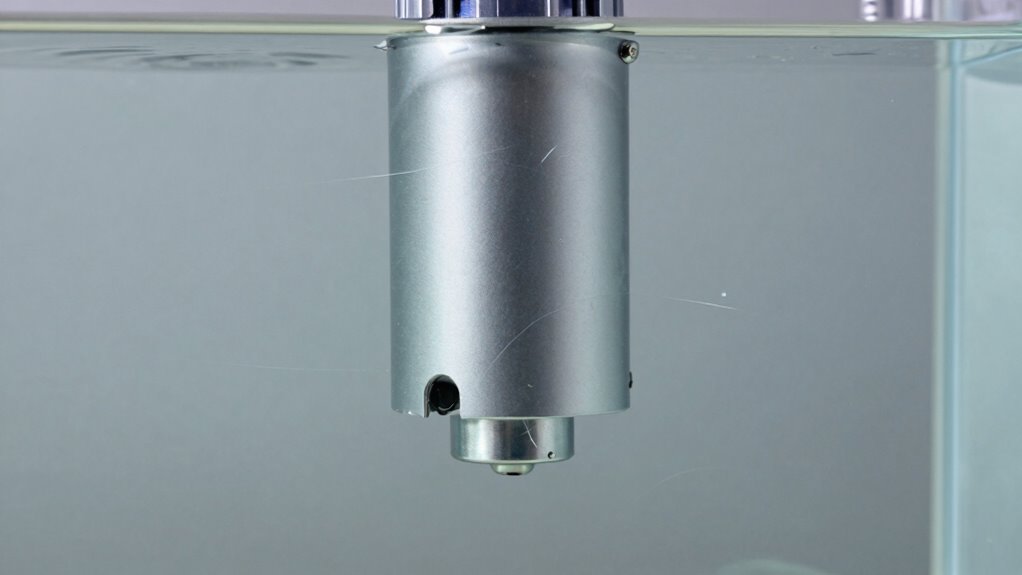
Proper placement of your aquarium heater is essential to prevent cracks and damage. Make sure you securely mount the heater using appropriate techniques to keep it stable. Also, avoid placing it near sharp edges or surfaces that could cause cracks over time. Additionally, selecting the right aquarium heater placement can help ensure safe operation and extend the lifespan of your equipment. Proper positioning also minimizes the risk of heater malfunction, which can lead to temperature spikes or electrical issues. Incorporating outdoor safety tips for equipment setup can further enhance the longevity and safety of your aquarium heater. Ensuring secure mounting methods are used can further prevent accidental dislodging or damage. Using proper load calculations when installing heaters can also help avoid electrical overloads that may cause malfunctions.
Secure Mounting Techniques
To prevent cracks and damage, it’s essential to securely mount your aquarium heater in a stable position. Proper secure mounting ensures the heater stays firmly in place, reducing unnecessary movement that can lead to cracks over time. Use mounting brackets or suction cups designed for your heater to achieve a strong hold. Vibration reduction is also key; secure the heater so it doesn’t vibrate against the glass or substrate, which can cause stress and cracks. Make sure the heater is positioned vertically or at a slight angle for *ideal* heat distribution and stability. Regularly check the mounting to ensure it remains secure, especially after cleaning or if the tank shifts. Proper secure mounting not only protects your heater but also promotes a safe, stable environment for your aquatic life. Additionally, choosing a high-quality mounting method can significantly decrease the risk of equipment failure and water damage. Incorporating reliable mounting techniques can further enhance the durability and safety of your aquarium setup, especially considering the importance of equipment stability in preventing accidents. Ensuring your mounting system provides consistent support can help mitigate vibrations and shocks that may compromise your heater’s integrity. Properly securing your heater also minimizes equipment vibrations, which can contribute to long-term durability issues.
Avoid Sharp Edges and Surfaces
Ensuring your aquarium heater is free from sharp edges and surfaces is essential for preventing cracks and damage. Sharp edges can inadvertently cut or stress the heater’s casing, increasing the risk of cracks that could leak or fail. When installing your heater, check for any rough or jagged spots and smooth them out with a file or sandpaper. Proper surface safety means placing the heater where it won’t come into contact with abrasive decor or gravel that might cause damage. Position the heater away from sharp decorations or fragile ornaments that could scrape or puncture it. Maintaining a smooth, safe surface around your heater helps prevent cracks, extends its lifespan, and keeps your aquarium environment secure for your aquatic life. Additionally, understanding high-quality materials used in heater construction can help you select durable options that resist damage over time. Selecting a heater made from durable materials is crucial for long-term reliability and safety, especially when considering the construction quality of the device. Using proper installation techniques can further reduce the risk of accidental damage and ensure safe operation. Incorporating regular inspection and maintenance routines can also help identify potential issues before they lead to damage or failure.
How to Set and Maintain Safe Temperature Ranges
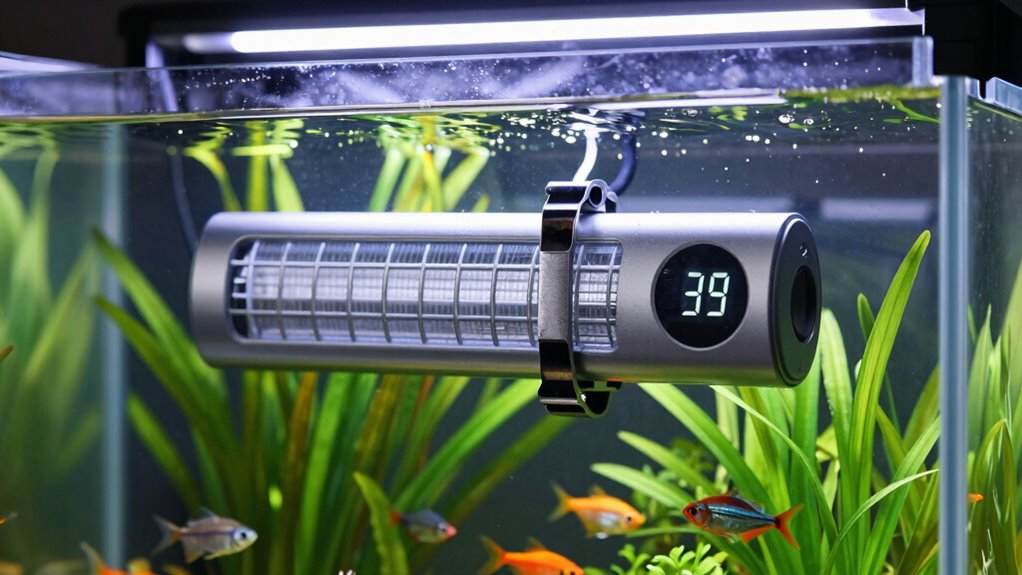
Setting the right temperature for your aquarium is essential to keep your fish healthy and comfortable. To do this effectively, start with proper temperature calibration—use a reliable thermometer to verify your heater’s accuracy. Next, ensure correct heater placement; position it near water flow to promote even heating. Then, follow these steps:
- Set the heater to the recommended temperature for your fish species.
- Monitor the temperature regularly, especially during initial setup.
- Adjust the thermostat if you notice temperature fluctuations.
- Avoid placing the heater near direct water flow or in spots where it might crack due to uneven heat distribution.
- Regularly inspect your heater and its components for signs of wear or damage to prevent malfunctions. Proper maintenance helps ensure your heater operates safely and effectively. Additionally, understanding heater safety guidelines can help prevent accidents or damage to your aquarium.
Consistent maintenance and accurate calibration help prevent dangerous temperature spikes, ensuring a safe environment for your aquatic life.
Using a Thermostat or External Controller to Prevent Temperature Spikes
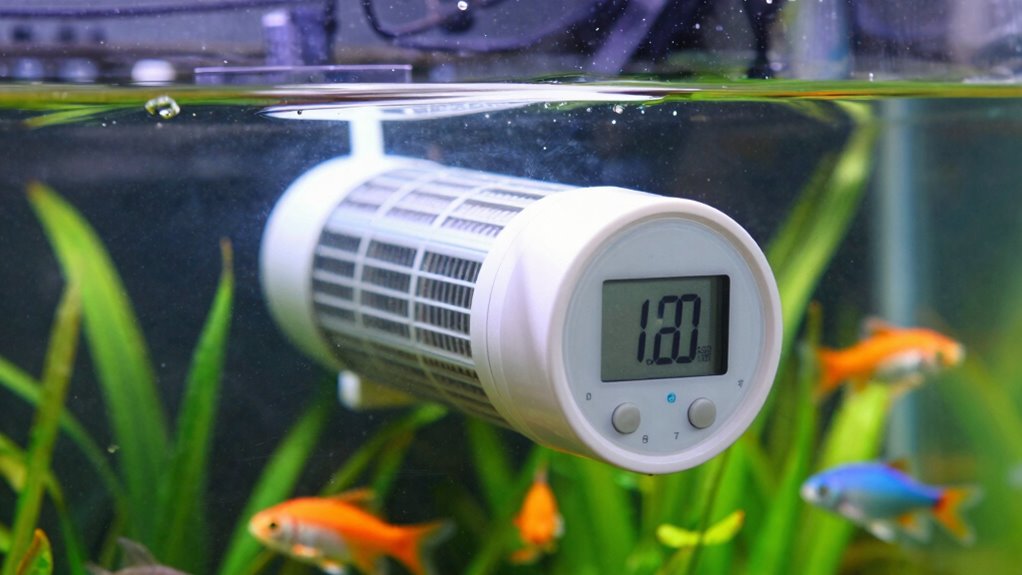
Using a thermostat or external controller offers an effective way to maintain stable water temperatures and prevent dangerous spikes. Smart thermostats automatically adjust heater output, keeping conditions steady. External controllers provide an extra layer of safety, disconnecting power if temperatures get too high. Imagine this setup:
| Temperature Range | Controller Type | Action |
|---|---|---|
| Safe | Smart thermostat | Maintains consistent heat |
| Rising dangerously | External controller | Shuts off heater immediately |
| Optimal | Both working together | Ensures stability |
How to Regularly Inspect and Maintain Your Aquarium Heater
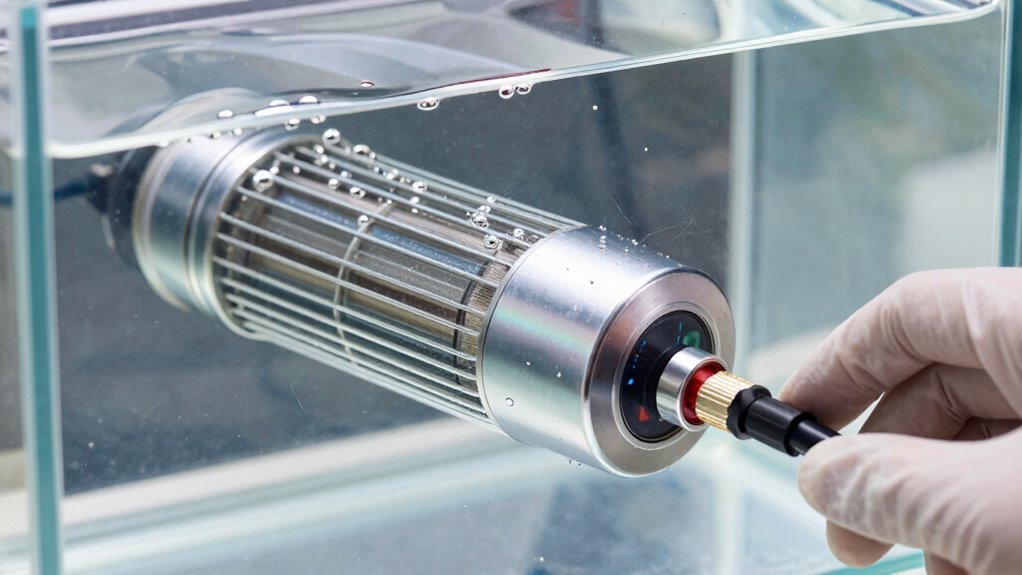
Regularly inspecting and maintaining your aquarium heater is essential to keep it functioning safely and efficiently. First, check the heater’s exterior for cracks or damage, which could cause leaks or shocks. Second, verify the thermostat’s accuracy by comparing the displayed temperature with an independent thermometer; this ensures proper fish nutrition by maintaining stable water temps. Third, clean away any aquarium algae buildup around the heater to prevent insulation issues that could cause overheating. Fourth, test the heater’s functionality by turning it off and on, listening for smooth operation. Regular maintenance prevents temperature spikes that can harm your fish and keeps the equipment in top shape. Consistent checks promote a healthy environment and safeguard your aquatic life.
Common Electrical Hazards: How to Avoid Shocks in Your Aquarium
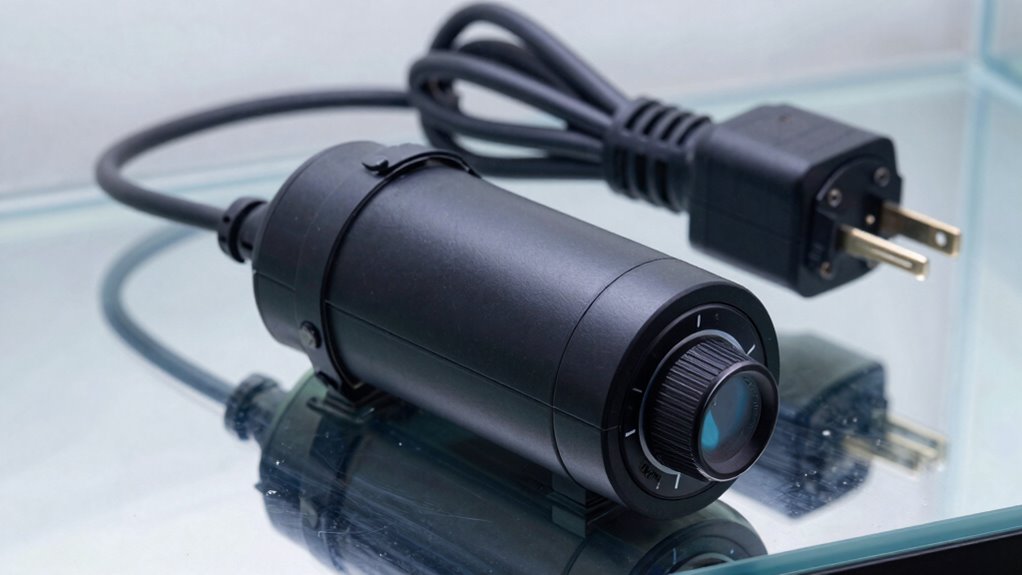
To prevent electrical shocks in your aquarium, you need to follow proper grounding practices and make certain your equipment is correctly grounded. Regularly inspecting your heater and other devices helps catch potential issues before they become hazards. Staying vigilant with maintenance keeps both your fish and yourself safe from electrical accidents.
Proper Grounding Practices
Have you ever wondered how proper grounding can prevent electric shocks in your aquarium? Effective grounding techniques are essential for electrical safety. First, always ensure your heater is plugged into a grounded outlet. Second, use a three-prong plug and outlet to provide a safe path for stray electricity. Third, install a ground-fault circuit interrupter (GFCI) outlet, which cuts power if a short occurs. Fourth, regularly check grounding connections for corrosion or damage. By following these grounding practices, you reduce the risk of shocks and protect your aquatic life. Proper grounding not only safeguards your equipment but also ensures electrical safety, giving you peace of mind while maintaining a healthy aquarium environment.
Regular Equipment Inspections
Inspecting your aquarium equipment frequently is vital to preventing electrical shocks. Regular inspections help you spot signs of corrosion, which can compromise insulation and conductivity, increasing shock risks. Check all cords, plugs, and equipment for corrosion prevention, replacing any damaged parts immediately. It’s also imperative to assess your water chemistry; high mineral levels or acidity can accelerate corrosion and damage electrical components. Ensure that all equipment is functioning properly and securely connected. Look for cracks, frayed wires, or signs of wear, especially around seals and joints. Maintaining clean, healthy water chemistry reduces corrosion and extends equipment lifespan. Consistent inspections keep you aware of potential hazards, allowing you to address issues early and keep your aquarium safe for both your aquatic life and yourself.
Troubleshooting Aquarium Heater Problems: Keep Your Tank Safe
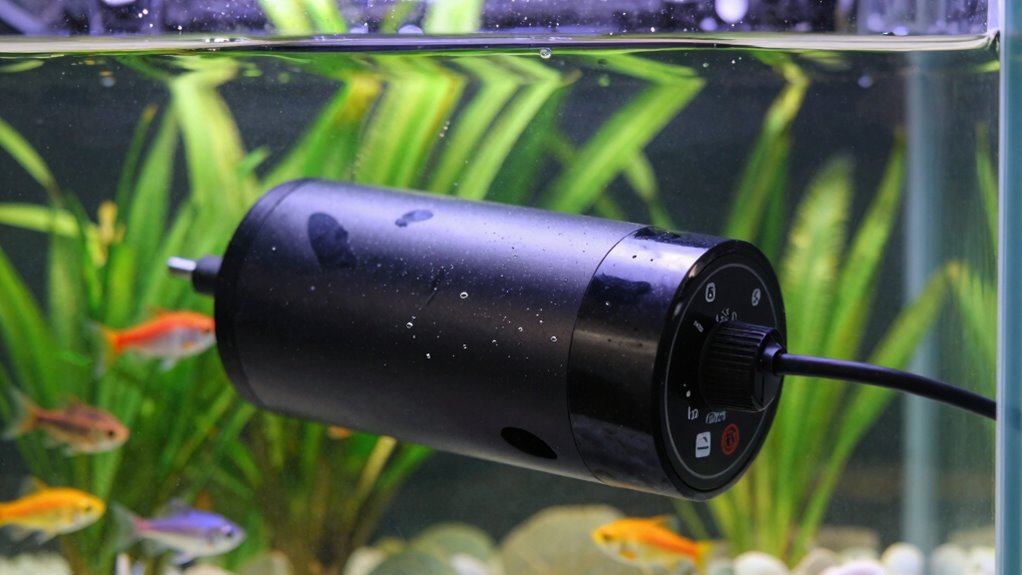
When your aquarium heater isn’t working properly, it’s essential to identify the problem quickly to prevent temperature fluctuations that could harm your aquatic life. Start by checking the power source and ensuring the heater is plugged in securely. Next, verify the thermostat setting matches your desired temperature. Then, observe fish behavior; sudden stress or sluggishness can indicate temperature issues. Additionally, consider aquarium plant compatibility, as some plants thrive at specific temperatures and may signal heater problems if they show stress. Finally, test the heater with a reliable thermometer to confirm accurate readings. Regularly monitoring fish behavior and checking heater function can help you catch issues early, keeping your tank safe and stable.
Frequently Asked Questions
Can a Faulty Heater Cause Long-Term Harm to Aquarium Inhabitants?
A faulty heater can indeed cause long-term harm to your aquarium inhabitants. It may lead to inconsistent temperatures, which can stress fish and other aquatic life chronically. This ongoing stress weakens their immune systems, making them more susceptible to disease and affecting their long-term health. Regularly checking and maintaining your heater guarantees stable conditions, preventing chronic stress and promoting a healthy, thriving environment for your aquatic pets.
Are There Specific Heater Brands With Higher Safety Ratings?
Yes, some heater brands have higher safety ratings due to better brand reliability and safety certifications. You should look for reputable brands like Eheim, Fluval, and Cobalt, which are known for rigorous safety standards. Always check for safety certifications such as UL or CE, as these indicate the heater meets essential safety requirements. Investing in a certified, reliable heater reduces risks of cracks, shocks, and temperature spikes, keeping your aquarium inhabitants safe.
How Often Should I Replace My Aquarium Heater for Safety Reasons?
A stitch in time saves nine, so you should replace your aquarium heater every 1 to 2 years for safety reasons. Regular heater maintenance helps detect cracks, faulty wiring, or temperature inconsistencies early. Follow recommended replacement intervals to prevent shocks or temperature spikes that could harm your fish. If the heater shows signs of damage or isn’t functioning properly, replace it immediately to keep your tank safe and stable.
What Are Signs of Electrical Failure in Aquarium Heaters?
You’ll notice electrical failure in your aquarium heater if it makes unusual electrical noise or the flickering indicator light signals a problem. These signs suggest the heater isn’t functioning properly and may pose safety risks. If you see or hear these issues, unplug the heater immediately, inspect it carefully, and consider replacing it to prevent shocks or temperature fluctuations that could harm your aquatic life.
Can I Use a Household Thermostat for Aquarium Temperature Control?
Using a household thermostat for your aquarium might seem like a simple fix, but it’s like trying to fit a square peg in a round hole. Household thermostats aren’t designed for aquatic environments and lack the precise control needed for aquarium temperature. They can fail, causing temperature swings that stress or harm your fish. For safe, steady aquarium temperature, invest in a dedicated aquarium heater with built-in thermostats.
Conclusion
By prioritizing aquarium heater safety, you protect your fish from sudden crashes and shocks—like a fragile glass jar near turbulent waters. When you choose, place, and maintain your heater carefully, you create a safe haven amidst potential hazards. It’s the calm surface above churning currents, a steady warmth amid unpredictable storms. Stay vigilant, and your aquatic world will thrive, resilient and vibrant, beneath the gentle glow of a well-guarded tank.
NFL season / tailgating Picks
team gear
As an affiliate, we earn on qualifying purchases.