The frequency you should bathe your dog depends on their coat type and activity level. Short-haired dogs generally need baths every 6 to 8 weeks, while long-haired or curly-coated breeds might benefit from baths every 4 to 8 weeks. Over-bathing can dry out their skin and damage their coat, so it’s important to tailor routines carefully. If you’re unsure, there’s more you should know about safe grooming practices and signs that your dog may need different care.
Key Takeaways
- Short-haired dogs typically need bathing every 6 to 8 weeks, unless they become particularly dirty or develop odors.
- Long-haired and curly-coated breeds generally require baths every 4 to 8 weeks, depending on activity level and coat condition.
- Oily-coated breeds often need more frequent baths to control sebum buildup and maintain skin health.
- Over-bathing can strip natural oils, causing dryness and discomfort; routines should be tailored to coat type and skin needs.
- Regular grooming, including brushing, helps manage dirt and loose hair, reducing the need for frequent baths.
dog grooming shampoo for coat types
As an affiliate, we earn on qualifying purchases.
As an affiliate, we earn on qualifying purchases.
How Your Dog’s Coat Type Affects Bathing Frequency

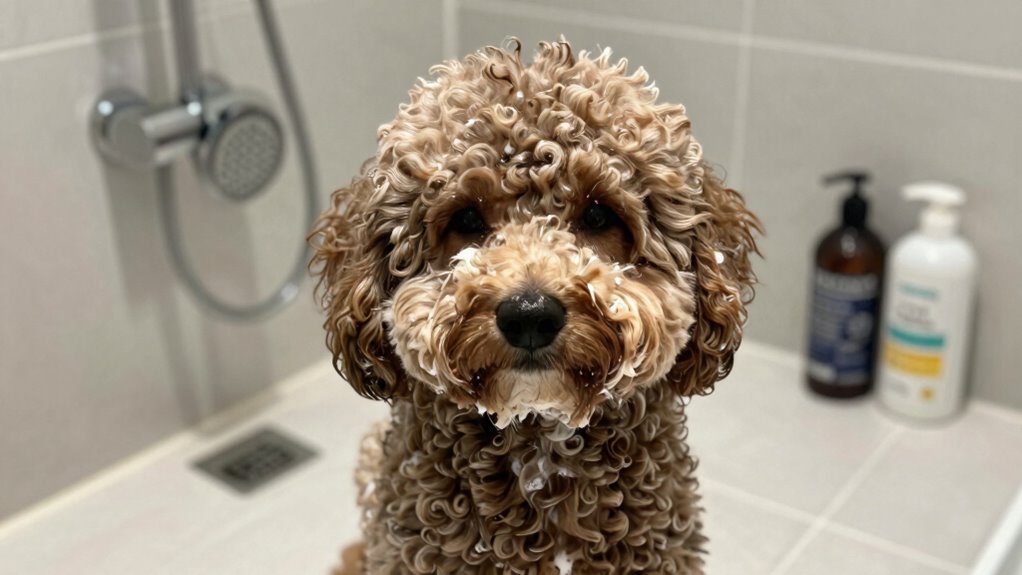
Your dog’s coat type plays a significant role in determining how often you should bathe them. For dogs with oily coats, frequent baths help control excess sebum, reducing unpleasant dog scent. Conversely, long-haired or double-coated breeds often need less frequent baths to prevent stripping natural oils, which can lead to dryness or irritation. When bathing your dog, use appropriate bathing equipment like gentle shampoos and brushes suited to their coat type. Proper tools ensure thorough cleaning without damaging the coat or irritating the skin. Remember, over-bathing can disrupt your dog’s natural oils, causing discomfort and increased shedding. Tailoring your bathing routine to your dog’s coat type helps maintain their hygiene, minimizes odor, and keeps their coat healthy and shiny. Additionally, understanding the specific coat type can guide you in choosing the right bathing frequency for optimal coat health. Recognizing coat texture can also influence the selection of grooming products to keep the coat in the best condition. Being aware of your dog’s coat condition can further help prevent skin issues and maintain a healthy, vibrant coat.
dog grooming brushes for long hair
As an affiliate, we earn on qualifying purchases.
As an affiliate, we earn on qualifying purchases.
How Often to Bathe Short-Haired Dogs
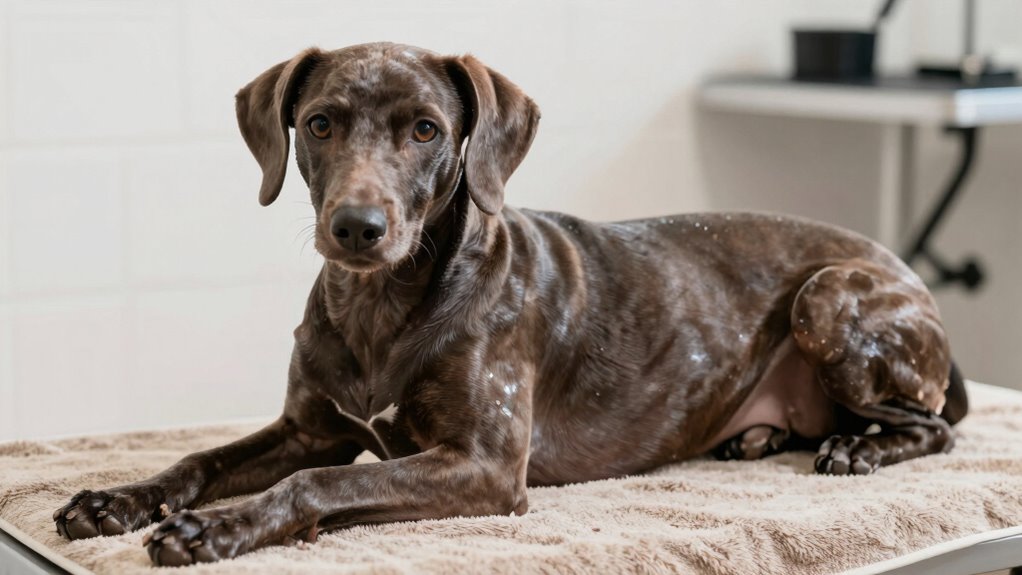
Short-haired dogs generally require less frequent baths than their long-haired counterparts, as their coats don’t trap dirt and debris as easily. Typically, bathing every 6 to 8 weeks is sufficient unless your dog gets especially dirty or develops a strong dog scent. When bathing, use lukewarm water to keep your dog comfortable and to avoid skin irritation. Maintaining the right bathing temperature is key to preventing discomfort and ensuring a thorough clean. Short-haired breeds tend to shed less odor, so frequent baths aren’t necessary for odor control alone. Instead, regular brushing helps manage loose hair and dirt buildup. Always use a gentle dog-specific shampoo to preserve your pet’s skin health and keep their coat shiny and clean. Incorporating energy-efficient bathing routines can also help reduce resource consumption during grooming. Additionally, proper bathing frequency ensures your dog’s skin stays healthy without unnecessary drying or irritation, which aligns with maintaining healthy skin and coat, and being mindful of the environmental impact of grooming practices.
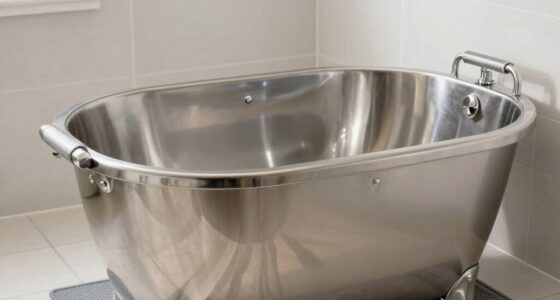
dog bathing tub with non-slip mat
As an affiliate, we earn on qualifying purchases.
As an affiliate, we earn on qualifying purchases.
How Often to Bathe Long-Haired and Curly-Coated Dogs
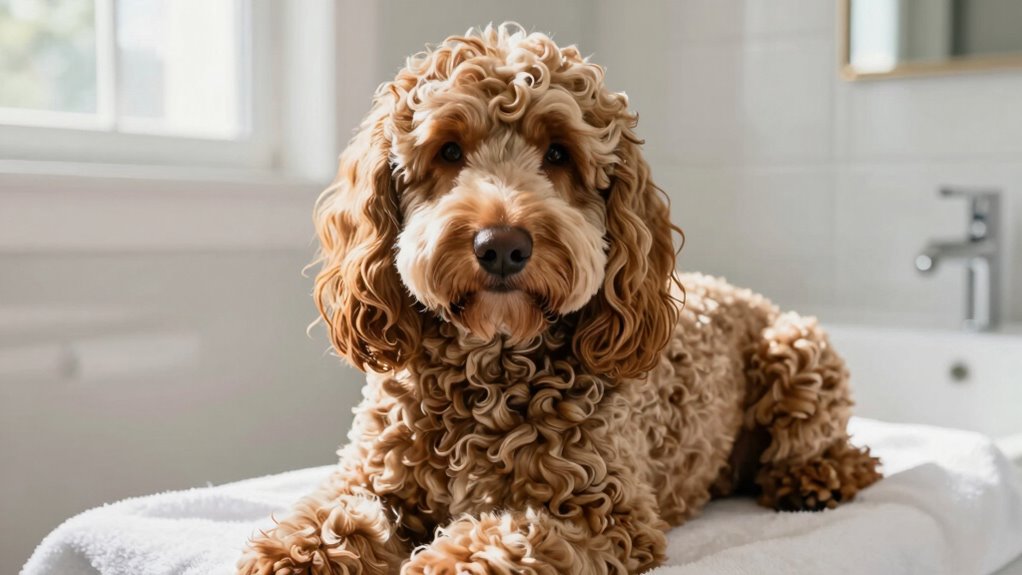
Long-haired and curly-coated dogs often need more frequent baths to keep their coats clean and healthy. You should consider recommended bath intervals, grooming routines, and how bathing impacts their skin. Proper care helps prevent matting, skin issues, and keeps your dog comfortable. Additionally, using the appropriate air quality products during grooming, such as gentle shampoos and conditioners, can further support healthy skin and coat conditions. Regular bathing also helps reduce dander buildup, which is beneficial for both your pet and household environment.
Bath Frequency Recommendations
Long-haired and curly-coated dogs typically require less frequent baths than their short-haired counterparts, but the exact interval depends on their lifestyle and coat condition. If your dog enjoys plenty of canine exercise or has a diet that affects skin oils, you might need to bathe them more often to keep their coat clean and healthy. Proper dog nutrition supports a shiny, manageable coat, reducing dirt buildup and odor. Generally, bathing every 4 to 8 weeks works well for these breeds, but always adjust based on activity level, outdoor exposure, and coat health. Overbathing can strip natural oils, so monitor your dog’s skin and coat condition, and consult your vet if unsure. Regular grooming and attentive care ensure your long-haired or curly-coated dog stays comfortable and clean. Incorporating balanced design principles into grooming routines can also help maintain a healthy coat.
Grooming and Coat Care
Proper grooming and coat care are key to keeping your long-haired or curly-coated dog comfortable and healthy. Regular brushing helps prevent matting and distributes natural oils, enhancing coat health. When it comes to bathing, avoid overdoing it; bathing too often can strip essential oils, causing dryness. Instead, support your dog’s coat with good dog nutrition, which promotes healthy skin and fur. Additionally, providing ample canine exercise keeps your dog active and reduces stress, contributing to overall coat condition. During grooming sessions, check for any skin issues or parasites. Use gentle, dog-specific shampoos and conditioners tailored to your dog’s coat type. Consistent grooming and attentive care guarantee your dog stays comfortable, shiny, and well-maintained.
Skin Health Considerations
Because long-haired and curly-coated dogs have hair that can trap dirt and moisture, their bathing frequency directly impacts skin health. Bathing too often can strip natural oils, leading to dryness, irritation, and increased risk of skin infections. Conversely, infrequent baths may allow allergens and dirt to build up, aggravating dog allergies and causing discomfort. Maintaining the right balance helps keep your dog’s skin healthy and free from irritation.
Consider these important points:
- Regular baths reduce the risk of skin infections
- Proper cleaning can minimize dog allergies
- Over-bathing may cause dryness and itching
- Under-bathing can lead to build-up of dirt and bacteria
- Use gentle, vet-recommended products to protect skin integrity
dog coat health supplements
As an affiliate, we earn on qualifying purchases.
As an affiliate, we earn on qualifying purchases.
When and Why You Should Adjust Your Dog’s Bathing Routine
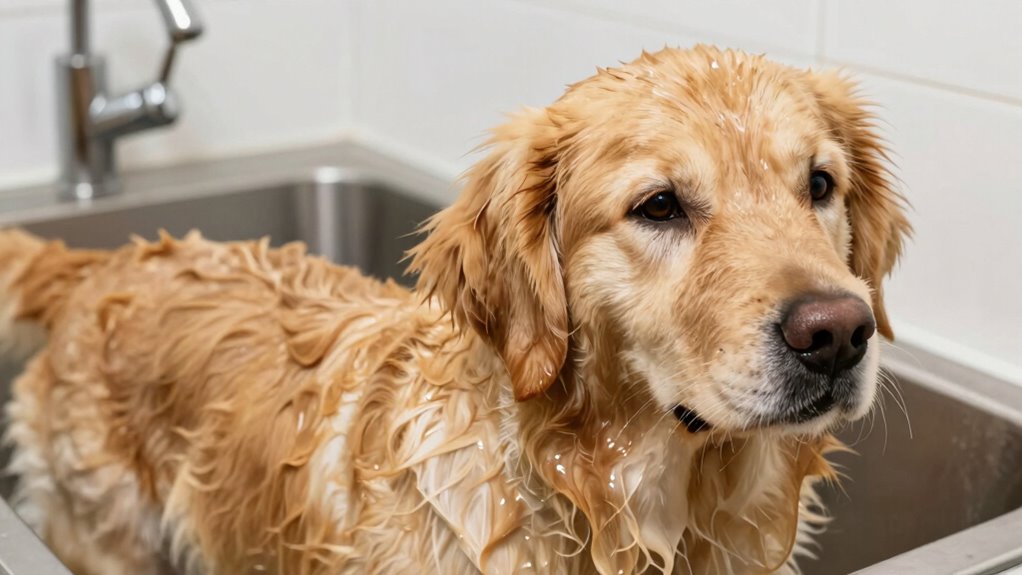
Adjusting your dog’s bathing routine is essential when you notice changes in their skin, coat, or behavior. If your dog shows signs of irritation or allergy triggers, like itching or redness, consider modifying how often you bathe them. Seasonal bathing adjustments are also important; during warmer months, more frequent baths may help remove allergens or excess oil, while in colder months, less frequent washing can prevent dryness. Keep an eye on their skin health and coat condition to determine if adjustments are needed. Additionally, changes in activity level or exposure to dirt and outdoor elements might require you to alter your routine. By paying attention to these cues, you can better maintain your dog’s comfort and health throughout the year. Monitoring your dog’s skin health and coat condition helps identify when a change in bathing frequency is necessary. Ensuring your bathing routine aligns with the fundamentals of pet hygiene supports overall well-being and comfort, especially considering how coat‑type influences bathing needs.
Signs Your Dog Needs an Immediate Bath or a Break From Frequent Washing
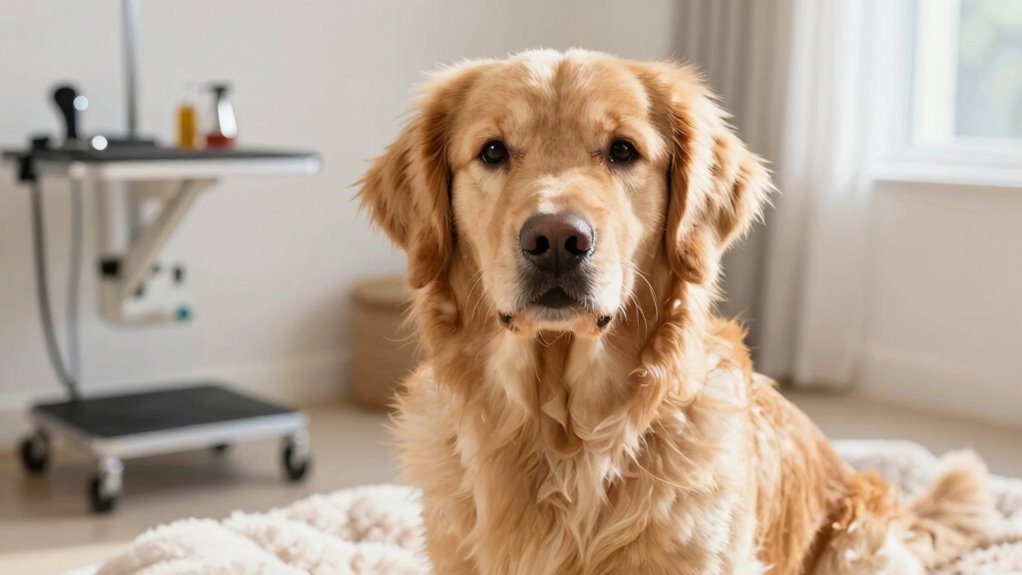
If your dog starts to smell unusually strong or develops a greasy or foul-looking coat, it’s a clear sign they may need an immediate bath. Ignoring these signs can lead to discomfort or skin issues. Pay attention to your dog’s grooming cues and adjust their bathing schedule accordingly. Watch for:
- Persistent bad odor despite regular grooming
- Greasy, oily, or matted fur
- Skin redness, irritation, or rashes
- Excessive scratching or licking
- Unpleasant odor that lingers after a quick brush
- Proper grooming techniques can help prevent some skin problems and keep your dog comfortable. Additionally, understanding your dog’s coat‑type can guide you in determining how often to bathe them and what products are safest to use. Recognizing skin health indicators is essential for maintaining your dog’s overall well-being. Regular grooming and bathing routines should be tailored to your dog’s specific breed characteristics, as different breeds have unique coat and skin needs.
These signals indicate your dog may need a bath sooner than scheduled or a break from frequent washing. Proper dog grooming isn’t just about routine; it’s about recognizing when your dog’s coat or skin needs extra care. Respond promptly to keep your pup happy and healthy.
Tips for Bathing Your Dog Properly Based on Coat Type
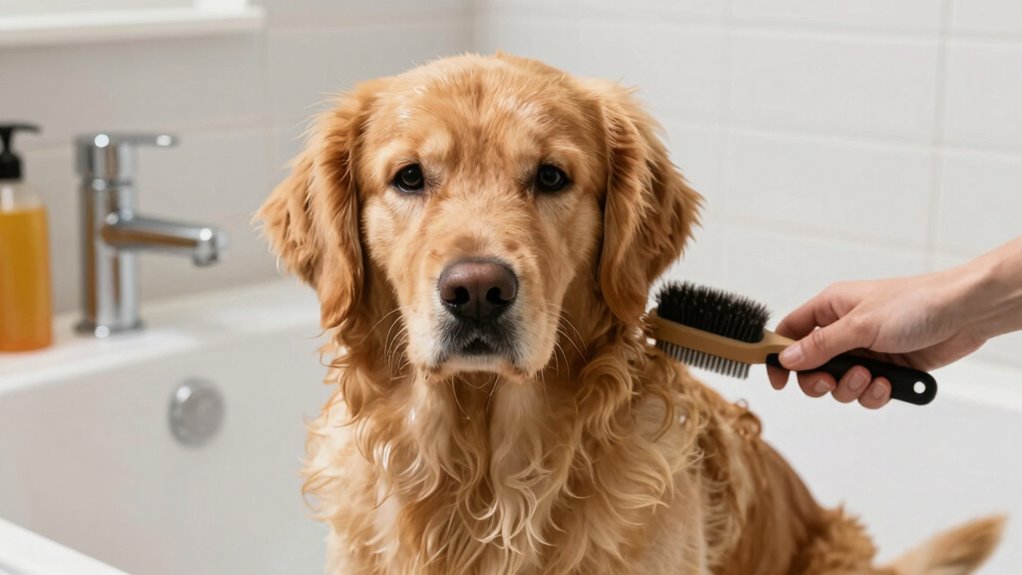
Different coat types require different bathing techniques to guarantee your dog’s skin stays healthy and their fur remains clean. For short-haired dogs, use a gentle brush to remove loose hair before bathing and choose a mild shampoo suited for their skin. Long-haired breeds need thorough brushing before bathing to prevent matting, and you should handle their coat delicately to avoid damage. Curly or textured coats benefit from deep conditioning, making sure to comb out tangles during or after a bath. Puppy grooming requires special care; use soft bathing tools and mild, puppy-specific shampoos to avoid irritation. Incorporating proper grooming techniques can significantly improve your dog’s coat condition and overall comfort. Additionally, understanding coat-specific bathing needs can help you tailor your routine for optimal health. Recognizing individual coat requirements ensures you select the right products and methods for your pet’s unique fur type. Always rinse thoroughly to remove all shampoo residue, and dry carefully to prevent skin issues, especially considering the influence of celestial bodies on personal traits that can affect skin sensitivity and coat health.
Frequently Asked Questions
Can Bathing Frequency Affect My Dog’s Skin Health?
Yes, bathing frequency can affect your dog’s skin health, especially if they have skin sensitivity. Overbathing can strip natural oils, leading to dryness and irritation, while infrequent baths might cause build-up and infections. Proper dog grooming tailored to your dog’s coat type helps maintain healthy skin. Regular baths with gentle, vet-approved products keep their coat clean and skin balanced, preventing discomfort and promoting overall well-being.
What Are the Risks of Over-Bathing My Dog?
Over-bathing your dog can strip natural oils from their coat, leading to dry, flaky skin and irritation. It may also disrupt the balance of good bacteria, increasing infection risks. To maintain a healthy coat and skin, stick to an appropriate bathing schedule for your dog’s coat type. Regular baths help keep your pet clean, but too frequent washing can cause discomfort, so always consider their specific needs.
How Do I Choose the Right Shampoo for My Dog?
Imagine your dog’s coat is a canvas needing the right colors; choosing the perfect shampoo is key. You should select a dog grooming shampoo with gentle, natural ingredients that suit your pup’s skin type. Check labels for soothing ingredients like oatmeal or aloe, and avoid harsh chemicals. By doing so, you guarantee a safe, nourishing clean, transforming bath time into a soothing experience that keeps your dog healthy and happy.
Are There Specific Bathing Routines for Senior Dogs?
For senior dogs, you should tailor your bathing routine for ideal senior dog grooming and aging coat care. Bathe them every 4 to 6 weeks, or more often if they get dirty or have skin issues. Use a gentle, moisturizing shampoo suited for aging coats. Be gentle, avoid hot water, and focus on thorough but soothing grooming. Regular baths help keep their skin healthy and comfort their aging coat.
How Does Climate Influence My Dog’s Bathing Schedule?
Climate greatly influences your dog’s bathing schedule because warmer weather can cause more dirt and sweat, prompting more frequent grooming. In humid conditions, you might need to bathe your dog more often to prevent skin sensitivity and infections. Conversely, cooler climates may require less frequent baths to maintain skin health. Always consider your dog’s coat type and skin sensitivity to strike the right balance, ensuring their comfort and hygiene.
Conclusion
Now that you know how your dog’s coat type influences bathing needs, the real question is—are you ready to discover the secret to keeping your furry friend’s coat healthy and shiny? The right routine isn’t just about cleanliness; it’s about understanding your dog’s unique needs. Get it right, and you’ll not only improve their comfort but open a bond stronger than ever. Are you prepared to take that next step? The choice is yours.