
To size your canister filter, match its flow rate to your tank’s volume, usually aiming for 4-6 times the tank’s size per hour. For example, a 50-gallon tank needs a filter with about 200-300 GPH. Properly balancing flow ensures good water circulation, healthy fish, and effective filtration. If you’re unsure how to find the right size, exploring the details will help you choose the best setup for your aquarium.

Get pet supplies delivered free — and shop member deals
- Fast, free delivery on millions of items
- Access to Prime Big Deal Days deals on October 6–7
- Prime Video, Amazon Music and more included
Key Takeaways
- Match the filter’s flow rate to your tank’s volume, typically aiming for 4-6 times the tank size per hour.
- Calculate tank volume accurately using length, width, and height measurements, then convert to gallons or liters.
- For optimal water quality, ensure the filter’s GPH (gallons per hour) aligns with fish bioload and tank size.
- Larger tanks require higher flow rate filters to prevent dead spots and support healthy water circulation.
- Regularly monitor and adjust flow rates and water changes based on water clarity, fish behavior, and plant growth.
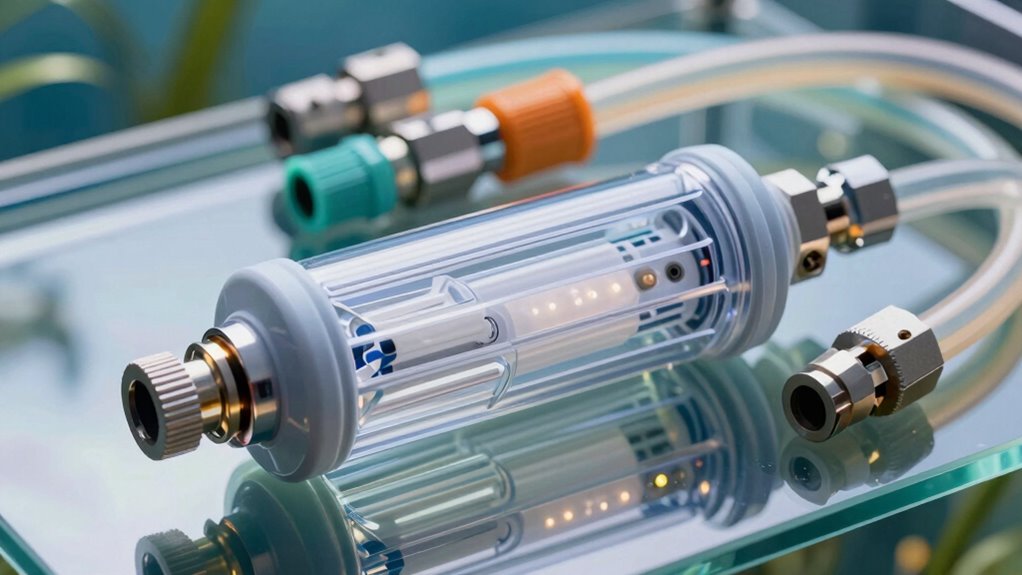
canister filter for 50-gallon aquarium
As an affiliate, we earn on qualifying purchases.
As an affiliate, we earn on qualifying purchases.
Why Proper Canister Filter Sizing Matters for Your Aquarium
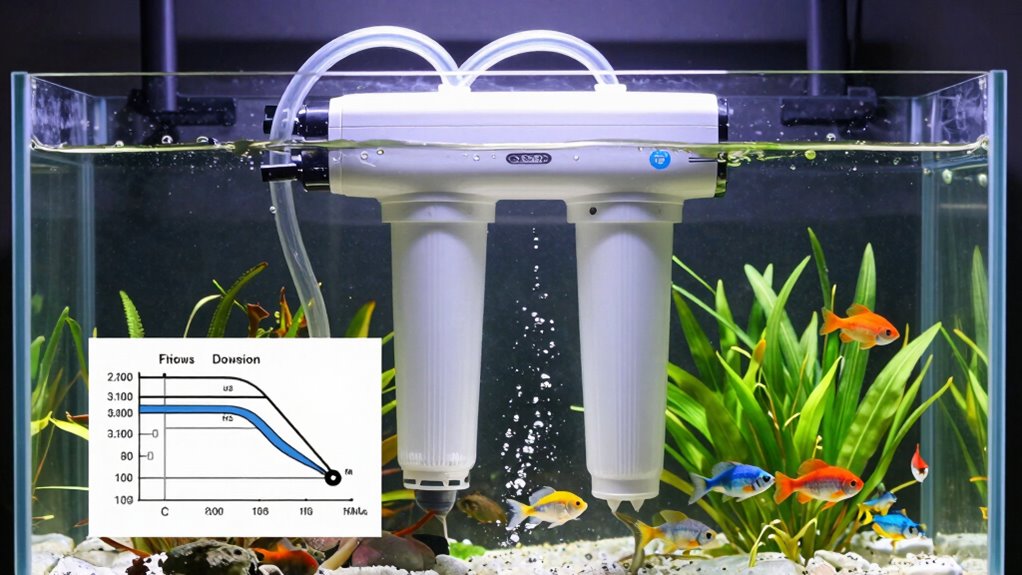
Choosing the right size canister filter is essential because an undersized filter won’t effectively clean your aquarium, leading to poor water quality. When your filter matches your tank’s needs, it helps maintain clear water and promotes healthy fish behavior. A properly sized filter also enhances aquarium aesthetics by reducing debris and algae buildup, making your tank more visually appealing. If the filter is too small, waste and toxins can accumulate, stressing your fish and causing erratic behavior. Conversely, an appropriately sized filter ensures smooth flow and efficient filtration, creating a stable environment. This balance supports natural fish activities and keeps your aquarium looking pristine. Proper sizing is key to both a healthy ecosystem and an attractive display, making your hobby more enjoyable. Additionally, understanding the flow rate relative to your tank volume helps optimize filtration performance. Recognizing the importance of filter capacity can help you select the ideal unit for your specific setup, ensuring adequate filtration and long-term aquarium health. Proper filter maintenance also plays a crucial role in sustaining its effectiveness over time. Regularly monitoring water parameters ensures your filtration system continues to meet your aquarium’s needs effectively.
How Tank Size and Turnover Rate Influence Filter Choice
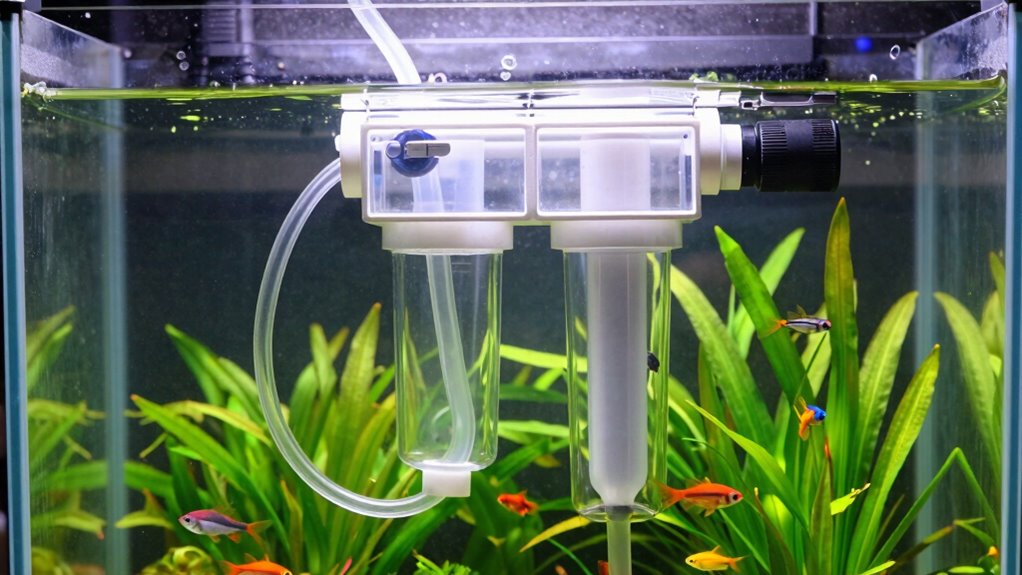
Your tank size and desired turnover rate directly influence the ideal canister filter for your aquarium. Larger tanks require filters with higher flow rates to ensure proper water circulation, maintaining consistent water quality. A higher turnover rate helps prevent dead spots, supporting healthy fish behavior and reducing stress. Additionally, selecting a filter with the appropriate flow rate capacity is crucial for ensuring your aquarium’s ecosystem remains balanced. Proper sizing also involves understanding how filter flow rate impacts water movement and oxygenation within your tank. Conversely, smaller tanks need less powerful filters to avoid creating strong currents that can disturb your aquarium’s aesthetics and irritate your fish. Matching the filter’s capacity to your tank size preserves visual clarity and creates a stable environment. By choosing a filter aligned with your tank’s volume and your desired flow, you promote natural fish behavior and maintain an attractive, healthy aquatic display. Proper sizing guarantees your filter supports both aesthetic appeal and the well-being of your aquatic life. Additionally, understanding flow rate calculations can help you select the most suitable filter for your setup. To accurately size your filter, consider the turnover rate, which is essential for maintaining optimal water quality and fish health. Knowing the aquarium filtration requirements can also guide you in selecting a filter that meets both your tank’s needs and your maintenance preferences.
How to Calculate the Right Flow Rate for Your Aquarium

To find the right flow rate, start by determining your aquarium’s volume. Next, consider the flow rate your tank needs to keep water clean and healthy. A proper affiliate disclosure can also inform your purchasing decisions for filters and accessories. Additionally, understanding the net worth of individuals involved in related fields can help gauge the quality and reputation of certain brands or products. Knowing the fundamentals of water circulation ensures your setup remains reliable and prevents issues down the line. For example, selecting a filter with an appropriate support features can significantly enhance your aquarium’s performance. Finally, match your filter’s capacity to guarantee it provides ideal circulation without overdoing it. Understanding safe installation practices ensures your setup remains reliable and prevents issues down the line.
Determine Aquarium Volume
Ever wonder how to determine the right size canister filter for your aquarium? It all starts with understanding your aquarium dimensions. Measure the length, width, and height of your tank accurately. Once you have these measurements, you can perform a volume calculation by multiplying them together and dividing by 1,000 (for liters) or 1,728 (for gallons). This gives you the total tank volume. Knowing your aquarium’s volume is essential because it helps you select a filter that can process the entire water content efficiently. Accurate volume measurement guarantees your filter’s flow rate matches your tank’s needs, promoting a healthy environment for your aquatic life. Always use precise measurements to get the most reliable volume calculation. Understanding flow rate is crucial for optimizing your aquarium’s filtration system. Additionally, selecting a filter with an appropriate capacity ensures optimal performance and longevity of your equipment. Being aware of the biological load can help you choose the right filtration system to support beneficial bacteria and maintain water quality.
Understand Flow Rate Needs
Once you’ve calculated your aquarium’s volume, the next step is to determine the appropriate flow rate for your canister filter. The right flow rate guarantees your tank stays clean without disrupting its aesthetics or creating excessive filter noise. Generally, you want a flow rate that turns over the entire tank volume 4-6 times per hour, depending on your aquatic inhabitants’ needs. For delicate or slow-moving species, lower flow rates help maintain a peaceful environment and preserve the tank’s visual harmony. Keep in mind that too high a flow can cause turbulence, stressing your fish and detracting from your aquarium’s aesthetics. Finding the right balance guarantees efficient filtration while keeping noise levels minimal and your tank visually pleasing. Additionally, considering the dog breeds overview can help you select equipment suitable for the specific needs of your aquatic environment. Proper flow rate calculation is essential for creating a healthy and harmonious habitat for your aquatic life.
Match Filter Capacity
Determining the right filter capacity involves matching your canister filter’s flow rate to your aquarium’s specific needs. To do this, consider your tank size and the desired turnover rate, which affects flow efficiency. A higher flow rate improves filtration but can stress delicate fish or disturb plants, while too low a rate hampers water quality. Calculate the necessary flow rate by multiplying your tank volume by the recommended turnover rate—usually 4 to 6 times per hour. For example, a 50-gallon tank needs a filter with a capacity of 200-300 GPH. Ensuring your canister filter matches this capacity optimizes flow efficiency, providing clean, healthy water without overwhelming your aquatic environment. Proper matching helps maintain stability and clarity in your aquarium. Flow rate calculation is an essential aspect of reliable aquarium maintenance. Additionally, understanding the importance of appropriate filter capacity can help prevent overworking your pump and extend its lifespan. Regularly monitoring your tank’s bioload and environmental conditions can ensure your flow rate remains suitable and adjustments are made as needed for optimal performance. Incorporating energy-efficient options can also contribute to reducing your overall operational costs.
Adjusting Your Canister Filter for Fish and Plant Needs
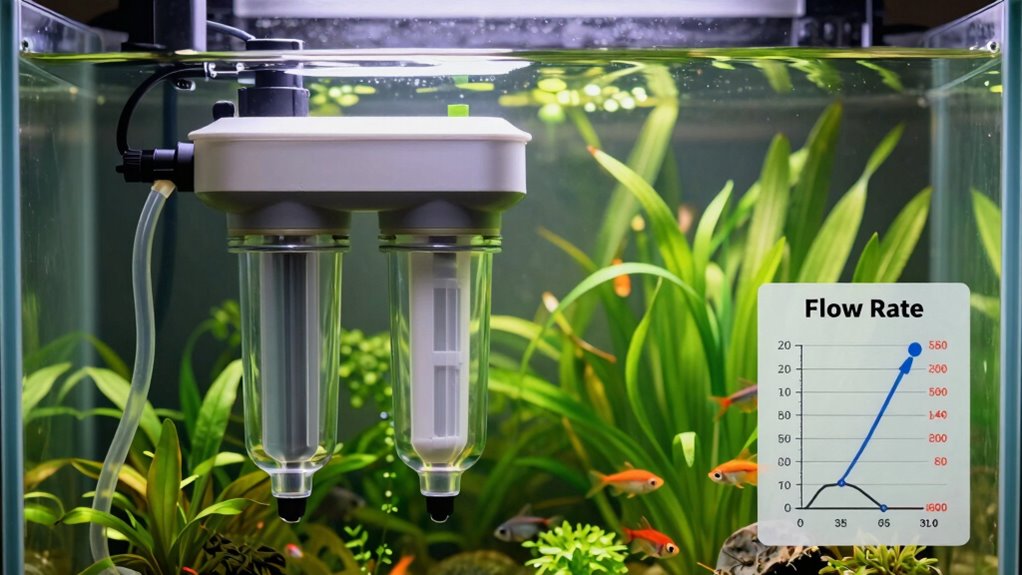
You need to fine-tune your canister filter based on your fish load and plant growth. Keep an eye on water changes to make certain your setup stays balanced, and adjust flow as plants grow taller or denser. Regular monitoring helps you make quick tweaks for a healthy, thriving aquarium. Proper filter maintenance ensures your equipment remains efficient and extends its lifespan.
Matching Flow to Bioload
Matching your canister filter’s flow rate to your aquarium’s bioload is essential for maintaining a healthy environment. Proper bioload management ensures your filter handles waste efficiently, preventing toxin buildup and promoting stable water conditions. If your bioload is high—more fish or messy species—you need a stronger flow rate to boost filtration efficiency. Conversely, a lower bioload requires less flow to avoid stressing your aquatic life. Adjusting your filter’s flow ensures waste is consistently removed and oxygen levels stay ideal. Remember, an underpowered filter can lead to poor water quality, while an overly strong flow might disturb plants or fish. By matching flow to your bioload, you enhance filtration, creating a balanced, healthy ecosystem that supports your aquatic inhabitants and plant growth.
Adjusting for Plant Growth
Have you considered how your plant growth can impact your canister filter’s performance? As plants grow, they increase biological load and influence water clarity, affecting aquarium aesthetics. To maintain ideal plant health and avoid overloading your filter, you might need to adjust your flow rate accordingly. Faster water movement ensures that nutrients reach plants effectively and waste removal remains efficient. Conversely, too strong a flow can disturb delicate plants or create turbulence. Regularly evaluate plant growth and overall tank conditions, then tweak your filter’s flow to support healthy plant development without compromising water quality. Proper adjustment keeps your aquarium vibrant, promotes lush plant growth, and preserves a balanced ecosystem. Monitoring these factors helps you optimize your canister filter for both fish and plant needs.
Monitoring Water Changes
Are you regularly monitoring water changes to keep your canister filter functioning efficiently? Consistent water changes are vital for maintaining ideal aquarium conditions, supporting healthy fish behavior, and preserving your aquarium’s aesthetics. When you check water parameters and adjust your water change schedule, you guarantee your filter isn’t overwhelmed or underperforming. If you notice cloudy water or unusual fish behavior, it might be time to increase water changes or tweak your filter’s flow rate. Proper monitoring helps prevent waste buildup and keeps beneficial bacteria thriving. Remember, balancing water quality with your aquarium’s visual appeal is key. Regular water changes, combined with an appropriately sized canister filter, create a stable environment where fish thrive and your tank remains a beautiful focal point.
Common Mistakes When Sizing Canister Filters and How to Avoid Them
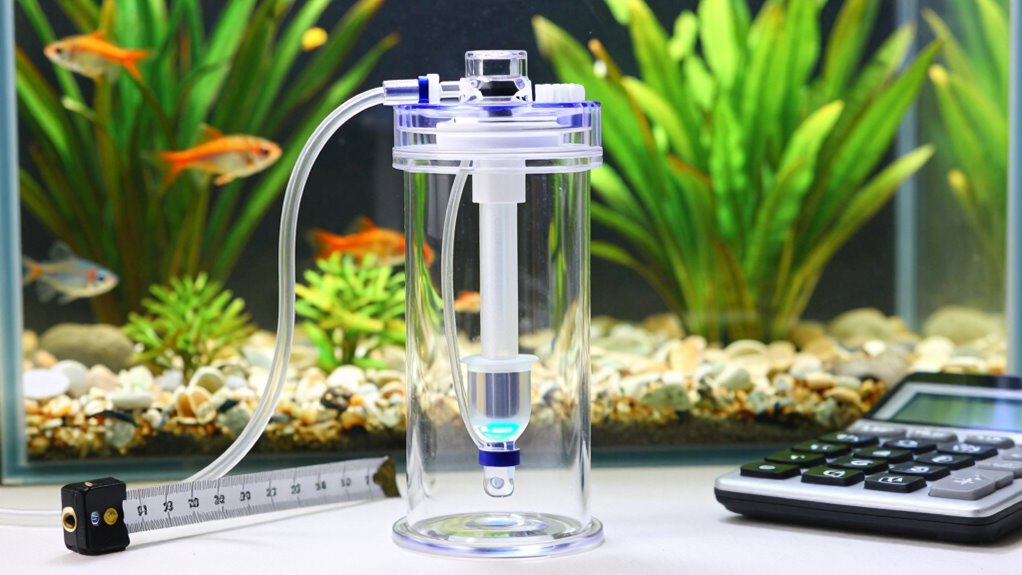
One common mistake when sizing canister filters is choosing a unit that’s too small for your aquarium’s needs. This can lead to inadequate pollutant removal and poor water quality. To avoid this, consider these points:
- Overestimating flow rate: Select a filter with a flow rate that matches or exceeds your tank’s volume to ensure proper circulation.
- Ignoring filter media capacity: More media means better pollutant removal; don’t compromise on media size or quantity.
- Focusing solely on size: Bigger isn’t always better if the flow rate isn’t appropriate for your tank’s bioload and filtration needs.
Choosing the Best Filter Size for Your Budget and Setup
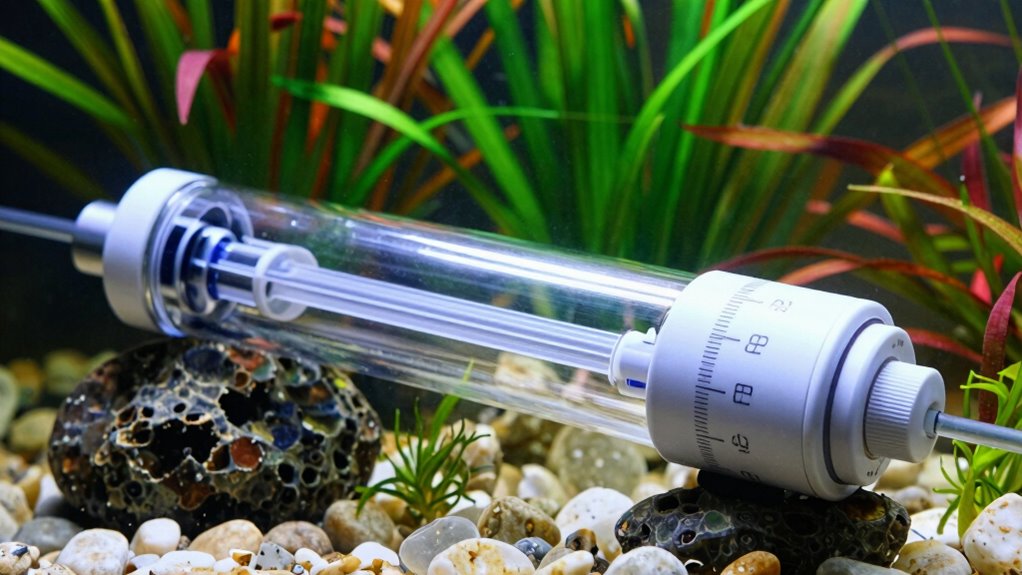
Choosing the right filter size involves balancing your aquarium’s needs with your budget. Larger filters often provide better filtration and quieter operation, enhancing aquarium aesthetics. However, they can be more expensive and may require more space. To help you decide, consider this comparison:
| Filter Size | Cost | Noise Level |
|---|---|---|
| Small | Low | Higher |
| Medium | Moderate | Moderate |
| Large | Higher | Very low |
A bigger filter keeps water clearer and quieter but costs more upfront. A smaller filter saves money but might compromise aesthetics and increase noise. Match your setup’s size and your budget to choose the most efficient, least disruptive option.
Tips for Installing and Maintaining Your Canister Filter
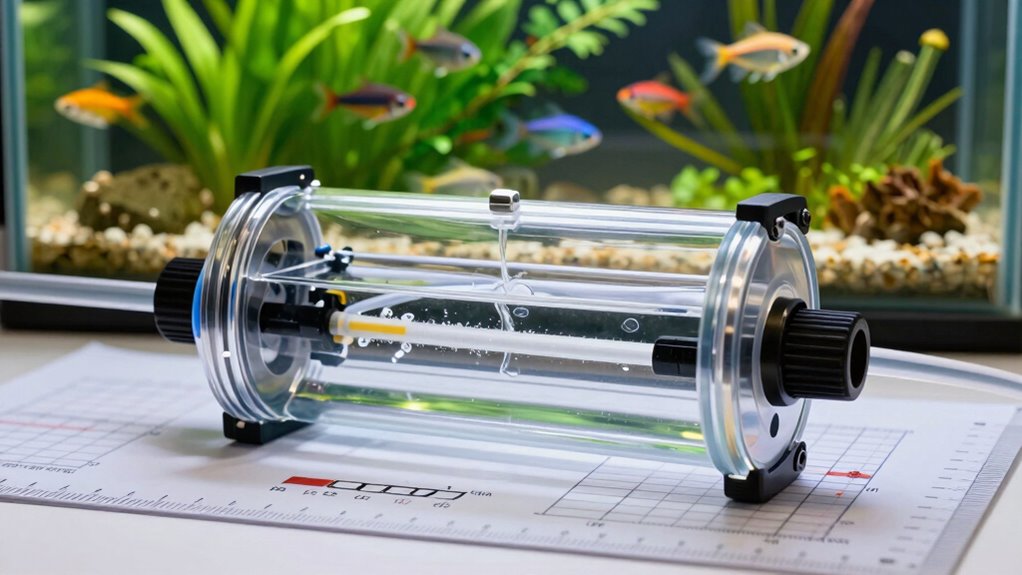
Proper installation and regular maintenance are essential to guarantee your canister filter functions efficiently and keeps your aquarium healthy. To start, follow these installation tips:
Proper setup and maintenance ensure your canister filter runs smoothly and keeps your aquarium healthy.
- Ensure your filter media is correctly placed to maximize biological and mechanical filtration. Use media suited for your tank’s needs.
- Secure all fittings tightly to prevent leaks and maintain proper flow.
- Position the canister above or below the tank as recommended, avoiding obstructions.
For ongoing maintenance, check and clean the filter media regularly to prevent clogging and reduce strain on the pump. Rinse media with tank water during cleaning to preserve beneficial bacteria. Also, inspect hoses and fittings for cracks or leaks. Proper installation and consistent upkeep keep your canister filter running smoothly and your aquarium thriving.
Troubleshooting Flow Rate Issues to Keep Your Aquarium Healthy
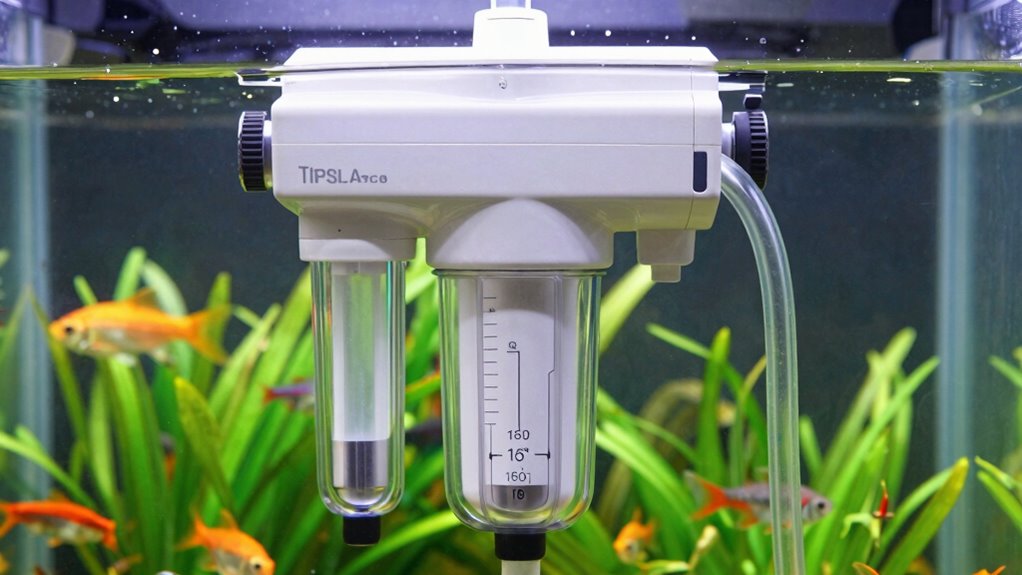
Flow rate issues can substantially impact your aquarium’s health by affecting water circulation, filtration efficiency, and oxygen levels. If your filter is running too fast or too slow, it can cause uneven water flow, leading to debris buildup or poor filtration. You might notice increased filter noise, which can signal that the flow rate isn’t ideal. Over time, incorrect flow rates can also shorten your filter’s lifespan by stressing its motor or clogging media prematurely. To troubleshoot, check for blockages or debris that restrict flow, and ensure your filter is properly sized for your tank. Adjust the flow rate if possible, and clean your filter regularly to maintain efficiency. Proper flow management keeps your aquarium stable, healthy, and minimizes wear on your equipment.
Frequently Asked Questions
Can I Use a Larger Filter Than Recommended for My Tank Size?
Yes, you can use a larger filter than recommended, but be aware it might increase filter noise and impact the tank’s aesthetic. A bigger filter can provide better filtration and flow, but it may produce more noise and be visually intrusive. Make sure it fits well without causing clutter or disturbing the tank’s look. Proper installation and maintenance help keep noise minimal, maintaining a clean, attractive environment for your aquatic life.
How Does Filter Media Type Affect Flow Rate Requirements?
Think of your filter media as a sieve—its porosity directly impacts flow rate needs. Heavily biological or mechanical media with high filtration efficiency slows water flow, so you’ll need a stronger pump to maintain adequate circulation. Conversely, more porous media permits faster flow. Choose your media carefully, balancing filtration efficiency and flow rate, to guarantee your tank remains healthy without stressing your filter system.
Is Higher Flow Rate Always Better for Biological Filtration?
Higher flow rates aren’t always better for biological filtration because they can reduce filter efficiency and disrupt flow stability. Too fast a flow may wash away beneficial bacteria, hindering biological processes. You should aim for a flow rate that balances effective filtration with stability, ensuring bacteria can thrive and maintain a healthy tank environment. Adjust your filter to optimize biological filtration without sacrificing flow stability or efficiency.
How Do Water Disturbances Impact Fish Health in High-Flow Setups?
Water turbulence acts like a wild dance floor, shaking your fish’s calm. High-flow setups create constant water disturbances that can stress your fish, making them hide or become lethargic. This fish stress weakens their immune system, increasing disease risks. To keep your aquatic world peaceful, dial down the flow rate or add gentle outlets, giving your fish a soothing environment where they can swim happily without the chaos of relentless turbulence.
Can Over-Filtering Harm Beneficial Bacteria in My Aquarium?
Over-filtering can harm beneficial bacteria if your filter becomes saturated, leading to bacterial imbalance. When your filter runs too fast or has excessive flow, it can disturb the biological media, preventing bacteria from establishing properly. This disruption reduces the biofilter’s efficiency, risking ammonia spikes and stressing your fish. To avoid this, choose a flow rate that provides sufficient filtration without causing excessive water disturbance, ensuring healthy bacterial colonies.
Conclusion
By balancing budget and biological needs, you’ll boldly build a better tank. Proper sizing promotes pristine water, prevents problems, and provides peace of mind. Remember to review flow rates, respect your tank’s size, and regularly maintain your filter. With a little planning and precise proportioning, you’ll prevent problems, promote health, and enjoy a thriving, trouble-free aquarium. Keep these tips in mind, and your aquatic adventure will stay smooth, stunning, and sensational!
Fall Picks
fall essentials
As an affiliate, we earn on qualifying purchases.