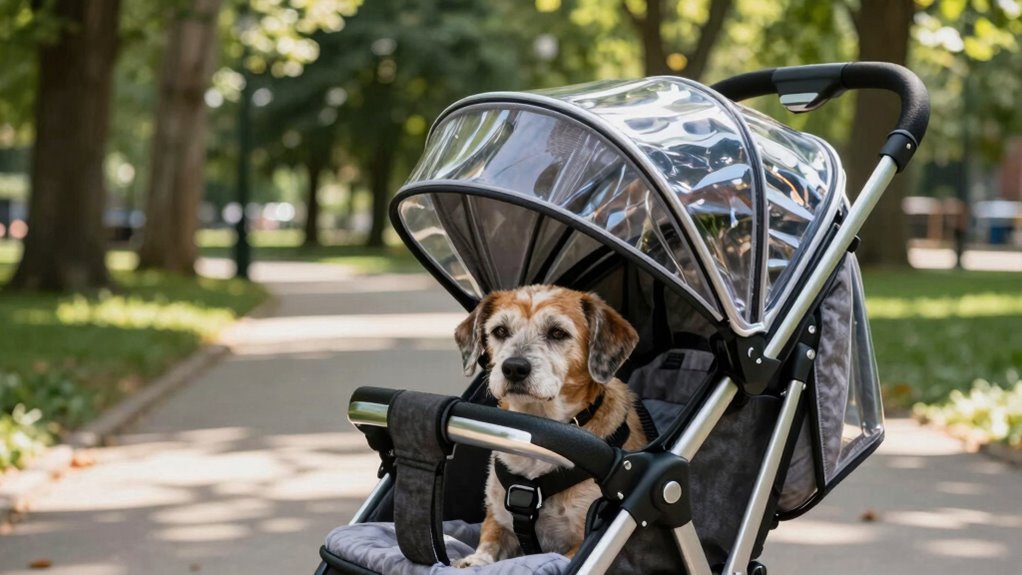

Stroller conditioning helps keep your senior or injured dog active and engaged without stressing their body. It offers a safe way to explore outdoors, providing mental stimulation and social interaction while supporting recovery. This gentle activity prevents muscle atrophy, keeps joints flexible, and boosts overall well-being. By choosing controlled routes, you can monitor your dog closely and prevent overexertion. To discover more about making this routine safe and enjoyable for your dog, keep exploring the details ahead.

Get pet supplies delivered free with Prime
- Fast, free delivery on millions of items
- Prime Video, Amazon Music and more included
- Member-only deals all year
Key Takeaways
- Allows seniors or injured dogs to enjoy outdoor activity without stressing their bodies.
- Supports mental stimulation and emotional well-being through safe environmental exposure.
- Promotes gentle movement to prevent muscle atrophy and maintain joint flexibility.
- Enhances bonding by creating positive routines and trust during outdoor outings.
- Provides a controlled, safe environment for rehabilitation and stress reduction.
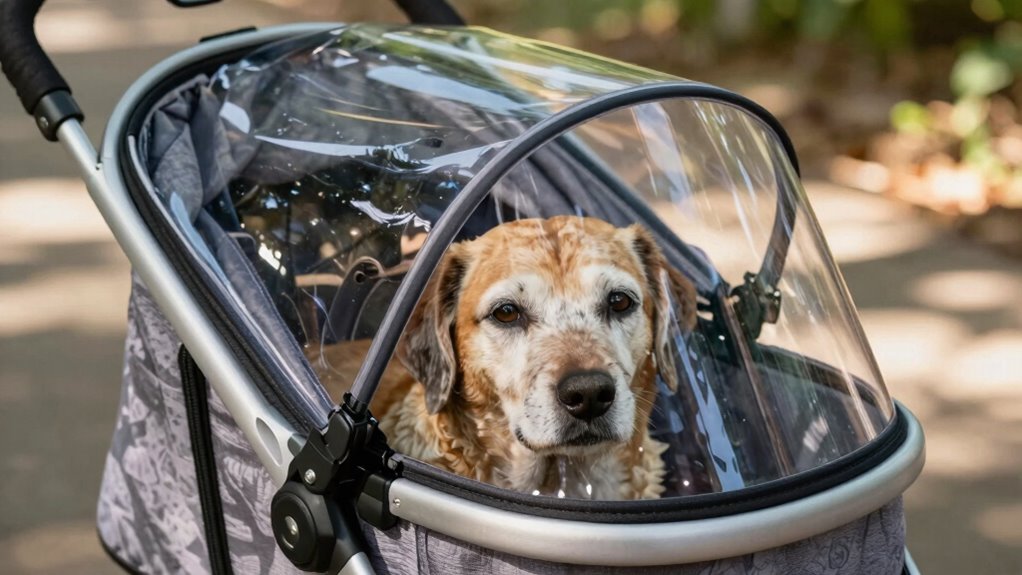
If your senior or injured dog struggles with walking or tires easily, stroller conditioning can offer a gentle way to maintain their outdoor activity and mental stimulation. Using a stroller allows you to keep your dog engaged with their environment without putting stress on their body. This approach is especially helpful if your dog’s mobility has diminished but they still crave the sights, sounds, and smells of the outdoors. It also gives you an opportunity to monitor their condition closely, ensuring they don’t overexert themselves while still benefiting from fresh air and natural stimuli.
Stroller conditioning helps senior or injured dogs enjoy outdoor time safely and comfortably.
Incorporating stroller conditioning into your dog’s routine can support their overall well-being. It encourages dog mobility by gently exposing them to various terrains and environments, which can help prevent muscle atrophy and stiffness. Although your dog might not be able to walk long distances, this controlled exposure helps keep their joints flexible and promotes circulation. When combined with rehabilitation exercises prescribed by your veterinarian, stroller outings can reinforce mobility gains and aid in recovery. These exercises might include gentle stretches or controlled movements that strengthen weak muscles, and the stroller provides a low-impact way to continue stimulating these areas without risking further injury. Incorporating rehabilitation exercises into your routine can enhance recovery and help maintain your dog’s strength.
You’ll find that stroller conditioning also boosts your dog’s mental health. For injured or aging dogs, staying mentally engaged is essential to prevent boredom and anxiety. Being outdoors allows them to observe the world around them, which can improve their mood and reduce feelings of frustration. As you push the stroller, you get to choose different routes and environments, adding variety to their experience. This variety keeps their mind sharp and can help reduce stress during recovery periods. Additionally, stroller outings can serve as a safe and controlled environment for socialization with other animals or people, which is vital for their emotional well-being. Creating a safe and predictable setting can help build your dog’s confidence and comfort in new situations.
Furthermore, stroller conditioning fosters a stronger bond between you and your dog. When you actively involve them in outdoor outings, you create positive associations that encourage cooperation and trust. Your dog learns to enjoy these outings, knowing they’re safe and controlled. As you continue this routine, it becomes a part of their daily care, supporting both their physical and emotional health. Regular outings also help maintain your dog’s natural instincts, encouraging curiosity and exploration even with limited mobility. Integrating these outings into your routine can also help keep your dog’s mental acuity sharp, promoting overall wellness.
dog stroller for senior and injured dogs
As an affiliate, we earn on qualifying purchases.
As an affiliate, we earn on qualifying purchases.
Frequently Asked Questions
How Long Should Stroller Sessions Last for Elderly Dogs?
You should start stroller sessions for your elderly dog with 5-10 minutes, gradually increasing as they become more comfortable. Keep sessions gentle to avoid overexertion, aligning with their exercise routines. During stroller outings, focus on puppy socialization and sensory experiences without overwhelming them. Watch for signs of fatigue or discomfort, and always prioritize your dog’s well-being. Over time, you can extend the duration based on their stamina and health.
What Signs Indicate a Dog Is Ready to Start Stroller Training?
You’ll know your dog’s ready to start stroller training when they keenly approach new environments, showing curiosity rather than fear. It’s like puppy socialization mixed with canine agility—if your furry friend’s tail wags at the sight of the stroller and they confidently explore, they’re ready. No need for a canine agility trial; just make certain they’re comfortable, relaxed, and enthusiastic to join the adventure, not retreat from it.
Can Stroller Conditioning Replace Regular Walks for Senior Dogs?
Stroller conditioning can’t fully substitute regular walks for your senior dog. While it offers exercise alternatives and indoor activities, walks provide essential mental stimulation and natural movement patterns that a stroller can’t replicate. Use stroller sessions to supplement outdoor walks, especially on days when your dog isn’t up for a full walk. Combining both approaches ensures your dog stays active, comfortable, and engaged, supporting their overall health and well-being.
How Do I Choose the Best Stroller for My Dog’s Needs?
Choosing the best stroller for your dog is like finding the perfect pair of shoes—comfort and fit matter most. Start by exploring different dog stroller types to match your dog’s size, mobility, and lifestyle. Look for comfort features like ample ventilation, padded seats, and secure harnesses. Consider durability and ease of maneuvering. Ultimately, select a stroller that keeps your dog safe, comfortable, and happy during every outing.
Are There Any Safety Precautions for Stroller Training Injured Dogs?
Yes, there are safety precautions you should take when stroller training injured dogs. Always use safety gear like harnesses and secure straps to prevent accidents. Start with short sessions in safe, flat areas and gradually increase the time and distance. Keep a close eye on your dog’s reactions and avoid rough terrain to prevent falls or injuries. These steps help guarantee accident prevention and keep your dog safe during stroller training.
Conclusion
Stroller conditioning isn’t just a journey; it’s a gentle dance of trust and resilience, where each push and pause weaves a tapestry of recovery. As your senior or injured dog slowly reclaims their independence, you become the steady compass guiding them through a landscape of hope. With patience as your compass and compassion as your map, you’ll nurture a bond that blossoms into strength, turning every stroll into a symphony of healing and love.
Fall Picks
fall essentials
As an affiliate, we earn on qualifying purchases.