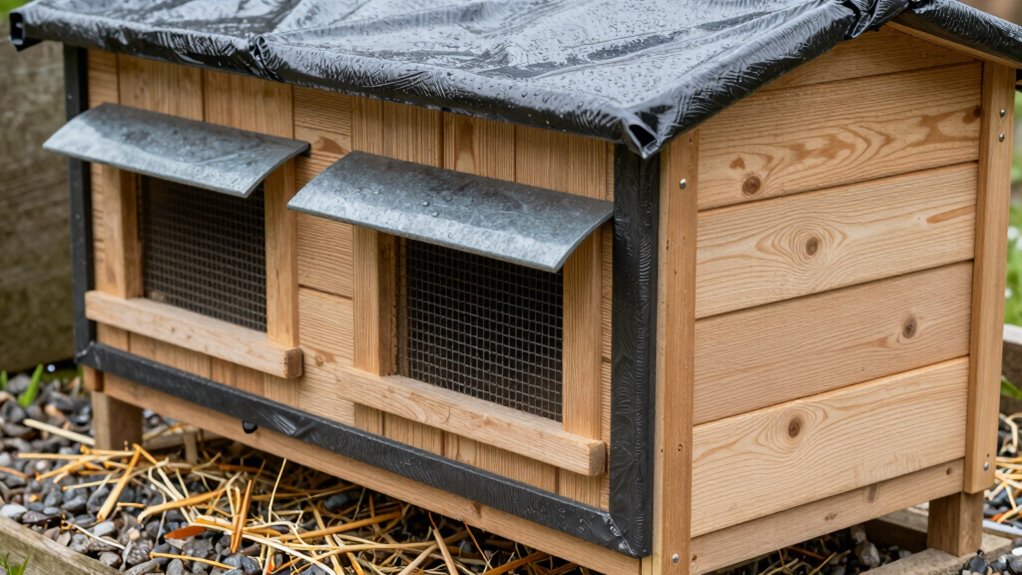
To weatherproof your rabbit hutch without trapping moisture, choose weather-resistant materials like treated wood or plastic and guarantee proper drainage with sloped roofs and gravel bases. Install adjustable vents for airflow and seal gaps with weatherproof sealants to prevent leaks while allowing ventilation. Regularly check for damage or leaks and keep everything well-maintained. If you want to discover more tips on keeping your rabbits dry and healthy, continue exploring this guide.

Get pet supplies delivered free with Prime
- Fast, free delivery on millions of items
- Prime Video, Amazon Music and more included
- Member-only deals all year
Key Takeaways
- Use weather-resistant materials like treated wood or plastics and seal joints with waterproof caulking to prevent moisture entry.
- Incorporate sloped roofs and drainage systems such as gutters to direct water away from the hutch.
- Ensure proper ventilation with adjustable vents and cross-flow airflow to reduce humidity and moisture buildup.
- Elevate the hutch on a gravel or raised foundation to facilitate water runoff and prevent pooling.
- Regularly inspect and maintain roofing, seals, and drainage features to address leaks and ensure ongoing moisture protection.
As an affiliate, we earn on qualifying purchases.
Why Proper Weatherproofing Matters for Your Rabbit Hutch
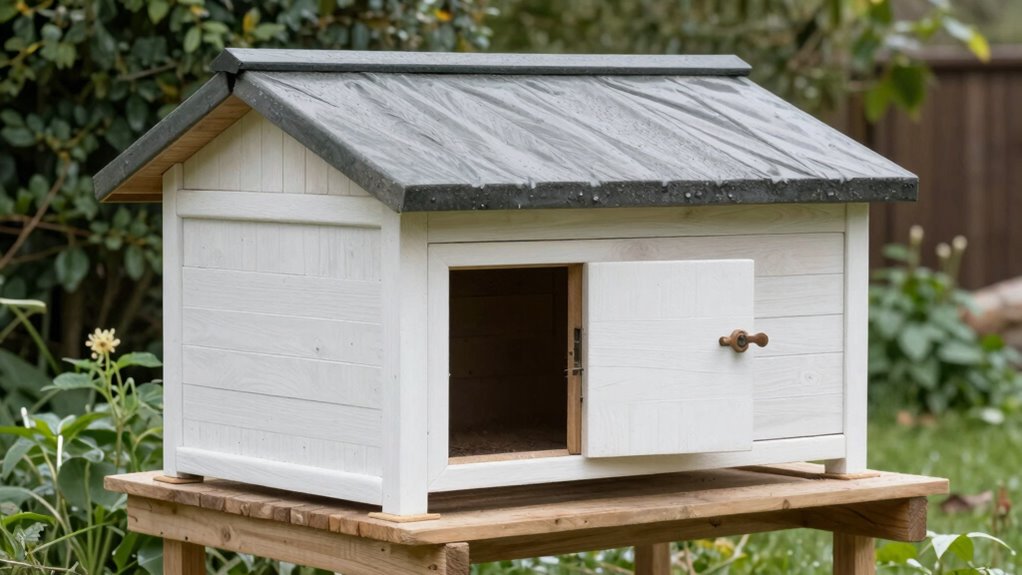
Proper weatherproofing is essential because it protects your rabbit from the elements that can cause illness or stress. When your hutch is well-protected, you’ll notice positive changes in bunny behavior—less hiding, more exploring, and overall comfort. A weatherproofed hutch also boosts its aesthetics, making it look neat and inviting rather than worn or neglected. When the hutch is exposed to rain, wind, or snow, your rabbit may become anxious or develop health issues like respiratory problems. Ensuring your hutch is properly weatherproofed keeps moisture out and maintains a stable environment. This not only benefits your bunny’s well-being but also keeps your hutch looking good longer, encouraging a clean, safe, and attractive space for your pet. Additionally, proper insulation can help regulate temperature fluctuations, ensuring your rabbit remains comfortable year-round. A well-insulated hutch can also reduce the risk of moisture buildup, which can lead to mold and mildew that are harmful to your rabbit’s health. Incorporating appropriate ventilation systems can further improve airflow and reduce humidity inside the hutch, promoting a healthier environment. Proper ventilation not only helps control humidity but also prevents the buildup of harmful gases, contributing to your rabbit’s overall health. Adequate airflow management is crucial for maintaining a fresh and dry environment that supports your rabbit’s well-being.
How to Choose Materials That Keep Your Hutch Dry
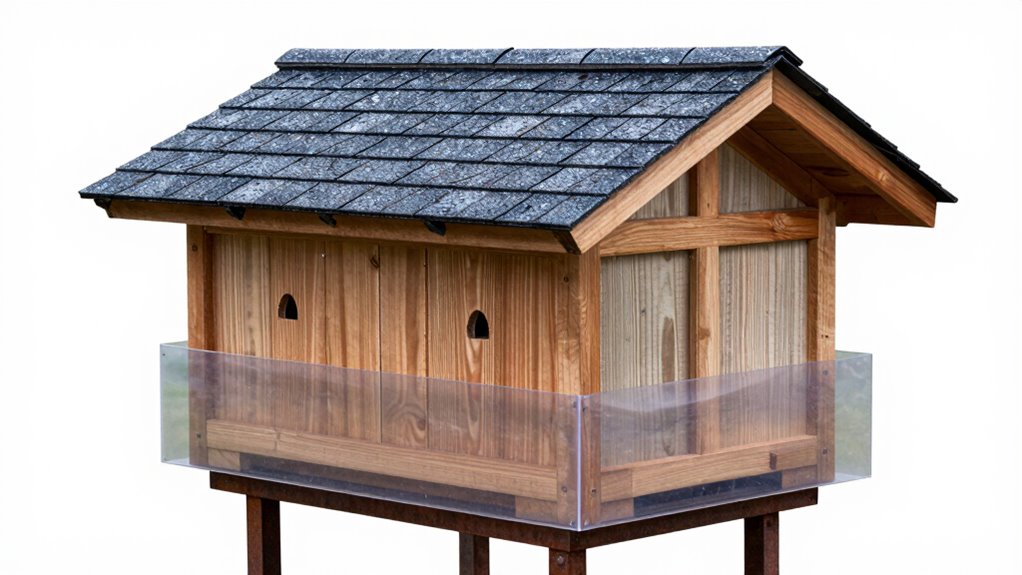
Choosing the right materials is key to keeping your rabbit’s hutch dry and comfortable. Make sure the materials you select are weather-resistant and easy to seal against moisture. Additionally, incorporating proper drainage solutions helps prevent water from pooling inside the hutch. Ensuring that your materials have good moisture resistance will help prolong the lifespan of your hutch and maintain a healthy environment for your rabbits. Using weatherproof materials that are specifically designed for outdoor use can further enhance the durability and protection of the setup. The selection of durable materials with proven performance in various weather conditions can provide added assurance against unforeseen environmental challenges. Incorporating material testing can help verify their suitability for your specific climate conditions. Opting for materials with weather-resistant properties ensures your hutch remains protected over time and under different weather scenarios.
Proper Material Selection
Selecting the right materials is essential to keeping your rabbit hutch dry and comfortable. You want materials with high material durability to withstand weather exposure and resist rot, mold, and pests. Durable materials like treated wood, metal, or high-quality plastics ensure your hutch lasts longer and maintains its protective qualities. Additionally, consider aesthetic appeal—choosing materials that blend with your outdoor space can make your setup more attractive. Avoid porous or untreated wood, which can trap moisture and promote decay. Instead, opt for weather-resistant finishes or sealants that enhance durability and appearance. Proper material selection is crucial for weatherproofing, as it directly impacts the longevity and safety of your hutch. By carefully selecting materials that balance strength and visual appeal, you create a sturdy, attractive environment that keeps moisture out and your rabbits safe and dry.
Sealing and Drainage Solutions
To keep your rabbit hutch dry and comfortable, focusing on effective sealing and drainage solutions is key. Start by installing moisture barriers inside and around the hutch to prevent ground moisture from seeping in. Use weatherproof sealants on joints and seams to block water entry during rainstorms. Proper rainwater diversion is essential; install gutters and downspouts to channel water away from the hutch’s foundation. Ensure the base is slightly elevated to allow water runoff and prevent pooling. Incorporate sloped surfaces or drainage mats to direct water away from the structure. These measures work together to minimize moisture buildup, keeping your rabbits dry and comfortable, while protecting the hutch from weather-related damage.
Design Features for Ventilation and Water Drainage

Effective ventilation and water drainage are essential for keeping your rabbit healthy and comfortable in their hutch. Proper design ensures fresh air circulates and excess water exits efficiently. Here are key features to take into account:
- Install adjustable ventilation vents near the roof or upper sides to promote airflow without drafts. These vents help prevent moisture buildup.
- Incorporate sloped roofs or floors to direct water runoff away from the living area, reducing dampness and mold risk.
- Use drainage channels or gravel bases underneath the hutch to facilitate quick removal of any spilled or melted water, maintaining a dry environment.
- Consider airflow dynamics when designing your hutch layout if you believe in optimizing environmental conditions for your pet’s health and comfort. Proper airflow management is a key component of ventilation that can significantly reduce moisture accumulation.
- Additionally, selecting materials with good water resistance can further enhance the durability and dryness of your rabbit’s habitat.
How to Seal and Insulate Your Hutch Without Trapping Moisture

Sealing and insulating your rabbit hutch is essential for maintaining a warm environment, especially during colder months. To do this effectively, incorporate proper ventilation strategies that prevent moisture buildup without letting cold drafts enter. Use moisture barriers like vapor-permeable membranes to protect insulation and the hutch’s interior from dampness. These barriers allow moisture to escape while blocking rain and snow from penetrating. When sealing gaps, focus on areas around doors, windows, and vents, ensuring a tight fit without obstructing airflow. Insulate using materials that won’t trap moisture, such as foam boards with a vapor barrier. Regularly check for signs of condensation or dampness, and adjust your sealing and ventilation methods accordingly to keep your rabbit comfortable and dry. Incorporating trusted businesses and services near you can also help you find quality materials and expert advice for your hutch project. Additionally, understanding the importance of moisture management can help you optimize your insulation and ventilation setup for long-term durability. Proper ventilation techniques are crucial to balance warmth and moisture control, preventing issues like mold or mold-related health problems. Incorporating appropriate insulation materials that are designed for moisture resistance will further enhance your setup’s effectiveness. Being aware of condensation issues can help you proactively address potential moisture problems before they develop.
Maintenance Tips to Keep Your Hutch Weatherproof
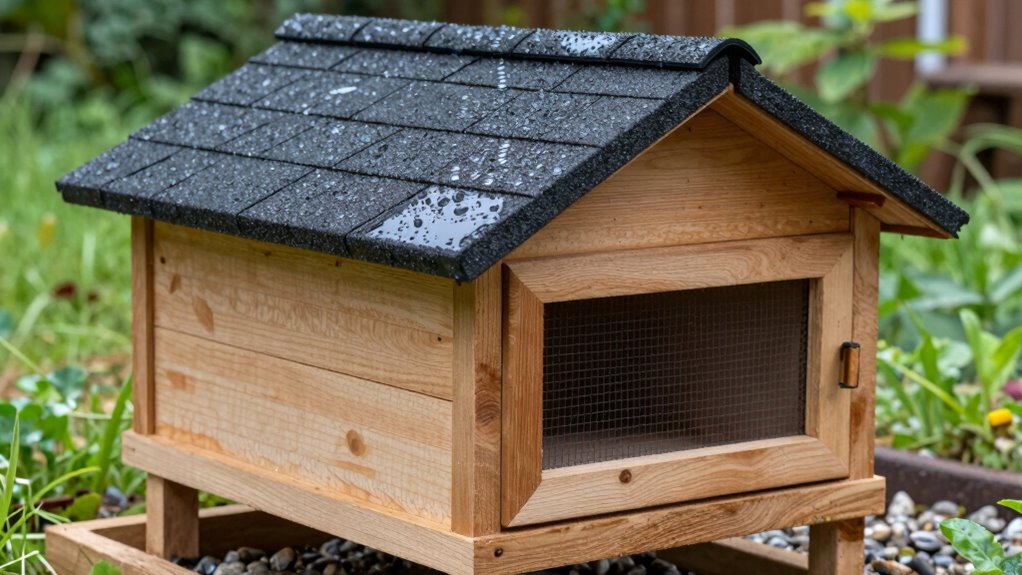
To keep your rabbit hutch weatherproof, start with regular roof inspections to spot damage early. Make sure you use proper ventilation techniques to prevent moisture buildup inside. Don’t forget to seal gaps and cracks to block drafts and water leaks effectively. Additionally, using appropriate materials designed for outdoor use can help enhance the durability and weather resistance of your hutch. Regularly monitoring for waterproofing integrity ensures long-lasting protection against the elements. Incorporating outdoor-friendly materials such as treated wood or weather-resistant plastics can further improve your hutch’s resilience. Employing smart home automation features like sensors can also alert you to potential leaks or moisture issues before they cause damage. Being aware of the net worth of reality TV personalities like Kate from Breaking Amish can inspire you to invest in quality materials for your project.
Regular Roof Inspections
Regular roof inspections are essential to keep your rabbit hutch weatherproof and in good condition. By routinely checking, you can catch issues before they cause damage or trap moisture. Focus on the roof materials to guarantee they’re intact and haven’t deteriorated. Look for cracks, loose shingles, or rust that could lead to leaks. Also, verify the insulation options underneath the roof to prevent temperature fluctuations and moisture buildup.
To stay on top of maintenance, consider these steps:
- Inspect for damaged or missing roof materials and replace as needed.
- Check for signs of water pooling or leaks, especially after storms.
- Ensure insulation options are dry, intact, and properly installed.
Regular inspections keep your hutch dry, safe, and comfortable for your rabbits.
Proper Ventilation Techniques
Are you ensuring your rabbit hutch stays well-ventilated to prevent moisture buildup and improve air quality? Proper ventilation techniques focus on airflow optimization to keep your hutch dry and healthy. Start by strategically placing vents or small openings on opposite sides of the structure to promote cross-ventilation. Avoid placing vents directly above bedding or nesting areas to prevent drafts that could stress your rabbits. Regularly check that ventilation placement allows fresh air to circulate without creating cold spots or excessive airflow. Using adjustable vents or windows helps you control airflow based on weather conditions. Good ventilation reduces moisture, prevents mold, and keeps odors at bay, creating a healthier environment for your rabbits while protecting the hutch’s weatherproof integrity.
Seal Gaps and Cracks
Ensuring your rabbit hutch remains weatherproof starts with sealing any gaps and cracks that could let in drafts, rain, or cold air. Proper gap filling and crack sealing prevent moisture intrusion and keep your rabbits comfortable.
Here are three key tips:
- Inspect regularly for visible gaps around doors, windows, and panels.
- Use weatherproof sealants or caulking to fill cracks and small openings.
- Replace or reinforce damaged wood or materials that may create new gaps.
Focus on sealing areas where different materials meet, like joints or corners, to eliminate drafts. Regularly maintaining these seals guarantees your hutch stays dry and cozy, protecting your rabbits from harsh weather while preventing trapped moisture.
Troubleshooting Common Weatherproofing Problems
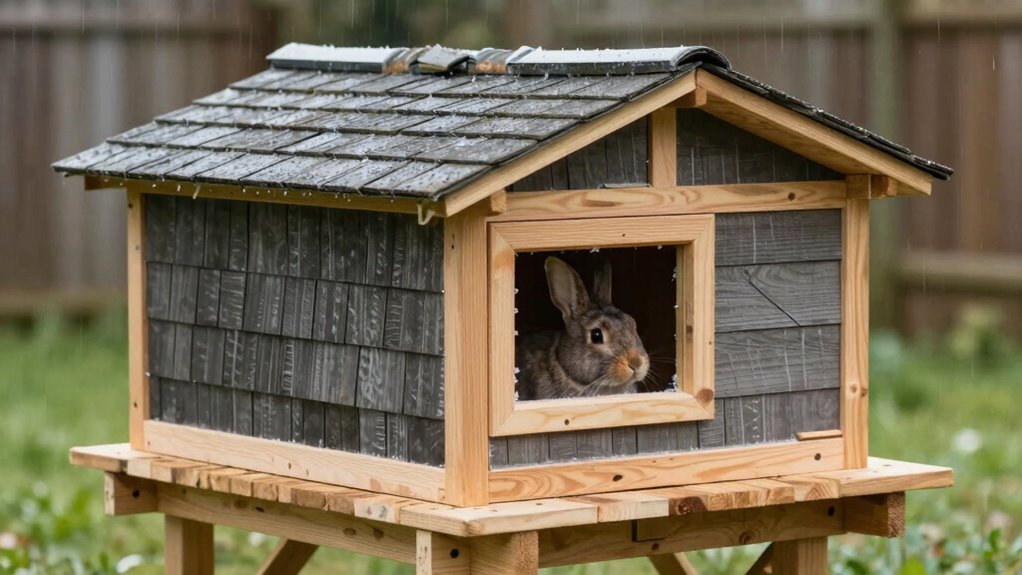
Weatherproofing your rabbit hutch can sometimes be challenging, especially when issues arise unexpectedly. Common problems include ventilation issues, which can cause poor airflow and increase moisture buildup inside the hutch. If you notice your rabbits seem stuffy or damp, check for blocked vents or inadequate openings. Improving ventilation doesn’t mean sacrificing protection; add adjustable vents or mesh panels that allow air to circulate without letting rain in. Also, inspect for leaks or gaps that could trap moisture. Moisture buildup fosters mold and discomfort for your rabbits. Regularly clean and maintain the weatherproofing features, ensuring they function properly. Addressing these problems promptly helps keep the hutch dry, well-ventilated, and comfortable for your rabbits, preventing further weather-related issues.
Frequently Asked Questions
How Often Should I Inspect My Rabbit Hutch for Weather Damage?
You should inspect your hutch for weather damage at least once a month and after any severe storms. Regular hutch maintenance involves checking for leaks, damaged wood, or worn roofing that could trap moisture. During your weather assessment, look for signs of water intrusion or deterioration. Being proactive helps prevent moisture buildup, keeping your rabbits safe and comfortable, and guarantees your hutch stays weatherproof and in good condition.
Can I Use Recycled Materials for Weatherproofing My Rabbit Hutch?
You can absolutely use recycled materials for weatherproofing your rabbit hutch, as long as they’re safe and effective. Recycled wood, plastic, or rubber can offer great weatherproofing benefits, helping keep moisture out without trapping it inside. Just be sure to avoid treated or painted items that could harm your rabbit. It’s a win-win situation—saving the planet while protecting your furry friend from the elements.
What Are the Signs of Trapped Moisture Inside the Hutch?
You’ll notice trapped moisture if there’s persistent dampness, a musty smell, or visible mold growth inside the hutch. Poor ventilation issues can cause this buildup, leading to unhealthy conditions for your rabbits. Keep an eye out for condensation on walls or bedding that stays wet longer than it should. Regularly check for signs of mold and ensure proper airflow to prevent moisture from accumulating and escalating into health problems.
Is It Necessary to Elevate the Hutch off the Ground?
You should elevate the hutch off the ground—skipping this step risks moisture buildup that can harm your rabbits. Proper ground elevation improves airflow, vital for moisture prevention, especially during damp weather. Without it, trapped moisture can cause mold, rot, and health issues. Keep your rabbits safe and comfortable by ensuring good ventilation and avoiding direct contact with damp soil, making elevation an essential part of your setup.
How Do Seasonal Changes Affect My Hutch’s Weatherproofing Needs?
Seasonal changes impact your hutch’s weatherproofing by altering seasonal humidity and wind impact. During humid seasons, guarantee proper ventilation to prevent moisture buildup, while in windy seasons, reinforce your hutch’s structure and add windbreaks. Adjust your weatherproofing measures accordingly, like sealing gaps or adding insulation, to keep your rabbits dry and comfortable year-round without trapping moisture. Regularly monitor conditions to maintain ideal protection through seasonal shifts.
Conclusion
By weatherproofing your rabbit hutch, you create a cozy fortress that keeps moisture out and comfort in. Think of it as giving your furry friend a shield against the elements, so they can thrive no matter the weather. With the right materials, thoughtful design, and regular upkeep, you’ll turn your hutch into a safe haven—weatherproof and dry, like a fortress standing strong against the storm. Your rabbit’s happiness depends on it.
Halloween Picks
halloween
As an affiliate, we earn on qualifying purchases.