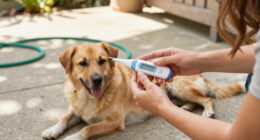
Pet temperature monitors help protect your pet by detecting dangerous heat levels in hot cars using sensitive sensors that measure ambient temperature. They send alerts when preset thresholds are exceeded, alerting you to dangers. However, their accuracy can be affected by factors like sunlight, wind, or placement, and they rely on batteries and proper calibration. While helpful, these devices aren’t foolproof—staying aware and supervising your pet remains essential. To learn about maximizing safety, keep exploring the details ahead.
Key Takeaways
- Pet temperature monitors use sensors to detect internal vehicle heat and send alerts when dangerous temperatures are reached.
- Proper calibration, sensor placement, and regular maintenance are essential for accurate and reliable readings.
- Alert systems rely on wireless notifications and alarms, but can fail due to battery issues or environmental interference.
- External factors like sunlight and wind can affect sensor accuracy, leading to false alarms or missed warnings.
- Monitors are safety tools that supplement, not replace, constant supervision and other heat safety precautions for pets.

Necto RV Pet Temperature Monitor – No WiFi Required – Remote Power Outage & Temp Sensor with App Alerts. Cellular Monitoring System for Home Safety & Server Room (1 Year Subscription Included)
- Cellular Monitoring System: 24/7 real-time alerts without WiFi
- Rechargeable Battery: Lasts up to 3 days during outages
- Instant Alerts & Monitoring: Customizable thresholds with multiple contacts
As an affiliate, we earn on qualifying purchases.
As an affiliate, we earn on qualifying purchases.
Why Hot Cars Are Dangerous for Pets: And How Monitors Can Help

Hot cars pose a serious threat to pets because temperatures inside can rise quickly to deadly levels, even on mild days. Your pet’s behavior, like panting or restlessness, can be signs of heat stress, but it’s easy to overlook these cues. Regular vehicle maintenance helps guarantee windows and vents are in good condition, allowing better airflow and reducing heat buildup. When you leave your pet in the car, even briefly, the temperature can spike dangerously fast. Pet owners often underestimate how quickly the interior heats up, making it vital to stay vigilant. Using pet temperature monitors can alert you to dangerous heat levels, but understanding your pet’s behavior and maintaining your vehicle properly are essential steps to prevent heat-related emergencies. Proper vehicle maintenance ensures optimal airflow and reduces the risk of heat buildup, supplementing the use of monitors for increased safety. Additionally, being aware of free floating heat accumulation in parked vehicles can help owners better anticipate and prevent dangerous temperature rises. Recognizing how heat transfer occurs in enclosed spaces can further improve safety strategies. Being familiar with insulation and ventilation techniques can also help mitigate heat buildup in parked cars.
How Pet Temperature Monitors Detect Dangerous Heat Levels

You rely on temperature sensors in pet monitors to detect dangerous heat levels quickly. When the sensor senses a rise beyond a safe point, it triggers an alert system to warn you immediately. However, these devices can sometimes fail or have limitations, so understanding their functionality helps you stay prepared. For instance, essential oils for respiratory health may provide relief if your pet experiences breathing difficulties caused by heat stress. Additionally, proper air quality management in your home can reduce the risk of heat-related issues and improve overall respiratory comfort for your pets. Regular device maintenance and testing ensure that temperature monitors function accurately when you need them most. For example, aquatic exercise techniques used for humans demonstrate the importance of consistent monitoring and adjustment to maintain safety and effectiveness, which also applies to pet safety devices. It’s also important to consider the performance ratings of vacuum cleaners used for cleaning pet hair, as this reflects their effectiveness in maintaining a healthy environment.
Temperature Sensor Functionality
Pet temperature monitors use sensitive sensors to detect rising temperatures inside your vehicle, alerting you before conditions become dangerous for your pet. These sensors measure ambient heat and send data to the device’s processor. Proper sensor calibration guarantees accurate readings, reducing false alarms or missed danger signals. Battery life impacts how often the sensor functions reliably; a weak battery can cause delayed alerts or sensor failure. The following table highlights key sensor features:
| Feature | Importance | Details |
|---|---|---|
| Calibration | Ensures accurate temperature readings | Regular calibration maintains reliability |
| Battery Life | Determines device longevity | Longer battery life means fewer interruptions |
| Response Time | Detects heat quickly | Faster response provides earlier alerts |
| Sensitivity Level | Detects small temperature changes | Adjustable for specific needs |
| Durability | Resists environmental factors | Ensures consistent performance |
Alert System Activation
When the temperature inside your vehicle rises to dangerous levels, pet temperature monitors activate their alert systems automatically. These devices rely on a built-in thermometer to detect unsafe heat levels quickly. Once a preset threshold is reached, the alert system triggers an audible alarm or notification, prompting you to take action. To guarantee reliable performance, regular device calibration is essential; it maintains accuracy over time, especially as sensors can drift. Battery life also plays a vital role—if the monitor’s power runs out, the alert system won’t work, leaving your pet vulnerable. Keeping batteries fresh and calibrating the device as recommended ensures the alert system functions effectively, providing peace of mind that you’ll be alerted before heat becomes dangerous. Additionally, choosing a reliable security system with compatibility for pet safety devices can enhance overall protection. Performing routine device checks ensures the monitor is functioning correctly and helps prevent false alarms or missed alerts. Proper sensor maintenance is crucial to sustain accuracy and reliability over time, especially considering sensor drift that can occur with prolonged use. Moreover, understanding the importance of regular calibration helps maintain consistent sensitivity and accuracy of the temperature sensors.
Limitations and Failures
While pet temperature monitors are designed to detect dangerous heat levels, they are not foolproof and can sometimes fail to alert you in time. One common issue is sensor calibration; if the sensor isn’t properly calibrated, it may provide inaccurate readings, delaying alerts or giving false reassurance. Regular device maintenance is essential to guarantee the monitor functions correctly, such as cleaning sensors and checking battery levels. Environmental factors, like direct sunlight or extreme temperatures, can also interfere with the device’s accuracy. Additionally, some monitors rely on Bluetooth or Wi-Fi connections, which can be unreliable. Understanding these limitations helps you avoid overreliance on the device and emphasizes the importance of active supervision when your pet is in a vehicle. Furthermore, the technology behind temperature sensing can vary between devices, affecting their overall reliability and performance. The variability in sensor quality and precision underscores the need for vigilant monitoring beyond just relying on technology. Device consistency and calibration are crucial factors in ensuring accurate readings over time. Being aware of environmental interference can help you better interpret readings and respond appropriately. Recognizing the potential for false alarms can also prevent unnecessary panic and ensure timely action.
Understanding the Technology Behind Pet Safety Devices

To keep your pet safe, it’s important to understand how these devices work. You’ll learn about the sensor technologies that detect temperature changes, how alert systems notify you, and what limitations you should keep in mind. Knowing this helps you choose the right safety device and use it effectively. Additionally, understanding body jewelry materials and their effects on skin can influence the placement and durability of the sensors, ensuring more accurate readings in different environments. Factors like wave and wind can influence how well the monitoring device performs in different environments. Incorporating smart home integration features can also enhance your pet’s safety by enabling automated alerts and responses. Regular maintenance and understanding air purifier maintenance dos and don’ts can also be beneficial if your monitoring device is integrated with air quality sensors, ensuring they function properly over time.
Sensor Technologies Explained
Ever wonder how pet temperature monitors detect dangerous heat levels? These devices rely on sensors that measure ambient temperature and sometimes humidity. The core technology includes thermistors or thermocouples, which change resistance or voltage based on heat. To keep them accurate, sensor calibration is essential—regularly adjusting the device ensures reliable readings. Proper device maintenance also involves cleaning sensors and checking connections to prevent false alarms. Regular calibration and maintenance are crucial to ensure sensor accuracy and reliable performance. Additionally, understanding sensor technology helps you troubleshoot issues and maintain optimal device function. Understanding lifecycle assessment and device design can inform better choices for pet safety devices. Here’s what you should know:
- Sensors detect temperature changes quickly and accurately
- Regular calibration keeps readings trustworthy
- Dirty sensors can cause inaccurate data
- Battery life impacts sensor performance
- Proper maintenance extends device lifespan
Understanding these technologies helps you trust the device and keep your pet safe in hot cars.
Alert System Functionality
Pet safety devices use alert systems to notify you immediately if temperatures reach dangerous levels. These devices typically rely on wireless connectivity, such as Bluetooth or Wi-Fi, to send instant alerts to your phone or other devices. When the temperature sensors detect a critical change, the alert system activates, providing real-time notifications to prompt quick action. Battery life is essential for reliable operation; most monitors are designed to conserve power by activating alerts only when necessary, ensuring longer usage between charges. Some devices feature low-battery alerts to remind you when it’s time to recharge or replace the batteries. Overall, the alert system’s effectiveness depends on seamless wireless communication and sustained battery performance, allowing you to respond swiftly and keep your pet safe.
Limitations and Precautions
While pet safety devices offer valuable protection, it’s important to recognize their limitations and take necessary precautions. These devices rely on battery life, which can diminish over time, potentially causing alerts to fail when you need them most. Regular device calibration ensures accurate temperature readings, but neglecting it can lead to false alarms or missed signals. Keep in mind that no monitor is foolproof; environmental factors like direct sunlight or obstructions can affect performance. Always double-check the device’s battery status and calibration regularly. Remember, technology supplements but doesn’t replace your vigilance. To stay safe, never rely solely on a device—always look in your vehicle and monitor your pet closely. Being proactive minimizes risks and keeps your furry friend safe.
What Are the Limitations of Pet Temperature Monitors?

Although pet temperature monitors can help prevent overheating, they do have limitations that you should be aware of. Sensor inaccuracies can occur due to device quality, placement, or environmental factors, leading to readings that aren’t entirely reliable. These inaccuracies might cause you to overlook a rising temperature or, conversely, trigger false alarms, creating unnecessary worry. Additionally, if the monitor isn’t positioned properly or if there’s interference from other electronic devices, the data may not reflect your pet’s true condition. It’s important to remember that pet temperature monitors are helpful tools but not foolproof solutions. Relying solely on them without additional precautions can leave your pet vulnerable in extreme heat conditions. Always monitor your pet closely and use multiple safety measures.
How to Use Pet Temperature Monitors Effectively and Safely

To use pet temperature monitors effectively and safely, you need to understand how to place and interpret them correctly. Proper placement guarantees accurate readings, helping you respond quickly if temperatures rise dangerously. Regularly check the monitor for behavioral cues like restlessness, panting, or lethargy, which signal heat distress. Keep these tips in mind:
- Place the sensor where your pet’s body heat is most consistent, like near the collar or harness.
- Set alerts for critical temperature thresholds to trigger prompt action.
- Use the monitor as part of your emergency preparedness plan.
- Always stay attentive to your pet’s behavioral cues, not just temperature readings.
- Practice quick response strategies if an alarm sounds or signs of heat stress appear.
Additional Tips to Protect Your Pet in Hot Weather

During hot weather, taking extra steps to protect your pet can prevent heat-related illnesses. Make certain your pet stays hydrated by offering fresh water frequently and encouraging them to drink. Hydration strategies are key, especially during outdoor activities or long periods outside. Additionally, proper shade placement is essential; always provide shaded areas where your pet can escape the sun’s direct heat. Set up a shady spot in your yard or use a canopy when walking outdoors. Remember, even brief exposure to high temperatures can be dangerous, so monitor your pet closely. Keep a close eye on their behavior and temperature, and never leave them in a parked car. These simple precautions can make a significant difference in keeping your pet safe and comfortable during hot weather.
Why Relying Solely on Devices Isn’t Enough to Keep Your Pet Safe

While pet temperature monitors can be helpful tools, relying solely on them doesn’t guarantee your pet’s safety in hot weather. Devices can have issues like limited battery lifespan, which might cause them to stop working unexpectedly. Calibration problems can lead to inaccurate readings, giving you a false sense of security. Remember, these tools are just part of the safety puzzle. You should also:
- Check the monitor’s battery regularly
- Test device calibration before use
- Never depend only on alarms
- Physically monitor your pet’s behavior
- Keep a close eye on weather conditions
Devices can malfunction or become unreliable, especially if not maintained properly. Always combine technology with your own vigilance to ensure your pet stays safe, especially in extreme heat.
Frequently Asked Questions
Can Pet Temperature Monitors Alert for Humidity or Other Environmental Factors?
Pet temperature monitors typically focus on temperature readings and may include humidity detection through environmental sensors. Some advanced models can alert you to humidity levels, helping you understand the overall environment inside your car. However, not all monitors have this feature. Check for environmental sensors that track humidity and other environmental factors, so you get a holistic view, ensuring your pet’s safety in varying conditions.
How Long Do Pet Temperature Monitor Batteries Typically Last?
Think of your pet’s temperature monitor battery as a tiny engine that keeps running smoothly. Typically, these batteries last between 6 to 12 months, depending on usage and features. You’ll want to track the battery life carefully, as replacement frequency varies. Regularly checking and replacing the batteries guarantees your monitor stays alert, so you can prevent heat dangers and keep your furry friend safe in any situation.
Are There Specific Pet Temperature Monitors for Different Animals?
Yes, there are species-specific devices designed for different animals. When choosing a pet temperature monitor, you should consider animal size, as larger or smaller animals may need different device settings or designs. These monitors are tailored to accurately track temperature for specific species, ensuring your pet’s safety. Always select a device that matches your pet’s size and species to get the most reliable readings and prevent overheating risks.
What Should I Do if My Monitor Malfunctions or Gives False Readings?
If your monitor malfunctions or gives false readings, start by checking the device’s calibration to verify accuracy. Troubleshoot alerts by replacing batteries or resetting the device according to the manufacturer’s instructions. If issues persist, contact customer support or consider replacing the monitor. Always double-check readings with a reliable thermometer to confirm your pet’s safety and prevent heat-related risks.
Do Pet Temperature Monitors Connect to Smartphones or Other Devices?
Many pet temperature monitors do connect to smartphones via Bluetooth or Wi-Fi, allowing you to monitor your pet’s temperature remotely. You should check the product’s app compatibility and smartphone connectivity options before purchasing. Most devices sync with a dedicated app, providing real-time updates and alerts. Make sure your phone satisfies the app’s system requirements to ensure smooth operation and reliable notifications, keeping your pet safe even when you’re away.
Conclusion
While pet temperature monitors are valuable tools, they aren’t foolproof. They can alert you to rising heat but can’t replace your vigilance. Relying solely on devices might give false reassurance, yet ignoring them risks tragedy. Stay attentive, check on your pet frequently, and remember that technology should complement, not replace, your care. In the heat, your awareness is the key—because a quick response can save your pet’s life.