To create a DIY meal prep system for raw, fresh, or kibble diets, start by organizing your storage with clear, labeled, and food-grade containers, keeping raw ingredients separate from cooked meals. Use freezer-safe bags and label them with dates to track freshness. Prepare meals in bulk and portion in advance, then store everything properly in the back of your fridge or freezer. Maintain cleanliness and follow food safety practices to protect your pet’s health. Keep exploring for more tips to perfect your system.

Get pet supplies delivered free — and shop member deals
- Fast, free delivery on millions of items
- Access to Prime Big Deal Days deals on October 6–7
- Prime Video, Amazon Music and more included
Key Takeaways
- Use airtight, food-grade containers or vacuum-sealable bags to store raw, fresh, and kibble foods safely and extend shelf life.
- Label all containers with dates to monitor freshness and prioritize older stock for feeding.
- Organize storage areas with clear bins and labels for quick access and efficient meal prep.
- Separate raw ingredients from cooked or prepared meals to prevent cross-contamination and ensure safety.
- Maintain cleanliness by regularly sanitizing containers and prep surfaces to promote pet health and food safety.
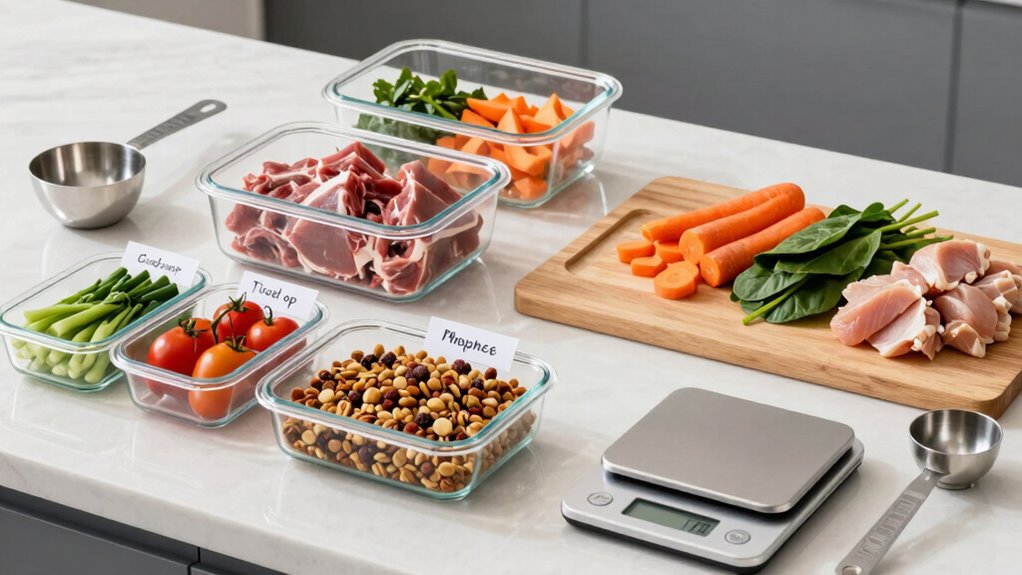
Creating a DIY meal prep system can transform the way you approach your weekly meals, saving you time and money. When it comes to feeding your pet, planning ahead guarantees you’re providing balanced nutrition without the daily hassle. Whether you prefer raw, fresh, or kibble diets, setting up an efficient system can streamline your routine and improve your pet’s health. The key lies in understanding pet nutrition and choosing the right storage solutions to keep food fresh and safe.
First, you need to familiarize yourself with your pet’s dietary needs. Raw diets often require careful handling to prevent contamination, so proper meal prep involves portioning and storing food correctly. Fresh food can spoil quickly if not stored properly, so you’ll want to invest in high-quality storage solutions. Using airtight containers helps lock in moisture and preserve nutrients, preventing spoilage and bacterial growth. For kibble, airtight bins keep pests out and maintain freshness longer, which simplifies your shopping and feeding routines.
Your pet’s nutrition should guide your storage choices. For raw or fresh foods, consider using freezer-safe containers or vacuum-sealable bags to extend shelf life. Label these with dates to track freshness and avoid waste. Meal prepping in bulk allows you to portion out servings ahead of time, reducing daily prep and ensuring your pet always has access to nutritious meals. When using storage solutions, prioritize those that are BPA-free and food-grade to keep your pet safe from harmful chemicals. Additionally, understanding pet nutrition can help you select the most appropriate food types and storage methods for your pet’s specific needs. Incorporating proper handling techniques can further minimize the risk of contamination and spoilage. Moreover, maintaining a well-organized system minimizes stress during busy feeding times.
To maximize your DIY meal prep system, organize your storage area efficiently. Clear bins and labeled containers make it easy to find what you need quickly. Store raw ingredients separately from cooked portions to prevent cross-contamination. Keep raw foods at the back of the fridge or freezer, and place ready-to-serve meals in accessible spots. This setup minimizes last-minute chaos and encourages consistency in feeding schedules. Incorporating knowledge of psychological assessments can also help tailor your routines to better fit your pet’s personality and behavior.
In addition to storage, maintaining cleanliness is vital. Regularly clean your containers and prep surfaces to prevent bacteria buildup. Rotating your stock ensures you use older food first, reducing waste and keeping your pet’s diet fresh and balanced. When you have a dedicated prep area, you can prepare meals in advance, store them efficiently, and confidently serve your pet nutritious food every day. Proper hygiene practices are essential to ensure the safety and health of your pet’s diet. Being mindful of food safety standards further enhances your pet’s well-being.
As an affiliate, we earn on qualifying purchases.
Frequently Asked Questions
How Do I Determine the Right Portion Sizes for My Pet?
To determine the right portion sizes for your pet, start with a portion calculation based on their weight, age, and activity level. Keep dietary balance in mind by including appropriate amounts of protein, carbs, and fats. Regularly monitor your pet’s condition and adjust portions if they gain or lose weight. Consulting your vet helps fine-tune these portions, ensuring your pet stays healthy and well-nourished.
What Safety Precautions Are Necessary When Handling Raw Ingredients?
Imagine wielding a meat cleaver like a sword in a dragon’s lair—safety first! Always handle raw ingredients with clean hands and tools to prevent cross-contamination. Keep raw meats separate and store them properly in sealed containers. Wash cutting boards, knives, and surfaces thoroughly after use. These precautions guarantee you don’t turn your kitchen into a pet food horror show, keeping everyone safe and healthy.
How Long Can Prepared Meals Be Stored Safely?
You can typically store prepared meals safely for 3 to 4 days in your refrigerator. Always check the nutritional labels for specific storage recommendations, and use airtight storage containers to keep meals fresh and prevent contamination. If you need to store meals longer, consider freezing them, which extends their safety for up to 3 months. Label containers with dates to guarantee freshness and safety.
Are There Specific Tools Recommended for Meal Prep?
Imagine you’re preparing a week’s worth of pet meals. You’ll want reliable meal prep containers, like BPA-free plastic or glass, to keep food fresh. Food storage tips include choosing airtight lids and labeling containers with dates. These tools help maintain freshness and prevent spoilage. Using the right meal prep containers guarantees your pet’s meals stay safe, fresh, and easy to access, making your prep routine more efficient and organized.
How Often Should I Rotate or Update My Pet’s Meal Plan?
You should rotate or update your pet’s meal plan every 4 to 6 weeks to guarantee meal variety and prevent dietary boredom. Regularly changing up ingredients helps provide balanced nutrition and keeps your pet interested. However, maintain some dietary consistency to avoid digestive issues. Observe your pet’s preferences and health, and consult your vet if you notice any reactions or signs of nutritional gaps, adjusting the plan as needed.
Conclusion
With this DIY meal prep system, you’ll turn mealtime chaos into a perfectly orchestrated symphony of freshness, raw power, and kibble convenience. Say goodbye to frantic grocery runs and guesswork — your pet’s diet will be so flawless, even the picky eaters will be begging for seconds! Get ready to revolutionize your pet’s health and your sanity in one simple, epic move. This system isn’t just a game-changer — it’s a life-saver on steroids!
Halloween Picks
halloween
As an affiliate, we earn on qualifying purchases.