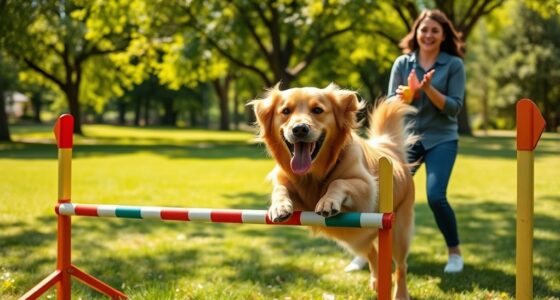

Many owners forget how vital it is to build a reliable stand-stay in various environments, not just at home. It’s essential to practice consistently, using clear cues and gradually adding distractions. Rushing the process or skipping foundational steps can cause confusion and reduce effectiveness. You also need to reinforce calmness and control outdoors, where more challenges occur. Keep working on these skills steadily, and you’ll find your dog more obedient and confident in any situation—that’s just the beginning.
Key Takeaways
- Owners often neglect practicing the stand-stay in varied environments to ensure reliable behavior outside the home.
- Many forget to reinforce the stay with consistent cues and immediate praise for successful holds.
- They overlook the importance of gradually increasing distractions and distance during training sessions.
- Owners may skip foundational training, jumping straight to advanced scenarios without solidifying basic responses.
- Regularly resetting and calmly managing breaks in the stay are often neglected, leading to inconsistent performance.

Have you ever wondered how to teach your dog to stand and stay calmly on command? Many owners focus on basic obedience, but they often overlook the importance of refining this skill through advanced training. The stand-stay command isn’t just about having your dog stand still; it’s about creating a reliable, controlled position that can be maintained in various environments. When you start working on this, remember that patience and consistency are key. It’s tempting to rush the process, but rushing can lead to common mistakes that hinder progress.
A common mistake owners make is not establishing a solid foundation before moving on to advanced training. If your dog doesn’t fully understand the basic cues—like “stand” and “stay”—it’s unlikely they’ll succeed in more complex situations. Make sure your dog responds reliably to these commands in a quiet, familiar environment before challenging them with distractions. This step helps prevent frustration and ensures your dog builds confidence. Once the basics are solid, you can start adding layers of difficulty, such as increasing the duration or introducing mild distractions.
Another mistake is inconsistent training. If you don’t use the same commands, cues, or signals every time, your dog will get confused. Consistency helps your dog associate specific words and body language with the desired action. For advanced training, you might incorporate subtle cues like a specific hand signal or a particular tone of voice. Always reinforce the command immediately and praise your dog when they succeed. Avoid giving mixed signals or allowing your dog to break the stay without correction, as this undermines their understanding of what’s expected. Establishing training consistency is essential for effective learning.
Many owners also forget to practice the stand-stay in different environments. It’s tempting to work only at home, but your dog needs to generalize the command to places like parks, busy streets, or around other dogs. This is essential for real-world obedience. To do this effectively, gradually increase the level of distraction and distance, rewarding your dog for maintaining the position. If your dog starts to break the stay, calmly reset and reinforce the command without scolding. This approach helps your dog learn that staying in position is expected regardless of surroundings. Incorporating training in new environments can significantly improve their responsiveness.
In addition, understanding the importance of generalization in training can make a significant difference in your dog’s behavior. Ultimately, effective training of the stand-stay command involves patience, clear communication, and consistent practice. Avoiding common mistakes such as skipping foundational steps, being inconsistent, or neglecting varied environments will help your dog develop a reliable and calm response. With time and dedication, the stand-stay can become a powerful tool in your training arsenal, ensuring your dog remains composed and responsive in any situation.
As an affiliate, we earn on qualifying purchases.
Frequently Asked Questions
How Long Should My Dog Hold a Stand-Stay?
You should aim for your dog to hold a stand-stay for about 10 to 30 seconds initially. Focus on maintaining duration consistency as your dog improves, gradually increasing the time. Make environmental adjustments by practicing in different settings to build reliability. Always reward your dog for staying calm and still during the stand-stay, and avoid rushing the process to guarantee the skill becomes dependable in various situations.
What Are Common Mistakes When Training Stand-Stay?
A common mistake when training stand-stay is rushing the process, expecting your dog to hold the position too soon. You might also neglect housebreaking essentials, leading to distractions, or skip proper leash training techniques, which can make commands less effective. Be patient, reinforce positive behavior consistently, and gradually increase the duration. Avoid punishing your dog for mistakes; instead, use praise and rewards to build confidence and understanding.
Can Puppies Learn Stand-Stay Skills Effectively?
Yes, puppies can learn stand-stay skills effectively with early training, much like planting a seed that grows strong over time. Imagine your pup as a budding flower, needing socialization and consistent cues to flourish. Incorporate puppy socialization and gentle, positive reinforcement during early training sessions. With patience and practice, your puppy will develop the focus and patience needed for a reliable stand-stay, becoming a well-behaved companion.
How Do I Maintain My Dog’s Focus During Stand-Stay?
To maintain your dog’s focus during stand-stay, use training equipment like a leash or target stick to keep them engaged. Keep sessions short and positive, offering treats and praise as positive reinforcement when they stay focused. Always reward your dog for maintaining eye contact and remaining attentive. Consistent practice with these tools and positive reinforcement helps your dog stay focused and confident during stand-stay exercises.
What Distractions Should I Introduce During Training?
Think of distraction techniques as adding spice to your training stew. You should introduce environmental challenges like busy streets, other animals, or loud noises, gradually increasing difficulty. Use toys or food distractions to test your dog’s focus during stand-stay. By carefully integrating these challenges, you teach your dog to stay committed despite life’s chaos, ensuring they remain steady in real-world situations.
Conclusion
Remember, mastering stand-stay skills isn’t just about obedience—it’s about building trust and confidence between you and your pup. Think of it as the silent promise in a handshake; a simple command that speaks volumes. When you invest in these small, often overlooked cues, you’re laying the foundation for a lifetime of good behavior and mutual respect. So, don’t forget to stand firm—your dog’s best behavior depends on it.