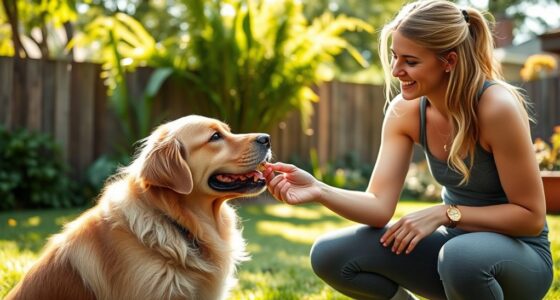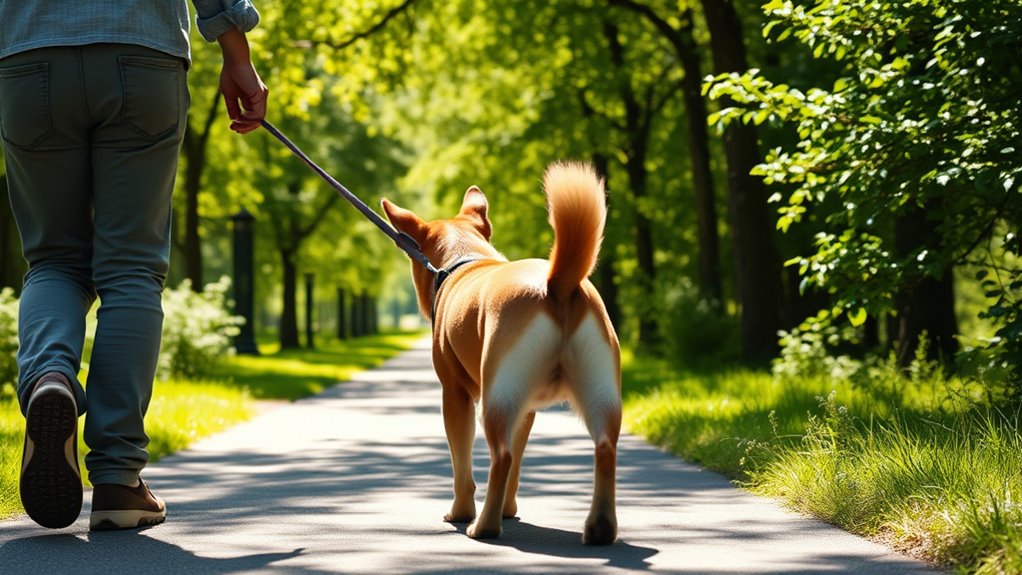

You can walk your dog calmly on a leash without using painful tools by focusing on positive reinforcement and building trust. Teach commands like “heel” and reward your dog whenever they walk beside you without pulling. Using a front-clip harness helps with control, but remember, consistent patience and redirection are key. Keep training sessions short and engaging, and you’ll create enjoyable, pain-free walks. If you want to learn more effective strategies, there’s plenty to discover below.
Open a free Amazon Business account
Business pricing, bulk buying and tax-exempt orders.
As an affiliate, we earn on qualifying purchases.
Key Takeaways
- Use front-clip harnesses and positive reinforcement to encourage calm, loose-leash walking without relying on painful tools.
- Teach and reward commands like “heel” and “come” to promote focus and reduce pulling behaviors.
- Apply the stop-and-go method: halt when pulling and resume only when the leash slackens.
- Redirect your dog’s attention with cues or changing direction calmly to maintain engagement.
- Practice patience and consistency, celebrating small progress to build trust and long-term loose-leash walking skills.

Walking your dog on a loose leash shouldn’t involve painful tools or harsh corrections. Instead, it’s about building a connection based on trust and understanding. When your dog pulls on the leash, it’s often a sign they’re excited, curious, or unsure. Rather than resorting to uncomfortable equipment like prong collars or choke chains, focus on training methods that promote cooperation and respect. You want your dog to associate walking calmly beside you with positive experiences, not pain or punishment.
Start by establishing a foundation of basic obedience. Teaching commands like “heel,” “sit,” and “come” helps your dog understand what’s expected. When your dog walks beside you without pulling, reward them immediately with praise or treats. This positive reinforcement encourages the behavior you want to see more often. Remember, consistency is key: every time your dog pulls, gently stop walking, wait for them to relax or return to your side, then resume. Over time, they’ll learn that staying close results in a more enjoyable walk.
Establish basic commands and reward calm, close walking for enjoyable, pain-free outings.
Using a front-clip harness can be incredibly helpful, but only if used correctly. It provides better control and discourages pulling without causing discomfort. However, don’t rely solely on equipment — it’s a training tool, not a quick fix. Pair it with regular, patient training sessions. When your dog pulls, avoid jerking or tugging. Instead, calmly redirect their attention with a cue or by changing direction. When they respond appropriately, reward generously. This teaches them that staying close and attentive gets them what they want.
Another effective method is the “stop-and-go” approach. When your dog pulls, stop walking and stand still until they relax or come back to your side. Once they do, praise and move forward again. This teaches them that pulling doesn’t get them ahead or faster, but staying with you does. Keep walks engaging by changing your pace, introducing new routes, or incorporating play breaks. A distracted or bored dog is more likely to pull, so keeping their mind occupied makes loose-leash walking easier.
Finally, patience and consistency are essential. Training your dog to walk politely takes time, and every dog learns at a different pace. Celebrate small victories and don’t get frustrated. Over time, your dog will understand that walking calmly is more rewarding than pulling ahead. With gentle guidance, positive reinforcement, and a focus on building trust, you’ll enjoy walks that are safe, comfortable, and free of painful tools or harsh corrections. Developing training consistency and patience is crucial for long-term success in loose-leash walking.
As an affiliate, we earn on qualifying purchases.
Frequently Asked Questions
Can Loose-Leash Walking Be Achieved With Reactive or Anxious Dogs?
Yes, you can achieve loose-leash walking with reactive or anxious dogs by being patient and consistent. Focus on positive reinforcement, rewarding calm behavior and gradually desensitizing your dog to triggers. Keep training sessions short and rewarding, and use treats or praise to encourage your dog to stay relaxed. Over time, your dog will learn to walk calmly on a loose leash, even with initial reactive or anxious tendencies.
How Long Does It Typically Take to Train a Dog for Loose-Leash Walking?
It usually takes anywhere from a few weeks to a couple of months to train your dog for loose-leash walking, depending on their age, temperament, and consistency in training. You should practice daily, keep sessions positive, and gradually increase distractions. Patience is key—some dogs pick it up quickly, while others may need more time. With steady effort, you’ll see progress and enjoy more relaxed walks together.
Are There Specific Breeds That Find Loose-Leash Walking More Challenging?
Some breeds, like retrievers and terriers, might seem like they’re determined to pull you into adventure, making loose-leash walking more challenging. Their energetic nature and strong prey drives can test your patience. But don’t worry—your consistent training and positive reinforcement can turn even the most stubborn into respectful walkers. With time, patience, and understanding, you’ll reveal their best behavior, transforming walks into enjoyable, stress-free moments for both of you.
What Are the Signs of Progress During Training Without Painful Tools?
You’ll notice signs of progress when your dog starts walking calmly by your side without pulling or tugging. They may look up at you more often, maintain eye contact, and respond promptly to your cues. Their pace becomes steadier, and the leash stays slack most of the time. You’ll also see increased focus on you and less distraction, showing they’re understanding and enjoying the training process.
Can Loose-Leash Walking Be Maintained in High-Distraction Environments?
Yes, you can maintain loose-leash walking in high-distraction environments, but it takes focus and preparation. As distractions increase, stay calm, and keep your dog engaged with consistent cues and rewards. Practice in gradually more challenging situations, always rewarding your dog when they stay focused. With patience and persistence, you’ll build reliable loose-leash walking even when the world around you is full of tempting sights and sounds.
Conclusion
Now that you know how to walk your dog without painful tools, you’re well on your way to a happier, more harmonious stroll. Remember, patience and consistency are your best friends—you don’t want to rush the process and end up in a whirl. With gentle guidance, your pup will learn to walk by your side comfortably and calmly. Stick with it, and soon you’ll both enjoy the walk without pulling hair or frustration—truly a win-win situation.
NFL season / tailgating Picks
team gear
As an affiliate, we earn on qualifying purchases.