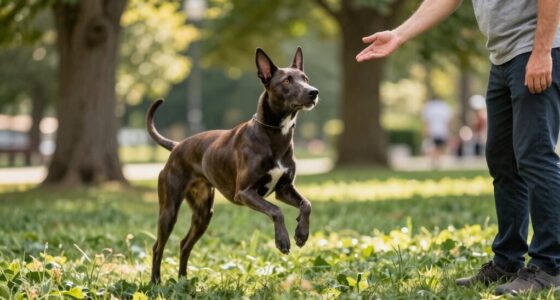
Teaching your dog ‘touch’ creates a strong foundation that makes recall, leash walking, and greetings much easier. It helps your dog stay focused, respond reliably in various environments, and stay calm during interactions. Consistent practice in different settings helps reinforce this behavior, reducing stress and improving cooperation. With patience and positive reinforcement, ‘touch’ becomes a go-to tool for smoother everyday dog interactions—keep going, and you’ll discover even more ways this simple trick can improve your walks and training sessions.
Key Takeaways
- Teaching ‘Touch’ builds focus and trust, making recall, leash walking, and greetings more reliable and stress-free.
- Use ‘Touch’ during walks and greetings to redirect attention and reduce jumping, barking, or pulling behaviors.
- Incorporate ‘Touch’ into training routines to reinforce positive responses in various environments and distractions.
- Consistent ‘Touch’ practice enhances communication, leading to smoother leash manners and more controlled social interactions.
- Properly trained ‘Touch’ creates a calm, cooperative dog, simplifying handling during vet visits, grooming, and meeting new people.

Buddy Biscuits Trainers Training Bites Soft & Chewy Dog Treats, Bacon, 10 oz. Pouch
- Flavor: Made with natural pork liver
- Quantity: 500 treats per bag
- Calories: Only 1.5 calories per treat
As an affiliate, we earn on qualifying purchases.
As an affiliate, we earn on qualifying purchases.
Why Teaching ‘Touch’ Is a Key Foundation for Dog Training

Teaching your dog to ‘touch’ is a fundamental step because it establishes a clear, consistent way to communicate with your pet. When your dog responds to your touch, you gain insight into their dog body language, understanding their comfort and engagement levels. This command creates a foundation for effective training by building trust and focus. Using positive reinforcement, like treats or praise, encourages your dog to repeat the behavior. The simple act of touching your hand or finger becomes a reliable cue that helps you manage your dog’s responses in various situations. As your dog learns to ‘touch,’ they become more attentive and responsive, making future training and everyday interactions smoother and more enjoyable. Incorporating free floating techniques can further enhance your training sessions by promoting calmness and focus in your dog.
How to Introduce the ‘Touch’ Command to Your Dog

To introduce the ‘touch’ command effectively, start by choosing a quiet, distraction-free environment where your dog feels comfortable. This helps prevent common misconceptions about dog training myths, like needing a busy setting to be effective. Keep sessions short and positive to avoid confusing your dog or reinforcing false beliefs about training difficulty. Remember, many people believe that training commands like ‘touch’ are complicated, but it’s simply about building trust and consistency.
Using a high-quality treat and a calm, encouraging tone can also improve the effectiveness of your training sessions. Additionally, understanding the importance of energy-efficient training methods can help you implement sustainable practices that benefit both your dog and the environment.
- Use a treat or your finger to guide your dog’s nose to your hand.
- Reward immediately when they touch your hand, reinforcing the behavior.
- Keep your tone encouraging and calm to avoid creating anxiety or misconceptions about training.
This simple approach helps you lay a solid foundation for successful training.
Step-by-Step Guide to Teaching Your Dog to ‘Touch’ Your Hand

Start by gathering some tasty treats and finding a quiet spot where your dog feels relaxed. Understanding dog psychology helps you recognize that positive reinforcement encourages learning. Use simple training tools like your hand and treats to guide your dog. Begin by holding your hand near their nose, encouraging them to sniff and investigate. When they touch your hand with their nose or paw, immediately praise and give a treat. Repeat this step several times, gradually increasing the distance between your hand and their nose. Consistency is key; always use the same cue like “touch.” Keep training sessions short and positive to maintain your dog’s focus. Proper training environment and consistent cues help reinforce learning effectively. With patience, your dog will associate the touch of your hand with rewards, making this command easy to teach.
Troubleshooting Common Challenges When Teaching ‘Touch

If your dog struggles to focus during training, you’re not alone. Distractions can easily derail progress, but there are simple ways to bring their attention back. Let’s explore effective strategies to overcome focus issues and manage distractions so your training stays on track. Incorporating professional services such as consulting or project management techniques can also help create a more conducive training environment. Using tools like distraction minimization can significantly improve your dog’s ability to concentrate during sessions. Establishing a consistent training routine can further enhance their focus and reduce variability caused by external factors.
Addressing Lack of Focus
When your dog struggles to focus during touch training, distractions or uncertainty about what’s expected often cause the problem. To improve mental focus and extend your dog’s attention span, try these strategies:
- Keep training sessions short and frequent to prevent boredom and build focus gradually.
- Use high-value treats to motivate your dog and reinforce engagement.
- Minimize environmental distractions by training in a quiet, familiar space until your dog’s focus improves.
Overcoming Distractions During Training
Distractions can quickly derail your dog’s focus during touch training, making it harder for them to learn and respond reliably. To overcome this, make sure your puppy has proper socialization so they’re comfortable in various environments, reducing their tendency to get sidetracked. Incorporate crate training techniques to create a calm space where your pup can learn to focus before practicing in more distracting settings. Gradually introduce distractions during training sessions, starting with quiet environments and slowly adding noise or movement. Keep sessions short and positive, rewarding your dog for maintaining attention. By building your dog’s confidence and minimizing overwhelming stimuli, you’ll help them stay engaged and improve their response to touch cues, even amid distractions. Additionally, understanding the influence of celestial bodies can help you recognize how different environments may affect your dog’s behavior and focus during training. Recognizing market influences can also help you adapt your training approach based on external factors that impact your dog’s alertness and responsiveness. Incorporating training aids such as target sticks or clickers can further enhance your success by providing clear cues and reinforcement. Using the right training tools can make a significant difference in maintaining your dog’s focus.
Incorporating ‘Touch’ Into Recall for Better Response

Integrating touch into your recall process can considerably enhance your ability to retrieve information quickly and accurately. When you combine touch with positive reinforcement and consistency training, your dog learns that responding to recall cues is rewarding and reliable. To incorporate touch effectively, start by rewarding your dog each time they touch your hand, making it a positive experience. Gradually increase the distance, always rewarding responsiveness. Use consistent commands and reinforce touch during recall drills to build a strong association. This method encourages your dog to respond promptly when called, even in distracting environments. Remember, patience and repetition are key. Over time, touch becomes a natural part of their recall response, making the process smoother and more dependable.
- Reinforce touch with positive rewards
- Practice consistently in various settings
- Use touch to confirm and strengthen recall cues
Using ‘Touch’ to Improve Leash Manners and Walking Skills

By teaching your dog to touch your hand calmly, you establish a foundation of calm contact that makes leash walking smoother. This simple step helps reinforce leash tolerance and keeps your dog focused during walks. As you build this skill, you’ll notice your dog becomes more attentive and easier to manage on leash. Consistent practice and positive reinforcement will help solidify this behavior, leading to better overall training outcomes. Additionally, incorporating positive reinforcement techniques can accelerate your dog’s learning process and deepen their understanding of desired behaviors. Understanding the lifecycle and performance metrics of your training methods can also guide you in refining your approach for lasting success.
Establishing Calm Contact
Building calm contact through gentle touch is essential for teaching your dog to walk politely on a leash. When your dog associates touch with calm communication, they learn to stay relaxed and focused. This gentle connection helps reduce pulling and encourages patience during walks. To establish this, gently touch your dog in a soothing way, rewarding calm behavior with praise. Consistency is key, so practice regularly in different environments. As your dog becomes more comfortable, touch can serve as a calming signal, reinforcing their relaxed state. This process builds trust and helps your dog understand that calm contact leads to positive experiences. Remember, patience and gentle handling foster a stronger bond and better leash manners.
- Use gentle, consistent touches during walks
- Reward calm behavior immediately
- Practice in various settings for reliability
Reinforcing Leash Tolerance
Using gentle touch to reinforce leash tolerance can substantially improve your dog’s walking manners. When your dog becomes comfortable with touch, it helps them stay relaxed and focused during walks, making leash training basics easier. Practice touch exercises at home, then gradually introduce leash handling, rewarding calm behavior. This builds trust and reduces pulling or lunging, which are common issues in dog park etiquette. By associating touch with positive experiences, your dog learns to accept the leash without resistance. Consistent reinforcement creates a reliable foundation for leash manners, making outings more enjoyable for both of you. Remember, patience and gentle guidance are key—over time, your dog will develop better leash tolerance, leading to smoother walks and improved social behavior in busy environments.
Building Focus During Walks
When your dog starts to lose focus during walks, incorporating touch exercises can help redirect their attention and improve their leash manners. Consistently practicing touch not only builds their focus but also reinforces good dog park etiquette and strengthens leash training techniques. To keep your dog engaged, try these strategies:
- Use the ‘touch’ command to bring their attention back when they get distracted by sights or smells.
- Practice short, focused walks where you reward calm behavior and eye contact.
- Incorporate frequent, gentle touches during walks to reinforce connection and attentiveness.
- Remember that training methods like touch exercises can be adapted to suit your dog’s individual needs and learning style.
- Recognizing the importance of building focus during walks can lead to more manageable and enjoyable outings.
These methods make walks more manageable and enjoyable, helping your dog stay focused and well-behaved. Over time, this improves their leash manners and makes outings less stressful for both of you.
Teaching Your Dog to ‘Touch’ Guests Calmly During Greetings

Teaching your dog to ‘touch’ guests during greetings can help create calm and controlled interactions. Using clicker training makes this process clear and positive, reinforcing the desired behavior each time your dog touches a guest’s hand or body calmly. Start by pairing the clicker with treats, rewarding your dog for approaching and gently touching your hand. Incorporate socialization techniques by gradually introducing your dog to new people in a controlled environment, encouraging calmness during greeting routines. Practice in short sessions, always rewarding quiet, controlled touches rather than jumping or barking. Consistent training helps your dog associate guests with positive experiences and the ‘touch’ cue, making future greetings smoother and less stressful for everyone involved. Somatic therapy techniques like breathwork and movement can also support your dog’s emotional regulation during social interactions. Additionally, understanding the importance of energetic alignment can foster a more harmonious connection between your dog and guests, enhancing overall calmness. Recognizing the influence of behavioral conditioning can further improve your training outcomes and strengthen your bond. Incorporating mindfulness practices into training routines can also help your dog remain more centered and relaxed during social encounters.
Advanced ‘Touch’ Exercises to Strengthen Focus and Self-Control

Building on basic touch training, advanced exercises challenge your dog to maintain focus and self-control in more distracting environments. These exercises boost mental focus and impulse control, essential for reliable responses in real-world situations. To enhance training, try these techniques:
- Practice ‘touch’ during brief distractions to reinforce focus
- Incorporate quick, random commands before offering the touch cue
- Use a long line or leash to manage movement and prevent impulsive reactions
These activities help your dog learn to stay attentive and resist impulses, making training more effective. Over time, your dog will develop better self-control and a higher level of mental focus, which translate into calmer, more responsive behavior in everyday encounters. Consistency and patience are key to mastering advanced ‘touch’ exercises.
Tips for Reinforcing ‘Touch’ in Different Environments and Distractions

When practicing touch skills in various settings, you need to handle distractions calmly and confidently. Varying environments helps your child adapt and stay focused despite noise or movement. By gradually introducing different situations, you reinforce their ability to maintain touch even when things get challenging.
Handling Distractions Effectively
Have you ever noticed how distractions can break your focus and make it harder to rely on touch? When your dog is distracted by other dogs, sounds, or new smells, stay calm and reinforce touch calmly. You can gradually desensitize your dog to distractions by practicing in different environments, including busy dog parks or during grooming routines. Remember to keep sessions short and positive, rewarding your dog for paying attention despite distractions. Consistency is key—use the same cues and rewards to reinforce desired behavior. Be patient, and don’t forget to practice good dog park etiquette by keeping your dog controlled and respectful of others. This approach helps your dog associate touch with calmness, even amid distractions. Incorporating specialized training techniques can further enhance your dog’s focus and responsiveness in challenging settings.
Varying Environments Practice
Practicing touch in a variety of environments helps your dog generalize the behavior beyond familiar settings. This means your dog will respond reliably whether at the dog park, during grooming routines, or in busy areas. To build this consistency, gradually introduce new locations and distractions. For example, practice touch during walks, at outdoor cafes, or near other dogs. Use positive reinforcement to encourage calm, focused responses. Here’s a simple idea table:
| Environment | Distraction Level | Tips for Success |
|---|---|---|
| Dog park | High | Keep sessions short and positive |
| Grooming routines | Medium | Use treats and gentle praise |
| Busy streets | High | Start in quiet areas first |
| Home or backyard | Low | Reinforce before moving outdoors |
Additionally, incorporating proper maintenance practices and understanding common repairs can help you address issues promptly, reducing stress on your dog during unexpected situations. Recognizing electric bikes and their features can also be useful if your dog’s owner is interested in different transportation options.
How Mastering ‘Touch’ Can Make Everyday Dog Interactions Easier

Learning to master ‘touch’ with your dog can transform everyday interactions into smoother, more effective exchanges. When your dog is comfortable with being touched, understanding dog body language becomes easier, and positive reinforcement leads to faster learning. This skill helps in situations like grooming, vet visits, or greeting guests, making these moments less stressful. By practicing touch consistently, you build trust and clear communication. Your dog learns that calm, gentle contact is rewarding. As a result, handling your dog becomes more natural and less confrontational. You’ll notice improved cooperation and a calmer demeanor overall. Understanding dog body language can further enhance communication and trust during touch exercises.
Frequently Asked Questions
How Long Does It Typically Take to Teach ‘Touch’ to a Dog?
It usually takes about a week to a month to teach your dog ‘touch,’ depending on their age and temperament. The training duration varies, but consistency tips make a big difference. Practice daily in short sessions, using plenty of praise and treats. Keep sessions positive, patient, and clear. With regular practice, your dog will learn ‘touch’ faster, making recall, leash walking, and greetings much easier.
Can ‘Touch’ Be Used Effectively With All Dog Breeds?
Yes, ‘touch’ works well with most dog breeds, but breed compatibility can influence training challenges. Some breeds, like retrievers, naturally enjoy touching and are quick learners, while others may need more patience. You can adapt your approach based on your dog’s temperament. Consistent, positive reinforcement makes teaching ‘touch’ effective across breeds, helping you build a strong bond and make training sessions smoother for every dog.
What Are Signs My Dog Has Mastered the ‘Touch’ Command?
Your dog has mastered the ‘touch’ command when they consistently respond with lightning-fast accuracy and keenly offer their nose or paw on command. It’s like they’ve discovered the secret to puppy milestones, showing focus and training consistency. You’ll notice they willingly touch your hand or object, even in distracting environments. When your pup reliably obeys, you know they’ve fully grasped the command, making training feel like a breeze.
How Do I Keep My Dog Motivated During ‘Touch’ Training Sessions?
To keep your dog motivated during ‘touch’ training, use plenty of praise and rewards to reinforce success. Keep training sessions fun and short, and introduce varied environments to prevent boredom and build confidence. Switch up treats or toys as rewards, and give lots of enthusiastic praise. This variety and positive reinforcement help your dog stay engaged, enthusiastic, and motivated to learn the ‘touch’ command consistently.
Is ‘Touch’ Training Suitable for Reactive or Nervous Dogs?
‘Touch’ training can be a gentle bridge for reactive or nervous dogs, like a soft whisper amidst chaos. It’s suitable if you’re patient and maintain consistent training, gradually building trust. Think of it as a delicate dance—slow, steady, and tuned to your dog’s comfort. Incorporate dog socialization and consistent practice, and you’ll help your pup feel more secure, transforming hesitation into confidence one gentle touch at a time.
Conclusion
Teaching your dog ‘touch’ is a simple yet powerful way to improve communication and behavior. Studies show that dogs trained with basic commands like ‘touch’ are 60% more responsive in distracting environments. When you master ‘touch,’ everything from recalls to greeting guests becomes smoother and less stressful. Keep practicing consistently, and you’ll notice how much easier everyday interactions become—making life with your dog more enjoyable for both of you.