
The most important line on a pet food label is the AAFCO statement, which confirms the product meets industry standards for nutrition, ingredient sourcing, and safety. It tells you whether the food is formulated to be complete and balanced or actually tested and verified. Recognizing this line helps you choose healthier options for your pet. If you’d like to understand what this statement really means and how it affects quality, there’s more to learn below.
Key Takeaways
- The AAFCO statement confirms the product meets nutritional standards, indicating it is either formulated or tested for completeness.
- Look for phrases like “Formulated to meet AAFCO standards” or “Complete and balanced” on the label to identify the claim.
- “Complete and balanced” means the food meets AAFCO’s strict nutritional requirements for pets.
- The statement assures ingredients come from reputable sources but does not guarantee ingredient quality or manufacturing practices.
- Recognizing this line helps pet owners assess food safety, nutritional adequacy, and overall quality assurance.

The Science-Based Homemade Dog Food Cookbook: Keep Your Dog Healthy, Happy & Thriving for Life | Vet-Approved, Wholesome, and AAFCO-Compliant Recipes for Every Age, Breed & Size
As an affiliate, we earn on qualifying purchases.
As an affiliate, we earn on qualifying purchases.
What Is the AAFCO Statement and Why Does It Matter?
Have you ever wondered what those ingredient statements on pet food labels really mean? The AAFCO statement provides fundamental reassurance about a food’s quality and safety. It confirms that the manufacturer has met specific standards related to ingredient sourcing and nutritional adequacy. This statement indicates whether the food is formulated to meet tested nutritional profiles or is just intended to serve as a complete diet. It helps you understand if the pet food is scientifically balanced for your pet’s needs. Without this statement, you can’t be sure the food provides all necessary nutrients or that the ingredients come from reputable sources. Essentially, the AAFCO statement acts as a guarantee that the pet food has been evaluated for safety and nutritional integrity.
How to Find the AAFCO Statement on Your Pet Food Label
Looking at your pet food label might seem straightforward, but locating the AAFCO statement requires a keen eye. First, examine the label design; it’s often at the bottom or side of the packaging. Packaging materials influence where the statement appears—some labels hide it in small print or near nutritional info. To find it quickly, look for phrases like “Formulated to meet AAFCO standards” or “Complete and balanced.” Here’s a helpful grid:
| Label Location | Common Phrases | Design Tips |
|---|---|---|
| Bottom panel | “AAFCO” | Use a magnifier if small |
| Side of package | “Formulated to meet” | Check near ingredients |
| Front label | “Complete and balanced” | Look under close inspection |
| Inner flap | “Nutritional adequacy statement” | Be patient and thorough |
Finding the statement takes effort, but with attention to label design and packaging materials, it’s doable. Recognizing the significance of the Nutritional Adequacy statement helps ensure your pet’s dietary needs are truly met. Additionally, understanding how the AAFCO statement is formulated can give you insight into the quality control standards behind the product. Being aware of label placement can make your search more efficient and less frustrating. Knowing that label design varies can also guide you to where the statement might be hidden.
What Are the Different Types of AAFCO Claims on Pet Food Labels?
Understanding the different types of AAFCO claims helps you better interpret pet food labels. You’ll see various statement types, official certification labels, and what each claim suggests about the product’s nutrition. Recognizing these elements guarantees you make informed decisions for your pet’s health. Additionally, knowing the significance of formulation statements can help determine how closely a product aligns with your pet’s dietary needs. Being familiar with label terminology also aids in comparing products effectively and understanding what specific claims imply about quality and safety. Familiarity with AAFCO definitions enhances your ability to interpret the nuances of each label claim and ensures you select the best nutritional options for your pet. Moreover, understanding the impact of ingredient lists can reveal more about the overall quality and safety of the pet food you choose.
Statement Types Overview
Pet food labels feature various AAFCO claims that help you understand the product’s nutritional adequacy and quality. These claims fall into different statement types, such as “Formulated To Meet” and “Complete and Balanced.” “Formulated To Meet” indicates the manufacturer’s claim based on formulation, but it may not guarantee ingredient quality or manufacturing standards. In contrast, “Complete and Balanced” signifies the food meets AAFCO’s rigorous standards, ensuring proper nutrition. Recognizing these statement types helps you assess the product’s reliability and safety. Keep in mind, these labels focus on nutritional standards rather than specific ingredient quality or manufacturing practices, which are equally important for choosing high-quality pet food. Additionally, understanding the regulations and guidelines related to pet food labeling can help you make more informed choices. It’s also helpful to be aware of how labeling claims are regulated and what they truly signify about the product’s standards. Understanding these distinctions helps you make better, informed decisions for your pet’s health.
Official Certification Labels
Have you ever noticed the official certification labels on pet food packaging and wondered what they really mean? These labels indicate that the product meets specific standards related to ingredient sourcing and manufacturing standards. When you see a label like “AAFCO Certified,” it signifies that the manufacturer has adhered to strict guidelines for ingredient quality and sourcing, ensuring ingredients are safe and properly handled. Certification labels can also confirm that the product was produced following good manufacturing practices, reducing contamination risks. These labels help you trust that the pet food has undergone rigorous oversight, providing reassurance about its safety and quality. Recognizing these labels helps you make more informed decisions, knowing that the manufacturer prioritizes ingredient sourcing integrity and solid manufacturing standards. Security standards play a role in ensuring that the processes behind pet food production are trustworthy and reliable. Additionally, understanding regulatory compliance can give you confidence in the overall safety of the product.
Implication of Claims
When you see specific claims on pet food labels, they reveal important information about the product’s compliance with AAFCO standards. These claims influence marketing implications and shape consumer perception. Different types of claims include:
- Nutritional adequacy statements indicating the food meets specific dietary needs. Understanding these statements helps consumers determine if a product aligns with their pet’s nutritional requirements. These statements are based on AAFCO’s nutritional profiles, which set the standards for what constitutes a complete and balanced diet.
- Breed-specific claims targeting particular breeds or sizes.
- Health benefit claims suggesting improvements like digestion or coat health.
- Ingredient claims emphasizing quality or specific ingredients used.
Understanding these claims helps you evaluate product suitability and transparency. While some claims bolster confidence, others can be misleading, affecting how consumers perceive a product’s quality. Recognizing the implications of these claims ensures you make informed choices based on factual, AAFCO-supported information. Additionally, awareness of market shifts and emerging trends can help consumers better interpret the credibility of certain claims.
What Does ‘Complete and Balanced’ Mean for Your Pet’s Nutrition?

Ever wonder what it truly means when a pet food is labeled “complete and balanced”? It indicates the food provides all essential nutrients your pet needs for excellent health, covering vitamins, minerals, and other critical components. This guarantees nutritional completeness, meaning your pet gets a well-rounded diet without the need for supplements. The quality of ingredients plays a key role here; high-quality ingredients help your pet absorb nutrients better and promote overall wellness. When a product bears this label, it’s formulated to meet specific standards that support your pet’s growth, maintenance, and health. Understanding this helps you choose foods that genuinely support your pet’s nutritional needs, giving you confidence that their diet is safe, effective, and tailored for their well-being. Additionally, many reputable brands incorporate live music and engaging environments to enhance the dining experience, ensuring your pet’s mealtime is both nutritious and enjoyable.
How Does AAFCO Regulate Pet Food?
How does AAFCO guarantee pet foods meet safety and nutritional standards? AAFCO sets guidelines that ensure pet food is both safe and nutritious through strict oversight of ingredient sourcing and manufacturing standards. They don’t directly regulate production but influence industry practices by establishing model regulations that companies voluntarily follow. This includes:
AAFCO establishes model regulations to promote safe, nutritious pet foods that companies voluntarily follow.
- Reviewing ingredient safety and quality
- Ensuring transparent ingredient sourcing
- Requiring adherence to manufacturing standards
- Conducting periodic product testing
- Promoting industry compliance to uphold safety and nutritional integrity. They also emphasize continuous regulatory updates to adapt to new scientific findings and industry developments. Furthermore, they support voluntary industry adherence to these standards to encourage consistent quality across the market. Additionally, they encourage consumer awareness to support informed choices in pet nutrition.
How to Use the AAFCO Statement to Choose Better Pet Food
When choosing pet food, understanding AAFCO language helps you identify quality products. Pay attention to feeding recommendations on the label to make certain your pet’s needs are met. By knowing how to interpret these statements, you can make smarter, more informed choices for your pet’s health. Additionally, recognizing the affiliate disclosure helps you understand potential biases and supports transparent decision-making. Being aware of net worth can also give you context about brands or personalities promoting certain pet foods.
Understanding AAFCO Language
Understanding AAFCO language is essential for making informed decisions about your pet’s food. It helps you interpret labels accurately and assess quality. Pay attention to specific wording, such as “formulated to meet” or “approved by,” which indicates compliance with standards. When evaluating labels, consider:
- The sourcing of ingredients to ensure quality and safety
- Whether the manufacturer provides transparent information about ingredient origins
- Statements that specify if the food is complete and balanced
- Any claims about nutritional adequacy verified by AAFCO
Clear language reflects label transparency, giving you confidence in the product. Recognizing these phrases allows you to make better choices that prioritize your pet’s health. By understanding AAFCO terminology, you can more easily identify high-quality pet foods that meet their nutritional needs.
Interpreting Feeding Recommendations
Ever wonder how to determine the right amount of food for your pet? The feeding recommendations on labels guide you based on your pet’s weight and activity level. Look closely at the AAFCO statement, which guarantees the food meets high manufacturing standards and uses quality ingredient sourcing. These guidelines help you avoid overfeeding or underfeeding, supporting your pet’s health. Remember, individual needs vary, so use the recommendations as a starting point and adjust based on your pet’s age, breed, and activity. Consistent portion control combined with understanding the ingredient sourcing and manufacturing standards behind the food ensures you’re making a smarter choice. This way, you can provide balanced nutrition and promote your pet’s well-being with confidence.
Common Myths About AAFCO and Pet Food Quality
Many pet owners believe that if a pet food label includes an AAFCO statement, it guarantees the food is of the highest quality. However, this is a common pet food myth. The AAFCO label indicates the food meets minimum nutritional standards, but it doesn’t assure superior quality or safety. To better understand pet food quality assurance, consider that:
- AAFCO testing focuses on nutritional adequacy, not ingredient sourcing
- Some brands may meet standards with low-quality ingredients
- Manufacturing practices greatly influence food safety
- AAFCO statements don’t account for freshness or palatability
Relying solely on an AAFCO statement can give a false sense of security. True quality assurance involves checking ingredient transparency, sourcing, and manufacturing processes beyond just the label.
How to Read Pet Food Labels Beyond the AAFCO Statement
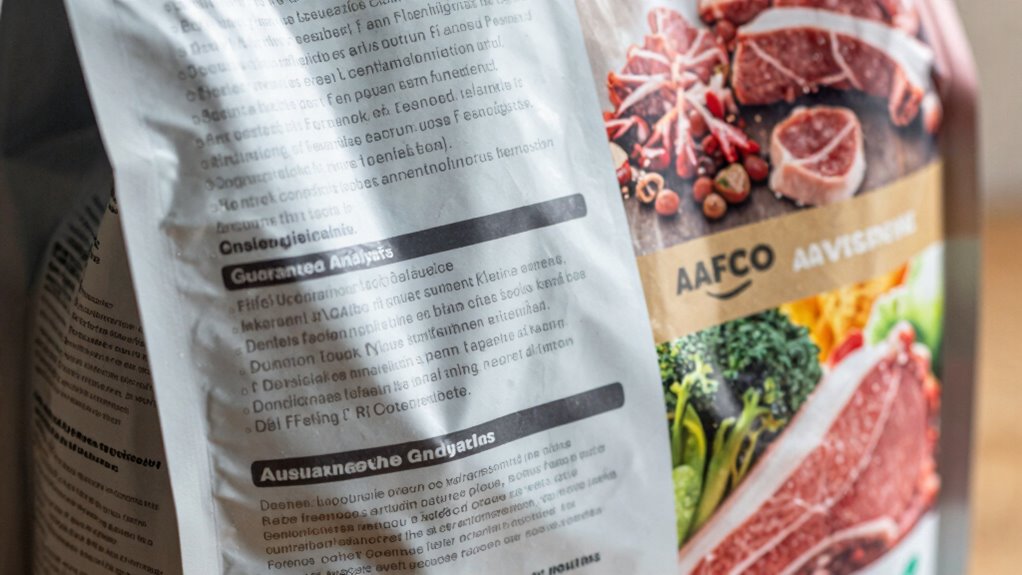
Have you ever looked at a pet food label and wondered what all the information really means? Beyond the AAFCO statement, scrutinize ingredient sourcing details—where ingredients come from can impact quality and safety. Packaging labels often include expiration dates, storage instructions, and manufacturing info, giving clues about freshness and handling. Understanding these details helps you choose better products for your pet. For example, check for clear sourcing info; vague terms like “meat by-products” can hide lower-quality ingredients. Also, examine packaging labels for freshness indicators or recalls.
| Ingredient Sourcing | Packaging Labels | Quality Indicators |
|---|---|---|
| Origin info | Expiration date | Recall notices |
| Farm vs. factory | Storage instructions | Freshness assurance |
| Specific details | Manufacturing location | Ingredient transparency |
Frequently Asked Questions
Can Pet Foods Without an AAFCO Statement Still Be Safe?
Yes, pet foods without an AAFCO statement can still be safe, but you need to be cautious. Without this statement, you must depend on ingredient authenticity and manufacturing consistency to ensure quality. Check for reputable brands that prioritize transparency, clear ingredient lists, and rigorous quality control. Doing so helps you make informed choices, ensuring your pet’s safety even if the product doesn’t carry an official AAFCO endorsement.
Does the AAFCO Statement Guarantee the Pet Food’s Quality?
The AAFCO statement isn’t a magic shield, but it’s a solid sign of quality assurance, like a lighthouse guiding your pet’s food choices. It shows the manufacturer follows ingredient transparency and nutritional standards. While it doesn’t guarantee perfect quality, it helps you identify products that meet industry benchmarks. Trusting foods with this statement can lead to safer, more reliable nutrition for your pet, but always read ingredient lists and reviews too.
Are All AAFCO Statements the Same Across Different Pet Food Brands?
No, not all AAFCO statements are the same across different pet food brands. You’ll notice variations in label consistency and the wording that reflects different manufacturing standards. Some brands specify that their food meets AAFCO standards through formulation, while others claim they’ve been tested according to AAFCO protocols. Always read the statement carefully to understand the level of quality assurance and whether it aligns with your pet’s needs.
How Often Do Pet Food Labels Update Their AAFCO Statements?
Pet food labels typically update their AAFCO statements annually or whenever there’s a significant change in formulation to guarantee regulatory compliance. You should check labels regularly, especially when purchasing new products, to confirm the statement reflects the current formula. Manufacturers are responsible for keeping their labels accurate and compliant with regulations, so updates happen as needed to maintain transparency and meet legal standards.
Can Homemade Pet Foods Meet AAFCO Standards?
Homemade pet foods can meet AAFCO standards, but it’s like building a house without a blueprint—you need careful planning. By following nutritionally complete homemade recipes and ensuring they meet AAFCO’s nutritional adequacy guidelines, you can provide your pet with balanced meals. Always consult a vet or pet nutritionist to confirm your recipes meet these standards, ensuring your furry friend stays healthy and happy.
Conclusion
Understanding the AAFCO statement helps you make informed choices, guarantees your pet’s nutritional needs are met, and guides you to read labels confidently. Recognize the importance of the statement, identify its presence, and decode its meaning. By doing so, you empower yourself to select healthier options, avoid misleading claims, and provide your pet with the best care possible. Ultimately, informed decisions lead to healthier pets and happier lives for both of you.