Choosing reliable dosing pumps for your reef tank helps guarantee consistent levels of calcium, alkalinity, and magnesium, which are essential for healthy corals and fish. Prioritizing simplicity over complexity makes maintenance easier and minimizes the risk of errors or malfunctions. Proper calibration, regular cleaning, and routine checks keep your system stable. When you focus on reliable, straightforward automation, your reef environment thrives. Keep exploring to discover how to set up and maintain your dosing system effectively.

Get pet supplies delivered free with Prime
- Fast, free delivery on millions of items
- Prime Video, Amazon Music and more included
- Member-only deals all year
Key Takeaways
- Prioritize simple, reliable dosing systems over overly complex setups to ensure consistent tank parameters.
- Regularly calibrate and verify pump output to maintain precise and stable dosing.
- Keep maintenance routines straightforward to prevent equipment failures affecting reef health.
- Use automation to reduce manual errors and achieve consistent additive delivery.
- Focus on monitoring and adjusting basic settings rather than adding unnecessary features for stability.
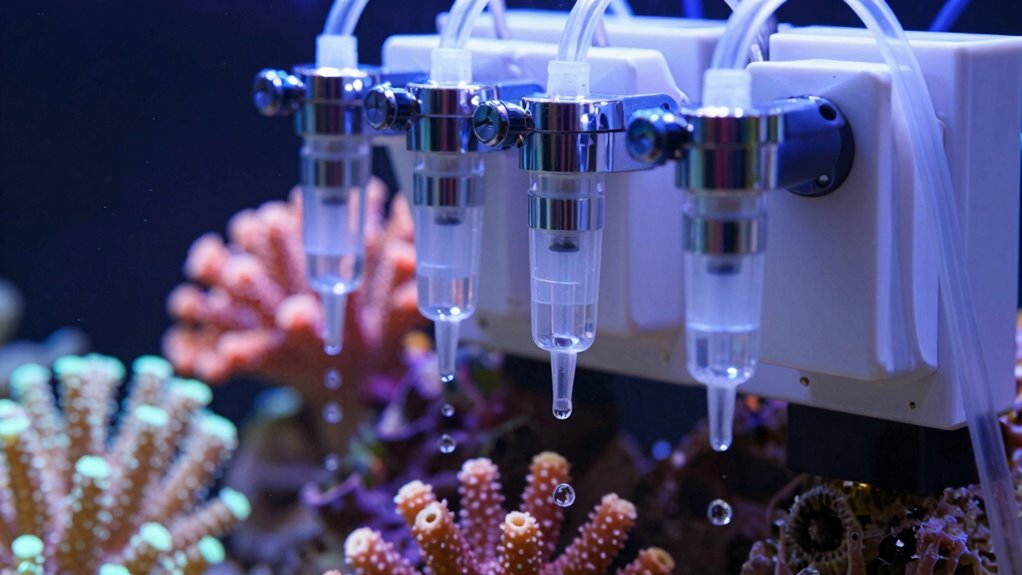
Have you ever wondered how to maintain precise chemical levels in your reef tank? Dosing pumps are a game-changer, offering the automation benefits that help keep your tank stable without the constant manual effort. These devices deliver exact amounts of additives, supplements, or medications at scheduled intervals, ensuring your corals and fish receive consistent care. When you’re managing a reef tank, stability is key, and dosing pumps bring that reliability by removing guesswork from your maintenance routine. Instead of eyeballing measurements or risking overdosing, you set your desired levels, and the pump takes care of the rest. This automation minimizes fluctuations in parameters like calcium, alkalinity, and magnesium, which are critical for a thriving reef ecosystem.
Using dosing pumps also simplifies your maintenance tips. Regular, predictable dosing means you spend less time testing and adjusting chemicals, freeing you up for other essential tasks or just enjoying your tank. To get the most from your equipment, it’s important to calibrate your pumps accurately and verify their output periodically. Even a small discrepancy can lead to imbalances over time, so checking the flow rate and ensuring the pump’s settings align with your tank’s needs is a smart move. Keep a log of your dosing schedule and test results; this helps you detect patterns and fine-tune your approach, avoiding sudden swings or deficiencies. Additionally, understanding the importance of automation in reef tank maintenance can help you appreciate how technology simplifies complex tasks. Incorporating consistent dosing practices can further enhance your tank’s stability by reducing variability over time.
Regular calibration and logging ensure precise dosing and a healthy, balanced reef tank.
Regularly cleaning and maintaining your dosing equipment also helps prevent issues that could impact your tank’s stability. While dosing pumps are designed for ease of use, they do require some initial setup and ongoing monitoring. Make sure your containers are clean and properly connected, and that you’re using high-quality supplements compatible with your system. Regularly check tubing and fittings for clogs or leaks, because even minor issues can throw off your dosing accuracy. It’s also wise to keep backup batteries or power sources handy, so your dosing schedule isn’t interrupted during outages. Recognizing the importance of proper calibration can help you maintain consistent dosing accuracy and avoid unintended fluctuations. Remember, consistency over complexity is more important than elaborate automation systems; simple, reliable pumps do the job effectively when used correctly. Moreover, understanding biodiversity principles can help you tailor your dosing practices to support a diverse and resilient reef ecosystem.
In the end, investing in dosing pumps can transform your reef tank maintenance. They offer automation benefits that bring peace of mind and reduce manual labor, while adherence to good maintenance tips ensures your system remains stable and healthy. With a little setup and regular checks, you’ll enjoy a thriving, balanced reef without the stress of constant manual dosing. Your corals and fish will thank you for the consistent care, and you’ll appreciate how straightforward reef keeping becomes when you rely on this smart, precise technology.
As an affiliate, we earn on qualifying purchases.
Frequently Asked Questions
How Often Should I Calibrate My Dosing Pump?
You should calibrate your dosing pump every 1 to 3 months to guarantee ideal pump accuracy. Regular calibration helps maintain consistent dosing, preventing nutrient imbalances in your reef tank. Factors like water changes, pump wear, or chemical buildup can affect accuracy, so keep a routine check. By scheduling calibration regularly, you ensure your dosing pump functions correctly, delivering the right amount of additives and maintaining a healthy, stable reef environment.
Can Dosing Pumps Be Used for Multiple Chemicals Simultaneously?
Yes, you can use dosing pumps for multiple chemicals at once, but don’t get carried away! Imagine juggling flaming torches—exciting but risky. Always check chemical compatibility to prevent reactions and pump maintenance issues. Use separate pumps or channels for incompatible substances. Regularly inspect your equipment, and avoid overloading it. Proper setup keeps your reef tank thriving without turning your maintenance routine into a circus act!
What Is the Maximum Flow Rate Typically Available?
The maximum flow rate of dosing pumps typically ranges from 10 to 200 milliliters per minute, depending on the model. You can customize the flow rate for precise dosing, which is essential for reef tanks. Regular pump maintenance guarantees consistent performance, preventing clogs or malfunctions that could disrupt your tank’s chemistry. Always choose a pump that offers adjustable flow rates for maximum control and maintain it well for reliability.
Are Dosing Pumps Safe for Highly Sensitive Reef Species?
Absolutely, dosing pumps are incredibly safe for highly sensitive reef species when used correctly. They are designed with precision to respect coral sensitivity and guarantee chemical safety, preventing overdosing or harmful spikes. With proper calibration and regular maintenance, these pumps deliver nutrients and additives gently and consistently, making them a reliable tool that prioritizes the health of your delicate reef inhabitants over complex setups.
How Do I Troubleshoot if My Pump Stops Working?
If your pump stops working, start by checking for electrical issues—ensure it’s plugged in properly and the circuit breaker isn’t tripped. Next, perform pump maintenance by inspecting for clogs or debris that might block flow. Clean the tubing and nozzles if necessary. If it still doesn’t run, test the power supply or consider replacing the pump. Regular maintenance helps prevent future problems and keeps your reef tank stable.
Conclusion
When it comes to reef tanks, choosing a dosing pump isn’t about complexity; it’s about consistency. Like a steady heartbeat beneath vibrant coral, a reliable pump keeps your ecosystem thriving, ensuring each element flows in harmony. Don’t chase the flashiest gadget; focus on stability and accuracy. After all, in the delicate dance of reefkeeping, steady hands and dependable tools turn chaos into a beautiful symphony of life beneath the waves.
Halloween Picks
halloween
As an affiliate, we earn on qualifying purchases.