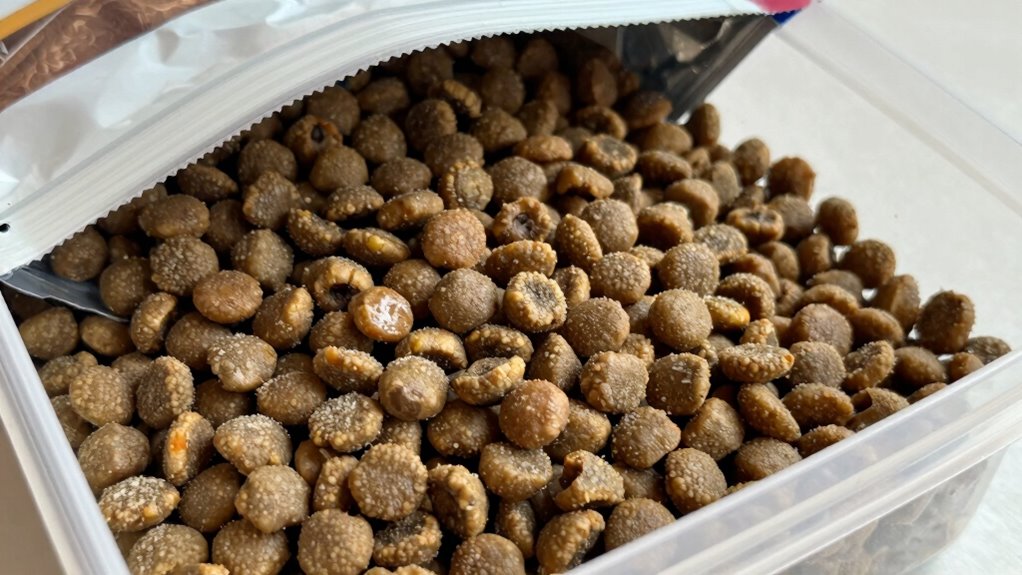

Storing kibble improperly can cause it to go stale faster and lose nutrients. Avoid using porous, lightweight containers that let moisture, air, and pests in, and keep everything airtight. Make sure your storage area is cool, dry, and well-ventilated, away from heat and sunlight. Regularly check for spoilage or pests, and control temperature by refrigerating if necessary. Keep these tips in mind to extend your kibble’s freshness—there’s more you can do to preserve quality.

Get pet supplies delivered free — and shop member deals
- Fast, free delivery on millions of items
- Access to Prime Big Deal Days deals on October 6–7
- Prime Video, Amazon Music and more included
Key Takeaways
- Using porous or lightweight containers allows moisture and pests to penetrate, accelerating spoilage.
- Storing kibble in warm, humid areas speeds up fat and nutrient breakdown.
- Failing to keep containers airtight can lead to exposure to oxygen, causing staleness.
- Ignoring regular checks for spoilage or pests increases the risk of kibble going bad unnoticed.
- Not maintaining proper temperature and ventilation conditions accelerates kibble deterioration.
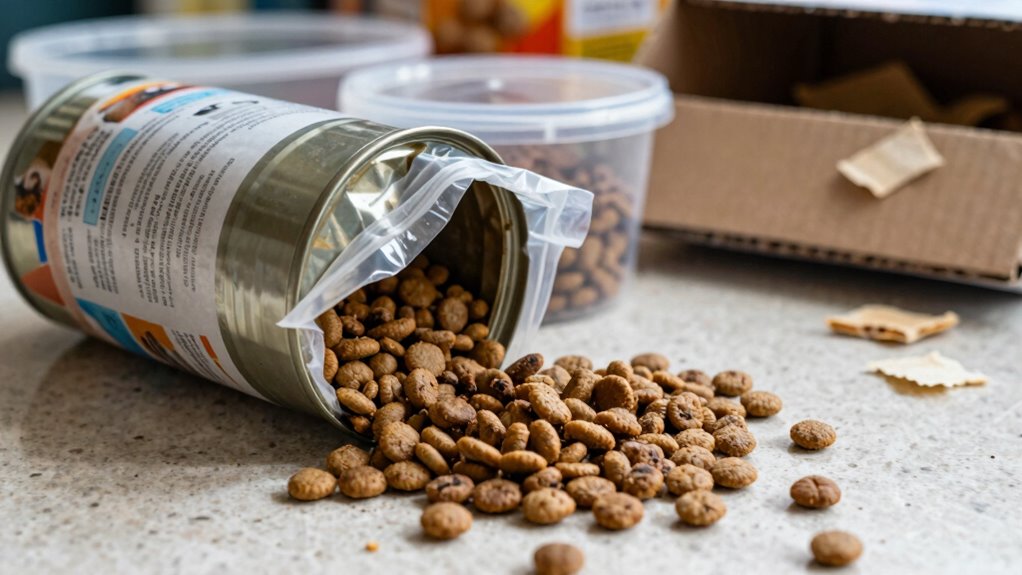
Proper food storage is vital for keeping your groceries fresh and preventing waste, but many people unknowingly make mistakes that compromise the quality of their food. When it comes to kibble, these mistakes can cause it to go stale faster, reducing its nutritional value and making it less enjoyable for your pets. One of the most important steps you can take is choosing the proper containers. Not all storage options are created equal; some containers let air and moisture seep in, accelerating the deterioration of the kibble. Opt for airtight, moisture-proof containers made of durable materials like plastic or metal. These help create a barrier that keeps out humidity, pests, and oxygen, all of which can spoil the food. Additionally, regularly checking your storage conditions can help catch any early signs of spoilage or pest intrusion before it becomes a bigger issue. Proper food storage also involves avoiding containers that are porous or lightweight, as these can compromise the integrity of the storage. Using appropriate storage materials can significantly extend the freshness of your pet’s food. Ensuring proper air circulation around stored kibble can help prevent mold growth and spoilage. Good ventilation in the storage area can further reduce the risk of moisture buildup. Temperature control techniques play a vital role in keeping kibble fresh. You should store the food in a cool, dry place away from direct sunlight, as heat and light can speed up the breakdown of fats and nutrients in the kibble. Avoid keeping it in warm areas like near the stove or in the garage, where temperature fluctuations are common. Ideally, the storage spot should stay consistently cool—around 50 to 70 degrees Fahrenheit. If your pantry tends to get warm or humid, consider refrigerating or freezing portions of kibble, but only if the packaging is airtight and suitable for cold storage. Be sure to let the kibble come to room temperature before serving it to your pet, as cold food can affect digestion and palatability. Proper storage conditions, including temperature control, are essential to extend the shelf life of your pet’s food.
airtight pet food storage containers
As an affiliate, we earn on qualifying purchases.
As an affiliate, we earn on qualifying purchases.
Frequently Asked Questions
How Long Does Unopened Kibble Typically Stay Fresh?
Unopened kibble typically stays fresh for about 6 to 12 months, depending on the brand and storage conditions. During this time, you might notice some flavor loss and nutrient degradation if it’s not stored properly. To maximize freshness, keep the bag in a cool, dry place, sealed tightly, and away from direct sunlight. Proper storage helps preserve the kibble’s taste and nutritional value for longer periods.
Can Freezing Kibble Extend Its Shelf Life?
Freezer preservation can definitely extend the shelf life of kibble. By storing it in an airtight container and placing it in the freezer, you prevent exposure to air and moisture that cause staleness. Just make sure to portion out servings to avoid thawing and refreezing multiple times. Freezing helps slow down the spoilage process and maintains freshness longer, giving you more flexibility in managing your pet’s food supply.
What Signs Indicate Kibble Has Gone Bad?
You’ll notice kibble has gone bad if it smells off, looks moldy or discolored, or feels unusually soft or sticky. Check your storage containers regularly, ensuring they’re airtight to prevent moisture and pests. Humidity control is essential—excess humidity can cause mold and spoilage. If the kibble develops an odd odor or texture, it’s best to discard it to keep your pet safe and healthy.
Is It Better to Store Kibble in Its Original Bag?
It’s better to transfer kibble into a suitable packaging, like an airtight container, rather than leaving it in the original bag. The original bag isn’t ideal because it can tear or let air in, speeding up staleness. Choose a cool, dry storage location away from direct sunlight. This way, your pet’s food stays fresh longer, maintaining flavor and nutrients for their health and enjoyment.
Do Different Brands Have Varying Storage Requirements?
Different brands can have varying storage requirements due to ingredients or packaging. You should check each brand’s recommendations for maximum freshness, as some may need airtight containers or cooler storage. Brand consistency matters, so sticking to one brand helps you understand its specific needs. Storage flexibility can be limited if a brand’s packaging isn’t designed for long-term storage. Always follow the manufacturer’s instructions to keep your kibble fresh longer.
Conclusion
If you keep making these food storage mistakes, your kibble could turn into a stinky, moldy monster faster than you can say “puppy snack.” Don’t let your pet’s food become a ticking time bomb of stale, ruined snacks. By avoiding these common errors, you’ll save your kibble from an early death and keep your furry friend happily munching on fresh, delicious bites. Remember, proper storage isn’t just smart—it’s a matter of survival for your pet’s taste buds!
Fall Picks
fall essentials
As an affiliate, we earn on qualifying purchases.