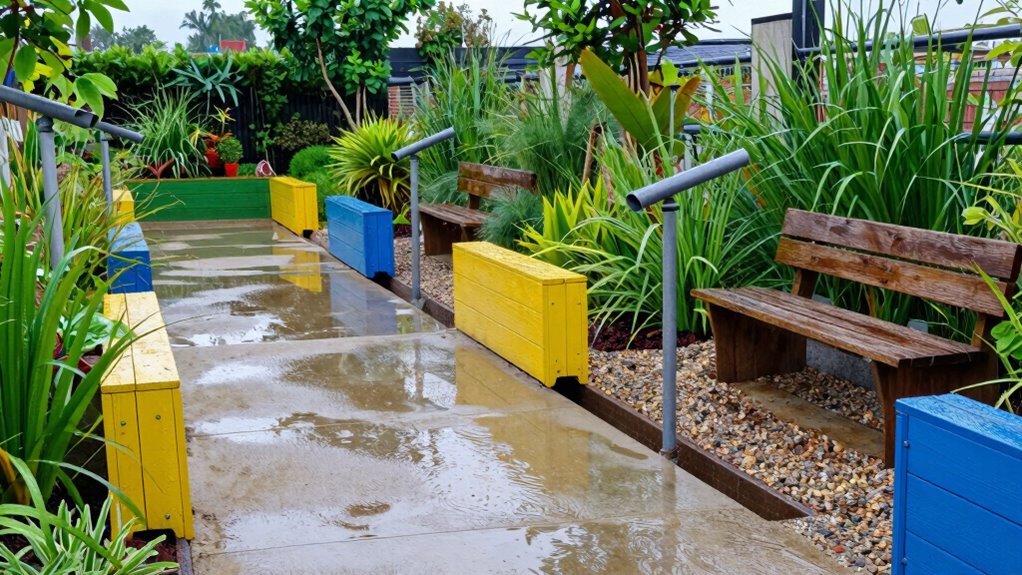

To build a mud management zone for rainy days, choose waterproof flooring like sealed concrete, rubber mats, or interlocking tiles to contain mud and prevent water from spreading. Install proper drainage with slight slopes, French drains, or gravel beneath the surface to prevent pooling. Position the zone near entrances and add shoe storage to keep footwear mud-free. Regularly maintain the area, ensuring drainage stays clear and flooring remains intact. Keep exploring for more tips on creating an effective mud zone.

Get pet supplies delivered free — and shop member deals
- Fast, free delivery on millions of items
- Access to Prime Big Deal Days deals on October 6–7
- Prime Video, Amazon Music and more included
Key Takeaways
- Select waterproof, slip-resistant flooring like rubber mats or sealed concrete for durability and safety.
- Install proper drainage systems such as French drains or trench drains to prevent pooling.
- Position the zone near high-traffic or outdoor entrance areas for effective mud containment.
- Incorporate shoe storage solutions to encourage mud-free footwear and reduce tracked dirt.
- Maintain drainage and flooring regularly to ensure ongoing effectiveness and a clean, dry environment.
Rainy days can turn your yard into a muddy mess, making it difficult to walk or enjoy outdoor activities. When the ground becomes soaked and slick, it’s easy to track mud into your home and create a persistent mess. To prevent this, building a dedicated mud management zone is essential. Start by choosing a durable, waterproof flooring material that can withstand constant moisture and foot traffic. Waterproof flooring options like rubber mats, interlocking tiles, or sealed concrete provide a clean, slip-resistant surface that keeps mud and water contained within the zone. These materials also make cleaning easier, so you can quickly remove dirt and moisture after a storm.
Create a durable, waterproof mud zone with slip-resistant flooring to keep your yard clean and safe during rain.
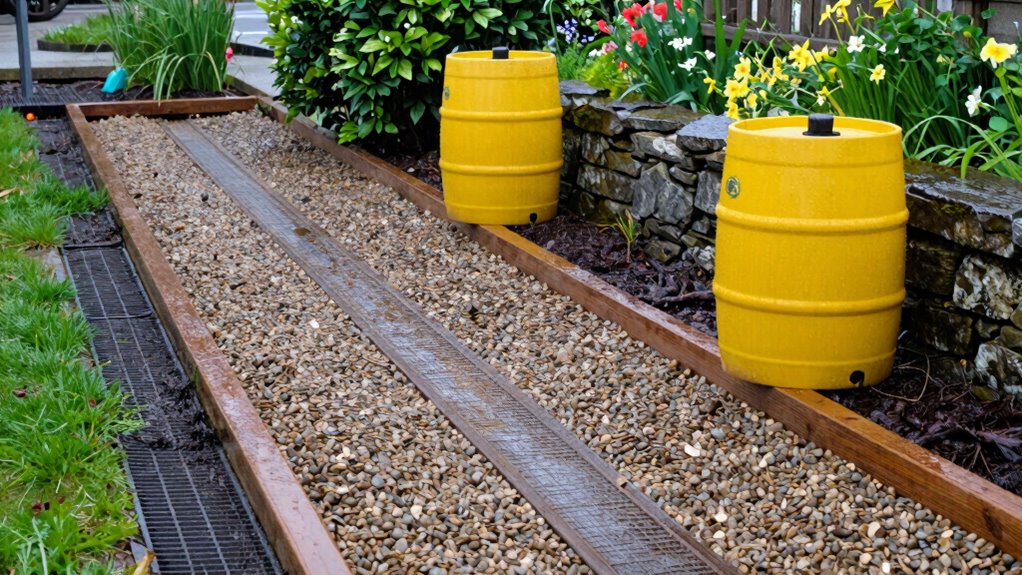
Beyond the flooring, focus on installing effective drainage solutions. Proper drainage is key to keeping this area dry and functional. You might consider adding a slight slope to the ground to direct water away from the zone, ensuring it doesn’t pool or flood. Installing a French drain or trench drain can efficiently channel excess water away from the area, preventing muddy puddles from forming. Incorporating gravel or small stones beneath the waterproof flooring can also improve drainage and prevent water from seeping into the soil underneath. These solutions work together to create a dry, stable surface that minimizes mud tracking and reduces soil erosion. Understanding proper drainage techniques is crucial for long-term effectiveness. Additionally, incorporating natural water absorption methods can further enhance drainage and reduce runoff.
Designing your mud management zone with strategic placement makes a significant difference. Position it near your outdoor entrance or high-traffic areas, so muddy shoes and gear are contained before they reach the rest of your yard or home interior. Adding a boot rack or shoe storage nearby encourages everyone to remove muddy footwear before stepping onto the waterproof flooring, keeping the zone clean and functional. To further improve drainage, consider installing a rain chain or gutter extension that directs roof runoff away from this designated area. This prevents additional water from spilling onto the zone during heavy rains. Proper site planning can enhance the zone’s effectiveness and longevity.
Finally, maintaining your mud management zone guarantees it continues to serve its purpose effectively. Regularly clear debris from drainage outlets, check for signs of erosion or standing water, and reseal or repair waterproof flooring as needed. Proper drainage solutions are essential for managing excess water and maintaining a dry environment. When set up correctly, this zone becomes a practical barrier against mud, helping you enjoy your outdoor space even during the rainiest days. With the right waterproof flooring and well-planned drainage solutions, you can keep your yard cleaner, safer, and more enjoyable, no matter the weather.
rubber outdoor mats for mud management
As an affiliate, we earn on qualifying purchases.
As an affiliate, we earn on qualifying purchases.
Frequently Asked Questions
What Materials Are Best for Constructing a Mud Management Zone?
You should use gravel or crushed stone for your mud management zone, as they provide excellent drainage solutions and prevent mud buildup. Incorporate geotextile fabric underneath to enhance soil stabilization and prevent mixing with underlying soil. Consider adding sand or fine gravel for smoother surfaces. These materials work together to guarantee proper drainage and stability, keeping your zone dry and functional during rainy days.
How Often Should I Maintain My Mud Management Zone?
Think of your mud management zone as a garden that needs regular care. You should perform seasonal maintenance at least twice a year, ideally in spring and fall, to keep everything in top shape. Focus on drainage improvements during these times to prevent water buildup. Regularly check for clogs or erosion, and address issues promptly. This routine helps your zone stay effective, even during heavy rains, ensuring your outdoor space remains functional and inviting.
Can I Customize the Size of My Mud Management Zone?
Yes, you can customize the size of your mud management zone. With a DIY design approach, you choose the dimensions that best suit your space and needs. Consider material choices like gravel, mulch, or pavers to improve drainage and durability. Measure carefully, and adjust the design if needed, ensuring it effectively manages mud and water runoff during rainy days. Personalizing the size helps create a more functional and efficient zone.
What Plants Are Effective in Reducing Mud Runoff?
You should choose plants like native grasses, rushes, and ground covers for runoff control because they stabilize soil effectively. Plant selection matters, as deep-rooted plants absorb excess water and reduce mud runoff during heavy rains. Incorporate dense foliage and root systems to hold soil in place, preventing erosion. These plants create a natural barrier, helping manage muddy conditions while enhancing your landscape’s overall health and beauty on rainy days.
How Do I Prevent Odors in the Mud Management Zone?
To prevent odors in your mud management zone, focus on odor control by ensuring proper air circulation. Make sure there’s enough space for air to flow freely, which helps disperse foul smells. Consider adding ventilation or fans if needed. Regularly aerate the muddy areas and remove any decaying organic matter. These steps will keep the zone smelling fresher and maintain a healthier environment during rainy days.
Conclusion
Creating a mud management zone during rainy days keeps your outdoor space clean and safe. While some might think it’s an extra hassle, it actually saves you time and effort in the long run by preventing muddy messes from spreading. By incorporating simple features like gravel or stepping stones, you make your yard more functional and enjoyable—even when the weather’s wet. Don’t let rain dampen your outdoor fun—build your mud management zone today!
Halloween Picks
halloween
As an affiliate, we earn on qualifying purchases.