
To create a pet emergency plan binder, gather all your pet’s essential documents like veterinary records, microchip info, and recent photos, and store them in one accessible folder. Include emergency contacts, vet info, and a checklist of supplies. Develop evacuation routes and practice them regularly. Keep contact lists updated and review your plan often. With a well-organized binder, you’ll stay prepared and confident during any crisis—learn more about making yours thorough and ready to go.
Open a free Amazon Business account
Business pricing, bulk buying and tax-exempt orders.
As an affiliate, we earn on qualifying purchases.
Key Takeaways
- Gather and organize all critical pet documents, including medical records, photos, and identification info, in a dedicated binder.
- Include emergency contact lists for veterinarians, shelters, pet sitters, and local emergency clinics for quick access.
- Create a detailed pet emergency plan with evacuation routes, safe locations, and a prepared pet emergency kit.
- Regularly review and update the binder contents and practice emergency drills with your pet.
- Use labeled dividers and secure storage to keep the binder organized and easily accessible during emergencies.
As an affiliate, we earn on qualifying purchases.
Gather and Organize Critical Pet Documents
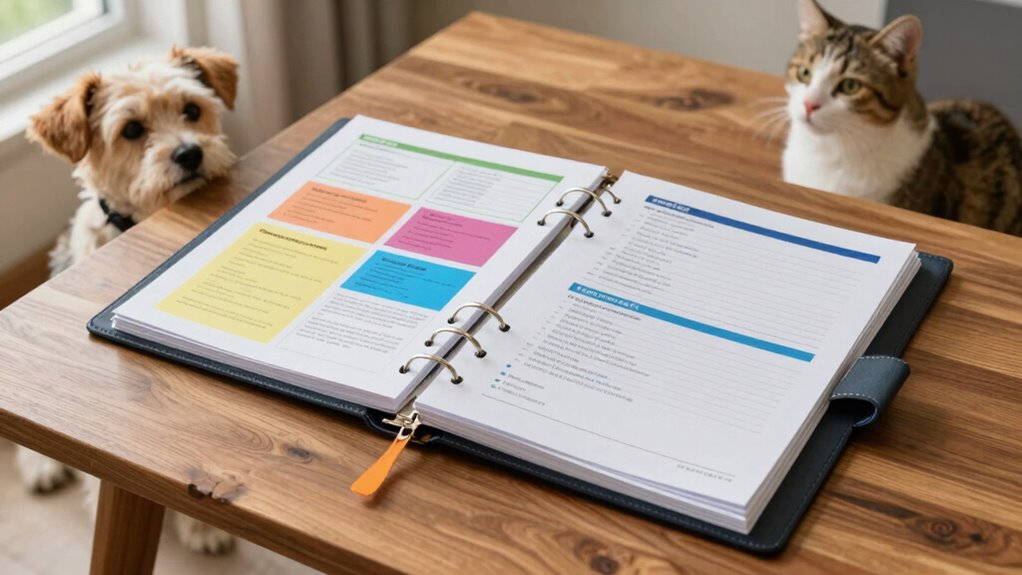
To guarantee you’re prepared in an emergency, start by gathering all your pet’s critical documents and keeping them organized in a designated folder or binder. Include veterinary records that detail your pet’s medical history, recent treatments, and any medications they’re on. These records can be invaluable if your pet needs urgent care or if you’re visiting a new veterinarian. Also, compile pet identification information, such as recent photos, microchip details, and collar tags. Having these documents ready assures you can quickly provide essential info to emergency responders or new caregivers. Organizing your pet’s medical history and identification can improve accuracy during emergency care by providing clear and comprehensive information, ensuring your pet receives the appropriate treatment swiftly. Keeping everything in one accessible spot, so you’re not scrambling to find important details during a stressful situation. A well-maintained pet identification record can help reunite you with your pet if they become lost. Organized records give you peace of mind that your pet’s health and identity are always protected, and maintaining comprehensive records can save valuable time in critical moments.
Decide What Info to Include in Your Pet Emergency Plan
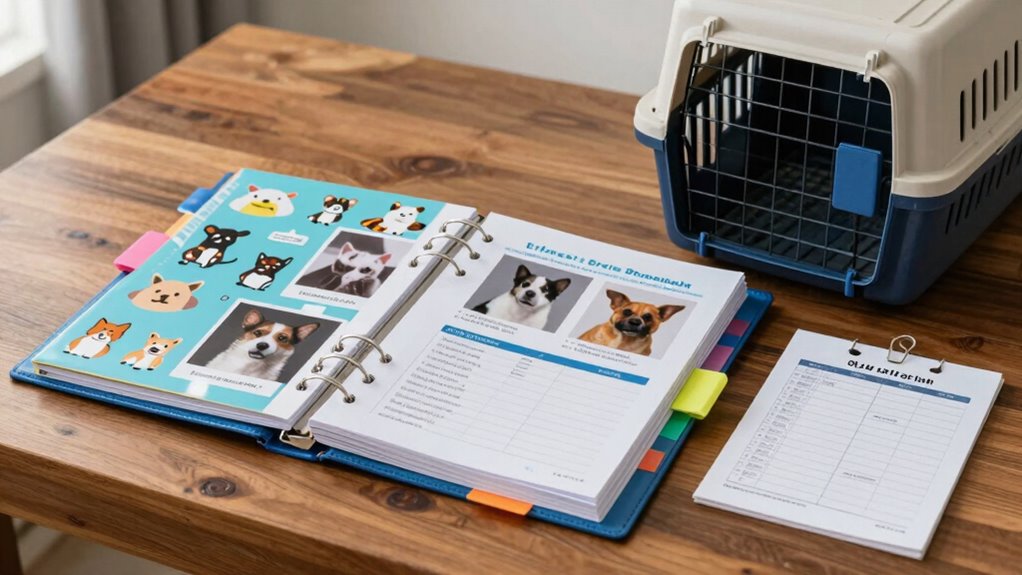
When creating your pet emergency plan, it’s essential to decide exactly what information you’ll include to guarantee quick and effective assistance. Focus on details that promote pet safety, such as your pet’s medical history, current medications, and special needs. Include clear instructions for emergency contacts, vet information, and nearby pet-friendly shelters. Be sure to list your pet’s feeding routine and favorite comfort items to ease stress during emergencies. Additionally, compile a checklist of emergency supplies like food, water, leashes, and first aid supplies. Being organized with this info ensures that anyone assisting you has all the necessary details at a glance, reducing panic and delays. Incorporating energy-efficient cloud solutions can also help you store and access your emergency information securely from anywhere. Utilizing properly labeled containers for storing your supplies can further prevent confusion during stressful situations. Proper organization can also facilitate quick evacuation procedures if an emergency requires immediate action. Ensuring your preparedness involves understanding the importance of having the right vacuum features to consider, such as HEPA filters and maneuverability, which can help in cleaning up pet fur and maintaining a safe environment during emergencies. The goal is to streamline communication and response, making sure your pet’s safety remains the top priority.
Create Your Pet Emergency Response and Evacuation Plan
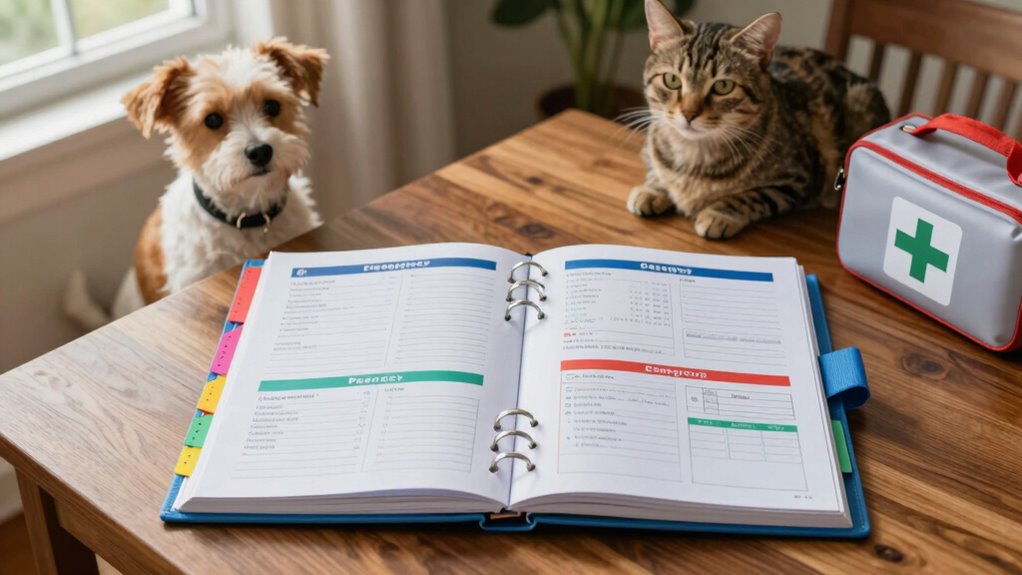
Creating a clear pet emergency response and evacuation plan guarantees you’re prepared to protect your pet quickly and efficiently. Focus on securing pet safety during emergencies by establishing specific evacuation routes and procedures. Ensuring you understand how to communicate with emergency responders can significantly improve your pet’s safety during crises. Developing an understanding of emergency communication protocols helps you relay critical information swiftly. Being aware of body jewelry measurements and materials can also be useful if your pet has accessories or if you need to identify proper equipment during rescue efforts.
- Identify multiple evacuation routes from your home, considering potential road closures or hazards.
- Designate a safe, pet-friendly location outside your home or community where you can evacuate.
- Prepare a pet emergency kit with essentials like food, water, medications, and comfort items.
- Practice evacuating with your pet regularly to ensure familiarity with routes and procedures.
- Incorporate astrological signs into your planning to understand potential personality traits or behaviors that may influence your pet’s reactions during stressful situations.
Having these steps in place ensures you can act swiftly during a crisis, minimizing stress and confusion. Clear evacuation routes and a solid response plan are crucial to safeguarding your pet’s well-being in any emergency.
Compile Emergency Contact and Communication Lists

Having an up-to-date list of emergency contacts is essential for quick communication during a crisis. Include your trusted veterinary contacts, guaranteeing their phone numbers and addresses are current. Also, add details for your pet insurance provider, so you can quickly access coverage information if needed. Don’t forget to list local emergency clinics, animal control, and nearby shelters. If you have a pet sitter or trusted friend who can assist, include their contact details as well. Organize this information clearly in your binder, possibly with labels or a dedicated section. Having these contacts readily available ensures you can swiftly reach out for help, schedule vet visits, or coordinate emergency care, minimizing stress during an urgent situation. Additionally, understanding emergency response protocols can help you act swiftly and effectively when every second counts. Familiarizing yourself with first aid techniques specific to pets can make a critical difference in their survival and comfort in an emergency. Staying informed about pet behavior signs can also help you recognize early symptoms of distress or illness that require immediate attention. Knowing Glycolic Acid benefits can be useful if your pet has skin issues or sensitivities, ensuring you choose appropriate treatments or avoid harmful substances.
Keep Your Pet Emergency Plan Updated and Practice It
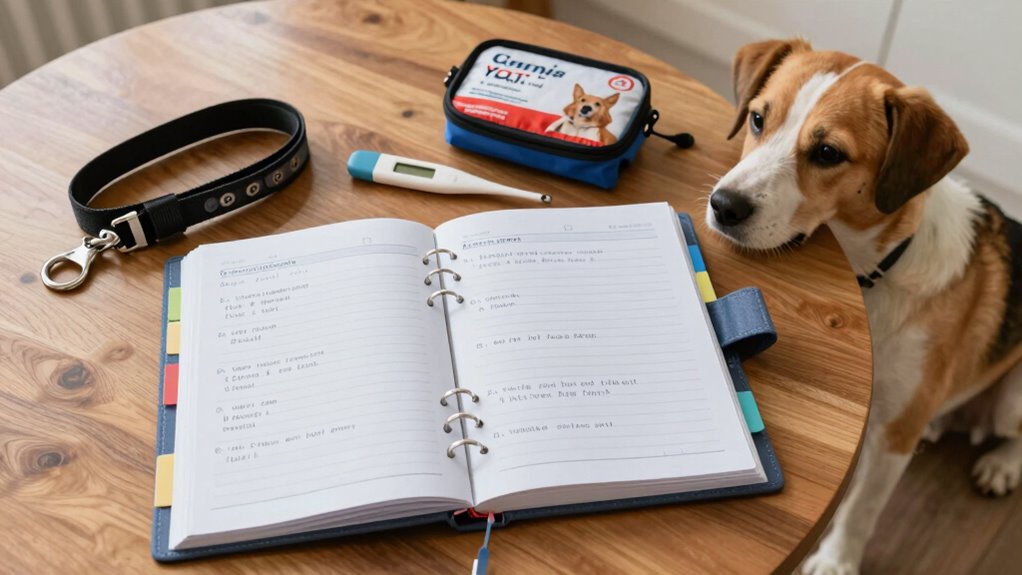
Regularly reviewing and practicing your pet emergency plan guarantees it remains effective when every second counts. Pets can exhibit unpredictable behavior during emergencies, so frequent drills help you understand their reactions and adapt your approach. To keep your plan current, consider these steps:
- Update contact and vet information as needed.
- Conduct quarterly emergency drills to assess response times.
- Observe your pet’s behavior during drills to identify stress triggers.
- Adjust your plan based on new insights and pet behavior changes.
- Keep your emergency preparedness supplies organized and accessible at all times.
- Incorporate pet behavior training into your routine to improve response effectiveness during emergencies. Additionally, understanding emergency response protocols can enhance your preparedness and ensure swift action when needed. Staying informed about air quality considerations can help you better protect your pet from environmental hazards during emergencies.
Practicing ensures you’re confident in executing the plan swiftly. Emergency drills reveal gaps and help you refine your response, making sure you’re prepared when real danger strikes. Staying proactive minimizes panic and keeps everyone safe.
Frequently Asked Questions
How Often Should I Review and Update My Pet Emergency Plan?
You should review and update your pet emergency plan annually to guarantee all information stays current. It’s also important to conduct a plan rehearsal with your pet at least once a year, so everyone knows what to do in a real emergency. Regularly checking supplies, contact info, and evacuation routes helps you stay prepared. By doing these steps, you’ll be ready to act swiftly and confidently when it counts most.
What Should I Do if I Lose Some Critical Pet Documents?
If you lose critical pet documents, act quickly to protect your pet recordkeeping. Contact your veterinarian and local shelter to report the loss and obtain copies if possible. Check your document storage spots, like your digital backups or safe boxes, to see if copies are stored there. Consider creating a new set of essential documents and updating your pet emergency plan, ensuring you’re prepared for any future surprises.
How Can I Involve Children in the Emergency Plan?
You can involve children in your emergency plan by encouraging child participation in emergency drills, making them familiar with safety procedures. Teach them how to respond calmly, locate pet supplies, and follow escape routes. Let them help pack a pet emergency kit or create a pet care chart. By practicing regularly and involving them actively, you build confidence and make certain everyone, including your pets, stays safe during emergencies.
What Items Should I Include in a Pet Emergency Kit?
You should include pet first aid supplies like bandages, antiseptic wipes, and any medications your pet needs. Pack enough food and water for several days, along with a leash, carrier, and recent photos. Don’t forget emergency contacts such as your vet, local animal shelter, and pet poison control. Having these items ready guarantees you’re prepared to handle emergencies quickly and keep your pet safe during unexpected situations.
How Do I Ensure My Pet Stays Calm During an Emergency?
To keep your pet calm during an emergency, focus on pet calming techniques and stress reduction. Speak softly and use a reassuring tone, maintaining gentle movements to avoid startling them. Provide familiar items like their blanket or toy to comfort them. Keep a consistent routine as much as possible and stay calm yourself, because your calm demeanor helps soothe your pet and reduces their stress during chaotic situations.
Conclusion
By building a balanced, well-organized pet emergency plan binder, you’ll boost your confidence and calm during chaos. Keep your plans precise, papers prepared, and practice periodically. This proactive approach provides peace of mind, protecting your pet and preserving your peace. With a little effort today, you’ll effortlessly guarantee safety, security, and swift support when seconds matter most. Stay steady, systematic, and prepared—because a prepared pet parent is a peaceful pet parent.
Fall yard work Picks
leaf blowers
As an affiliate, we earn on qualifying purchases.