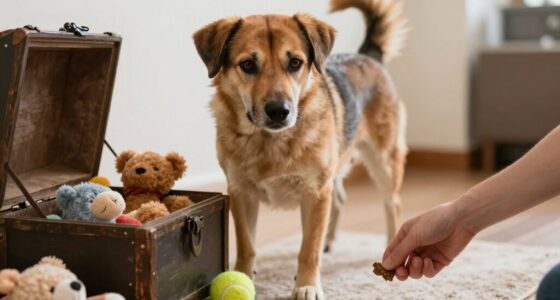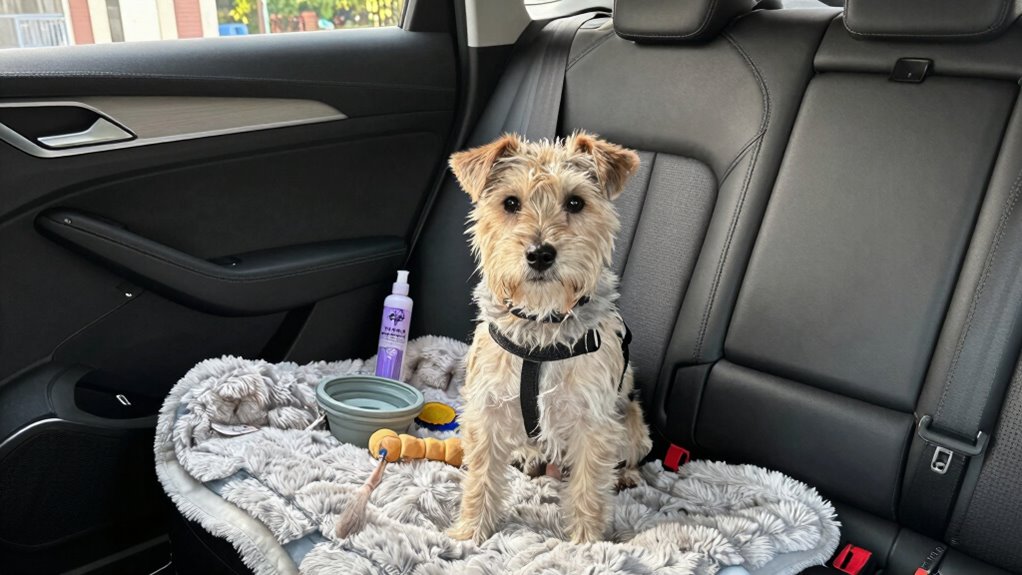

To help your dog stop pacing in the car, create a calming routine by starting with short trips to build comfort gradually. Use familiar blankets or toys, reward calm behavior with treats, and keep the environment quiet and soothing with soft music or calming sprays. Make sure your dog is securely contained and well-exercised before traveling. Break long trips into manageable stops, stay calm yourself, and incorporate gentle reassurance. Keep these steps in mind to establish a more peaceful journey—if you want to learn more, keep going.
Key Takeaways
- Gradually introduce car rides with short trips, rewarding calm behavior to build positive associations.
- Ensure the dog is physically exercised before travel to reduce restlessness and anxiety.
- Use familiar bedding, calming sprays, and soft music to create a soothing environment in the vehicle.
- Secure the dog with a harness or crate to promote safety and reduce movement-induced stress.
- Maintain a calm demeanor, use gentle reassurance, and incorporate calming techniques during the trip.
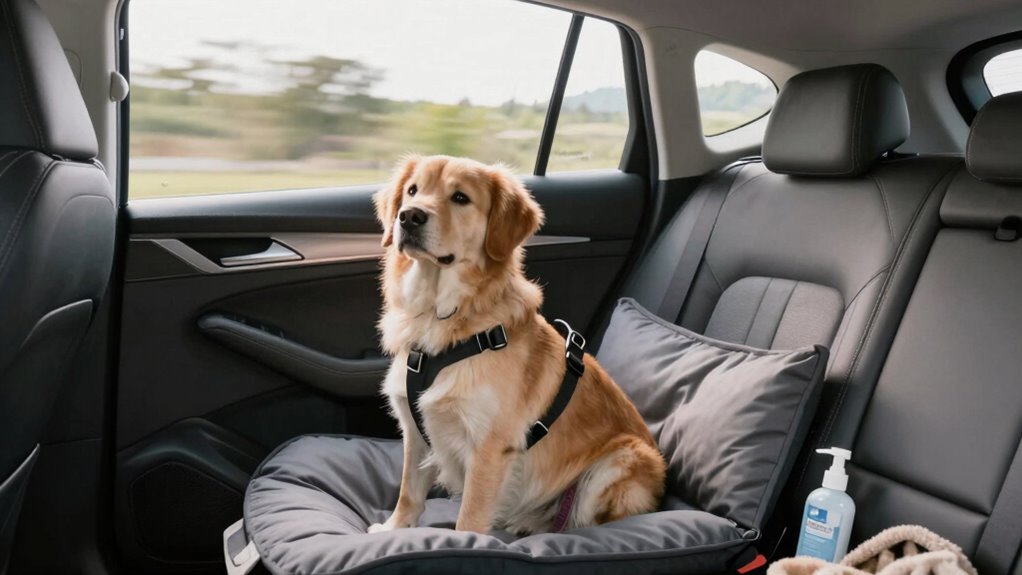
If your dog tends to pace during car rides, establishing a consistent travel routine can make trips calmer and more comfortable for both of you. Pacing often stems from anxiety or excitement, but with the right approach, you can help your dog feel safer and more relaxed. Prioritizing travel safety is key, so always ensure your dog is properly secured with a harness or crate that keeps them safe during sudden stops. Comfort and security go hand-in-hand with calming techniques that help ease your dog’s nerves.
Start by creating a familiar environment inside your vehicle. Use a dedicated travel bed or blanket that smells like home, which helps your dog associate the space with comfort rather than stress. Before hitting the road, take a few minutes to gently pet and talk to your dog, reinforcing a sense of calm. Keep the environment quiet and free from startling noises, such as loud music or abrupt sounds, which can increase anxiety and contribute to pacing.
Create a cozy, familiar space with a blanket and gentle reassurance for calmer car rides.
Gradually introducing your dog to car rides can significantly reduce their stress. Begin with short trips around the block, rewarding calm behavior with treats and praise. Over time, extend these trips, always maintaining a steady, predictable routine. Consistency is vital; dogs thrive on routine and knowing what to expect, which can diminish their urge to pace. Incorporate calming techniques such as playing soft music or using calming sprays designed for dogs in the car, which can create a soothing atmosphere. Understanding the importance of vehicle safety can help you choose the best secure containment for your dog. Additionally, familiarity with biodiversity principles can encourage environmentally friendly choices in your travel gear, such as eco-conscious crates or sustainable accessories.
Make sure your dog is well-exercised before the trip. A tired dog is less likely to feel anxious and more prone to settle during the ride. During the journey, take frequent breaks if possible to stretch their legs and allow for bathroom needs. These breaks not only provide physical relief but also help break up the trip, preventing your dog from becoming overwhelmed or restless. Recognizing the significance of proper containment can promote safer and more relaxed travels. Incorporating behavioral management strategies can also support your efforts to reduce pacing and anxiety during car rides.
Throughout the ride, remain calm yourself. Dogs pick up on your energy, so if you stay relaxed, they’re more likely to mirror that calmness. Use gentle, reassuring words and avoid any sudden movements that might startle them. If pacing persists, consider incorporating calming techniques such as gentle massage or using anxiety-reducing products recommended by your vet.
As an affiliate, we earn on qualifying purchases.
Frequently Asked Questions
How Can I Prevent My Dog From Feeling Anxious During Car Rides?
To prevent your dog from feeling anxious during car rides, focus on enhancing travel comfort and ensuring car seat safety. Use a cozy, well-fitting crate or harness to keep them secure, reducing stress. Gradually introduce car rides at a calm pace, offering treats and praise to build positive associations. Keep the environment quiet, and take regular breaks to stretch. These steps help your dog feel safe, relaxed, and less anxious during trips.
Are There Specific Toys That Help Calm Pacing in the Car?
Yes, calming toys and soothing scents can help reduce your dog’s pacing during car rides. Look for toys designed to provide comfort, like plush or chew toys infused with calming pheromones. You can also use sprays or diffusers with lavender or chamomile to create a relaxing environment. These tools help distract your dog and promote relaxation, making car trips more comfortable for both of you.
What Are the Signs of Motion Sickness in Dogs?
A picture is worth a thousand words, and recognizing signs of motion sickness in your dog is key. Watch for excessive drooling, lip licking, vomiting, restlessness, or whining. If you notice these, consider dog medication or calming accessories to ease discomfort. Keep your dog calm and comfortable during travel, and consult your vet for tailored advice. Staying attentive helps make certain a smoother, happier journey for both of you.
How Long Should a Typical Car Trip Be for Anxious Dogs?
For anxious dogs, keep car trips around 30 to 60 minutes to prevent stress and exhaustion. Make certain car seat safety by using a harness or crate, and bring travel accessories like calming sprays, favorite toys, or a blanket to comfort your pup. Break up longer trips with regular stops, giving your dog a chance to stretch, hydrate, and relax, making journeys safer and more enjoyable for both of you.
Can Training Help Reduce Pacing Behavior During Travel?
Imagine your dog calmly lying in their crate, relaxed and content, as you hit the road. Training definitely helps reduce pacing during travel. Use crate training combined with positive reinforcement to create a safe, secure environment where your dog feels at ease. Reward calm behavior with treats and praise, gradually building their confidence. Over time, this routine can transform anxious pacing into peaceful, enjoyable journeys for both of you.
Conclusion
By establishing a calming routine, providing familiar comforts, and giving your dog plenty of breaks, you can turn car trips into more enjoyable adventures for both of you. Remember, isn’t a relaxed, happy pup worth the effort? With patience and consistency, you’ll help your dog feel safer and more secure on the road. So, why settle for stressful rides when peaceful journeys are just a routine away? Your dog’s comfort is worth it!