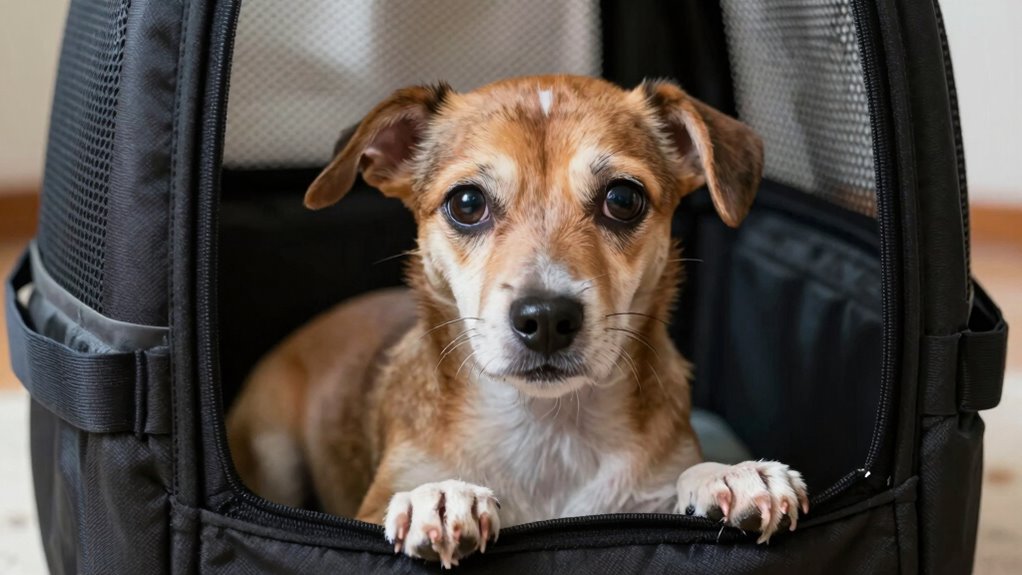

Many dogs dislike carriers because they associate them with stressful experiences like vet visits or uncomfortable rides, causing fear or anxiety. To change this, you should create positive associations by using treats, praise, and toys, and let your dog explore at their own pace. Gradually increase their comfort level without forcing, and be patient. With consistent training and understanding their natural instincts, you can help your dog view the carrier as a safe space—more helpful tips follow.

Get pet supplies delivered free with Prime
- Fast, free delivery on millions of items
- Prime Video, Amazon Music and more included
- Member-only deals all year
Key Takeaways
- Dogs often associate carriers with negative experiences like vet visits, causing fear and resistance.
- Creating positive associations through treats, praise, and gradual exploration helps reduce anxiety.
- Forcing dogs into carriers can increase stress; instead, encourage voluntary exploration and comfort.
- Patience, short training sessions, and reinforcement build trust and confidence over time.
- Respecting a dog’s natural instincts and emotional responses is key to successfully changing their perception of carriers.

Have you ever wondered why some dogs resist being placed in carriers? It’s a common issue, and understanding dog behavior can help you address it effectively. Many dogs associate carriers with negative experiences—perhaps a trip to the vet or a stressful car ride—leading them to feel anxious or fearful whenever they see one. This anxiety isn’t just about dislike; it’s rooted in their natural instincts to avoid what makes them uncomfortable or scared. Recognizing this can help you approach carrier training with patience and empathy, gradually transforming your dog’s perception of the carrier from a source of stress to a safe space.
When you start carrier training, it’s essential to focus on creating positive associations. Instead of forcing your dog into the carrier, encourage your dog to explore it at their own pace. Use treats, praise, and toys to make the carrier inviting. Place it in a familiar area and toss treats inside, letting your dog approach and sniff it without pressure. This process helps reshape their dog behavior, turning the carrier into a place of comfort rather than fear. The goal is to build trust and confidence, so your dog begins to see the carrier as a safe haven rather than an obstacle.
Consistency is key in carrier training. Incorporate short, frequent sessions where you reward your dog for small steps—approaching the carrier, stepping inside briefly, or simply sitting next to it happily. Over time, increase the duration they spend inside and the complexity of the activities, always reinforcing positive experiences. Avoid punishing or scolding if your dog shows hesitation; instead, go back a step and proceed at their pace. This approach helps your dog associate training sessions with positive feelings, easing their resistance. Additionally, understanding and respecting their natural behavioral instincts can greatly improve the training process.
As an affiliate, we earn on qualifying purchases.
Frequently Asked Questions
How Long Does It Typically Take to Acclimate a Dog to a Carrier?
It usually takes a few days to a few weeks for your dog to acclimate to a carrier. Focus on crate training and stress reduction techniques, gradually introducing the carrier as a safe space. Use positive reinforcement and patience, allowing your dog to explore the carrier at their own pace. Consistent, gentle exposure helps reduce anxiety, making the carrier a comfortable, stress-free environment for your furry friend over time.
Are There Specific Breeds More Prone to Disliking Carriers?
Some breeds are more prone to disliking carriers due to breed tendencies and behavioral traits. For example, herding breeds like Border Collies may be more anxious or sensitive, while toy breeds such as Chihuahuas might be more territorial. Your dog’s temperament influences their comfort level. To help, introduce the carrier gradually, making it a positive space, and consider breed-specific needs to reduce fear and build confidence.
Can Medication Help a Fearful Dog Tolerate a Carrier?
Imagine your dog trembling as the carrier approaches; medication can help ease that fear. It can be a useful part of behavior modification, making travel less stressful. Calming supplements, like natural treats or prescribed meds, can relax your dog before and during trips. Always consult your vet to find the right option, ensuring your furry friend feels safe and comfortable, transforming stressful journeys into calmer, more manageable experiences.
What Are Signs of Severe Anxiety in Dogs During Travel?
Severe anxiety in dogs during travel shows through excessive panting, whining, trembling, or trying to escape the carrier. You should observe if your dog shows signs of distress despite puppy training and stress reduction efforts. These behaviors indicate heightened fear or discomfort. To help, keep travel sessions short initially, provide familiar items, and maintain a calm environment. Consistent positive reinforcement can gradually ease your dog’s anxiety during travel.
How Can I Prevent My Dog From Developing Carrier Aversion?
Prevent pet panic by practicing positive carrier training and anxiety management. Start by introducing the carrier gradually, making it a pleasant place with treats, toys, and praise. Use short sessions to build comfort, never force your dog inside. Consistency is key—regular, rewarding routines help your dog associate the carrier with calmness and comfort, reducing fear and fostering familiarity. Patience and persistence turn travel terror into trusting training.
Conclusion
Remember, transforming your dog’s feelings about carriers is like planting a seed—you need patience and gentle care. With consistent positive experiences, you’ll watch their fear fade like fog lifting in the morning sun. Each small step builds trust, turning a dreaded object into a safe haven. Stay calm, be patient, and celebrate every victory, no matter how tiny. Soon, your dog will see the carrier not as a trap, but as a cozy, trustworthy space they’re happy to explore.
Fall Picks
fall essentials
As an affiliate, we earn on qualifying purchases.