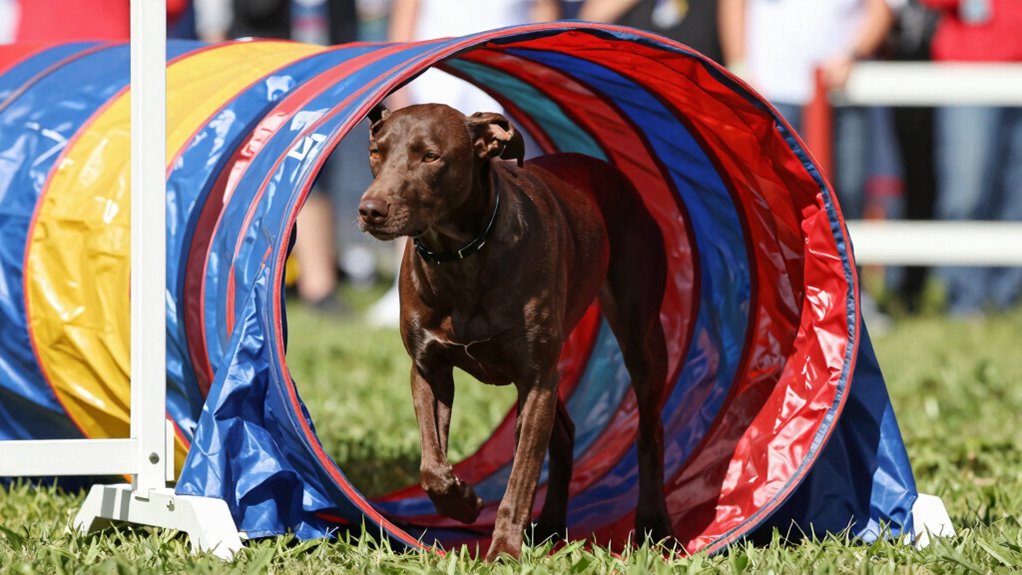

If your dog gets ‘stuck’ on their favorite obstacle like the agility tunnel, it’s often because they find it particularly rewarding and confidence-boosting. Dogs naturally develop strong attachments when they associate certain obstacles with success, praise, and fun. These positive experiences make them enthusiastic to repeat it, creating a preference. To help your dog balance their interests, you can introduce variety and reinforce other obstacles. Keep exploring to discover more tips on nurturing confidence and enthusiasm in your dog’s agility training.

Get pet supplies delivered free with Prime
- Fast, free delivery on millions of items
- Prime Video, Amazon Music and more included
- Member-only deals all year
Key Takeaways
- Dogs may favor familiar obstacles like the tunnel due to increased confidence and comfort levels.
- Repetition reinforces positive associations, making the tunnel a preferred choice.
- A dog’s desire for predictability can lead to sticking with favorite obstacles.
- Overexposure to the tunnel can create a sense of mastery, encouraging repeated use.
- Some dogs develop strong preferences based on early positive experiences with the obstacle.
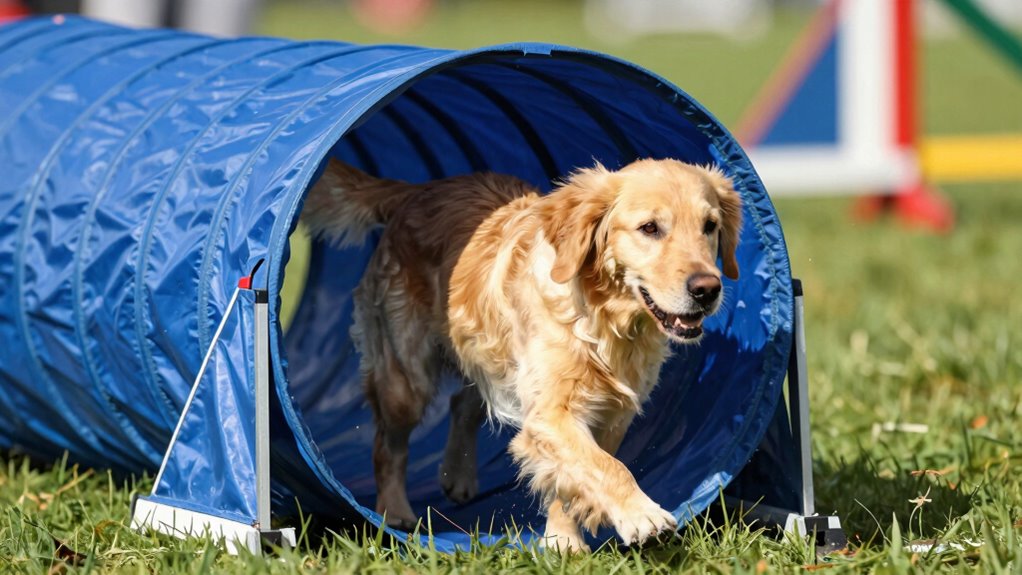
An agility tunnel offers a versatile and engaging way to enhance your dog’s training and exercise routines. It’s a fun obstacle that helps build confidence, improve coordination, and provide mental stimulation. When you introduce your dog to the tunnel, it’s essential to focus on effective training techniques. Start by encouraging your dog to approach the tunnel with treats or toys, gradually increasing the distance and decreasing your assistance. Use positive reinforcement to reward your dog’s willingness to enter and stay inside the tunnel. Consistency is key — practice regularly, and avoid rushing the process to prevent frustration. Break down the training into small, manageable steps, and always end on a positive note to reinforce a good experience. Over time, your dog will associate the tunnel with fun and success, making it a favorite obstacle in their agility routine.
Introduce the tunnel gradually with treats, positive reinforcement, and consistent practice to build your dog’s confidence and enjoyment.
While training techniques are indispensable, safety considerations are equally important to safeguard your dog’s well-being. Make sure the tunnel is set up on a flat, non-slip surface to prevent accidents. Inspect the tunnel for any damage or sharp edges before each session. Keep the training sessions short and positive, especially if your dog is new to agility. Overexertion or stress can lead to fear or hesitation, making your dog “stuck” on certain obstacles. Always supervise your dog during training, and be alert to signs of fatigue or discomfort. If your dog seems hesitant or stuck, don’t force them; instead, step back and try again later, using treats and praise to rebuild confidence. Recognizing and addressing behavioral cues early can help prevent your dog from developing long-term fears or aversions. Understanding dog behavior and how they respond to different stimuli can greatly improve your training outcomes. Additionally, being attentive to your dog’s emotional state ensures a positive experience and encourages their willingness to engage with new obstacles. A supportive environment and patience are key to helping your dog overcome fear or confusion related to certain obstacles, ensuring a more enjoyable experience for both of you.
As an affiliate, we earn on qualifying purchases.
Frequently Asked Questions
How Can I Encourage My Dog to Try New Agility Obstacles?
To encourage your dog to try new agility obstacles, introduce obstacle diversity gradually, making each new challenge fun and rewarding. Use training patience, offering plenty of praise and treats to boost confidence. Break down the new obstacle into simple steps, and practice consistently. Avoid forcing your dog; instead, let curiosity and positive reinforcement guide them. Over time, they’ll become enthusiastic to explore and master a variety of agility obstacles.
What Are Signs My Dog Is Overstressed With Certain Obstacles?
You’ll notice stress signals like yawning, lip licking, or avoiding obstacles, which indicate your dog might be overstressed. Overexertion cues include heavy panting, lagging behind, or hesitation. If you see these signs, give your dog a break, reduce obstacle difficulty, or offer positive reinforcement to ease their stress. Recognizing these cues helps prevent burnout and keeps training enjoyable and safe for your pup.
How Often Should I Rotate Agility Equipment for Variety?
You should rotate agility equipment every 4 to 6 weeks to keep your dog engaged and prevent boredom. Regular equipment maintenance guarantees safety, while obstacle customization keeps training fresh and exciting. Changing up the setups stimulates your dog’s mind and body, helping avoid over-familiarity. By thoughtfully adjusting the equipment, you foster enthusiasm and confidence, making each session a new adventure without risking overstimulation or fatigue.
Can a Dog’s Breed Influence Their Preference for Certain Obstacles?
Yes, your dog’s breed can influence their obstacle preferences due to breed tendencies. For example, Border Collies often excel at agility tasks and may prefer high-energy obstacles like jumps and tunnels. Conversely, some breeds might favor obstacles that match their physical traits or instincts. Recognizing these preferences helps you tailor training, making sessions more enjoyable and effective, ultimately boosting your dog’s confidence and performance on the course.
What Safety Measures Are Recommended for Agility Tunnels?
Think of agility tunnels as your dog’s safety net; proper maintenance is vital to prevent accidents. Regularly check for tears or debris, and clean the tunnel to keep it safe. Always guarantee safety barrier placement guides your dog correctly and prevents falls. By consistently maintaining the tunnel and positioning safety barriers, you create a secure environment, allowing your dog to confidently navigate obstacles without worries.
Conclusion
So, next time your dog seems glued to their favorite obstacle, remember it’s part of their learning journey. Embrace the challenge, celebrate their progress, and stay patient. Let their enthusiasm inspire your training, and watch as they grow more confident, more motivated, more engaged. Because in the end, every tunnel they run through, every jump they conquer, and every obstacle they love builds their skill, bonds, and joy—step by step, tunnel by tunnel.
Halloween Picks
halloween
As an affiliate, we earn on qualifying purchases.