
To protect your dog’s shoulders and toes during flyball, focus on strengthening their shoulder muscles with controlled pulls and resistance exercises, ensuring stability during rapid turns and accelerations. Trim nails regularly, use paw booties on rough or hot surfaces, and monitor paws for soreness after sessions. Incorporate warm-ups, gentle exercises, and appropriate surfaces like turf or grass to reduce injury risk. Want to learn more about effective conditioning techniques? Keep going for expert tips to keep your dog safe and healthy.
Open a free Amazon Business account
Business pricing, bulk buying and tax-exempt orders.
As an affiliate, we earn on qualifying purchases.
Key Takeaways
- Strengthen shoulder muscles with controlled pulls and resistance exercises to prevent strains during rapid flyball movements.
- Regularly trim nails and use paw protection like booties to prevent toe injuries from rough surfaces.
- Incorporate warm-up routines and gradual training increases to reduce shoulder and paw stress.
- Use soft surfaces such as turf or grass to cushion paws and minimize joint impact during training.
- Monitor for signs of fatigue and incorporate rest days to avoid overtraining injuries.
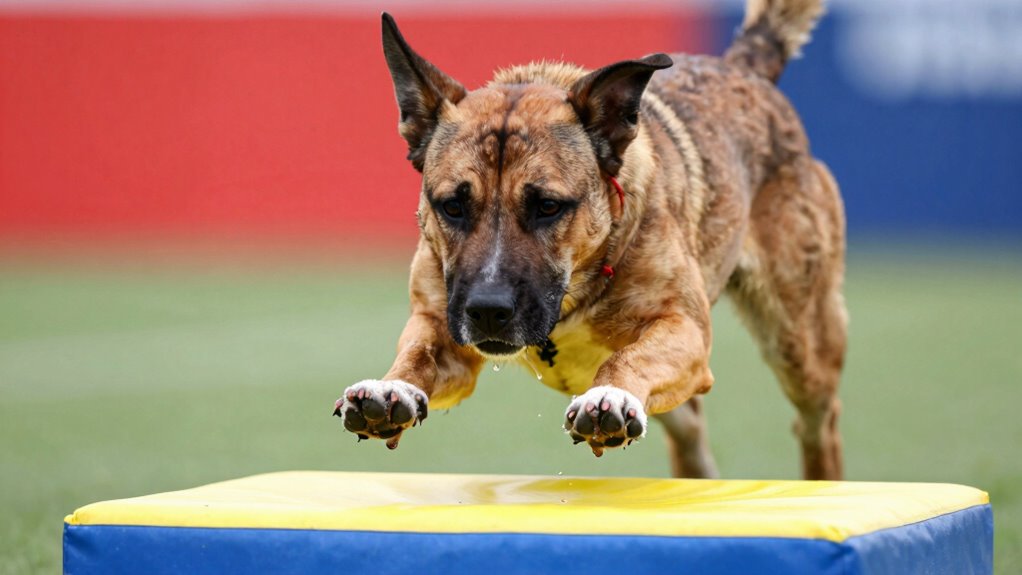
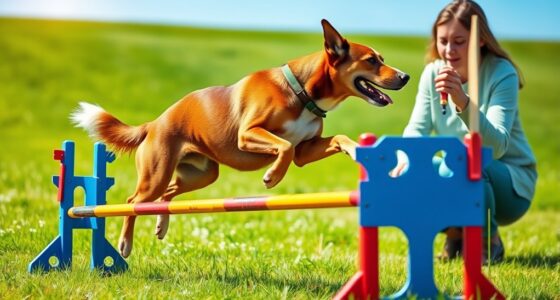
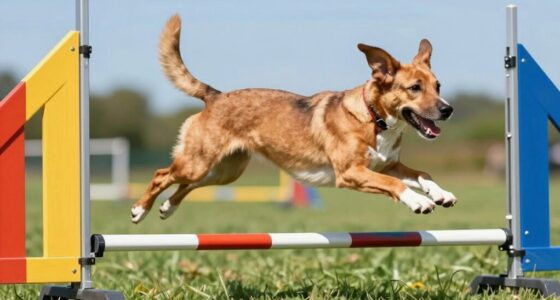
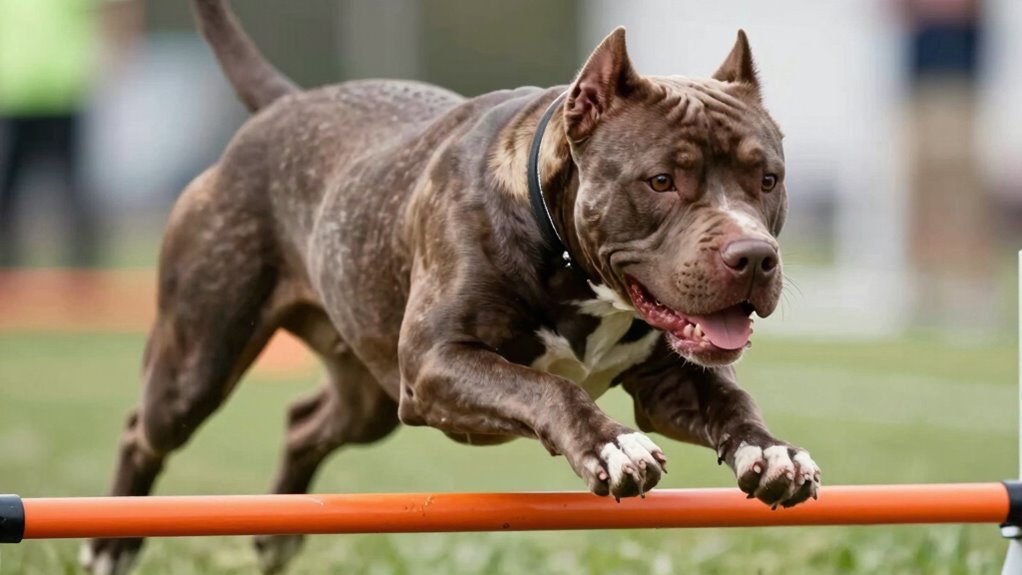
Have you ever wondered how to train your dog for fast, efficient relay races? When it comes to flyball conditioning, it’s not just about speed and agility—your dog’s safety is equally significant. You’ve got to focus on protecting their shoulders and toes, two essential areas that can easily get injured with improper training or overexertion. Building shoulder stability is indispensable because the rapid acceleration and quick turns demand strong, stable shoulders that can handle the strain without giving out. Incorporating exercises that strengthen the shoulder muscles, like controlled pulls or gentle resistance work, can make a big difference. These exercises help prevent strains and guarantee your dog maintains proper form during high-intensity runs, reducing the risk of long-term injuries. Additionally, understanding dog anatomy and biomechanics can help tailor your training to better prevent injuries and improve overall performance. Proper knowledge of muscle groups and joint mechanics can further enhance your ability to design safe and effective routines.
Building shoulder stability with gentle exercises reduces injury risk and boosts your dog’s performance in relay races.
Toe protection is equally critical. Flyball involves a lot of jumping and quick stops, which put stress on your dog’s toes and paw pads. To keep their toes safe, make sure your dog’s nails are trimmed regularly, as overgrown nails can cause discomfort and alter their gait. Investing in paw pads or protective booties for training sessions—especially if you’re practicing on rough or hot surfaces—can help prevent cuts, abrasions, and burns. Remember, healthy toes mean better grip and faster acceleration, so don’t overlook this essential aspect of training. You should also monitor your dog’s paws for signs of soreness or injury after each session, addressing any issues immediately before they develop into more serious problems. Incorporating proper training techniques, such as gradual build-up and rest days, can further reduce injury risks. Additionally, using appropriate training surfaces can help cushion their paws and reduce impact stress, promoting safer training sessions.
A balanced approach to flyball conditioning involves more than just running drills. Warm-up routines are indispensable for preparing your dog’s muscles and joints, especially the shoulders, for the physical demands ahead. Gentle stretching and light jogging can boost circulation and help prevent injuries. Incorporate core strengthening exercises, as a strong core supports shoulder stability during rapid movements. Proper hydration and nutrition also play a role in keeping your dog’s body resilient against strains. Make sure your training surface is suitable—soft grass or specialized turf can cushion your dog’s paws and reduce impact stress on toes and joints. Recognizing early signs of fatigue and soreness can further help prevent overtraining and injuries.
In essence, protecting your dog’s shoulders and toes isn’t just a precaution; it’s an essential part of their flyball training. When you prioritize shoulder stability and toe protection, you help your dog perform at their best while minimizing injury risk. With consistent care, proper exercises, and thoughtful equipment choices, your dog can excel in relay races, racing faster and safer every time. By taking these steps, you’re not only enhancing their performance but also ensuring their health and happiness during every jump and dash.
dog shoulder strengthening exercises
As an affiliate, we earn on qualifying purchases.
As an affiliate, we earn on qualifying purchases.
Frequently Asked Questions
How Often Should My Dog Undergo Flyball Training Sessions?
You should schedule flyball training sessions two to three times a week, ensuring your dog gets consistent practice without overexertion. Use proper training techniques that emphasize gradual skill development, and always prioritize equipment safety to prevent injuries. Keep sessions short and positive, allowing your dog to rest and recover. Regular training helps build your dog’s confidence and skills while reducing the risk of shoulder or toe injuries.
What Are Signs of Shoulder or Toe Injuries During Training?
You can notice signs of shoulder or toe injuries during training if your dog shows limping, reluctance to jump, or paw licking, which indicate discomfort. Don’t overlook these cues; they’re key to injury prevention. Maintaining joint stability through proper warm-ups and avoiding overexertion helps protect your dog. If you see these signs, stop training immediately and consult your vet to prevent further damage and ensure safe, enjoyable flyball sessions.
Are There Specific Breeds That Excel in Flyball?
Certain breeds, like Border Collies and Australian Shepherds, excel in flyball because of their breed compatibility with quick, intense training. You’ll find these breeds thrive in high training intensity, which enhances their agility and speed. However, it’s essential to tailor your training to their physical capabilities, ensuring you protect their shoulders and toes from injury. Choosing a breed suited for high-energy activities helps maximize performance and enjoyment in flyball.
How Can I Prevent Overexertion in My Dog During Training?
Think of your dog’s energy like a delicate flame—you want to keep it burning steady, not burning out. To prevent overexertion, always start with a proper warm-up to prepare muscles, then end with cool-down routines to relax them. Watch for signs of fatigue, and adjust training intensity accordingly. This balance keeps your dog’s muscles healthy, prevents injuries, and guarantees they enjoy every moment of flyball without overdoing it.
When Should I Consult a Veterinarian About Injury Concerns?
You should consult a veterinarian about injury concerns immediately if your dog shows signs like limping, swelling, pain, or reluctance to move, as these indicate possible injury. Regular veterinary consultation helps with injury prevention by catching issues early and guaranteeing your dog’s training is safe. Trust your instincts—prompt vet visits ensure proper treatment and prevent minor problems from worsening, keeping your dog healthy and active.
Conclusion
By incorporating flyball conditioning into your training, you’re not just boosting your dog’s agility—you’re also protecting their shoulders and toes from injury. Did you know that properly conditioned dogs are 30% less likely to sustain sports-related injuries? So, stay consistent, focus on proper technique, and watch your pup excel safely. With the right approach, you’ll enjoy a healthier, happier teammate ready to race and play for years to come.
NFL season / tailgating Picks
team gear
As an affiliate, we earn on qualifying purchases.