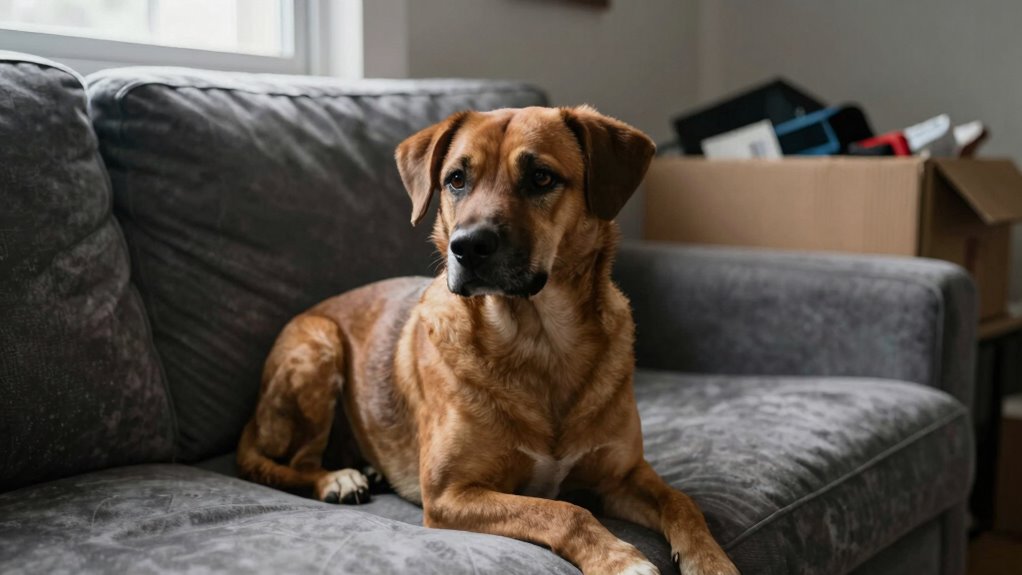
When you move to a new house, your dog often regresses because the change triggers stress, uncertainty, and instinctual guarding behaviors. They might act out, become more possessive, or withdraw, as their way of coping. This is only temporary, and with patience, consistent routines, and familiar objects, your dog can adjust. If you keep exploring, you’ll discover how to support your dog through this challenging time and help them settle in confidently.
Key Takeaways
- Moving causes stress, leading to behavioral regression as dogs cope with unfamiliar environments.
- Dogs may become territorial and possessive to establish security in their new home.
- Regressions are natural responses, not stubbornness, resulting from overwhelm and uncertainty.
- Maintaining routines and familiar objects helps ease anxiety and rebuild confidence.
- Patience and gentle reassurance are essential for long-term emotional adjustment.
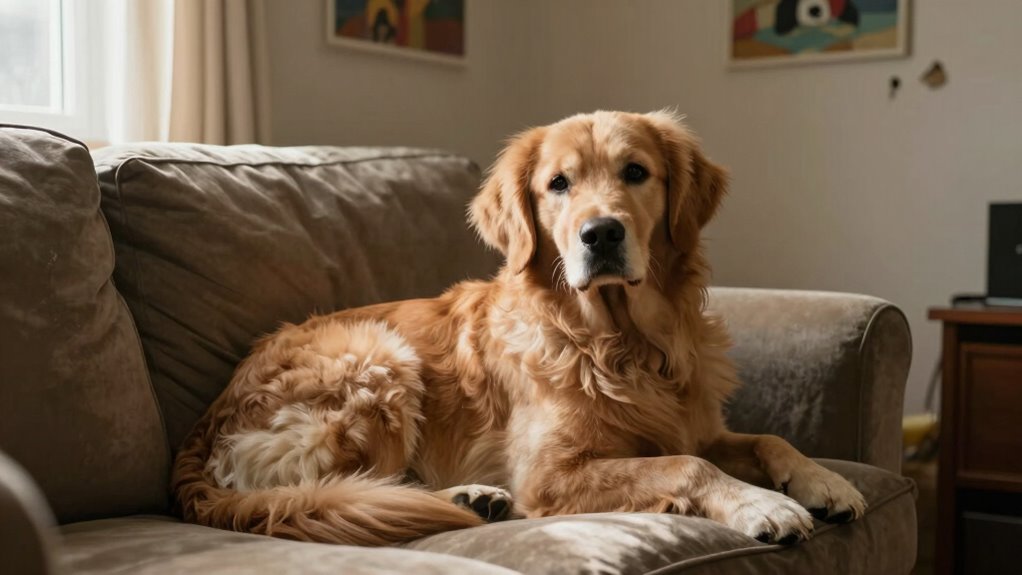
Moving to a new house can be a stressful experience for dogs, often causing them to regress in their behavior. When your dog suddenly finds itself in an unfamiliar environment, it’s natural for them to feel overwhelmed and unsure. This stress can manifest as pet anxiety, leading your dog to revert to behaviors they had previously outgrown or avoided. For example, a dog who had been house-trained might start soiling indoors again, or a social dog might become more withdrawn. The unfamiliar smells, sounds, and sights can trigger a heightened state of alertness, making it harder for your pet to relax and adapt. This regression isn’t a sign of defiance or stubbornness; it’s your dog’s way of coping with the upheaval.
Territorial behavior is another common reaction during this *changeover*. Dogs are inherently territorial animals, and a new home can feel like an invasion of their space. To protect what they see as theirs, they may start to guard their belongings more aggressively or become more possessive over certain areas. This behavior often stems from their need to establish boundaries in the new environment, which can be heightened by their pet anxiety. When they sense unfamiliar objects or smells, they might bark excessively at visitors or strangers, or even become more aggressive. It’s important to recognize that these actions are rooted in their instinct to feel secure and in control. As your dog adjusts to the new surroundings, these behaviors might intensify initially, but they typically diminish with patience and reassurance.
Understanding that territorial instincts can be heightened during a move can help you approach their behavior with compassion and patience. The process of settling in may also activate their natural guarding behaviors, which can be managed through gentle training and positive reinforcement. Recognizing the importance of consistent routines** can also provide a sense of stability and security for your pet during this transition. Creating a familiar environment by incorporating objects with your dog’s scent, such as blankets or toys, can further ease their adjustment. The key to helping your dog through this *changeover* is understanding that it’s temporary. You can support their emotional well-being by maintaining routines, providing familiar objects like blankets or toys, and offering lots of positive reinforcement. Giving your dog time to explore the new space at their own pace can reduce their territorial instincts and pet anxiety. Avoid punishing or scolding them for behaviors that stem from stress; instead, focus on creating a calm environment**. Consistent routines and gentle reassurance help rebuild their confidence and security. Remember, your patience and understanding are *essential* in helping your dog settle into their new home, easing their pet anxiety and diminishing territorial behaviors over time.

SPOT Soothers Tabbie Lambie Dog Toy – 8in Mini Stuffing-Free Calming Plush with Lavender Scent & Squeaker for Toy Breeds & Puppies, Anxiety Relief – 1 of 3 Assorted Colors, Sent at Random
- Color Options: Ships in random color: pink, teal, or lavender
- Mini Size: 8-inch plush for tiny pups
- Lavender Scent: Contains pet-safe lavender aromatherapy pouch
As an affiliate, we earn on qualifying purchases.
As an affiliate, we earn on qualifying purchases.
Frequently Asked Questions
How Long Does Dog Regression Typically Last After Moving?
Dog regression after moving typically lasts from a few days to a few weeks, depending on your dog’s temperament and development stage. During this time, you’ll notice shifts in behavior as your pup adjusts to new surroundings. Be patient, offer comfort, and maintain routines to help ease their anxiety. Remember, these temperament shifts are temporary, and with support, your dog will regain confidence as they settle into their new home.
Are Some Dog Breeds More Prone to Regression?
Some breeds are more prone to regression due to breed tendencies and temperament differences. For example, sensitive breeds like Border Collies or Chihuahuas tend to be more affected by change. You might find that these dogs need extra reassurance and time to settle. It’s a case of “a little from a lot,” meaning breed traits can heighten their reaction to new environments. Understanding your dog’s breed can help you support their emotional needs better.
Can Diet Changes Influence a Dog’s Regression Process?
Yes, diet impact can influence a dog’s regression process. When you modify your dog’s diet, it affects their overall well-being and comfort, which can either help ease or exacerbate regression symptoms. Good dog nutrition supports their emotional stability and reduces stress during a move. To minimize regression, make sure you provide a balanced diet that meets their nutritional needs, and consider consulting your vet for specific diet adjustments during this change.
What Signs Indicate a Dog’s Regression Is Worsening?
Think of your dog as a ship steering through stormy waters. If behavioral triggers like excessive barking, clinginess, or destructiveness intensify, or if anxiety indicators like trembling, hiding, or loss of appetite worsen, your dog’s regression might be getting worse. These signs show the storm is growing fiercer. Stay attentive, and consider consulting a vet or trainer to help steer your furry friend back to calmer seas.
Should I Consider Professional Training During Regression?
Yes, you should consider professional training during regression. A trainer can help with behavior modification tailored to your dog’s needs, making the process smoother. They’ll suggest effective training approaches to rebuild your dog’s confidence and settle anxiety. Professional guidance guarantees you’re using consistent, positive techniques, which can speed up recovery. Investing in training during this time helps your dog adjust more comfortably and strengthens your bond through understanding and patience.
Conclusion
Moving house can feel like a big upheaval for your dog, and just like a child clinging to familiar comforts, they might regress temporarily. Remember, this phase is normal, and with patience and reassurance, they’ll settle in again. Think of it as planting a seed—you need to nurture it patiently for it to grow strong. Stay consistent, offer love, and soon your furry friend will feel at home once more.