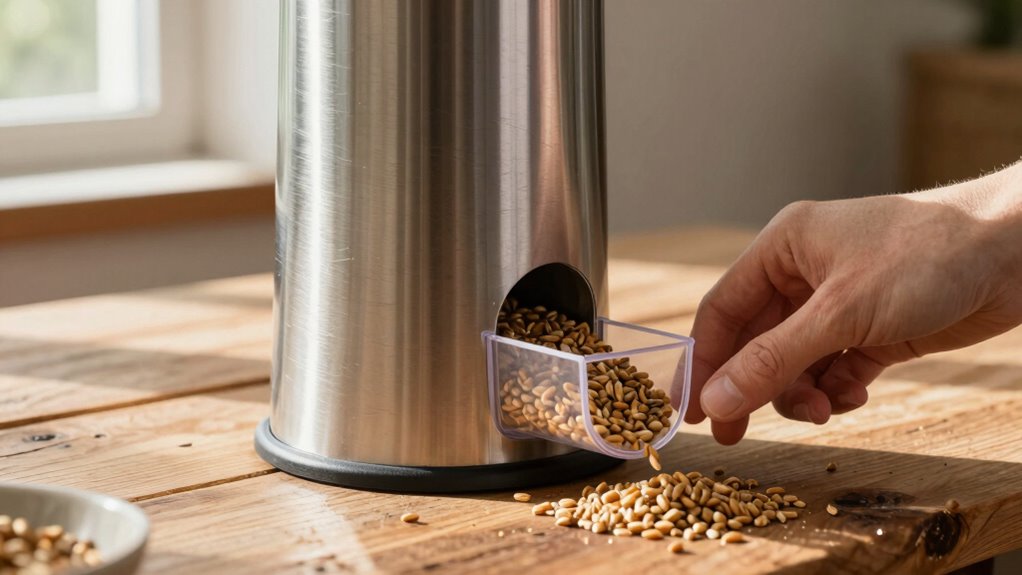
Automatic feeders can experience portion drift over time due to mechanical wear, sensor inaccuracies, or software glitches. This drift leads to incorrect portion sizes, affecting your pet’s nutrition or causing economic inefficiencies. Regular manual rechecks help catch these issues early, ensuring accurate dispensing and system reliability. By routinely verifying portion sizes against standards, you can prevent large errors from building up. Keep exploring to discover effective strategies for maintaining your feeder’s accuracy.
Key Takeaways
- Mechanical wear and sensor drift can cause automatic feeders to dispense inaccurate portion sizes over time.
- Regular manual rechecks help detect calibration issues early, preventing nutritional and economic discrepancies.
- Software updates or environmental factors may unintentionally introduce errors requiring manual verification.
- Manual inspections ensure ongoing accuracy and help identify signs of mechanical or sensor deterioration.
- Routine rechecks are a cost-effective way to maintain system reliability and customer satisfaction.
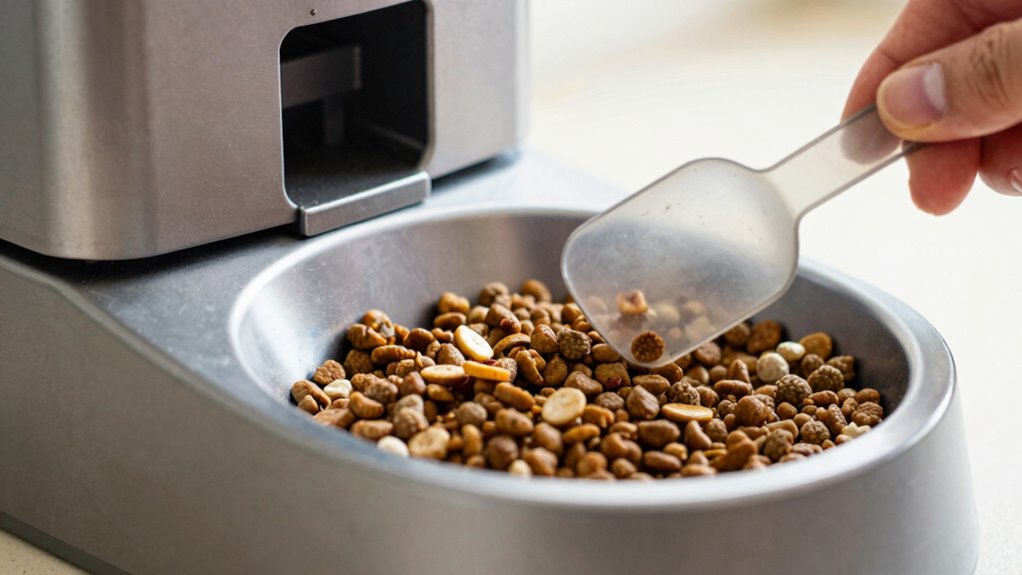
Have you ever noticed how portion sizes at restaurants or in packaged foods seem to gradually increase over time? This subtle change is a classic example of portion drift, a phenomenon that can also affect automated feeders used for pet food, livestock, or even industrial processes. While these devices rely on automated calibration to guarantee accurate portions, they’re not infallible. Over time, mechanical wear, environmental factors, or software glitches can cause the amount dispensed to shift, leading to inconsistent servings. That’s why user oversight remains essential—automatic systems need regular manual rechecks to prevent significant discrepancies. Calibration accuracy** can also decline if sensors become less reliable, highlighting the importance of manual checks. Additionally, sensor drift can occur gradually, making routine inspections even more critical for maintaining performance. Automated calibration is designed to maintain accuracy without constant human intervention. It typically involves sensors or software algorithms that measure and adjust the portioning mechanism to dispense the correct amount. However, even the most sophisticated calibration routines can drift from their original settings. Mechanical parts might loosen or wear down, sensors may become less accurate, and software updates can unintentionally introduce errors. When these shifts go unnoticed, the result is a gradual increase or decrease in portion sizes—what we call portion drift. This phenomenon can compromise nutritional balance in pet food, cause economic inefficiencies in industrial settings, and lead to customer dissatisfaction in food services. Regular maintenance and monitoring are key to identifying potential issues early on, especially as system components age. Sensor reliability is crucial for maintaining consistent calibration over time. User oversight acts as an indispensable safeguard against portion drift. Regular manual rechecks help identify signs of calibration failure early, guaranteeing that the automated system remains precise. By routinely verifying the actual portion sizes against the expected standards, you catch any deviations before they become problematic. This process might involve simple steps like measuring dispensed amounts periodically or running test cycles to confirm accuracy. These manual checks are quick, cost-effective, and can be incorporated into routine maintenance schedules. They also provide an opportunity to inspect mechanical parts and sensors for wear or damage, which might otherwise go unnoticed until a significant error occurs. Implementing a preventive maintenance** routine ensures ongoing accuracy and reliability.
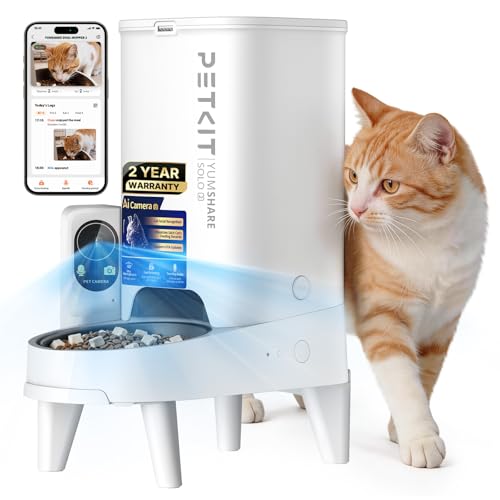
PETKIT Automatic Cat Feeder with Camera, Upgraded Multi-Cat Recognition, 2.4G&5G WiFi Pet Feeder with Freshness Preservation,3L Timed Food Dispenser with Low Food Sensor,Night Vision Motion Capturing
1080P HD Camera &Night Vision: The PETKIT automatic cat feeder features a 1080P high resolution and 140° wide…
As an affiliate, we earn on qualifying purchases.
As an affiliate, we earn on qualifying purchases.
Frequently Asked Questions
How Often Should Manual Rechecks Be Performed on Automatic Feeders?
You should perform manual rechecks on automatic feeders weekly to guarantee the portion size aligns with your feeding schedule. Regular inspections help catch any discrepancies early and prevent overfeeding or underfeeding. By verifying the portion size and adjusting as needed, you maintain consistent nutrition for your pets. Staying proactive with these rechecks ensures the feeder functions correctly, keeping your pet’s diet balanced and healthy over time.
What Tools Are Needed to Recheck Portion Accuracy?
To recheck portion accuracy, you’ll need a precise scale, such as a digital or gram scale, and a clean container for measuring. Make sure your equipment is well-maintained, especially during your feeding schedule, to prevent drift. Regularly calibrate the scale and inspect the feeder for any malfunctions. These tools and maintenance routines help you keep portions consistent, ensuring proper feeding and avoiding over- or underfeeding.
Can Portion Drift Affect Animal Health?
Imagine a delicate balance, like a tightrope walker’s steady step—portion drift can threaten animal health by disrupting nutritional consistency and feed stability. You might not see every variation, but subtle shifts could cause deficiencies or overfeeding. This instability stresses their systems, risking illness or decreased productivity. Regular manual rechecks help you catch these changes early, ensuring each animal receives precise nourishment and maintains ideal health.
Are There Specific Automatic Feeder Brands More Prone to Drift?
Some automatic feeder brands are more prone to drift due to less reliable mechanisms or poor drift prevention features. You should prioritize brands known for high reliability and effective drift prevention, such as Brand A and Brand B. Regular manual rechecks are essential, regardless of brand, to guarantee accurate portioning. By choosing trusted brands and maintaining routine inspections, you minimize the risk of portion drift impacting animal health.
How to Calibrate an Automatic Feeder for Accurate Portions?
To calibrate your automatic feeder for accurate portions, start by measuring the current portion size. Next, adjust the feeder’s settings through the control panel or adjustment screw to match the desired portion. Perform a test run, then check the output and repeat the feeder adjustment until the portions are consistent. Regular portion calibration guarantees your automatic feeder delivers precise amounts, preventing overfeeding or underfeeding.

PETLIBRO Automatic Cat Feeder, Automatic Dog Food Dispenser with Freshness Preservation, 5L Timed Pet Feeders for Dry Food, Up to 6 Meals Per Day, Granary 5L Basic Button Type Black
Freshness in Every Bite: Patented rotor on our auto pet food dispenser in the bottom of the tank…
As an affiliate, we earn on qualifying purchases.
As an affiliate, we earn on qualifying purchases.
Conclusion
Remember, even the most precise automatic feeders are like silent guardians—trustworthy but not infallible. Regular manual rechecks are your lighthouse in the fog, guiding you to keep portions steady and your pets satisfied. Without these checks, small drifts can grow into tidal waves, disrupting your pet’s routine. Stay vigilant, and you’ll guarantee their bowl remains a steady stream, not a flooding floodgate—keeping their nourishment safe and sound, just as a true captain watches over the ship.

PETLIBRO RFID Automatic Cat Feeder, Collar Sensor for Personalized Meals, Cats Recognition, Diet Tracking and Anti-Stealing for Multi-Pets Homes and Different Diets, Wi-Fi Programmable Food Dispenser
Collar Tag Sensor-Activated Personalized Meals: Each cat wears a unique RFID tag. The feeder opens only when the…
As an affiliate, we earn on qualifying purchases.
As an affiliate, we earn on qualifying purchases.

Etekcity Food Kitchen Scale, Digital Grams and Ounces for Weight Loss, Baking, Cooking, Keto and Meal Prep, LCD Display, Medium, 304 Stainless Steel
𝗘𝗳𝗳𝗼𝗿𝘁𝗹𝗲𝘀𝘀 𝗪𝗲𝗶𝗴𝗵𝗶𝗻𝗴: Supports 5 units (oz/lb:oz/fl'oz/g/mL), tare function, and includes 2 AAA batteries for hassle-free operation
As an affiliate, we earn on qualifying purchases.
As an affiliate, we earn on qualifying purchases.