
To use meals as motivation, time your pet’s meals so they aren’t overly hungry or full during training sessions. offer small, manageable treats that fit within their daily calorie needs to keep them engaged without overfeeding. Mix in different textures and reward types, and gradually shift from meal-based rewards to other motivators like praise or toys. Proper timing and balanced portions boost learning and maintain health—keep exploring for more tips to optimize your training approach.
Key Takeaways
- Schedule meals to ensure pets are slightly hungry before training sessions for optimal motivation.
- Use small, controlled treat portions during training to reinforce behaviors without overfeeding.
- Combine meal rewards with praise, toys, or play to diversify reinforcement and maintain engagement.
- Gradually taper treats when transitioning from meal rewards to other incentives to prevent expectation.
- Monitor treat calorie content to balance motivation with overall nutritional needs and prevent weight gain.

Pet Botanics 10 oz. Pouch Training Rewards Mini Soft & Chewy, Bacon Flavor, with 500 Treats Per Bag, The Choice of Top Trainers
- Flavorful Ingredients: Pork liver, bacon, botanicals
- Low Calorie Treats: 1.5 calories per treat
- Versatile Use: Training, enrichment, daily treats
As an affiliate, we earn on qualifying purchases.
As an affiliate, we earn on qualifying purchases.
Why Using Meals as Rewards Boosts Your Pet’s Training Success
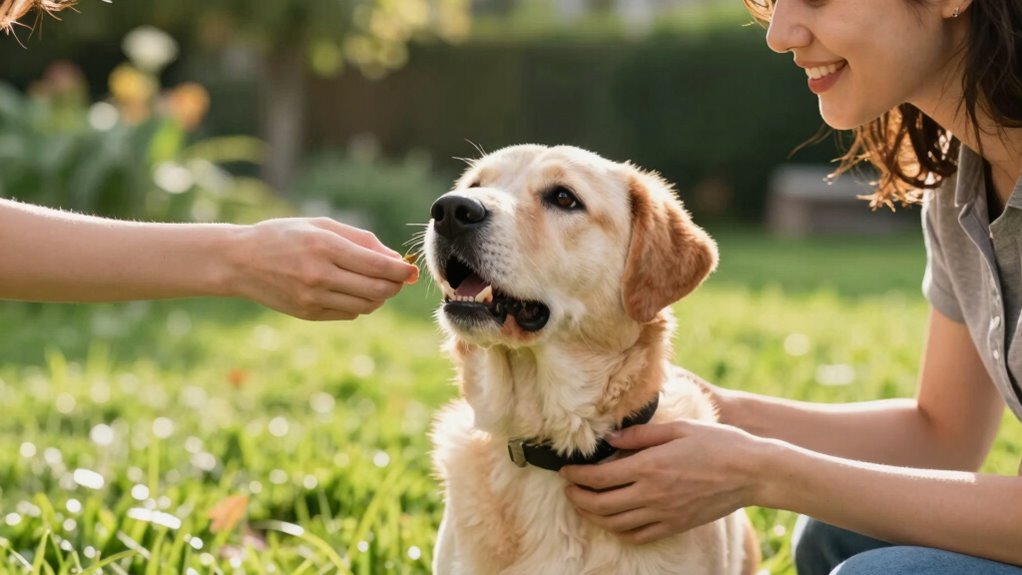
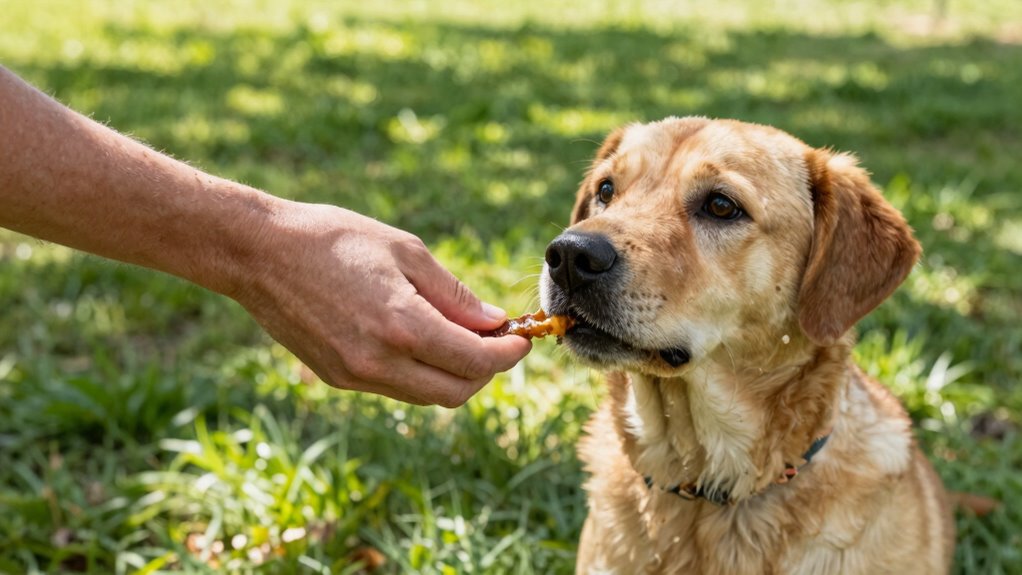
Using meals as rewards can considerably improve your pet’s training success because they serve as highly motivating incentives. Proper meal timing plays a vital role; offering treats immediately after desired behaviors reinforces learning and helps your pet connect actions with rewards. Consistent reward timing ensures your pet understands which behaviors are rewarded, boosting their motivation to repeat them. When you use meals as motivators, your pet perceives training as a positive experience, increasing engagement and focus. Keeping reward consistency means giving treats at predictable intervals, so your pet doesn’t get confused or frustrated. This approach strengthens your bond and accelerates learning. Incorporating positive reinforcement techniques, like well-timed, consistent meal rewards, makes training more effective and enjoyable for both of you. Additionally, understanding the importance of meal scheduling can optimize your pet’s responsiveness and enthusiasm during training sessions. Recognizing the role of training environment setup can further enhance your pet’s focus and success. Establishing a training routine helps your pet anticipate rewards and stay motivated throughout sessions.
How to Calculate the Right Meal Portions for Motivating Your Dog or Cat
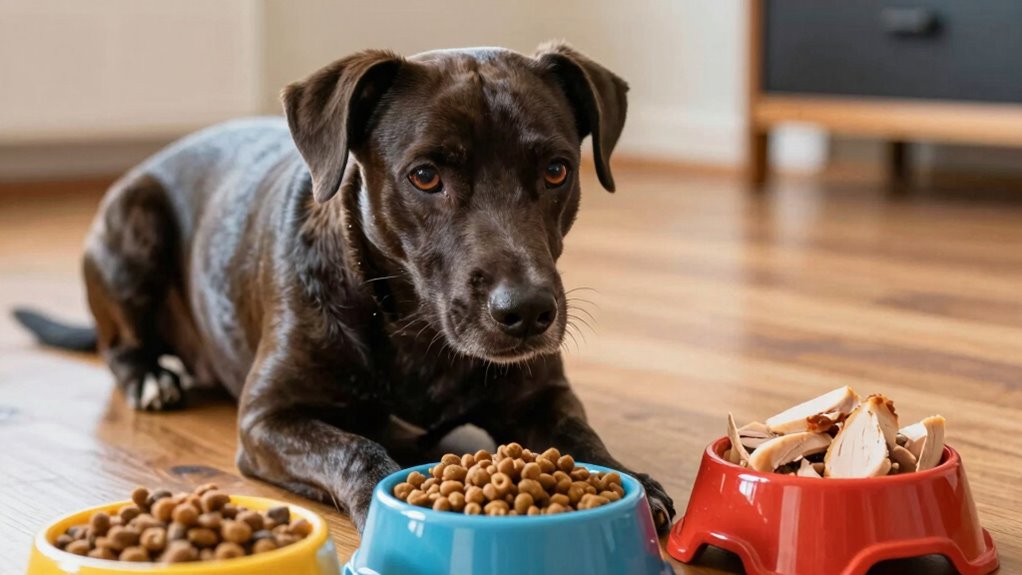
To effectively motivate your dog or cat with meal rewards, you need to determine the right portion sizes that balance reinforcement with their overall nutrition. Start by calculating the calorie content of the treats or small meal portions you plan to offer. Use calorie calculation to guarantee you’re not exceeding their daily nutritional needs, which vary based on age, weight, and activity level. Portion sizing should be modest—usually a small fraction of their daily intake—so it fuels training without overfeeding. Check your pet’s recommended daily calorie intake and adjust portions accordingly. Keep in mind that consistent, appropriately sized portions help maintain a healthy weight while providing enough motivation to reinforce good behavior. Proper calorie calculation and portion sizing are essential for effective, balanced training rewards. Understanding biodiversity can also remind us how diverse diets support overall health and well-being, including in our pets. Additionally, considering species-specific dietary needs can help tailor feeding strategies to your pet’s unique requirements and promote overall nutritional balance. Recognizing the importance of energy last in managing your pet’s diet can further optimize their training and health outcomes.
When and How to Feed Meals During Training for Best Results
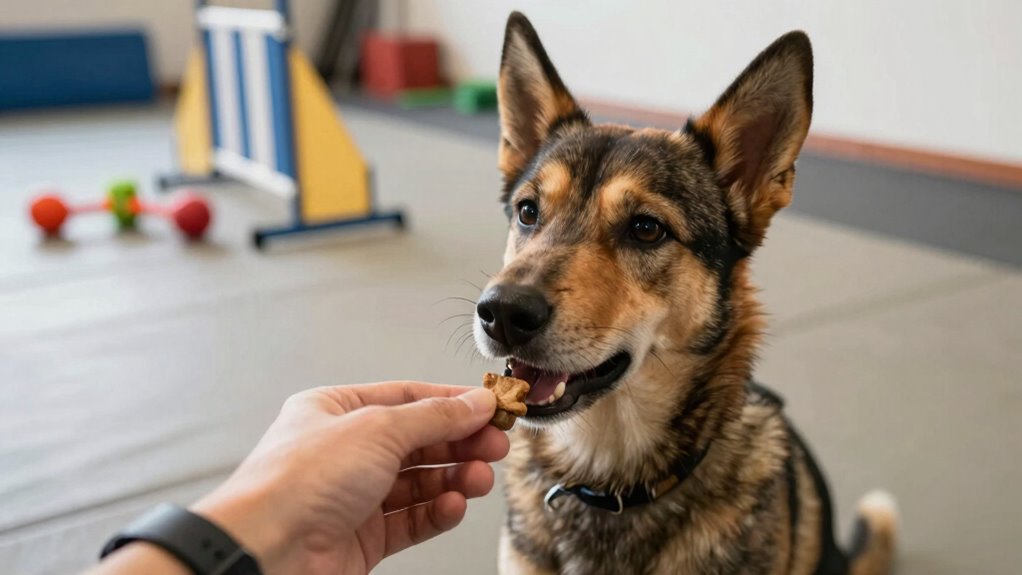
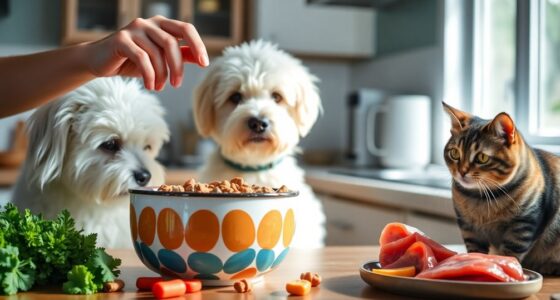
Timing your pet’s meals around training sessions can considerably boost their motivation and focus. To do this effectively, plan meal timing so your pet is slightly hungry but not starving—usually a few hours before training. This encourages them to work for food rewards without feeling overly hungry. Portion management is key; serve smaller, controlled portions during training to prevent overfeeding and maintain energy levels. Avoid feeding a large meal right before or immediately after training, as digestion can distract or cause discomfort. Instead, schedule main meals at regular intervals apart from training times. This approach supports metabolic health and overall well-being. Proper meal timing and portion management create an ideal environment for successful training. Additionally, understanding the importance of meal timing can help optimize your pet’s motivation and performance during training sessions, especially since cultural content emphasizes balance and harmony in routines.
How to Balance Meals and Other Rewards During Training Sessions
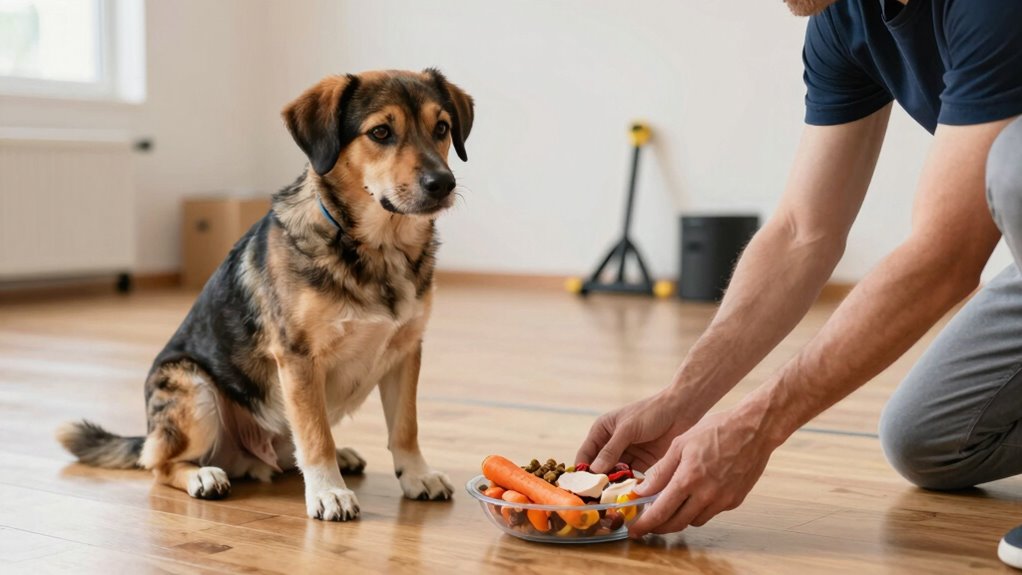
Balancing meals and treats during training requires careful timing and portion control to keep your dog energized without overfeeding. You should also consider combining treats with meals to reinforce good behavior while maintaining a healthy diet. By managing these elements, you can reward effectively and support your dog’s training progress.
Timing and Portion Control
Managing when and how much you feed your training partner is crucial for maintaining energy and motivation without causing discomfort or distraction. Proper portion planning and mealtime scheduling guarantee your pet stays alert and ready to learn. Timing meals too close to training can lead to sluggishness, while gaps might leave them hungry and unfocused. Consider these visual cues:
- A small snack right before a session
- Breakfast with a balanced portion
- A mid-day meal to recharge
- Post-training treats to reinforce success
- Regular, consistent mealtime routines
- Monitoring wave and wind conditions can help optimize outdoor training times for safety and comfort.
Combining Treats and Meals
In training sessions, combining treats with regular meals can enhance motivation without overloading your pet. Proper treat timing guarantees rewards reinforce good behavior while maintaining a balanced diet. To promote meal variety, mix different proteins and textures, keeping meals interesting and nutritious. Using treats as a supplement, not a replacement, helps prevent overfeeding. Consider this approach:
| Reward Type | Usage Tip |
|---|---|
| Treats | Use sparingly for motivation |
| Meals | Maintain balanced, varied diet |
| Treat timing | Reward immediately after behavior |
| Meal variety | Incorporate different ingredients |
| Rewards | Combine treats with meals for engagement |
This balance encourages training success and supports your pet’s overall health. Being mindful of nutritional balance ensures that your pet’s diet remains complete and beneficial. Additionally, understanding feeding guidelines can help you tailor meals and treats to your pet’s specific needs. Incorporating positive reinforcement techniques makes training more effective and fosters a stronger bond between you and your dog. To optimize your pet’s development, paying attention to balanced nutrition can lead to better training outcomes and overall well-being.
Common Mistakes to Avoid When Using Food as a Training Incentive
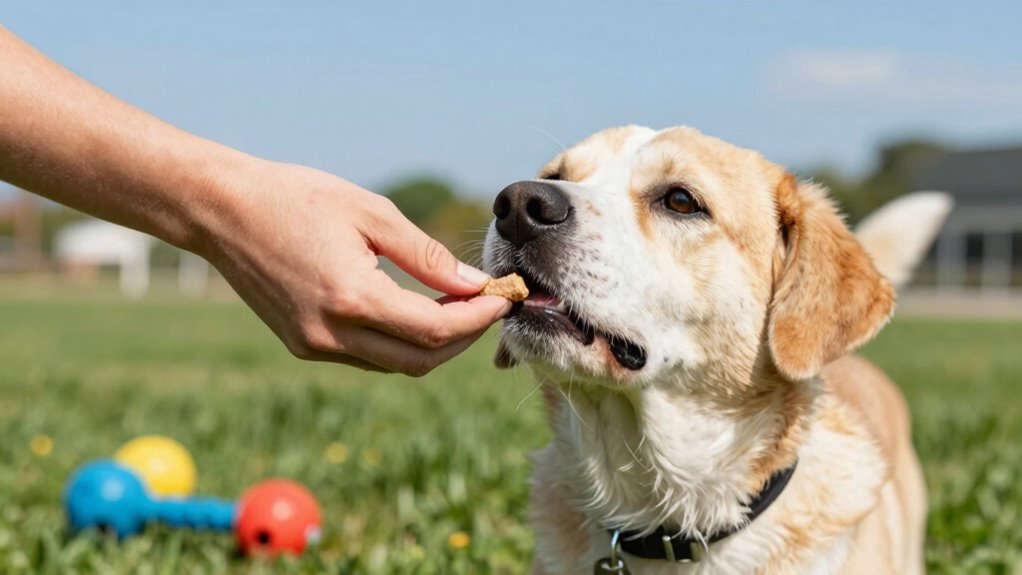
Using food as a training incentive can backfire if you’re not careful. Overfeeding can lead to weight gain and health issues, while inconsistent rewards can confuse your dog. To keep training effective, avoid these common mistakes and stay consistent. Additionally, selecting healthy, appropriate-sized treats ensures your dog remains motivated without risking overfeeding or nutritional imbalance best treats for training. Incorporating vet-approved treats into your training regimen can further ensure your dog’s health and motivation are maintained properly. Understanding Hopi culture and its traditional practices can also inspire more meaningful and culturally respectful training methods. Proper handling of food rewards, such as avoiding piercings that may cause irritation or infection, also contributes to a safer and more effective training process.
Overfeeding Risks
While food can be a powerful motivator during training, overfeeding can quickly backfire and undermine your efforts. Overfeeding dangers include disrupting weight management, causing unwanted fat gain, and reducing motivation if progress stalls. To avoid these pitfalls, keep in mind:
- Giving too many treats after each session
- Ignoring portion sizes and calorie counts
- Using food as a constant reward rather than moderation
- Relying solely on food, neglecting other motivation methods
- Overestimating how much your pet needs for satisfaction
- Being aware of resale value and how it might influence your choices when selecting treats or incentives
Additionally, neglecting nutritional balance can lead to deficiencies or excesses that affect your pet’s overall health. These mistakes can lead to weight management issues and diminish the effectiveness of using food as an incentive. Staying mindful of overfeeding dangers helps ensure your training remains productive and your pet’s health stays on track. Balance is key to sustainable progress, and understanding caloric needs can help you tailor treats appropriately. Properly managing training motivation ensures consistent progress without compromising health.
Inconsistent Rewards
Have you ever noticed your pet’s motivation dip during training sessions? Inconsistent rewards can be a major culprit. If your meal schedule isn’t predictable, your pet might lose trust in the process. Always reward immediately after desired behavior to reinforce learning. Avoid giving treats randomly or sporadically; this inconsistency confuses your pet and weakens motivation. Proper portion sizing matters too—if rewards are too large or too small, your pet may become less interested or overly dependent on treats. Keep a steady routine with regular meal times, and use rewards consistently to build a clear association. This approach helps your pet understand what’s expected and keeps motivation high, making training more effective and enjoyable for both of you.
Tips for Transitioning From Meal Rewards to Other Reinforcers Over Time

Shifting from meal rewards to other reinforcers is a crucial step in maintaining your pet’s motivation over time. To do this smoothly, start by gradually tapering treats, so your pet doesn’t expect food every time. Incorporate reward diversification by using praise, toys, or play as alternative incentives. Be consistent to help your pet understand the change. Here are some tips:
- Slowly reduce treat frequency while introducing new rewards
- Use high-value reinforcers to keep motivation high
- Mix meal rewards with other forms of praise
- Observe your pet’s response and adjust accordingly
- Keep training sessions engaging and positive
Frequently Asked Questions
Can Using Meals as Rewards Cause My Pet to Gain Weight?
Yes, using meals as rewards can cause your pet to gain weight if you’re not careful. Over-rewarding with treats or extra food can upset their nutritional balance and lead to weight gain. To prevent this, make sure treats are part of a balanced diet, limit portion sizes, and use low-calorie options. Always monitor your pet’s weight and adjust their feeding routine accordingly to maintain good health.
What if My Pet Refuses to Work for Food Rewards?
If your pet refuses to work for food rewards, try using puzzle feeders or offering alternative treats. These options can make training more engaging and appealing. You might also experiment with different types of treats or reduce the size of rewards to keep your pet interested. Keep training sessions short and positive, and gradually increase difficulty to encourage participation. Patience and variety are key to successful motivation.
Are There Specific Types of Food Best for Training Incentives?
You should choose healthy treats and protein-rich foods for training incentives. These options are appealing and nutritious, helping to keep your pet motivated and energized. Small, soft treats work best because they’re easy to chew and quick to eat, ensuring smooth training sessions. Avoid high-calorie or junk foods, and always select treats that match your pet’s dietary needs. This approach keeps training fun and healthy for your furry friend.
How Do I Prevent My Pet From Becoming Food-Focused Outside Training?
To prevent your pet from becoming food-focused outside training, avoid using treats as constant rewards and keep meal times consistent. Don’t give extra treats or table scraps between meals to reduce food obsession and meal dependence. Instead, offer toys and praise for good behavior. This helps your pet learn to value rewards beyond food, maintaining a healthy balance and preventing over-reliance on treats for motivation.
Is It Necessary to Consult a Vet Before Changing Meal-Based Training Strategies?
Think of your pet’s diet like tuning an instrument—you want everything to sound just right. Consulting a veterinarian before making dietary adjustments makes certain your training strategy stays balanced and healthy. Veterinary advice can identify any underlying health issues and guide safe changes. Skipping this step risks unintended consequences, just like playing out of tune. Always seek professional guidance to keep your pet happy and healthy while using meals as motivation.
Conclusion
Using meals as motivation can be a gentle nudge toward better training results, turning everyday feeding into a rewarding journey. With a little planning and patience, you’ll discover how this approach naturally encourages your pet’s best behavior without relying solely on treats. Remember, the key is to create a balanced, enjoyable experience that keeps your furry friend enthusiastic to learn. Embrace this method, and watch your training bond grow stronger and more joyful every day.