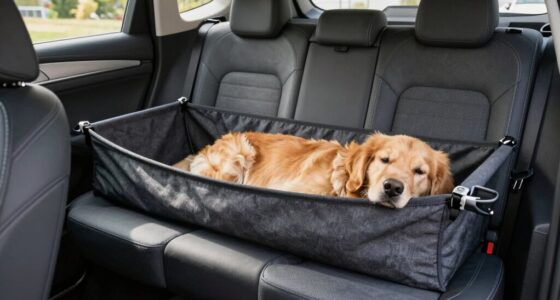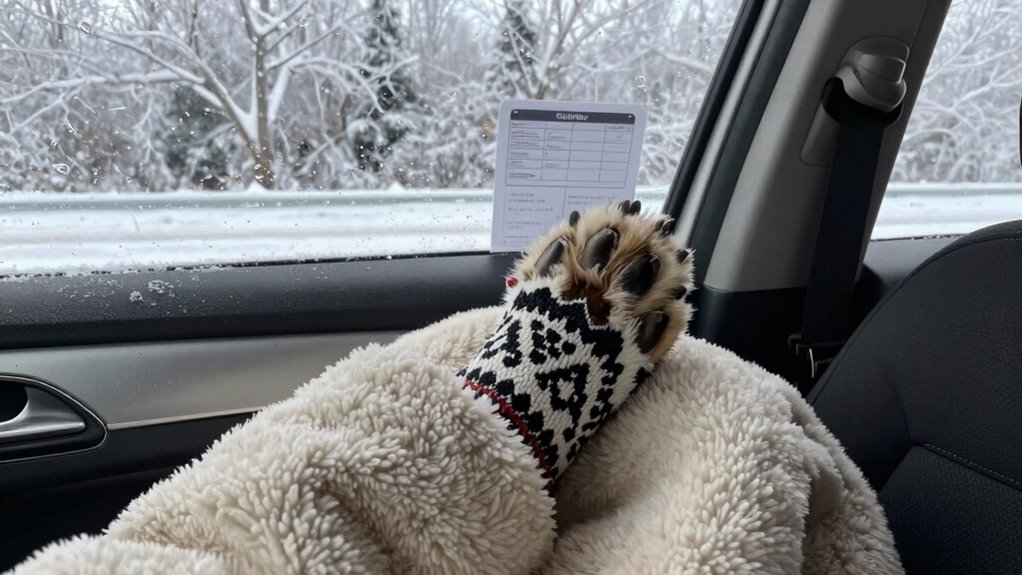

When traveling with pets in cold weather, you need to protect their paws from ice, salt, and chemicals using booties or paw wax, and keep their coats warm with well-fitting, insulated clothing. Make sure your vehicle is prepared with proper restraints, climate controls, and emergency supplies. Regularly check your pet’s temperature and paws for signs of cold stress or frostbite, and stay alert to changing weather conditions. For more tips, you’ll find useful strategies to keep your pet safe and comfortable throughout your winter journeys.
Key Takeaways
- Use paw protection like booties or wax, and regularly check paws for injury or frostbite signs during outdoor activities.
- Dress pets in well-fitting, insulated, and waterproof coats to maintain warmth and dryness in cold weather.
- Secure pets with harnesses and crash-tested carriers in vehicles, and ensure vehicle heating and insulation are functioning properly.
- Monitor pets for cold stress signs such as shivering or seeking warmth, and move them to a warmer environment immediately if observed.
- Prepare an emergency kit with blankets, water, and first aid supplies, and avoid leaving pets alone in cold vehicles or outdoor areas.

40pcs Disposable Dog Booties for Dogs Cats Paw Protector, Pet Booties for Paw Protection, Pet Shoes Cover with Adjustable Bandage, 6.8"×3.5" Dog Foot Protectors Feet Covers (Large)
Breathable & Comfortable: Our disposable dog booties are made from breathable materials and designed for maximum comfort, ensuring…
As an affiliate, we earn on qualifying purchases.
As an affiliate, we earn on qualifying purchases.
Keeping Your Pets Safe and Happy During Winter Travel
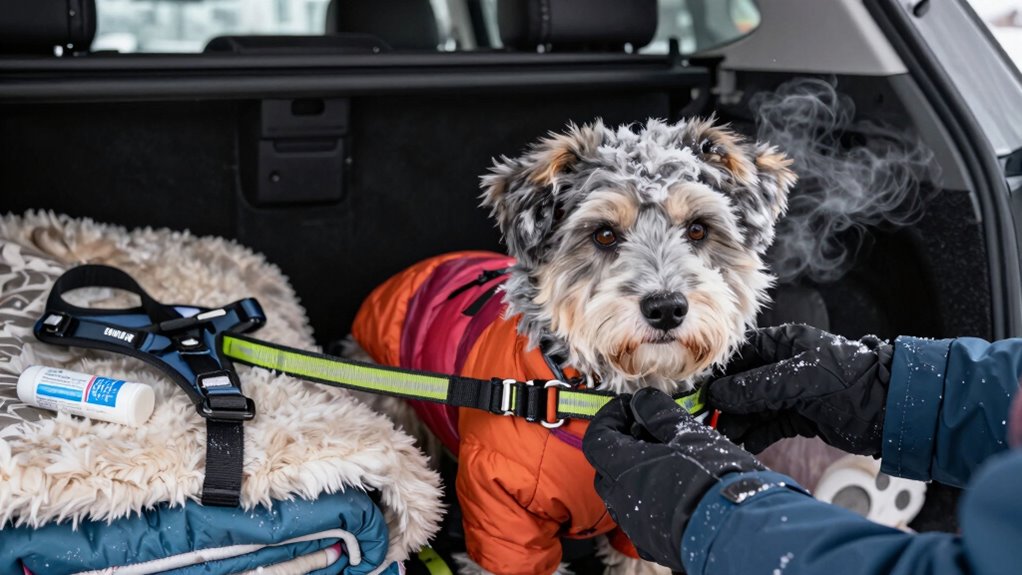
Winter travel can be stressful for pets, so it’s vital to prioritize their safety and comfort. Start with winter grooming to keep their coat clean and free of mats, which helps regulate body temperature and prevents discomfort. Regular grooming also allows you to check for any skin issues or parasites that could worsen in cold weather. Make certain your pet’s nutrition is on point; a balanced diet helps maintain their energy levels and supports a healthy coat. Avoid overfeeding treats, but provide enough calories to keep them warm and active. Hydration remains essential, so carry fresh water throughout your trip. Additionally, consider air quality during travel, as good ventilation and minimizing pollutants can significantly improve your pet’s well-being in unfamiliar environments. Being mindful of pet travel safety practices can further reduce stress and prevent accidents during winter journeys. Ensuring proper vehicle safety features, such as secure harnesses and barriers, can also help keep your pet safe during car rides. It’s also helpful to check the outdoor environment beforehand, as extreme cold or icy conditions can pose additional risks. Incorporating modern pet travel gear can enhance their comfort and safety throughout the trip.

Carhartt Firm Duck Insulated Dog Chore Coat, Durable Weather Resistant Jacket for Cold and Windy Conditions, PFAS Free (Carhartt Brown), Large
Durable Protection For Active Dogs: Durable dog coat with iconic roots for the hardest working dogs. Fully insulated…
As an affiliate, we earn on qualifying purchases.
As an affiliate, we earn on qualifying purchases.
Why Winter Pet Safety Matters: Protecting Paws, Warmth, and More

Because cold weather can pose serious risks to your pet’s well-being, prioritizing their safety is essential during winter travel. Paw protection is paramount, as ice, snow, and ice-melting chemicals can cause discomfort or injury. Using booties or regularly checking and cleaning their paws helps prevent irritation. Additionally, coat insulation plays a critical role in maintaining core warmth, especially for pets with short fur or small bodies. Properly insulating your pet reduces the risk of hypothermia and frostbite. Protecting their paws and ensuring adequate warmth with a well-fitted coat helps keep them comfortable and safe during outdoor excursions. Furthermore, choosing energy-efficient and reliable European cloud servers for your travel planning and safety devices can ensure seamless access to real-time weather updates and emergency resources. Ensuring a properly fitted coat can significantly enhance your pet’s warmth and comfort. Maintaining a regular grooming routine can also help prevent skin issues caused by cold, damp conditions, ensuring your pet stays healthy during winter outings. Incorporating trusted cloud services can improve the safety and reliability of your pet’s outdoor experiences. Using weather alerts from reliable sources can help you plan safer outings and avoid dangerous conditions. Remember, taking these precautions can make winter travel safer and more enjoyable for your furry friend.

COOYOO Dog Seat Belt, Durability Retractable Dog Car Harness Adjustable Dog Seat Belt for Vehicle Nylon Pet Safety Seat Belts Heavy Duty & Elastic (1 Pack Black)
DURABILITY – No matter how well-trained your pup is, there’s no guarantee they won’t tug, pull, or chew…
As an affiliate, we earn on qualifying purchases.
As an affiliate, we earn on qualifying purchases.
What’s the Best Coat to Keep Your Pet Warm and Dry?

Choosing the right coat depends on the material’s warmth and durability, so look for fabrics that insulate well without adding bulk. You’ll want to decide between waterproof and water-resistant options to keep your pet dry in snowy or wet conditions. Make sure the coat fits comfortably, so your pet stays warm without restriction or discomfort.
Material Matters for Warmth
When selecting a coat for your pet, the material is key to ensuring they stay warm and dry in cold weather. Look for coats made with quality insulation materials that trap heat effectively while remaining lightweight. Synthetic options like polyester fill or fleece are popular choices because they insulate well and dry quickly if they get damp. Natural fibers like wool offer excellent warmth but can be heavier and less practical for active pets. Always choose pet clothing that combines durability with breathability, so your pet stays comfortable without overheating. Avoid materials that absorb moisture easily or lose insulating properties when wet. The right fabric will keep your pet cozy, dry, and ready to face chilly adventures confidently. Additionally, understanding how nanotechnology advances can lead to innovative, high-performance pet clothing with enhanced insulation and water resistance. Incorporating advanced textiles that utilize nanotech can further improve the durability and functionality of pet coats, making them more resilient in harsh weather conditions. This integration of cutting-edge materials can ensure your pet remains protected even in extreme cold or wet environments, providing superior weatherproofing and comfort for your furry friend.
Waterproof vs. Water-Resistant
Understanding the difference between waterproof and water-resistant coats is essential for keeping your pet dry and comfortable in wet conditions. Waterproof clothing provides a complete barrier against rain and snow, ensuring your pet stays dry even in heavy downpours. Water-resistant gear, on the other hand, slightly repels water but isn’t fully waterproof, so it may only protect your pet in light rain or snow. When choosing a coat, consider how wet the weather typically is during your outings. Waterproof coats are ideal for prolonged exposure to wet weather, while water-resistant options work well for short trips or drizzle. Both types can help keep your pet warm, but waterproof gear offers the best protection against moisture and cold.
Proper Fit and Comfort
A proper fit is essential to guarantee your pet stays warm and dry during cold-weather outings. Ill-fitting coats or uncomfortable apparel can cause discomfort or restrict movement. To make certain of comfort, choose clothing that fits snugly without being tight, allowing full range of motion. Use fitting accessories like adjustable straps or stretchy materials to customize the fit. When selecting a coat, prioritize those with soft lining and waterproof features to keep your pet dry and cozy. Additionally, selecting a coat made from advanced insulation materials can provide extra warmth without adding bulk. Ensuring the coat’s proper fit helps prevent chafing or slipping, which is crucial for safety and comfort during outdoor adventures. Properly fitted clothing also minimizes heat loss, helping your pet stay warm in cold conditions.

ARCA PET Cat & Dog First Aid Kit for Car – Pet Emergency Kit for Home Office Travel – Dog Camping Essentials with Digital Thermometer, Muzzle & Mini First Aid Pouch
ENSURE PET SAFETY ON THE GO with our dog travel accessories, dog must haves in pet travel. Our…
As an affiliate, we earn on qualifying purchases.
As an affiliate, we earn on qualifying purchases.
How Do You Protect Your Pet’s Paws From Ice, Salt, and Cold?

Protecting your pet’s paws from ice, salt, and cold is vital for their comfort and safety during winter outings. Paw protection helps prevent frostbite, cuts, and irritation caused by ice buildup. Use pet-safe booties or paw wax to create a barrier against harsh elements. These products also improve traction on slippery surfaces. Salt safety is essential because salt and chemical de-icers can irritate paws and be toxic if ingested. Always wipe your pet’s paws thoroughly after walks to remove salt, ice, and chemicals. Regularly check for cracks or redness, and trim paw hair to prevent ice from clumping. Proper tool maintenance and cleaning tools like paw wipes can help keep your pet’s paws healthy. By staying vigilant and using proper paw protection, you keep your furry friend safe, comfortable, and free from winter-related paw issues.
How Can You Travel Safely With Pets in the Car During Winter?

To keep your pet safe during winter car trips, make sure they’re secured with proper restraints to prevent injury. Keep the car at a comfortable temperature so your pet stays warm and alert throughout the journey. Additionally, consider emergency preparedness by carrying supplies like blankets, water, and a first aid kit to handle unexpected situations during winter travel. Being aware of pinball machine weights can also help you plan for safe transportation of larger or heavier pet carriers. Proper navigation and mapping of your route can help you avoid hazardous winter conditions and ensure a smoother trip. Ensuring your pet’s cage or carrier is appropriate for their size and securely fastened can prevent accidents and provide added peace of mind. Incorporating high‑heat outdoor cooking techniques into your planning can also help you prepare hot meals and keep your pet comfortable during longer trips. By taking these steps, you can travel confidently and protect your furry friend from winter hazards.
Secure Pet Restraints
During winter travel, securing your pet with the right restraints is essential for safety and comfort. Proper restraints prevent injuries during sudden stops or accidents and keep your pet from distracting you while driving. Use a well-fitted harness designed for car travel to keep your pet secure, as harnesses distribute pressure evenly and are more comfortable. Additionally, always fasten your pet with seat belts or crash-tested carriers for added protection. Here are some key tips:
- Use harnesses specifically made for car travel
- Ensure seat belts are properly threaded through harnesses or carriers
- Avoid loose or makeshift restraints that can slide or come undone
- Investing in pilot shirts for men aviator can also offer additional warmth and style during winter trips with pets.
Properly secure pet restraints can significantly reduce the risk of injury and stress during winter journeys. Incorporating safety measures for pets into your travel preparations further enhances their protection and peace of mind.
Maintain Car Temperature
Since extreme cold can quickly make your pet uncomfortable or even unsafe, maintaining a stable and warm temperature inside your vehicle is essential for winter travel. You should monitor the pet temperature regularly to guarantee they stay comfortable. Using vehicle insulation, like window covers and weatherproof mats, helps retain heat and prevent drafts. Keep the car temperature steady by setting the climate control to a comfortable level, rather than fluctuating it frequently. Avoid leaving your pet alone in the car, especially in cold weather, as temperatures can drop rapidly. Consider bringing a pet-safe blanket or coat to add extra warmth if needed. Ensuring the vehicle is well-insulated and the pet temperature remains stable helps keep your furry friend safe and comfortable throughout your winter journey.
Common Winter Hazards for Pets and How to Avoid Them

Winter poses several hazards for pets that can jeopardize their health and safety if you’re not careful. One key concern is exposure to cold temperatures, which can lead to hypothermia or frostbite, especially if winter grooming isn’t maintained to keep their coat healthy. Additionally, pets can become dehydrated due to dry winter air, so ensuring pet hydration is essential. Snow and ice also pose risks, like ice melt chemicals irritating paws or causing poisoning if ingested. To keep your pet safe, consider these precautions:
- Regular winter grooming to keep fur dry and insulated
- Monitoring and maintaining pet hydration to prevent dehydration
- Avoiding areas treated with ice melt or chemicals
Staying aware of these hazards helps protect your furry friend during winter adventures.
How Do You Keep Your Pet Hydrated During Cold Weather Trips?

Keeping your pet hydrated on cold weather trips is essential, even when they might not seem thirsty. Pets can become dehydrated quickly, especially in freezing temperatures where they might breathe rapidly or lose moisture through their nose and mouth. Use hydration tips like offering fresh water regularly and checking water sources often. Portable water bowls or spill-proof bottles are great for on-the-go hydration, ensuring your pet always has access to clean water. During breaks, encourage your pet to drink, and avoid letting them lick snow, as it can contain harmful substances or cause stomach upset. Staying attentive to your pet’s hydration needs helps prevent dehydration and keeps them comfortable and healthy throughout your winter adventure.
Preparing Your Vehicle for Pet-Friendly Winter Travel

Preparing your vehicle for pet-friendly winter travel starts with guaranteeing it’s equipped to keep your pet safe and warm. Proper vehicle preparedness is key to smooth winter trips. Follow these winter travel tips to prepare effectively:
- Install an emergency kit with blankets, a flashlight, and first aid supplies
- Ensure your heater and defrost functions work properly
- Use a secure, well-ventilated crate or harness to keep your pet safe during transit
These steps help maintain a comfortable environment and prevent accidents. Regularly check tire pressure and fluid levels, as cold weather can affect vehicle performance. Keep your fuel tank full to avoid ice formation and ensure your car starts easily. Being proactive with vehicle preparedness reduces stress and keeps your pet safe, making winter travel more enjoyable for everyone.
How Can You Recognize When Your Pet Is Too Cold and What to Do Next?

When your pet starts shivering, whining, or seeking warmth, it’s a clear sign they’re too cold. Recognizing cold symptoms quickly helps prevent serious health issues. Look for signs like trembling, lifting paws off the ground, or seeking your body heat. Pay close attention to pet frostbite signs, such as pale or grayish skin, cold to the touch, or swelling on extremities like ears, paws, or tail. If you notice any of these symptoms, gently move your pet to a warmer environment immediately. Use a blanket or coat to insulate them and offer warm, not hot, water. Avoid massaging frostbitten areas, and seek veterinary care promptly. Acting quickly can make a difference in preventing long-term damage and keeping your pet safe in cold weather.
Frequently Asked Questions
How Do I Choose the Right Winter Travel Gear for My Pet?
To select the right winter travel gear for your pet, consider their size, breed, and activity level. Opt for durable winter accessories like insulated coats and booties that protect paws from ice and salt. Prioritize pet safety gear that fits well and keeps your pet warm without restricting movement. Always check for comfort and ease of wear, and choose items made from safe, non-toxic materials to guarantee your pet stays safe and cozy during your trip.
Are There Specific Signs of Frostbite or Hypothermia in Pets?
You should watch for signs of frostbite, like pale or gray skin, swelling, or blisters, especially on your pet’s ears, paws, or tail. Hypothermia symptoms include shivering, lethargy, weakness, or difficulty breathing. If you notice these signs, get your pet to a warm place promptly and seek veterinary care. Keeping an eye on these symptoms helps guarantee your pet stays safe during cold weather adventures.
Can Certain Breeds Tolerate Cold Weather Better Than Others?
Think of breeds as different trees in winter—some stand tall and resilient, others bend easily. Certain breeds, like Siberian Huskies and Malamutes, have breed resilience and thick coat adaptations that help them tolerate cold weather better. Smaller or short-haired breeds may struggle more, needing extra protection. You can’t rely solely on breed; always observe your pet’s behavior and provide appropriate gear to keep them safe and warm.
How Often Should I Take Breaks During Winter Road Trips With Pets?
You should plan to take rest stop frequency every 2-3 hours when traveling with pets in winter. During these stops, check your vehicle temperature monitoring to verify the inside stays warm and comfortable. Use these breaks to let your pet stretch, hydrate, and relieve themselves. Staying attentive to your pet’s needs helps prevent cold-related issues and keeps your trip safe and enjoyable for everyone.
What Are Safe Indoor Activities for Pets During Winter Travel?
During winter travel, you can keep your pets safe indoors with enrichment activities like puzzle toys and gentle training exercises. Use calming techniques such as calming music or pheromone diffusers to reduce stress. Make sure your pet has a cozy, warm space to relax, and spend time engaging them in interactive play. These activities help your pet stay mentally stimulated and calm, ensuring a comfortable, safe environment during your winter journey.
Conclusion
Don’t let winter worries keep you from enjoying trips with your pets. With the right precautions—like protective paw gear, proper clothing, and safe car practices—you can keep your furry friend safe and comfortable all season long. Some might think winter travel isn’t worth the hassle, but a little extra prep makes all the difference. Embrace the cold, and create wonderful winter memories together—safety and fun go paw in paw!