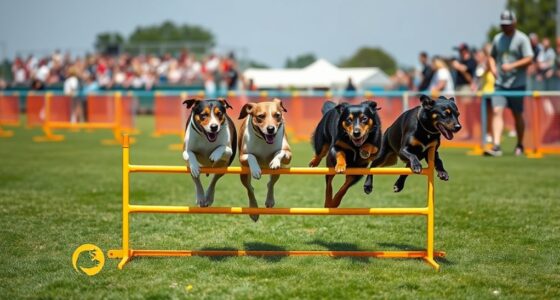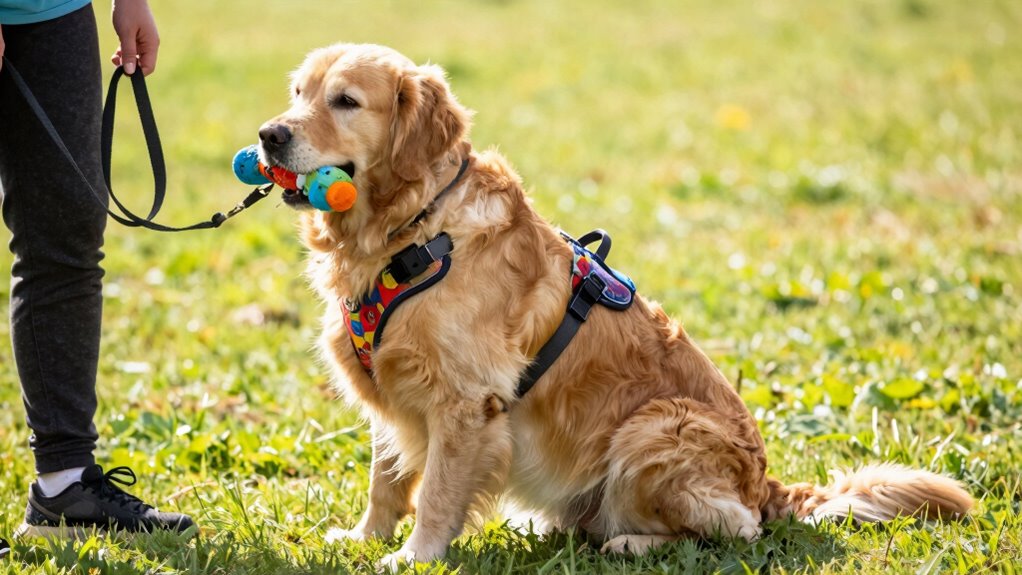

To train your dog to carry items safely, start with light objects and use positive reinforcement like praise and treats to encourage gentle handling. Keep sessions short and gradually increase the weight, watching for signs of fatigue or discomfort. Teach commands like “hold” or “carry” consistently and supervise during practice to prevent accidents. Understanding your dog’s breed traits, physical ability, and health needs helps guarantee safe training. For more detailed steps, you’ll find useful tips on progressing safely and effectively.

Get pet supplies delivered free — and shop member deals
- Fast, free delivery on millions of items
- Access to Prime Big Deal Days deals on October 6–7
- Prime Video, Amazon Music and more included
Key Takeaways
- Start training with lightweight, non-threatening objects and use positive reinforcement to encourage gentle carrying.
- Gradually increase object weight while monitoring your dog’s comfort and response.
- Teach commands like “hold” or “carry” consistently to build understanding.
- Supervise training sessions to prevent chewing, biting, or accidental ingestion of objects.
- Regularly check your dog’s mouth, teeth, and paws for signs of discomfort or injury.
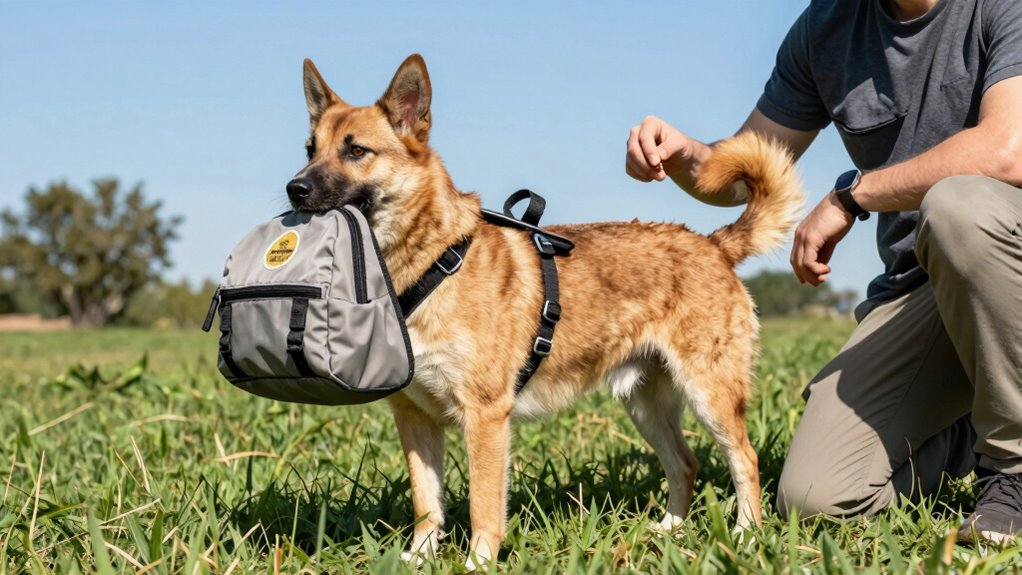
Training your dog to carry items safely can be a rewarding process that strengthens your bond and makes everyday tasks easier. When you start teaching your dog to hold and carry objects, it’s important to take into account their breed specific traits and overall health. Some breeds are naturally more inclined to carry things, thanks to their physical build or instinctual behaviors. For example, retrievers and shepherd breeds often excel at carrying items because they were bred for tasks involving retrieving and carrying. Recognizing these breed-specific traits helps tailor your training approach and guarantees your dog remains comfortable and safe throughout.
Before you begin, it’s vital to think about your dog’s nutrition. Proper dog nutrition supports their energy levels, muscle strength, and overall health, all of which are essential for carrying tasks. A well-balanced diet rich in high-quality proteins and nutrients helps your dog develop the physical capacity needed for carrying objects without strain. Making certain your dog has the right nutrition also minimizes the risk of injury or fatigue during training sessions, making the process more enjoyable for both of you.
Start with simple steps by choosing lightweight, non-threatening objects for your dog to carry. Use positive reinforcement to encourage your dog to pick up and hold the item. When they do so successfully, praise them enthusiastically and offer treats. Keep training sessions short and frequent, so your dog doesn’t become overwhelmed or tired. As your dog becomes more comfortable, gradually increase the weight of the items, but always monitor their response to prevent overexertion. Remember, patience is key — rushing this process can lead to frustration or even injury.
Start with lightweight objects, use positive reinforcement, and gradually increase weight with patience.
It’s also important to teach your dog to carry items gently and avoid biting or gripping too tightly. If they start to chew or tug excessively, redirect their attention and reinforce gentle holding. Consistency in commands and training cues will help your dog understand what you expect. Using commands like “hold” or “carry” consistently will build clarity and reinforce their learning. Always supervise your dog during carrying activities, especially if they’re handling objects that could be swallowed or cause harm. Additionally, understanding breed specific traits can help you tailor your training methods to your dog’s natural abilities and limitations. Incorporating knowledge about dog anatomy can further optimize your training, ensuring your dog’s comfort and safety during carrying exercises. Furthermore, considering your dog’s age and physical condition can help prevent overexertion and injuries. Also, being aware of your dog’s physical capabilities is crucial for customizing training routines to suit their individual needs.
Finally, keep in mind that training your dog to carry items safely isn’t just about obedience — it’s about guaranteeing their well-being. Regularly check your dog’s mouth, teeth, and paws for signs of discomfort or injury, especially if they’re carrying heavier objects. By integrating breed specific traits, proper nutrition, and patience into your training, you’ll help your dog learn to carry items confidently and safely, making everyday life easier and more enjoyable for both of you. Additionally, understanding the importance of biodiversity and conservation can inspire you to incorporate sustainable practices into your pet care routine.
As an affiliate, we earn on qualifying purchases.
Frequently Asked Questions
What Are the Best Dog Breeds for Carrying Items?
You should consider breeds like Labrador Retrievers and Border Collies for carrying items, as their suitability for the task is high due to their strong build and willingness to work. Keep in mind the dog’s carrying capacity limits; avoid overloading them to prevent injury. These breeds are intelligent, trainable, and energetic, making them ideal for carrying items safely when trained properly.
How Do I Prevent My Dog From Chewing on Carried Objects?
To prevent your dog from chewing on carried objects, address their chewing habits with distraction techniques like offering toys or puzzle feeders. When you notice them chewing, redirect their attention to an appropriate item. Consistently praise and reward good behavior, and use commands like “leave it” to reinforce boundaries. Regular exercise also helps reduce boredom, which can lead to unwanted chewing, keeping your carried items safe and intact.
How Long Should Training Sessions Last?
Imagine your dog ardently waiting, eyes bright with anticipation. Keep training sessions short, about 10-15 minutes, to hold their focus and prevent boredom. Use effective training techniques during each session, ensuring they’re engaging and rewarding. Aim for consistent session frequency, ideally daily or every other day, so your dog learns steadily without feeling overwhelmed. Short, regular sessions create the best environment for your pup to grasp new skills safely.
What Safety Gear Is Recommended for Carrying Items?
You should use a well-fitted harness designed for load carrying to guarantee safety. Make sure the harness fit is snug but not too tight, allowing free movement without chafing. Opt for gear that distributes the load evenly across your dog’s chest and shoulders, reducing strain. Reflective or padded options can enhance safety. Regularly check the harness for wear and adjust as needed to keep your dog comfortable and secure during carrying tasks.
How Can I Tell if My Dog Is Comfortable With Carrying Items?
You can tell if your dog is comfortable carrying items by observing their posture and comfort indicators. A relaxed dog will stand or sit calmly, with a wagging tail and soft eyes. If they hold a relaxed posture, show no signs of tension, and willingly keep the item in their mouth or harness, they’re likely comfortable. Avoid forcing them, and watch for signs of stress like yawning or avoidance behaviors.
Conclusion
Now that you’ve learned how to train your dog to carry items safely, you’re both ready to navigate the world like a well-oiled team. With patience and consistent practice, your pup will become a trusty sidekick, carrying treasures and tidbits with the grace of a seasoned explorer. Remember, every successful fetch is a small victory, turning your bond into a sturdy bridge that’s built on trust, teamwork, and a dash of wagging tail joy.
Evergreen bestsellers Picks
bestsellers
As an affiliate, we earn on qualifying purchases.