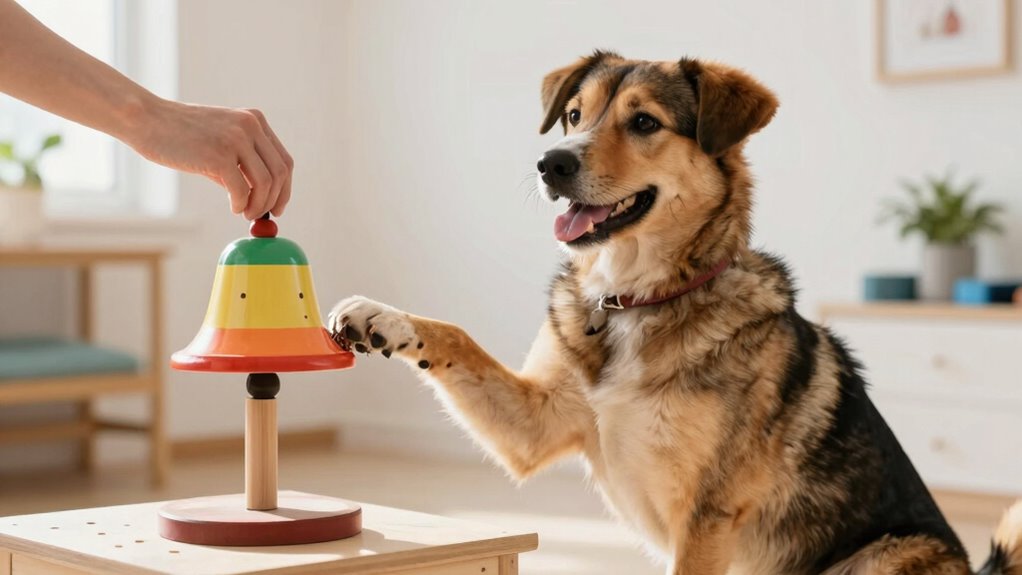

To teach your dog to ring a bell, start by choosing an easy-to-hear, accessible bell and let your dog explore it calmly. Use a consistent cue like “ring the bell” and reward every gentle touch or paw with praise and treats. Be patient, repeat often, and gradually increase your dog’s confidence. As they get the hang of it, phase out treats for praise alone. Keep practicing regularly to make dog ringing the bell a natural way to communicate needs—if you keep at it, success awaits.

Get pet supplies delivered free — and shop member deals
- Fast, free delivery on millions of items
- Access to Prime Big Deal Days deals on October 6–7
- Prime Video, Amazon Music and more included
Key Takeaways
- Choose an accessible, easy-to-hear bell and introduce it gradually to the dog.
- Use consistent cues like “ring the bell” and reward correct touches immediately.
- Reinforce the behavior with praise and treats, increasing the dog’s confidence over time.
- Phase out treats gradually, replacing them with verbal praise or affection.
- Practice regularly and keep training sessions positive and brief to establish the habit.

Teaching your dog to ring a bell can be a simple and effective way to communicate their needs, but it requires patience and consistent practice. The key to successful training lies in using effective training techniques and reward methods that motivate your dog and reinforce positive behavior. Start by choosing a bell that’s easy for your dog to reach and hear. Hang it at a height that’s accessible, and let your dog get familiar with it by allowing them to sniff and investigate the bell without any pressure. This initial step helps reduce any confusion or fear around the new object.
Introduce the bell gently, allowing your dog to explore and familiarize without pressure or stress.
Once your dog is comfortable around the bell, you can begin training techniques focused on associating the bell with going outside or alerting you to their needs. Each time you take your dog outside or address their needs, gently prompt them to touch or paw at the bell. Use a consistent cue like “ring the bell” each time. When your dog makes contact with the bell, immediately reward them with praise and a treat. Reward methods are crucial here: the instant your dog interacts with the bell correctly, they need to associate that action with positive reinforcement. This could be verbal praise, a tasty treat, or a quick play session—whatever motivates your dog most.
Consistency is essential. Every time your dog makes contact with the bell, reinforce the behavior with rewards and gentle encouragement. Be patient if they don’t get it right away; some dogs need more repetition before understanding the connection. Over time, you’ll notice your dog initiating the bell themselves, signaling they need to go outside or want your attention. When this happens, respond immediately and reward generously to strengthen the behavior. Recognizing and understanding dog learning processes can greatly improve the effectiveness of your training.
As your dog becomes more confident, you can gradually phase out treats and focus on verbal praise or affection as rewards. The goal is for your dog to reliably ring the bell to communicate their needs, not just to get treats. Remember to keep training sessions short and positive, ending on a successful note. Patience and consistent reinforcement will help your dog learn quickly and develop a clear way to tell you what they need. Additionally, understanding how dogs learn and the importance of positive reinforcement techniques can significantly enhance training outcomes. Recognizing the importance of repetition and patience in training will help you stay motivated and persistent. Incorporating clear cues into your training can also make the learning process more effective. With time, your dog will start ringing the bell confidently, turning this new skill into a natural part of your daily routine.
As an affiliate, we earn on qualifying purchases.
Frequently Asked Questions
How Long Does It Typically Take for a Dog to Learn This Skill?
It usually takes a few days to a couple of weeks for your dog to learn to ring a bell reliably. Your training techniques and motivation strategies play a big role in speeding up this process. Consistent practice, positive reinforcement, and keeping sessions short and engaging help your dog understand quickly. Stay patient and encouraging, and you’ll see progress faster as your dog learns this new skill.
Can Older Dogs Learn to Ring a Bell Effectively?
Did you know that dogs over 7 years old can learn new tricks? Yes, older dogs can effectively learn to ring a bell, though it might take a bit more patience. Using positive reinforcement methods and consistent training techniques, you can teach your senior dog to communicate their needs. Keep sessions short, stay patient, and celebrate small victories to help your older dog succeed in ringing the bell.
What if My Dog Keeps Ringing the Bell Unnecessarily?
If your dog keeps ringing the bell unnecessarily, you need to practice training consistency and positive reinforcement. When your dog rings the bell without a real need, gently ignore the behavior and only reward them when they ring it for a legitimate reason. Consistently reinforcing appropriate bell use helps your dog understand when it’s appropriate to ring. Over time, this reduces unnecessary ringing and encourages better communication.
Are There Specific Breeds That Learn Faster?
Think of your dog’s learning process as a race—some breeds have a head start. Breed differences play a big role, with intelligent breeds like Border Collies and Poodles often learning faster. These breeds are quick on their paws, picking up new tricks with ease. While individual temperament matters, knowing your dog’s breed can help set realistic expectations for learning speed and tailor your training approach.
How Do I Prevent My Dog From Becoming Dependent on the Bell?
To prevent your dog from becoming dependent on the bell, maintain consistent training and avoid overusing the bell for every need. Use positive reinforcement to encourage your dog to communicate independently, and gradually reduce reliance on the bell by teaching alternative cues. Keep training sessions varied and rewarding, so your dog learns to trust their own signals and doesn’t rely solely on the bell, fostering confidence and independence.
Conclusion
With patience and consistency, you’ll turn that tiny bell into your dog’s voice, a gentle whisper that speaks volumes. Remember, every ring is a step closer to a stronger bond, a dance of understanding and trust. Soon, your pup’s little chime will become a melody of communication, echoing your teamwork in perfect harmony. Keep practicing, and watch as your friendship blossoms into a symphony of shared language—beautiful, simple, and endlessly rewarding.
Halloween Picks
halloween
As an affiliate, we earn on qualifying purchases.