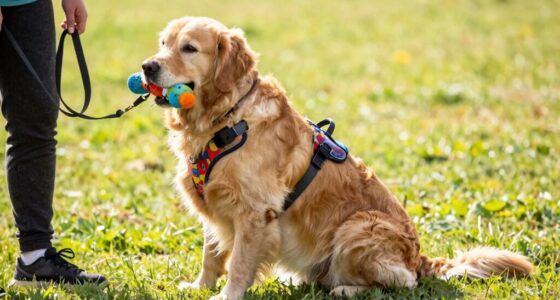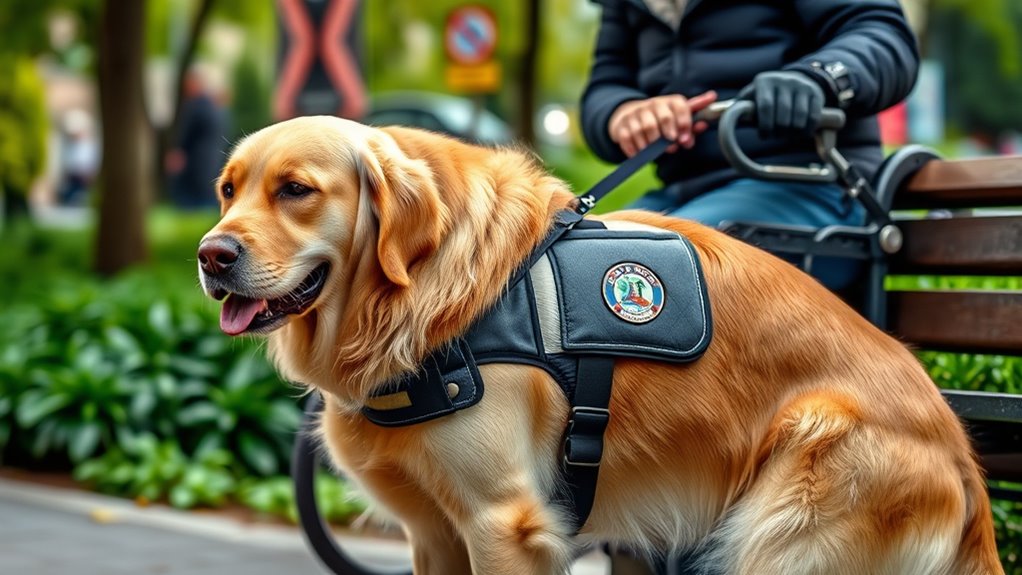

Service dog tasks must directly help with your disability, like guiding you around obstacles, alerting you to sounds or medical emergencies, or fetching items to aid mobility. Tasks that aren’t related, such as performing tricks or providing emotional comfort alone, aren’t legal or recognized under ADA. Your dog must stay under control and behave properly in public. To better understand which tasks qualify and how to guarantee compliance, keep exploring more details.

Get pet supplies delivered free with Prime
- Fast, free delivery on millions of items
- Prime Video, Amazon Music and more included
- Member-only deals all year
Key Takeaways
- Legitimate service dog tasks directly mitigate a disability, such as guiding visually impaired individuals or alerting to medical emergencies.
- Tasks unrelated to a disability, like fetching a newspaper or providing comfort alone, are not considered service tasks.
- Service dogs must be under control and behave appropriately in public; disruptive behavior can lead to access denial.
- Only tasks that specifically assist with a person’s disability qualify; general obedience or tricks do not meet legal criteria.
- Emotional support animals do not have the same legal access rights as service dogs performing specific, disability-related tasks.

Have you ever wondered how service dogs assist their handlers in daily life? These highly trained animals do more than just provide companionship; they perform specific tasks that help people with disabilities navigate the world more independently. Whether it’s guiding someone with vision loss, alerting to medical emergencies, or retrieving objects, service dogs are invaluable partners. Their tasks are carefully tailored to meet their handler’s unique needs, which means understanding what’s legal and what’s not is vital for both handlers and the public.
Service dog tasks are defined by the Americans with Disabilities Act (ADA) as actions that directly mitigate a disability. For example, a dog trained to alert a person with hearing impairments to sounds like doorbells, alarms, or someone calling their name is performing a task directly related to their handler’s disability. Similarly, a guide dog helping a person with visual impairments navigate obstacles is performing a task that guarantees safety and independence. Other tasks include alerting to medical conditions such as low blood sugar for diabetics or pulling a wheelchair for mobility assistance. These tasks must be trained and specific; a service dog cannot simply be a well-behaved pet performing general obedience.
Service dog tasks directly mitigate disabilities, such as alerting to sounds or assisting with mobility, ensuring safety and independence.
However, it’s vital to understand what’s not considered a service task. Simply having a dog that provides emotional support or comfort doesn’t qualify as a service dog under the ADA. Emotional support animals are not granted the same legal access to public places and are not allowed to perform specific tasks related to a disability. Likewise, training a dog to do tricks or perform activities unrelated to a person’s disability doesn’t qualify as a service task. For example, a dog that fetches the newspaper for fun or fetches a drink without a connection to a disability isn’t performing a legal service task.
It’s also important to recognize that service dogs must be under control at all times. This means they should be harnessed, leashed, or otherwise tethered unless it interferes with their work. Disruptive or aggressive behavior can result in denial of access under the law. While the tasks performed must be related to mitigating a disability, handlers are responsible for ensuring their dogs do not behave inappropriately in public.
As an affiliate, we earn on qualifying purchases.
Frequently Asked Questions
Can a Service Dog Perform Off-Leash Tasks in Public?
Yes, a service dog can perform off-leash tasks in public if it’s properly trained to do so and maintains control. You should guarantee your dog responds reliably to commands and stays focused on you to prevent disruptions or safety issues. Keep in mind that local laws and regulations may vary, so check the rules in your area. Ultimately, your dog’s training and your supervision determine when off-leash work is appropriate.
Are Emotional Support Animals Considered Service Dogs Legally?
Think of emotional support animals as cozy blankets, providing comfort rather than fulfilling specific tasks. Legally, they’re not considered service dogs, which means they don’t have the same public access rights. While they help ease emotional distress, they aren’t protected under the ADA like true service dogs. So, you can’t take them into places that only allow official service animals, and their presence isn’t legally mandated.
What Are the Penalties for Falsely Claiming a Service Dog?
If you falsely claim a service dog, you could face serious penalties, including fines up to $5,000 and criminal charges for fraud. You might also lose public access rights and face civil liability if your deception causes harm or inconvenience. State and federal laws crack down on misuse because they aim to protect the rights of people with genuine disabilities. Honesty is essential to avoid these legal consequences.
Can Service Dogs Be Trained by Their Owners?
Imagine guiding your loyal companion through bustling streets, knowing you’ve trained them yourself. You absolutely can train your service dog. Many owners start with basic obedience, then teach tasks specific to their needs. It’s a rewarding process that builds trust and understanding. Just guarantee your training meets legal standards, and consider professional guidance if needed. With patience and dedication, you create a capable partner who’s ready to assist you confidently.
Are There Specific Breed Restrictions for Service Dogs?
You don’t have to worry about specific breed restrictions for service dogs, as laws prioritize the individual’s needs over breed type. While some places may have breed bans, these don’t typically apply to service animals. You can train any breed to perform necessary tasks if they meet the requirements set by the ADA. Focus on your dog’s ability, temperament, and training rather than breed, ensuring they can reliably assist you.
Conclusion
Understanding what tasks your service dog can perform helps you navigate the law confidently. For example, if your dog helps alert you to an oncoming seizure, that’s a recognized task. Remember, only tasks directly related to your disability are legal. By knowing these boundaries, you ensure your service dog remains a valuable, lawful aid. Stay informed, and you’ll both be protected and empowered to face everyday challenges together.
Columbus Day / Indigenous Peoples' Day Picks
long weekend sales
As an affiliate, we earn on qualifying purchases.