
To guarantee your future therapy dog has proper public manners, focus on consistent socialization and positive reinforcement. Teach your dog commands like “sit,” “stay,” and “leave it” to help keep them calm in busy settings. Practice exposure to different environments and sounds, rewarding calm behavior. Maintain patience and stay calm yourself, as your attitude influences your dog. By consistently practicing these skills, you’ll prepare your dog for confident, polite interactions in any social situation. Keep exploring to discover more effective strategies.
Key Takeaways
- Teach and reinforce basic commands like “sit,” “stay,” and “leave it” for reliable public responses.
- Use positive reinforcement to encourage calm and polite behavior in social settings.
- Gradually expose the dog to diverse public environments to build confidence and reduce overexcitement.
- Manage excitement levels through training and provide clear cues to maintain composure.
- Practice responsible behavior, including patience and attentiveness, to ensure safety and proper manners in public.
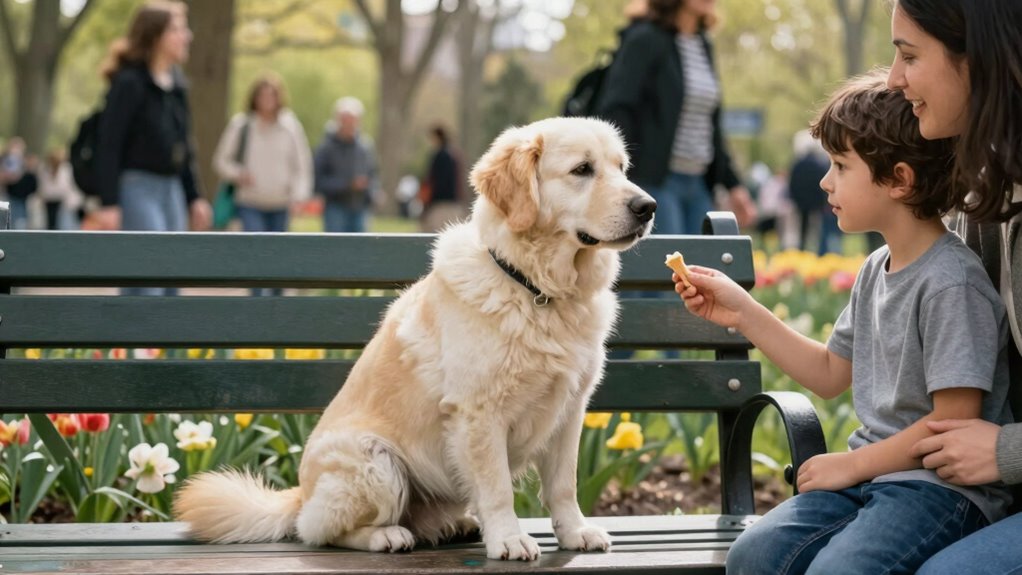
Preparing future therapy dogs to behave appropriately in public is essential for their success and safety. As you work with your dog, focus on effective dog training that emphasizes good manners and calm behavior in various settings. Proper training helps your dog understand what’s expected and builds their confidence, making them more comfortable in unfamiliar environments. One of the most important aspects of this process is socialization. Socialization techniques are key to exposing your dog to different people, animals, sounds, and sights in a controlled way, guaranteeing they become well-adjusted and confident. The goal is for your dog to remain relaxed and attentive, no matter where they are.
Start socializing your dog early, but always pay attention to their comfort level. Gradually introduce them to new experiences, always using positive reinforcement to reward calm, desirable behavior. For example, when your dog encounters a new person, encourage gentle approach and reward them with treats or praise if they remain relaxed. This teaches them that new people are friendly and safe. Similarly, take your dog to different environments—parks, busy streets, pet-friendly stores—and allow them to observe and adapt at their own pace. Consistency is essential; repeated exposure helps your dog become familiar with various stimuli, reducing fear or anxiety when they encounter these situations during therapy work. Incorporating ventilation and air quality techniques can also help create a calming environment during training sessions. Additionally, understanding the importance of public safety ensures your training promotes not only good manners but also responsible behavior in public settings. Furthermore, integrating biodiversity awareness into training routines can foster a greater sense of calm and focus in diverse environments. Recognizing the role of environmental factors in training can help tailor approaches that enhance your dog’s comfort and responsiveness. Including appropriate environmental stimuli in training exercises can further improve your dog’s ability to stay composed across different settings.
Gradually expose your dog to new experiences with positive reinforcement to build confidence and reduce anxiety.
Dog training plays an indispensable role in establishing public manners. Teach commands like “sit,” “stay,” and “leave it” so your dog can respond reliably in distracting environments. Use these commands to manage your dog’s behavior, ensuring they stay focused and calm when interacting with others. During socialization, reinforce good manners by rewarding your dog for calmly sitting or lying down when faced with a new person or situation. This helps your dog understand that calm behavior is expected and appreciated, especially in public settings where overexcitement can be problematic.
As you progress, practice real-world scenarios where your dog might encounter stress or excitement, such as crowded events or loud noises. Maintain a calm demeanor yourself, as your attitude influences your dog’s behavior. Keep training sessions short, positive, and frequent, so your dog doesn’t become overwhelmed. Remember, patience and consistency are key. Over time, your dog will learn to navigate public spaces with confidence and good manners, making them a dependable and comforting presence for those they’re meant to serve. By combining effective dog training with thoughtful socialization techniques, you set your future therapy dog up for success and guarantee they’re a well-behaved, safe, and friendly companion in every public setting.

Clicker Training for Dogs: Positive reinforcement that works!
- Comprehensive training information: Helpful tips for dog training
- Easy reference guide: Quick access to training knowledge
- Family pet education: Enhance your family's pet knowledge
As an affiliate, we earn on qualifying purchases.
As an affiliate, we earn on qualifying purchases.
Frequently Asked Questions
How Long Does It Typically Take to Train a Therapy Dog?
It typically takes around 6 months to a year to train a therapy dog, but it varies depending on the dog’s age and temperament. During this time, you focus on dog socialization and basic obedience to make certain the dog behaves appropriately in public. Consistent training, positive reinforcement, and social exposure help develop your dog’s confidence and calm demeanor, preparing them to work effectively as therapy dogs.
Are There Any Breeds Better Suited for Therapy Work?
Some breeds are better suited for therapy work, depending on their breed compatibility and temperament. Labrador Retrievers, Golden Retrievers, and Poodles often excel because they’re friendly, adaptable, and calm. You should conduct a temperament assessment to verify the dog has a gentle, patient nature ideal for therapy. Remember, individual temperament matters more than breed, so focus on a dog’s personality and how well it responds to people.
How Do Therapy Dogs Handle Stressful or Unfamiliar Environments?
You handle stressful or unfamiliar environments by focusing on stress management and environmental adaptability. Your therapy dog learns to stay calm through gentle exposure, positive reinforcement, and consistent routines. When faced with new settings, you guide them patiently, helping them adjust without pressure. Over time, your dog becomes more confident and resilient, making it easier for them to provide comfort and support, even in challenging situations.
What Health Requirements Must Therapy Dogs Meet?
You need to guarantee your therapy dog meets specific health requirements. This includes maintaining good dog temperament, so your dog stays calm and friendly around people. Regular health certifications are essential, confirming your dog’s vaccinations, parasite prevention, and overall health are up to date. These requirements keep your dog safe and ready to provide comfort, and they also ensure you’re meeting the standards expected for therapy work.
Can Therapy Dogs Be Trained for Specific Emotional Support Tasks?
Like a true Renaissance pup, you can definitely train therapy dogs for specific emotional support tasks. You’ll focus on developing their emotional intelligence, helping them recognize and respond to human emotions. With task customization, you tailor their training to suit individual needs—whether providing comfort during anxiety or offering companionship for loneliness. Your effort guarantees your dog not only meets public manners standards but also becomes a compassionate, effective emotional support partner.
Conclusion
So, now that you’ve got the scoop on public manners, it’s time to turn your future therapy dog into the ultimate social butterfly—minus the embarrassing peeing or barking fit. Remember, a well-behaved pup is your ticket to endless pats, treats, and perhaps even a Netflix-worthy reputation. Just think: with a little training and a lot of patience, you’ll be the duo everyone admires—proving that even therapy dogs can master the art of classy public behavior.