If you want your pet bedding to last longer, air drying is the better choice because it’s gentle on fabrics and prevents fiber breakdown from high heat and agitation. Machine drying, especially over time, can weaken fibers, cause thinning, or create holes. While it’s faster, proper air drying with good airflow and sunlight helps preserve your bedding’s durability. For more tips on extending your pet bedding’s lifespan, keep exploring how different drying methods impact fabric care.

Get pet supplies delivered free with Prime
- Fast, free delivery on millions of items
- Prime Video, Amazon Music and more included
- Member-only deals all year
Key Takeaways
- Air drying reduces fabric wear by avoiding high heat and mechanical agitation, extending bedding lifespan.
- Machine drying with gentle settings can speed up drying while minimizing damage, but may still cause fiber weakening over time.
- Proper airflow during air drying prevents mold, maintaining fabric integrity longer than damp, improperly dried bedding.
- Over-drying in machines accelerates fiber breakdown, decreasing bedding durability compared to air drying.
- Natural sunlight during air drying offers antibacterial benefits, helping preserve bedding hygiene and longevity.
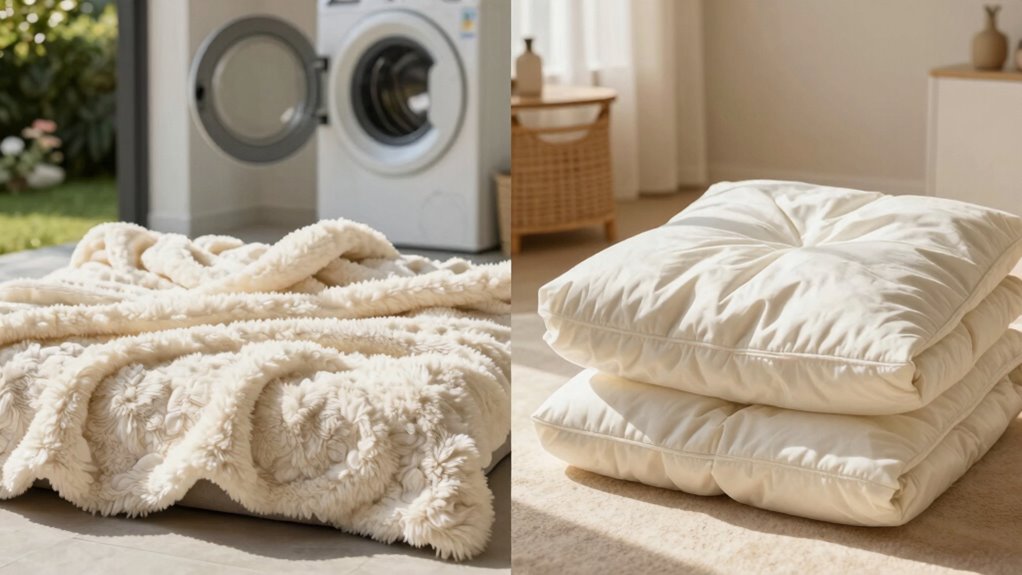
When it comes to drying your pet’s bedding, choosing between air drying and machine drying can impact both convenience and the longevity of the fabric. Your decision affects how effectively you clean the bedding and how well the fabric withstands repeated washings. Air drying involves hanging or laying the bedding out in a well-ventilated space, which is gentle on fabrics and reduces wear and tear. This method preserves fabric durability because it avoids the mechanical agitation and high heat of machines that can weaken fibers over time. If you prioritize gentle cleaning methods, air drying is a solid choice, especially for delicate or high-maintenance fabrics. It allows the bedding to dry naturally without exposing it to harsh conditions that could accelerate fraying or thinning. Additionally, proper ventilation is crucial for indoor air quality and helps prevent mold or mildew growth on damp fabrics. Proper airflow is also essential for maintaining a healthy environment for your pet. Using proper drying techniques can further enhance the lifespan of your pet’s bedding and ensure it remains hygienic. Incorporating natural sunlight during air drying can also help eliminate bacteria and freshen the fabric, further benefiting your pet’s health. Additionally, understanding the effects of heat and agitation on fabrics can guide you in choosing the best drying method for different materials.
On the other hand, machine drying offers speed and convenience that can be appealing if you’re busy or need to quickly get bedding ready for use again. Modern dryers come with various settings, such as low heat or delicate cycles, which help minimize damage. However, frequent machine drying can still compromise fabric durability because the tumbling and high heat can cause fibers to break down faster. Over time, this may lead to thinning fabric, holes, or fraying, especially in bedding made from less durable materials. If you choose machine drying, it’s best to use gentle cycles and avoid over-drying, which can cause unnecessary stress on the fabric. Regularly cleaning your dryer’s lint filter also helps ensure even airflow and reduces the risk of heat damage. Being aware of fabric care instructions can further prolong the lifespan of your pet’s bedding. Properly drying bedding also reduces residual moisture, which is vital for preventing mold and mildew growth that can affect both your pet and home environment.
As an affiliate, we earn on qualifying purchases.
Frequently Asked Questions
How Does Drying Method Affect Pet Bedding Odor?
Drying method directly impacts pet bedding odor. Air drying reduces odor retention because it allows moisture to evaporate naturally, preventing microbial growth that causes bad smells. Machine drying, especially at high heat, can trap odors if bedding isn’t thoroughly dried, leading to microbial growth. To keep your pet’s bedding fresh, guarantee it’s completely dry after washing, whether you air dry or machine dry, to minimize odor retention and microbial development.
Are There Specific Fabrics Better Suited for Air Drying?
Ever wondered which fabrics are best suited for air drying? Natural fibers like cotton and linen are excellent choices because they maintain their fabric integrity through gentle air drying, enhancing fabric maintenance and drying efficiency. Synthetic fabrics like polyester can also work well, but they might take longer to dry and could trap odors. Choosing the right fabric guarantees your pet’s bedding stays fresh and durable with minimal effort.
Can Drying Method Impact Pet Allergies?
Yes, drying method can impact pet allergies. Air drying often reduces pet allergy triggers by minimizing residual moisture that dust mites thrive on, helping to lower allergen levels. Machine drying at high heat can also kill dust mites, but improper drying might leave moisture behind, increasing allergen presence. By choosing the right method, you can better control pet allergy triggers and promote a healthier environment for both you and your pet.
Does Drying Method Influence Pet Bedding Color Fading?
You might be surprised to learn that drying method can influence your pet bedding’s color fading. Air drying tends to preserve color retention better, as it’s gentler on fabrics. Machine drying, especially at high heat, can weaken fabric durability over time, leading to faster fading. So, if you want your pet bedding to stay vibrant longer, opting for air drying could be your best bet, protecting both color and fabric integrity.
How Does Drying Time Compare Between Air and Machine Drying?
Machine drying typically offers quicker drying times, enhancing drying efficiency, especially if you’re in a hurry. Air drying takes longer but uses less energy, making it more eco-friendly. If you prioritize speed, machine drying is your best bet, but if you want to save on energy costs and reduce wear on the bedding, air drying might be better. Consider your schedule and energy preferences when choosing your drying method.
Conclusion
Choosing between air drying and machine drying for your pet’s bedding ultimately depends on what lasts longer. Did you know that bedding dried naturally can retain up to 30% more of its fibers, making it more durable over time? While air drying might take longer, it’s gentler and helps preserve the fabric’s integrity. So, if you want bedding that stays softer and lasts longer, consider air drying—it’s a simple switch that makes a big difference.
Fall Picks
fall essentials
As an affiliate, we earn on qualifying purchases.