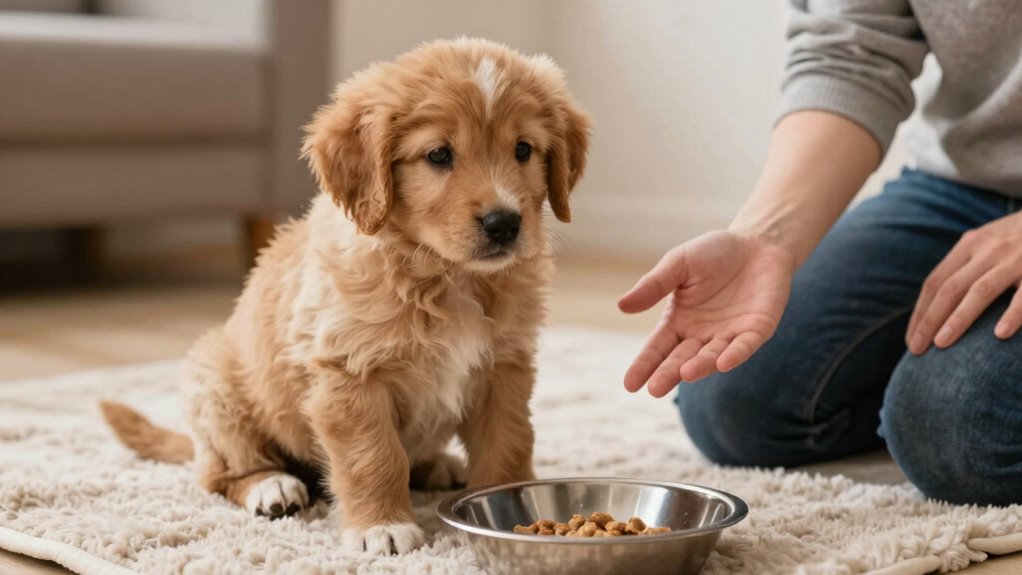

To teach your puppy to relax around food, start by establishing a calm routine using commands like sit and stay before feeding. Introduce the crate as a positive space, feeding inside it to help build confidence. Practice consistent routines, reward calm behavior, and avoid punishing excitement or possessiveness. Be patient and gradual, especially if your puppy has a history of guarding. With time and positive reinforcement, your puppy will learn to stay calm during mealtime—learn more to see how to make it happen.
Key Takeaways
- Use positive reinforcement to reward calm behavior during feeding times.
- Establish a consistent routine and commands to create predictability.
- Gradually introduce crate confinement during meals to reduce guarding tendencies.
- Socialize your puppy with different people and environments to decrease reactivity.
- Be patient and avoid punishing excitement or possessiveness, focusing on calm, positive experiences.
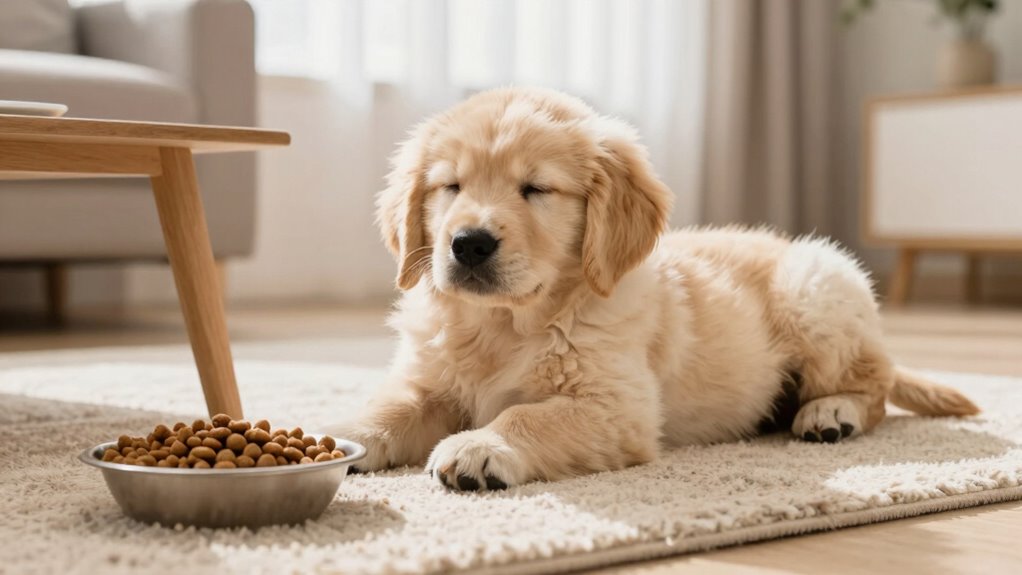
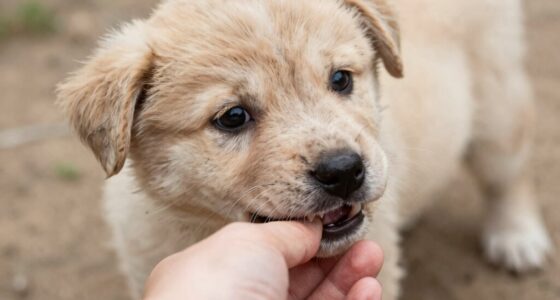
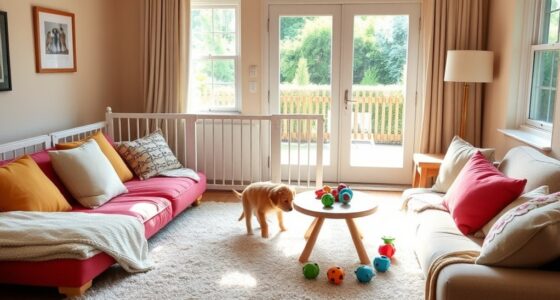
Many puppies become overly excited or possessive around food, which can lead to challenging behaviors and safety concerns. It’s important to address this early by focusing on puppy socialization and proper training techniques. When you expose your puppy to different people, animals, and environments, you help them become more confident and less reactive around food. Socialization also teaches your pup that mealtime isn’t a time for guarding or aggression, making future training smoother.
Early socialization reduces food guarding and builds confidence for calmer, safer mealtimes.
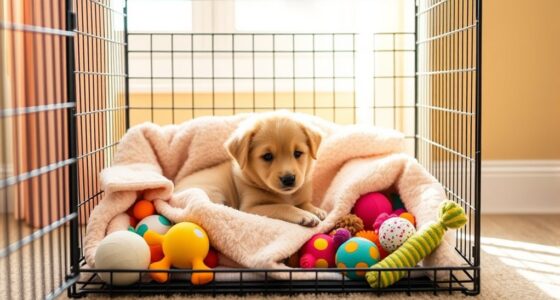
Crate training plays a crucial role in teaching your puppy to relax around food. A crate provides a safe, comfortable space where your puppy can learn to settle down and feel secure. Start by introducing the crate as a positive spot, placing treats and toys inside to encourage your puppy to go in willingly. Once they’re comfortable, you can begin to use the crate during mealtimes, feeding them inside so they associate it with positive experiences. This helps prevent guarding behaviors and teaches your pup that food isn’t a resource to be fiercely protected. Incorporating desensitization techniques can further reduce food-related anxiety and guarding tendencies, especially when combined with positive reinforcement strategies.
To begin teaching your puppy to relax around food, establish a routine that emphasizes calmness. Before feeding, ask your puppy to sit and stay, then place their food bowl on the floor. Instead of rushing to give them the food, wait until they’re calm and relaxed. If they become overly excited or start barking, gently redirect their attention or wait until they settle before proceeding. Over time, your puppy will learn that calm behavior earns access to their meal, reinforcing self-control. Using consistent routines helps your puppy understand what to expect and reduces their stress around mealtime. Consistent routines also create a predictable environment, which can help reduce anxiety and improve overall behavior.
Throughout this process, consistency is key. Use the same commands and routines each day so your puppy knows what to expect. Incorporate brief periods of crate confinement during mealtime, gradually increasing the duration as your pup becomes more comfortable. When your puppy remains relaxed during and after eating, reward them with praise or a small treat outside the crate. This positive reinforcement helps solidify the idea that relaxing around food leads to good things. Recognizing the importance of proper socialization can significantly impact your puppy’s attitude toward food and other situations.
Patience is essential. Some puppies may take longer to calm down around food, especially if they have a history of resource guarding. Never punish your puppy for being excited or possessive; instead, calmly guide them toward relaxed behavior and reward their progress. Consistent training and positive experiences are vital for developing a healthy attitude toward food. Over time, these techniques help your puppy develop a healthy attitude toward food, reducing anxiety and guarding tendencies. With consistent puppy socialization, crate training, and calm routines, you’ll teach your pup to enjoy mealtime without stress or aggression. Developing a positive association with food and mealtime is key to long-term success.

KSIIA Washable Dog Bed Medium Size Dog Crate Bed Plush Pet Mat 35"x23" Gray
- Luxurious Padding Support: Supports joints and relieves pressure
- Ultra Soft Rose Velvet: Provides cozy, shedding-resistant comfort
- Non-Slip Pad Design: Ensures stability and safety for pets
As an affiliate, we earn on qualifying purchases.
As an affiliate, we earn on qualifying purchases.
Frequently Asked Questions
How Long Does It Typically Take for a Puppy to Relax Around Food?
It usually takes a few weeks for a puppy to relax around food, but it varies based on individual temperament. You should focus on puppy socialization in a calm environment, gradually introducing food-related interactions without rushing. Consistent, positive reinforcement helps your puppy feel secure. Keep sessions short and positive, and over time, your puppy will learn to stay relaxed during meal times, building confidence and trust.
Should I Use Treats to Teach Relaxation or Avoid Them?
Using treats for training, especially treat-based training, can be effective for teaching relaxation techniques. Surprisingly, 80% of puppies respond well to reward-based methods, making treats a valuable tool. You should incorporate treats gradually, pairing them with calm praise, to reinforce relaxed behavior around food. Avoid overusing treats to prevent dependency, but they’re a helpful way to motivate your puppy and build positive associations with relaxation cues.
Can Early Food-Related Anxiety Lead to Future Behavioral Issues?
Yes, early food-related anxiety can lead to future behavioral issues if not addressed. It affects resource management and can cause resource guarding or aggression. To prevent this, use socialization strategies that teach your puppy to share and be comfortable around food and other resources. By managing resources early and exposing your puppy to positive experiences with food, you help build confidence and prevent anxiety from escalating into problematic behaviors later.
How Do I Handle a Puppy That Aggressively Guards Food?
To handle a puppy that aggressively guards food, start with resource guarding. Use calmness training by approaching gently and offering treats near their bowl without demanding. Gradually, teach your puppy that sharing food leads to positive experiences. Avoid punishment, and instead, reward calm behavior. Consistency is key. Over time, your puppy will learn that being relaxed around food is safe, reducing aggressive guarding and building trust.
Is It Necessary to Consult a Professional Trainer for Food-Related Stress?
Yes, consulting a professional trainer can be very helpful when dealing with food-related stress. They can guide you through effective training techniques and suggest environmental modifications to reduce your puppy’s anxiety. A trainer can assess your puppy’s specific behavior and develop a customized plan, making sure you use positive reinforcement and appropriate management strategies. This support can build your puppy’s confidence and promote a calmer, more relaxed attitude around food.
Conclusion
As you guide your puppy to relax around food, you’re planting seeds of trust that will blossom into a garden of calmness. Remember, patience is your gentle rain, nurturing confidence with every positive experience. With time and consistency, those tiny paws will tread softly through mealtimes, turning chaos into calm. Soon, your puppy will dance around food with the grace of a breeze, knowing that safety and serenity are always just a treat away.