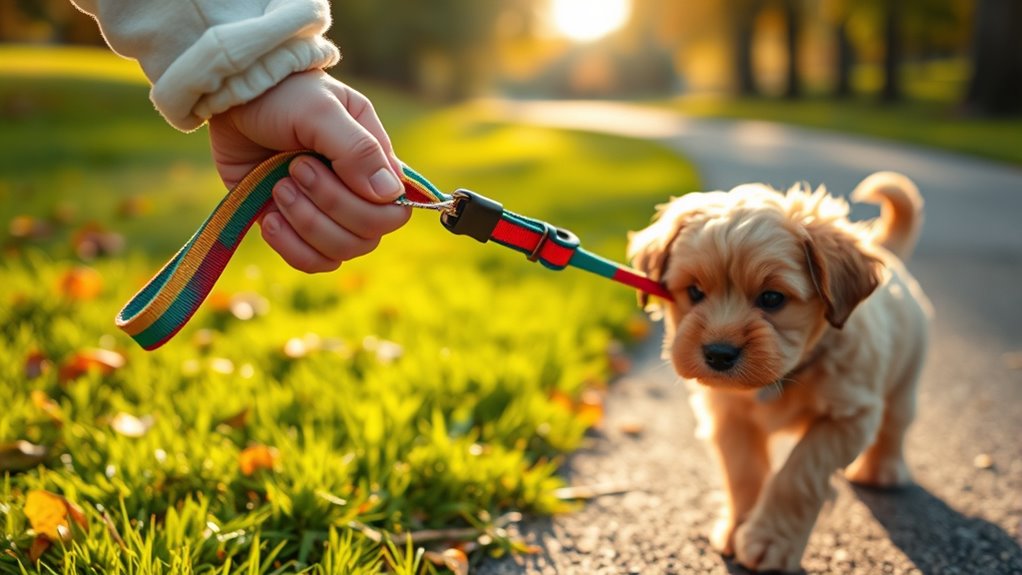

To start leash walking with your tiny pup, choose a lightweight harness or collar suited for small dogs and introduce it indoors first. Let your dog explore, sniff, and get comfortable while offering treats and praise. Keep initial walks short, stay calm, and allow your pup to explore at their own pace with a loose leash. Practice daily, reward good behavior, and be patient—these first steps set the foundation for happy, confident walks ahead. Keep going to discover more tips to make walks enjoyable for both of you.

Get pet supplies delivered free with Prime
- Fast, free delivery on millions of items
- Prime Video, Amazon Music and more included
- Member-only deals all year
Key Takeaways
- Introduce a lightweight, comfortable harness indoors to build positive associations before outdoor walks.
- Keep initial outdoor walks brief, allowing the dog to explore at their own pace and gradually increase duration.
- Use treats and praise to encourage walking alongside you, maintaining a loose leash to prevent pulling.
- Avoid tugging or harsh corrections; redirect attention with treats or toys if the dog pulls.
- Practice daily, making walks fun and rewarding to build confidence and establish good leash habits.

Teaching your small dog to walk on a leash can be a rewarding experience, but it requires patience and the right approach. From the moment you start, keep in mind that your puppy or tiny dog might feel overwhelmed by the new sensation of a leash and the outside world. Your goal is to make the experience positive and comfortable, not stressful. Begin by choosing a lightweight, well-fitting collar or harness suited for your dog’s size. A harness is often preferable for small dogs because it distributes pressure more evenly and reduces strain on their delicate necks. Once you’ve got the right equipment, let your dog get used to wearing it inside the house first. Allow them to sniff and explore the new gear, offering treats and praise for calm behavior. This helps build positive associations early on.
When you’re ready to step outside, keep initial walks short—just a few minutes at a time. Stand still and let your dog explore the immediate environment at their own pace. Use treats and gentle encouragement to motivate them forward. Your voice should be calm and reassuring to prevent any anxiety. As your dog begins to understand that leash walking is safe and enjoyable, gradually increase the duration of your outings. Keep the leash loose, not tight, so your dog doesn’t feel restrained or pulled. Small dogs can be easily startled or overwhelmed, so avoid tugging or harsh corrections. Instead, use a cheerful tone and reward good behavior generously to foster confidence.
Pay attention to your dog’s body language. If they seem nervous or hesitant, back up and give them time to acclimate. Sometimes, small dogs need extra reassurance, so stop and let them investigate their surroundings comfortably. When your dog pulls on the leash, gently redirect their attention back to you with treats or a toy. Never yank or punish them, as this can create fear or resistance. Consistency is key; practice daily, keeping sessions positive and fun. Over time, your dog will associate leash walking with good things, like treats, praise, and adventure. Additionally, choosing appropriate leash training techniques can help prevent pulling and build good habits from the start.
small dog harness for leash training
As an affiliate, we earn on qualifying purchases.
As an affiliate, we earn on qualifying purchases.
Frequently Asked Questions
When Should I Start Leash Training My Puppy?
You should start leash training your puppy as soon as you bring them home, ideally around 8 weeks old. Early training helps your pup get used to the collar and leash, making walks more enjoyable and safe. Keep sessions short, positive, and consistent. By starting early, you build a strong foundation for good behavior, ensuring your puppy feels comfortable and confident when walking on a leash.
What Type of Leash Is Best for Small Dogs?
Think of your tiny pup as a delicate bird; a lightweight, adjustable harness is your best bet. It offers better control, prevents strain on their neck, and keeps them comfortable. Avoid heavy-duty or retractable leashes, which can be cumbersome or unsafe. Opt for a soft, durable leash that fits snugly, giving your little explorer freedom while ensuring safety. Your small dog’s comfort and security depend on the right choice.
How Can I Prevent My Dog From Pulling?
To prevent your dog from pulling, stay calm and use a proper harness or front-clip harness to give you better control. Keep your leash slack and stop walking whenever your dog pulls, then resume only when they relax. Reward your dog with treats and praise when they walk nicely beside you. Consistency is key—practice regularly, and your dog will learn that walking calmly is rewarding and preferred.
How Long Should Initial Leash Training Sessions Last?
You should keep initial leash training sessions around 5 to 10 minutes to prevent your dog from becoming overwhelmed or bored. Short, frequent sessions help your pup stay engaged and build positive associations with walking on a leash. As your dog gains confidence and endurance, gradually increase the duration. Always end on a positive note, offering praise or treats to reinforce good behavior and encourage continued progress.
What if My Dog Is Afraid of the Leash?
If your dog is afraid of the leash, start slowly and make it a positive experience. Let your dog sniff and explore the leash without attaching it at first. Use treats and praise to reward calm behavior around the leash. Gradually introduce the leash, keeping sessions short and relaxed. Be patient and gentle, ensuring your dog feels safe and comfortable before progressing to walking.
Conclusion
So, you’ve mastered leash walking with your tiny explorer—who knew those first steps would be so rewarding? Just remember, it’s funny how something so simple can teach patience, discipline, and trust. Maybe the real leash isn’t just for your pup, but for letting go of your own worries. After all, sometimes the tiniest steps lead to the biggest adventures—if you’re willing to take that first, awkward stride together.
Halloween Picks
halloween
As an affiliate, we earn on qualifying purchases.